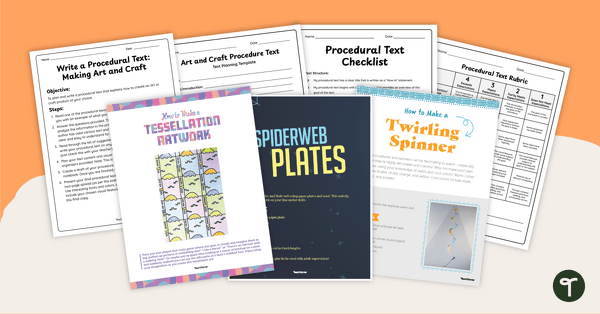
Get your students to create a high-quality procedural text that teaches others how to make an art or craft creation using this fully scaffolded writing project booklet.
A Fully Scaffolded Craft Procedure Project for Elementary Students
Procedural writing is one of the most practical and engaging text types for elementary school students. Children naturally enjoy explaining how to do things, but turning that knowledge into a clear, well-structured procedure can be challenging. That’s where Teach Starter can help!
This writing project has been designed by our experienced team to guide your students through writing a procedural text that teaches the audience how to create a specific art or craft project. The resource includes three example procedural texts that students can read and analyze before starting their own writing. Through guided questions, students explore the purpose, structure and language features of procedures, helping them identify what makes instructions clear and easy to follow. Students then plan, draft, edit and publish their own procedural text in the style of one of the examples.
The example art and craft procedure texts included in the resource are:
- How to Make a Tessellation Artwork
- Spiderweb Plates
- How to Make a Twirling Spinner
By working through the writing process step by step, students gain a deeper understanding of procedural writing conventions, including materials lists, sequenced instructions, imperative verbs and visual features. The final outcome is a high-quality procedural text that demonstrates both creativity and strong writing skills, while giving students the satisfaction of teaching others how to create something special.
How This Procedure Writing Project Supports Student Success
This project has been carefully designed by our team to take the guesswork out of procedural writing for your students. By providing students with strong examples, guided analysis opportunities and structured planning tools, the resource helps transform what can feel like a daunting writing task into a manageable and enjoyable learning experience. Here’s how:
- Model texts provide a clear starting point – The three example procedures give students a concrete understanding of what a successful procedural text looks like. Instead of wondering how to structure their writing, students can refer to authentic examples and identify the features they will need to include in their own work.
- Guided analysis promotes deeper understanding – The accompanying analysis activities encourage students to think carefully about how procedural texts are constructed. By examining elements such as purpose, audience, text structure and language features, students develop a stronger understanding of what makes instructions effective and easy to follow.
- Planning tools support organized thinking – The included planning templates help students gather and organize their ideas before they begin drafting. This often leads to more logical sequencing and fewer missing steps, which can be a major challenge when students are writing instructions for a process they know well themselves.
Download This “How-To” Procedural Writing Project
This procedural writing project can be accessed by clicking the Download button above. There are four files to choose from:
- Procedural Text Examples – Color PDF
- Procedural Text Examples – Black and White PDF
- Project Booklet – Black and White PDF
- Project Booklet – Editable Google Slides
Use the dropdown menu on the Download button to access your preferred version. (Note: You will be prompted to make a copy of the Google Slides template before accessing it).
For sustainability purposes, please consider printing this workbook double-sided.
Teach Procedural Writing with More Teach Starter Resources
Looking for more curriculum-aligned, age-appropriate resources to use when teaching procedural writing to your students? Teach Starter has you covered!
teaching resource
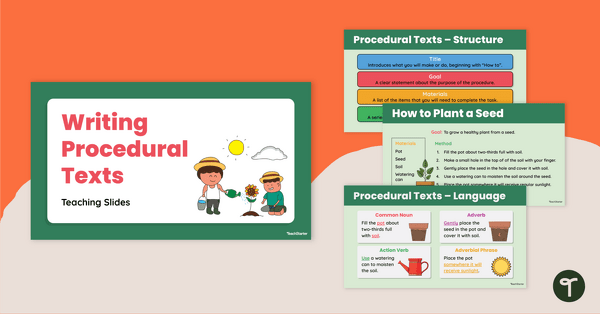
Writing Procedural Texts Teaching Slides
Use this procedural writing PowerPoint to teach your students about the purpose, structural elements and language features of procedure texts.
teaching resource
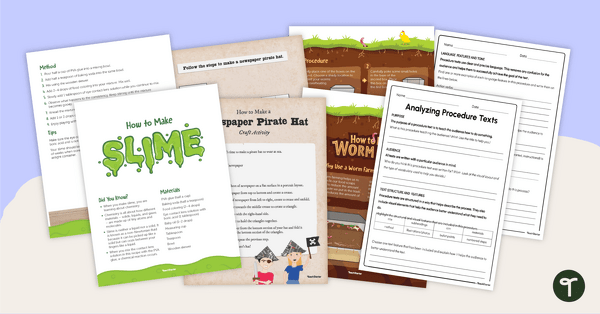
Procedural Text Examples and Analysis Worksheet
Use these procedural text examples with accompanying analysis worksheets to teach your students about the purpose, structure and language features of procedural writing.
teaching resource
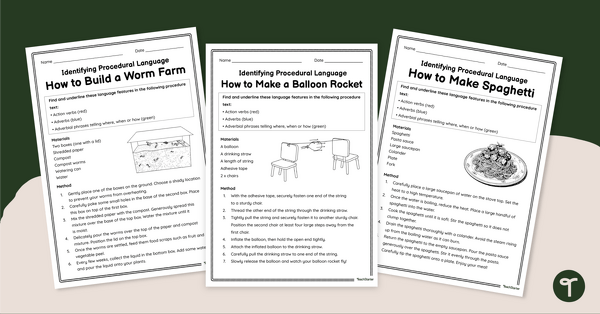
Identifying Procedural Language Worksheets
Help your students identify procedural language with this set of three worksheets.

0 Comments
Write a review to help other teachers and parents like yourself. If you'd like to request a change to this resource, or report an error, select the corresponding tab above.