ELAR 4.10
Author's purpose and craft: listening, speaking, reading, writing, and thinking using multiple texts. The student uses critical inquiry to analyze the authors' choices and how they influence and communicate meaning within a variety of texts. The student analyzes and applies author's craft purposefully in order to develop his or her own products and performances. The student is expected to:
- (1) explain the author's purpose and message within a
text;
- (A) explain how the use of text structure contributes to the author's purpose;
- (B) analyze the author's use of print and graphic features to achieve specific purposes;
- (C) describe how the author's use of imagery, literal and figurative language such as simile and metaphor, and sound devices such as alliteration and assonance achieves specific purposes;
- (D) identify and understand the use of literary devices, including first- or third-person point of view;
- (E) discuss how the author's use of language contributes to voice; and
- (F) identify and explain the use of anecdote.
- Plus Plan
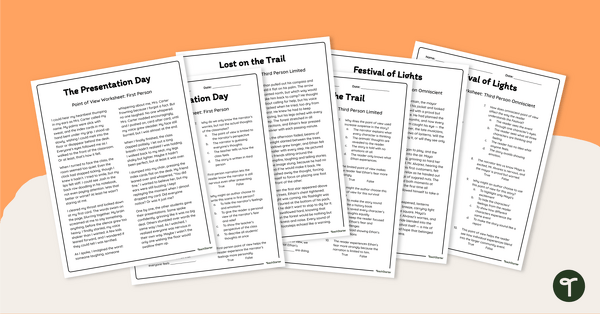
Narration and Point of View Worksheets
Use these narration and point of view comprehension passages to help students explore different narrative voices in literary texts.
- Plus Plan
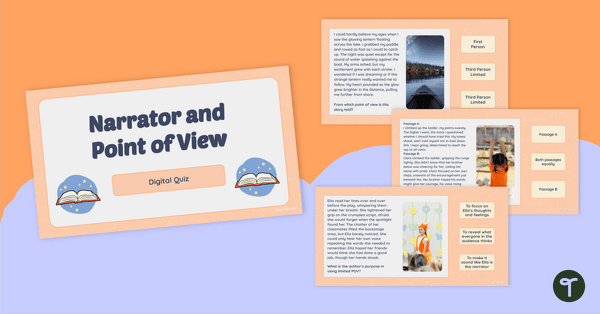
Narrator and Point of View Digital Quiz
Discover how narrator and point of view can be taught in a fun and engaging way with this interactive quiz designed to help elementary students become confident readers and critical thinkers.
- Plus Plan
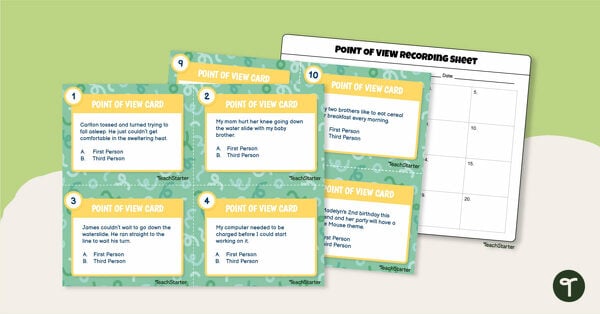
Point of View Task Cards - Beginner Set
Use these colorful, fun task cards to help your beginning reader identify first, and third-person point of view (POV)
- Free Plan
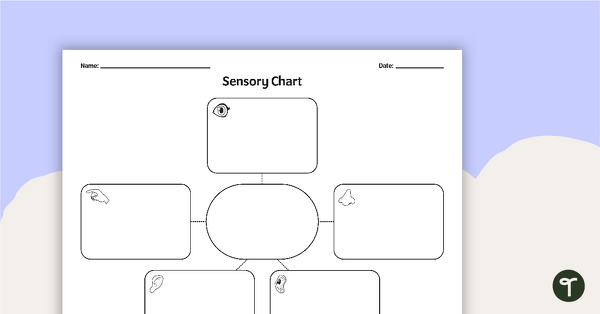
Sensory Chart Graphic Organizer
A graphic organizer for students to use when categorizing sensory details.
- Free Plan
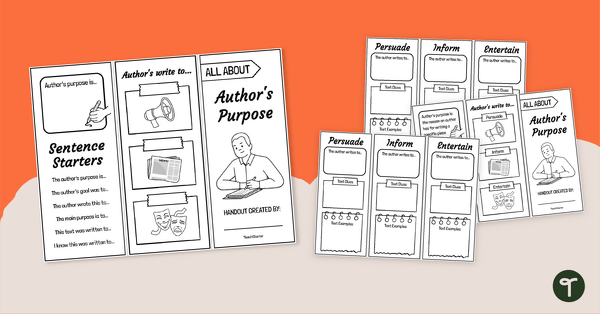
Free Author’s Purpose Handout
Use this Author’s Purpose Handout in the form of a brochure to explore the different reasons authors write.
- Plus Plan
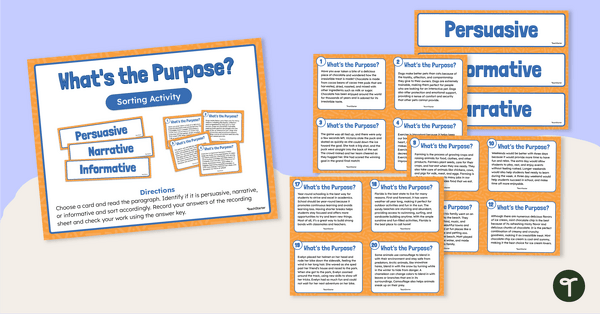
Author’s Purpose Sorting Activity
Use this author’s purpose sorting activity to teach your students the difference between persuasive, informative and narrative writing.
- Plus Plan
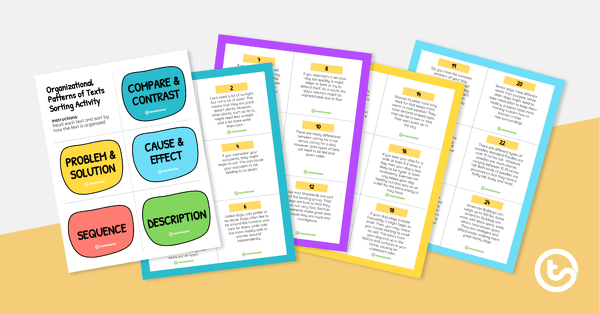
Text Structures Sorting Activity
A set of 24 text structure cards to use in a sorting or scoot activity.
- Plus Plan
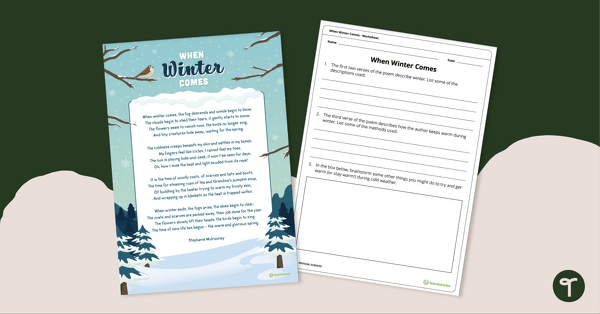
Poetry Analysis Worksheet Pack - 4th and 5th Grade
Strengthen poetry analysis skills with this set of engaging poems and poetry analysis worksheets exploring purpose, audience, structure, sound devices and figurative language.
- Plus Plan
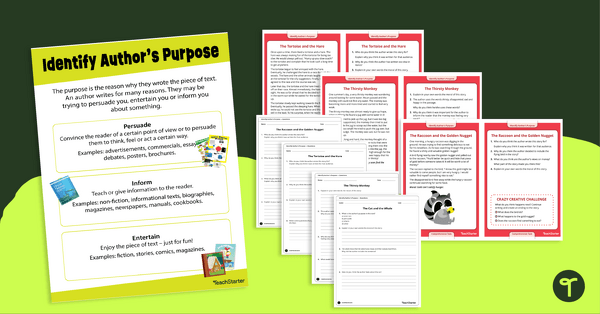
Author’s Purpose Task Cards and Worksheets
Download these author’s purpose task cards to help students identify and understand why authors write various types of texts.
- Plus Plan
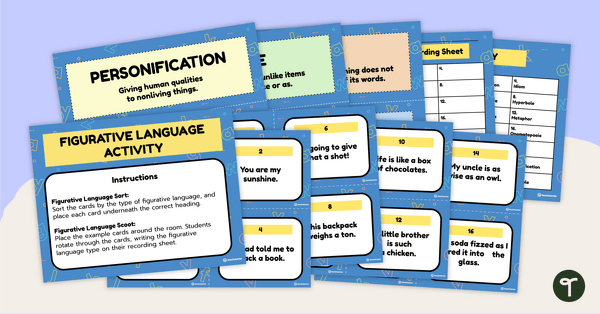
Figurative Language Sorting Activity
Explore figurative language in context with this set of 28 sorting cards.
- Plus Plan
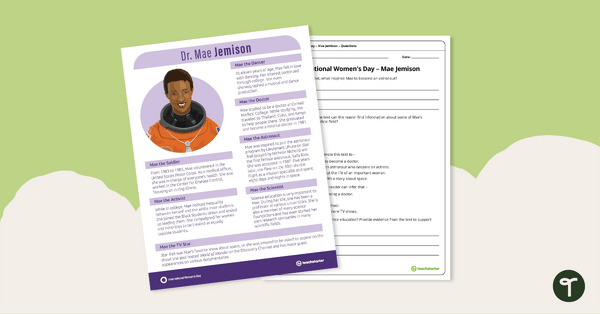
Inspirational Woman Profile: Dr. Mae Jemison – Comprehension Worksheet
Review our profile on the first Black woman astronaut and answer questions to reinforce understanding.
- Free Plan
Author's Purpose - Sorting Worksheet
A teaching resource to help teach your students about author's purpose.
- Plus Plan
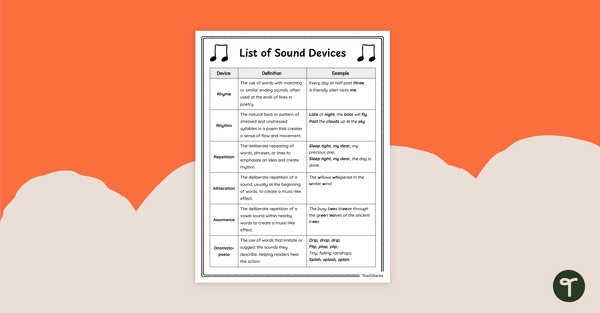
List of Sound Devices
Download this list of sound devices in poetry to help students recognize, understand and confidently use sound techniques that bring poems to life.
- Plus Plan
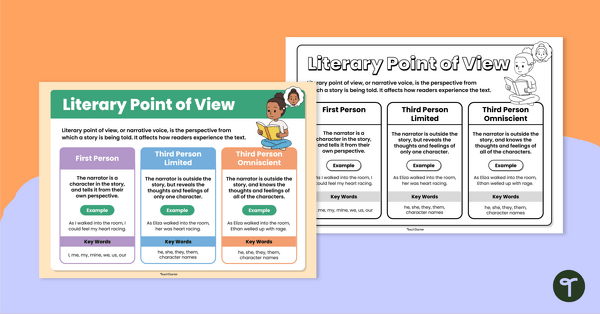
Types of Point of View in Literature Poster
Teach the types of point of view in literature with this classroom poster that explains first person, third person limited, and third person omniscient narration.
- Plus Plan
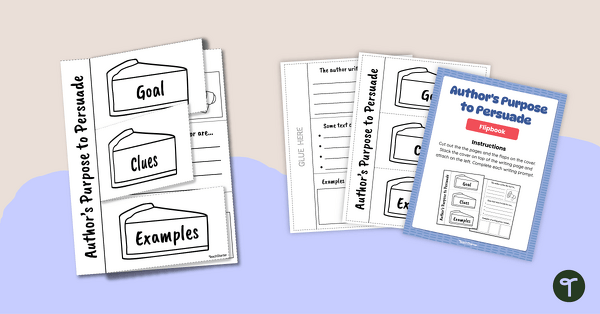
Author’s Purpose to Persuade Flipbook
Help students explore the Author’s Purpose to Persuade with this engaging and interactive flipbook.
- Plus Plan
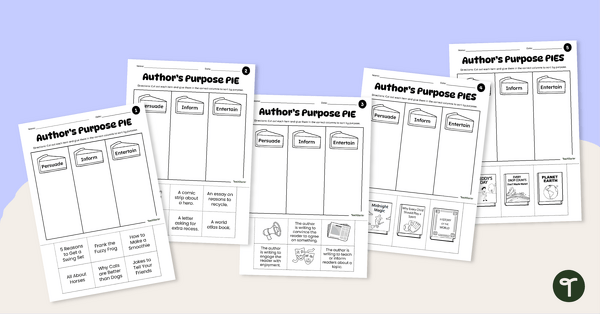
Author’s Purpose Pie Worksheet Set
Practice Author’s Purpose knowledge with this set of Author’s Purpose Worksheets.
- Plus Plan
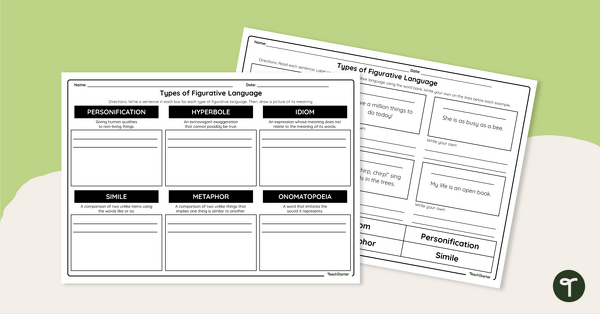
Types of Figurative Language - Worksheet
Practice identifying and creating examples of figurative language with this printable worksheet.
- Plus Plan
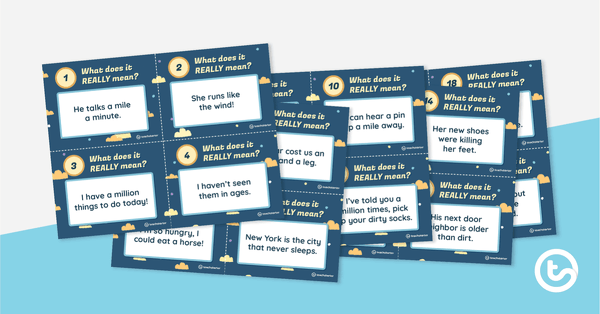
What Does It Really Mean? - Hyperbole Task Cards
Identify and interpret hyperboles used in sentences.
- Plus Plan
Brilliant, Brave Minds – Comprehension Task
An article and comprehension task celebrating women and Women's History Month.
- Plus Plan
First But Not Last – Comprehension Task
An article about historic women paired with a comprehension task.
- Plus Plan
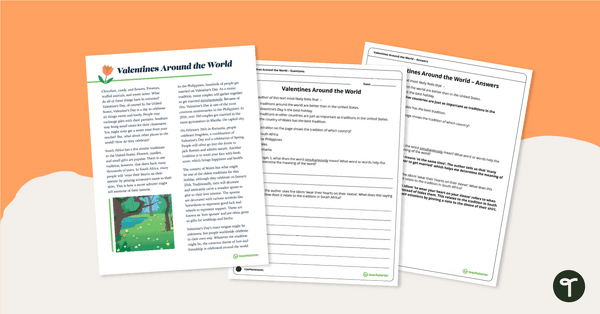
Valentines Around the World – Comprehension Worksheet
Explore five global Valentine’s Day traditions with this informational text and comprehension questions activity.
- Plus Plan
Write a Short Story – Overcoming Obstacles
Get your students analysing and writing overcoming obstacles short stories with this engaging and fully scaffolded writing project booklet.
- Plus Plan
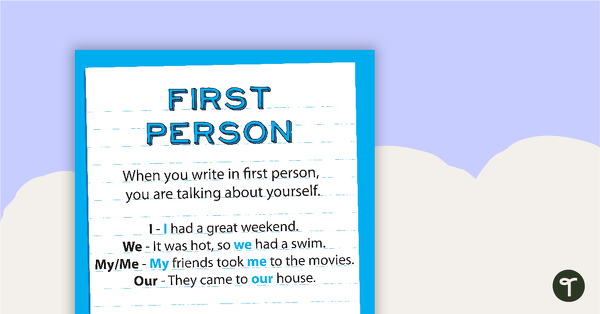
First, Second, and Third Person Narration Posters
A set of three posters and a title page examining first, second, and third person narration.
- Plus Plan
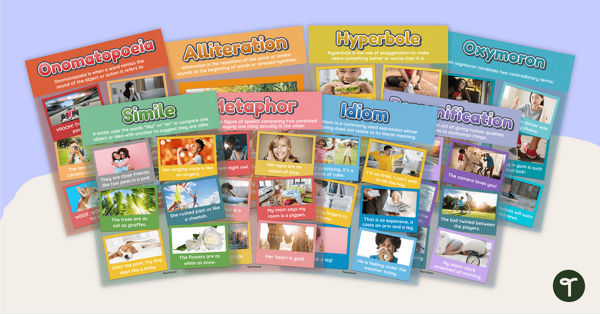
Figurative Language Anchor Charts
Display the types of figurative language with a set of printable figurative language anchor chars.
- Plus Plan
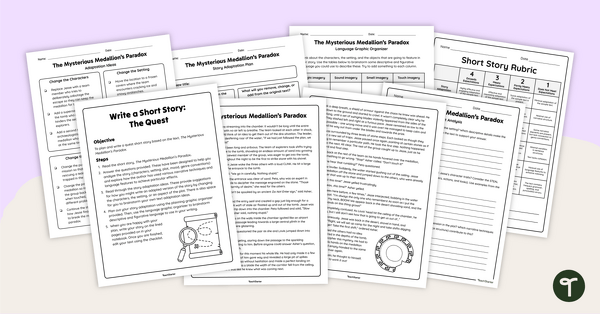
Write a Short Story – The Quest
Get your students analyzing and writing a quest story with this engaging and fully scaffolded writing project booklet.
- Plus Plan
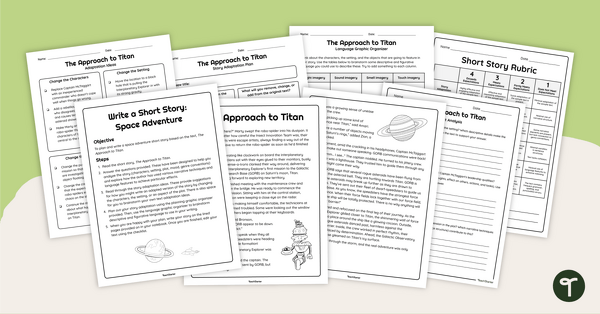
Write a Short Story – Adventure in Space
Get your students analyzing and writing adventure in space stories with this engaging and fully scaffolded writing project booklet.
- Plus Plan
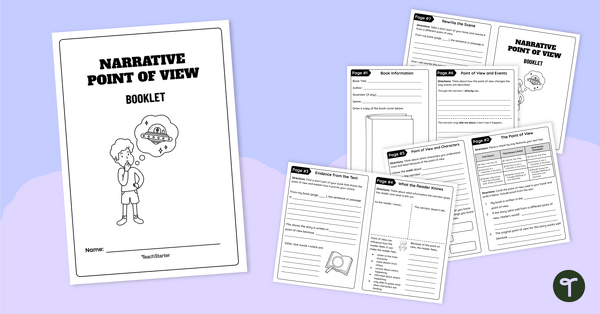
Point of View in Narration Booklet
Explore point of view in narration with this engaging mini book that helps students analyze the narrative voice of a book they have recently read.
- Plus Plan
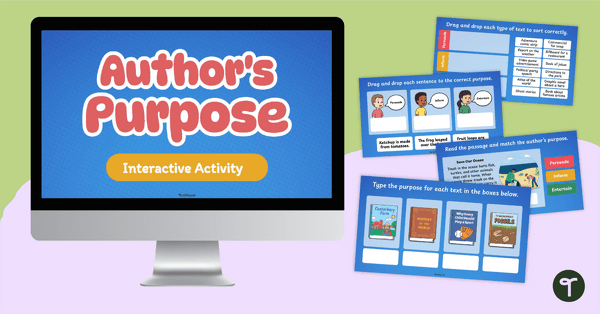
Author’s Purpose Activity - Digital Task Cards
Explore Author’s Purpose with this set of engaging and interactive Author’s Purpose Activity digital task cards.
- Plus Plan
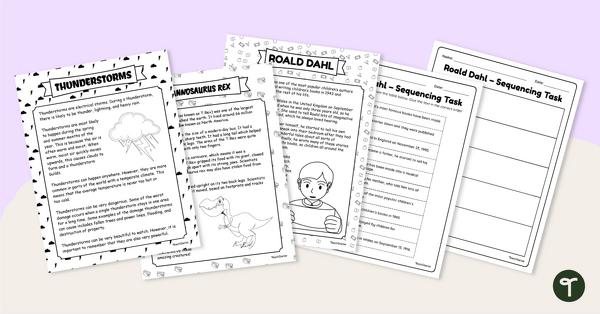
Sequence an Information Text – Cut and Paste Worksheets
Use these informational text examples to teach your students about sequencing facts in a logical order.
- Plus Plan
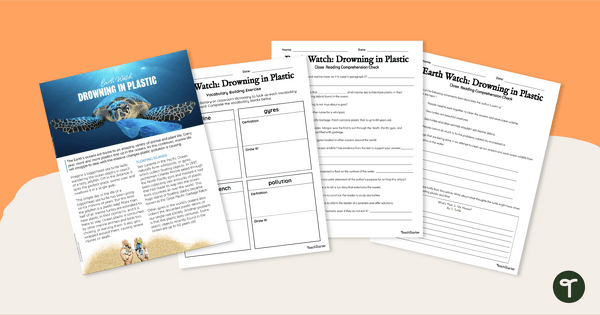
Earth Watch: Drowning in Plastic - Comprehension Worksheet
Practice reading comprehension skills and learn about microplastic pollution in our oceans with a reading comprehension activity.
- Free Plan
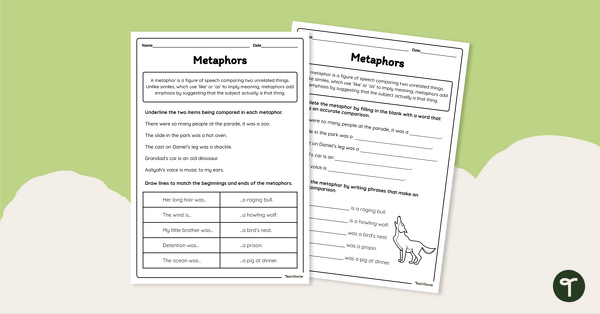
Metaphors Worksheet
Practice identifying and using metaphors with this differentiated metaphors worksheet.
- Plus Plan
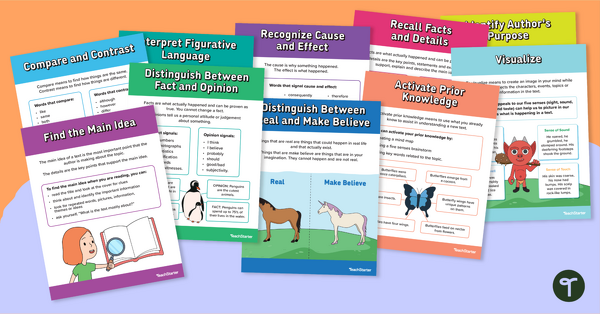
Reading Comprehension Strategies Anchor Charts
Provide young readers with concrete examples of reading strategies with a set of 18 ready-made reading anchor charts.