Year 5
The proficiency strands understanding, fluency, problem-solving and reasoning are an integral part of mathematics content across the three content strands: number and algebra, measurement and geometry, and statistics and probability. The proficiencies reinforce the significance of working mathematically within the content and describe how the content is explored or developed. They provide the language to build in the developmental aspects of the learning of mathematics. The achievement standards reflect the content and encompass the proficiencies.
At this year level:
- understanding includes making connections between representations of numbers, using fractions to represent probabilities, comparing and ordering fractions and decimals and representing them in various ways, describing transformations and identifying line and rotational symmetry
- fluency includes choosing appropriate units of measurement for calculation of perimeter and area, using estimation to check the reasonableness of answers to calculations and using instruments to measure angles
- problem-solving includes formulating and solving authentic problems using whole numbers and measurements and creating financial plans
- reasoning includes investigating strategies to perform calculations efficiently, continuing patterns involving fractions and decimals, interpreting results of chance experiments, posing appropriate questions for data investigations and interpreting data sets.
(source: www.australiancurriculum.edu.au)
Achievement Standard
By the end of Year 5, students solve simple problems involving the four operations using a range of strategies. They check the reasonableness of answers using estimation and rounding. Students identify and describe factors and multiples. They identify and explain strategies for finding unknown quantities in number sentences involving the four operations. They explain plans for simple budgets. Students connect three-dimensional objects with their two-dimensional representations. They describe transformations of two-dimensional shapes and identify line and rotational symmetry. Students interpret different data sets.
Students order decimals and unit fractions and locate them on number lines. They add and subtract fractions with the same denominator. Students continue patterns by adding and subtracting fractions and decimals. They use appropriate units of measurement for length, area, volume, capacity and mass, and calculate perimeter and area of rectangles. They convert between 12- and 24-hour time. Students use a grid reference system to locate landmarks. They measure and construct different angles. Students list outcomes of chance experiments with equally likely outcomes and assign probabilities between 0 and 1. Students pose questions to gather data, and construct data displays appropriate for the data.
(source: www.australiancurriculum.edu.au)
- Plus Plan
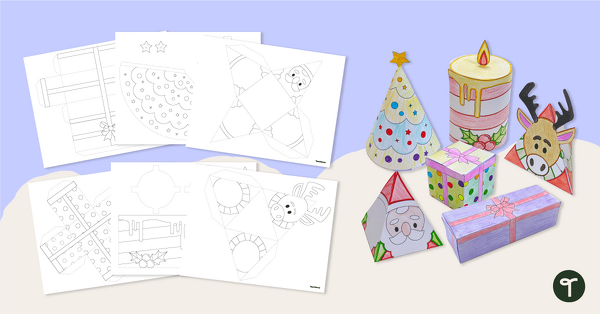
Nets of 3-D Shapes - Christmas Ornaments Printable
Turn 3-D nets into paper Christmas ornaments with a fun set of printable ornament templates.
- Plus Plan
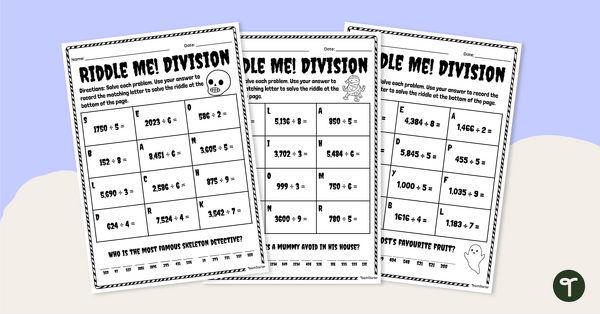
Halloween Themed Division Riddles - Worksheet
Have a bit of division fun with our riddle-based Halloween sheets!
- Plus Plan
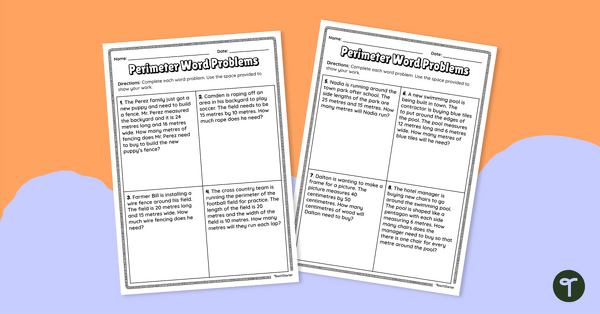
Perimeter Word Problems Worksheet
Get students solving real-life perimeter word problems with a printable worksheet for 3rd and 4th grade.
- Plus Plan
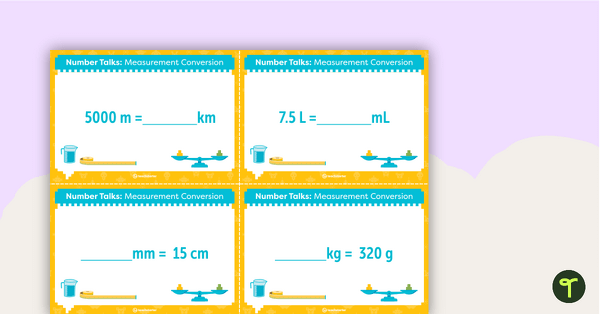
Number Talks - Measurement Conversion Task Cards
Build number sense skills with this set of 20 task cards.
- Plus Plan
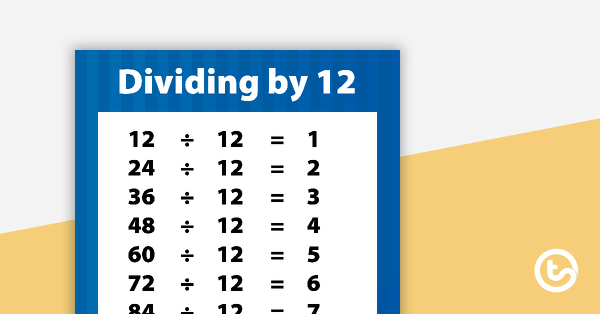
Division Facts Poster - Dividing by 12
A poster showing division facts for twelve.
- Plus Plan
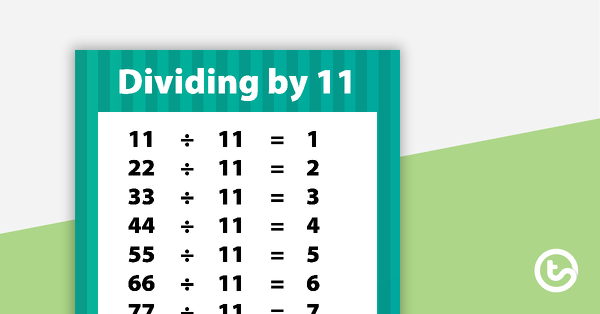
Division Facts Poster - Dividing by 11
A poster showing division facts for eleven.
- Plus Plan
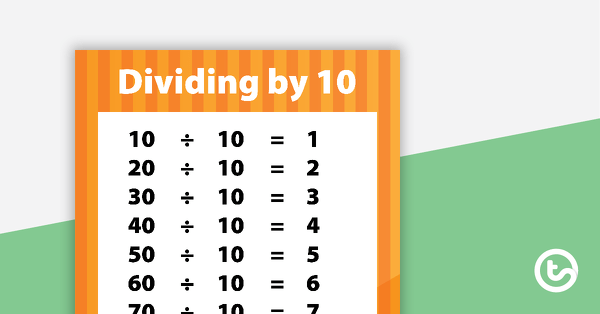
Division Facts Poster - Dividing by 10
A poster showing division facts for ten.
- Plus Plan
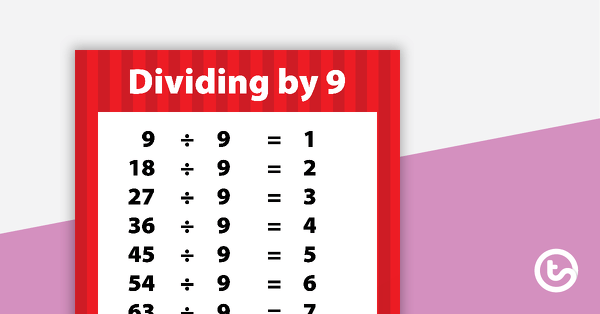
Division Facts Poster - Dividing by 9
A poster showing division facts for nine.
- Plus Plan
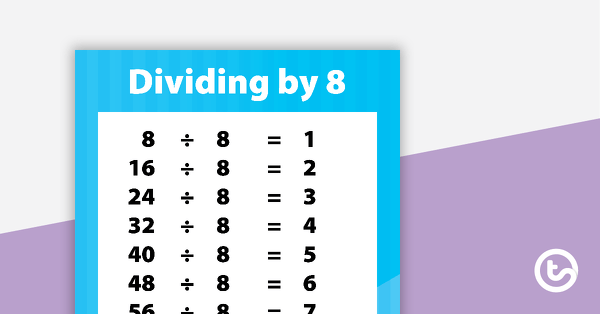
Division Facts Poster - Dividing by 8
A poster showing division facts for eight.
- Plus Plan
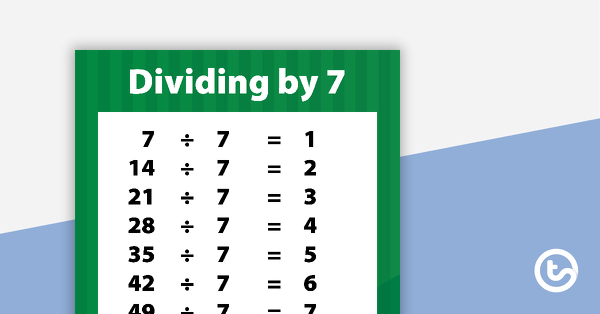
Division Facts Poster - Dividing by 7
A poster showing division facts for seven.
- Plus Plan
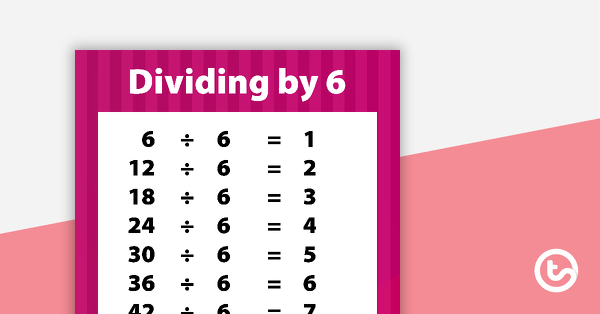
Division Facts Poster - Dividing by 6
A poster showing division facts for six.
- Plus Plan
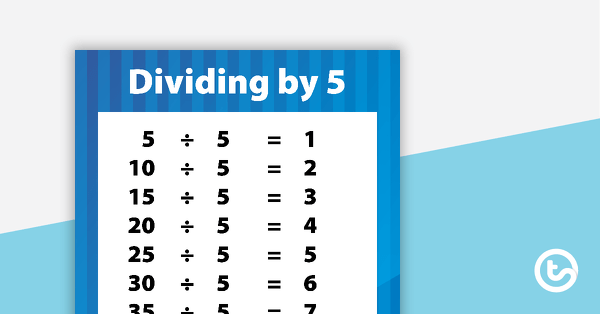
Division Facts Poster - Dividing by 5
A poster showing division facts for five.
- Plus Plan
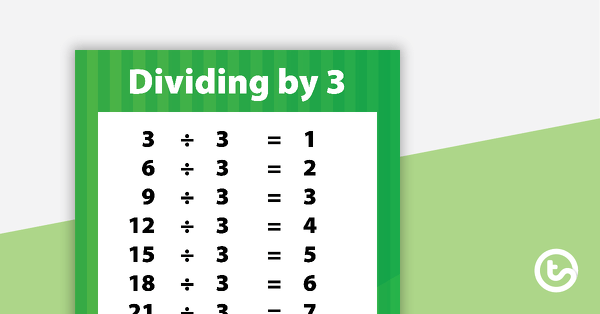
Division Facts Poster - Dividing by 3
A poster showing division facts for three.
- Plus Plan
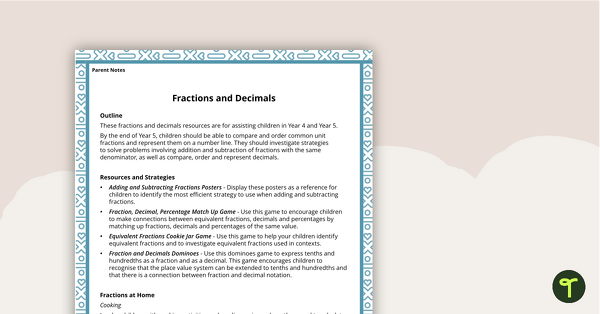
Fractions and Decimals Maths Activity Ideas for Parents
An information sheet for parents or carers to use when assisting children with fractions and decimals at home.
- Plus Plan
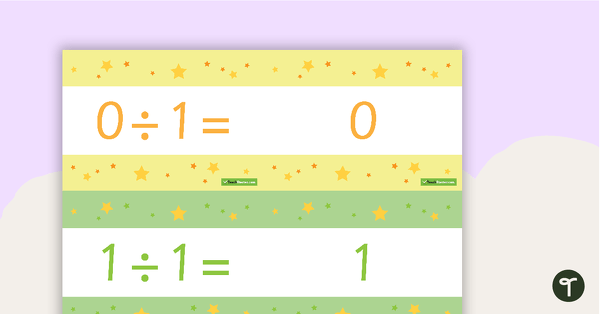
0 - 12 Division Flashcards - Stars
Flashcards with 0-12 division.
- Plus Plan
Multiplication Facts PowerPoint - Fourteen Times Tables
A 30 slide PowerPoint to use when learning about multiplication.
- Plus Plan
Multiplication Facts PowerPoint - Thirteen Times Tables
A 30 slide PowerPoint to use when learning about multiplication.
- Plus Plan
Multiplication Facts PowerPoint - One Times Tables
A 30 slide PowerPoint to use when learning about multiplication.
- Plus Plan
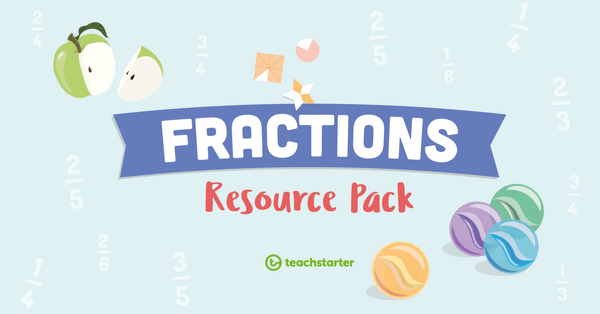
Fractions Resource Pack
A collection of resources exploring fractions.
- Plus Plan
Number Talks Teaching Resource Pack - Grade 5
A collection of number talks teaching resources that support meaningful and highly engaging conversations in the mathematics classroom.
- Plus Plan
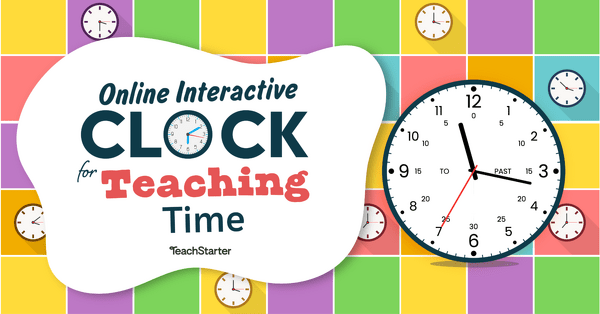
Interactive Clock for Teaching Time (Analogue and Digital)
Teach time with an interactive digital clock designed to add a hands-on element to this important primary school lesson!
- Plus Plan
Maths Resource Pack for Parents - Fractions and Decimals
A comprehensive resource pack for parents to help Year 4 and Year 5 children with fractions and decimals.
- Plus Plan
Money and Financial Mathematics Teaching Resource Pack
A collection of resources exploring money and financial mathematics.
- Plus Plan
Time Teaching Resource Pack
A collection of resources exploring time concepts.
- Plus Plan
Applications of Time Unit Plan - Year 5 and Year 6
This Mathematics unit addresses the concepts of 12- and 24-hour time, timetables and timelines.
- Plus Plan
12- and 24-Hour Time
A 60 minute lesson in which students will understand the relationship between 12- and 24-hour time systems.
- Plus Plan
Applications of Time Assessment - Year 5 and Year 6