Year 5
The proficiency strands understanding, fluency, problem-solving and reasoning are an integral part of mathematics content across the three content strands: number and algebra, measurement and geometry, and statistics and probability. The proficiencies reinforce the significance of working mathematically within the content and describe how the content is explored or developed. They provide the language to build in the developmental aspects of the learning of mathematics. The achievement standards reflect the content and encompass the proficiencies.
At this year level:
- understanding includes making connections between representations of numbers, using fractions to represent probabilities, comparing and ordering fractions and decimals and representing them in various ways, describing transformations and identifying line and rotational symmetry
- fluency includes choosing appropriate units of measurement for calculation of perimeter and area, using estimation to check the reasonableness of answers to calculations and using instruments to measure angles
- problem-solving includes formulating and solving authentic problems using whole numbers and measurements and creating financial plans
- reasoning includes investigating strategies to perform calculations efficiently, continuing patterns involving fractions and decimals, interpreting results of chance experiments, posing appropriate questions for data investigations and interpreting data sets.
(source: www.australiancurriculum.edu.au)
Achievement Standard
By the end of Year 5, students solve simple problems involving the four operations using a range of strategies. They check the reasonableness of answers using estimation and rounding. Students identify and describe factors and multiples. They identify and explain strategies for finding unknown quantities in number sentences involving the four operations. They explain plans for simple budgets. Students connect three-dimensional objects with their two-dimensional representations. They describe transformations of two-dimensional shapes and identify line and rotational symmetry. Students interpret different data sets.
Students order decimals and unit fractions and locate them on number lines. They add and subtract fractions with the same denominator. Students continue patterns by adding and subtracting fractions and decimals. They use appropriate units of measurement for length, area, volume, capacity and mass, and calculate perimeter and area of rectangles. They convert between 12- and 24-hour time. Students use a grid reference system to locate landmarks. They measure and construct different angles. Students list outcomes of chance experiments with equally likely outcomes and assign probabilities between 0 and 1. Students pose questions to gather data, and construct data displays appropriate for the data.
(source: www.australiancurriculum.edu.au)
- Plus Plan
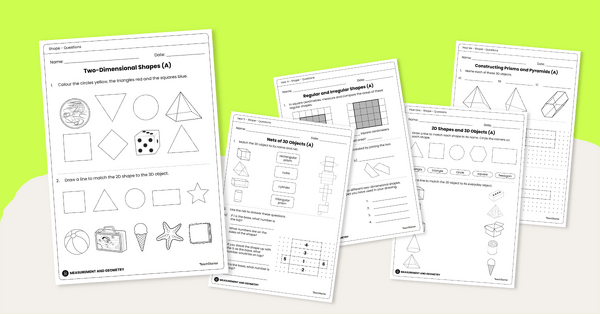
Shape Worksheet Sets (Foundation to Grade 6 Level)
Use these levelled worksheets sets with your primary school students to explore 2D shapes and 3D objects!
- Plus Plan
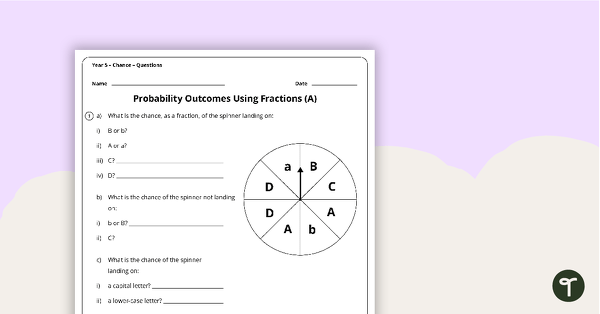
Chance Worksheets - Year 5
4 chance worksheets linked to the Australian Curriculum.
- Plus Plan

Number Patterns Year 5 Worksheet Set
Explore algebraic ideas with this number patterns year 5 worksheet set that provides practice extending patterns, writing equations and completing number sentences.
- Plus Plan
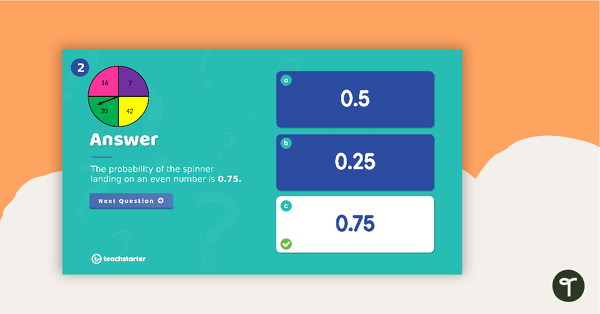
Chance and Probability Upper Years PowerPoint
An engaging 30 slide interactive PowerPoint to use in the classroom when learning about chance and probability in the upper years.
- Plus Plan
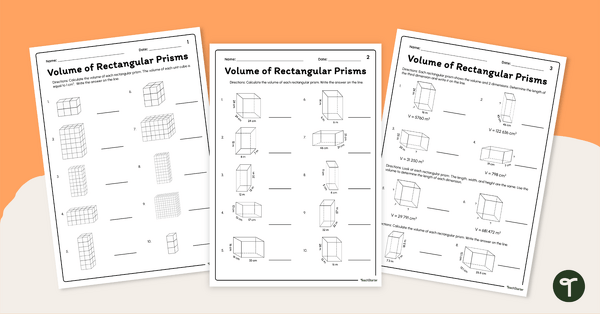
Differentiated Volume of Rectangular Prism Worksheet Set
Differentiate instruction with this volume of rectangular prism worksheet set that offers three levels of volume problems.
- Plus Plan
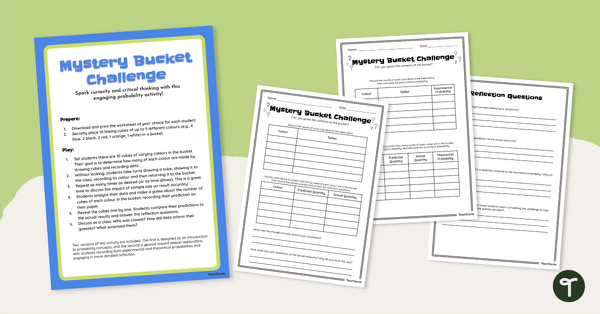
Probability Experiments — Mystery Bucket Challenge
Conduct probability experiments like our ‘Mystery Bucket Challenge’ to give your students hands-on experience with concepts of chance.
- Plus Plan
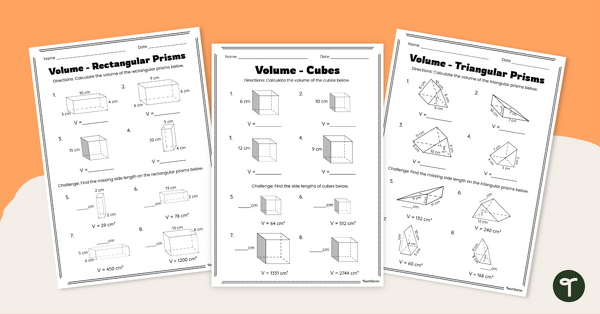
Volume Worksheets
Provide your students with these volume worksheets to help them master finding the volume of cubes, rectangular prisms and triangular prisms.
- Plus Plan
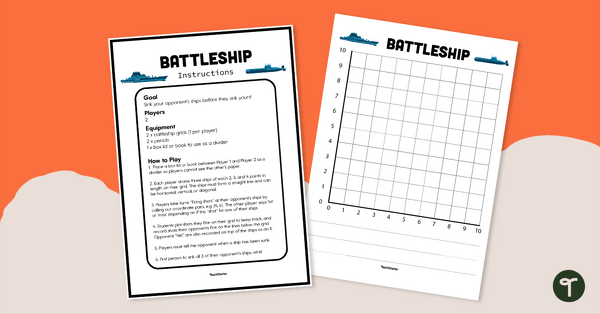
Battleship Plotting Game (Quadrant 1 of the Cartesian Plane)
Use this grid system game to practise plotting coordinates on Quadrant 1 of the Cartesian plane.
- Plus Plan
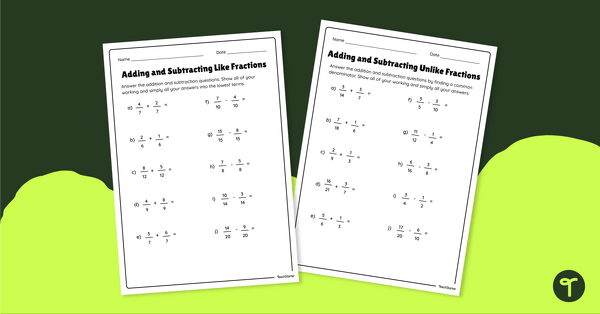
Adding and Subtracting Fractions Worksheets
Use these adding and subtracting fractions worksheets to enable your students to practise this important skill.
- Plus Plan
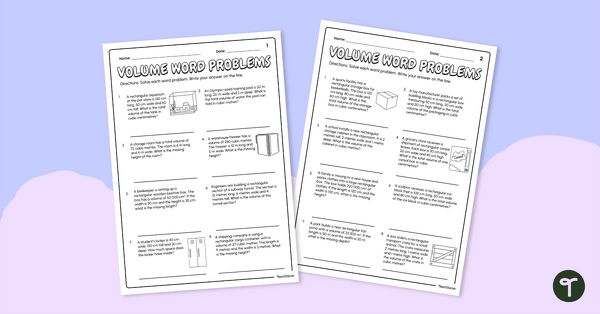
Volume Word Problems
Reinforce concepts of volume with these volume word problems worksheets that contain multiple problem types set in real-world scenarios.
- Plus Plan
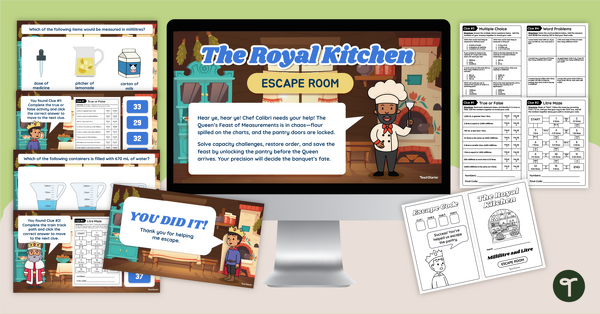
Measuring Capacity Escape Room
Explore measuring and comparing capacity in litres and millilitres with this measuring capacity escape room.
- Plus Plan
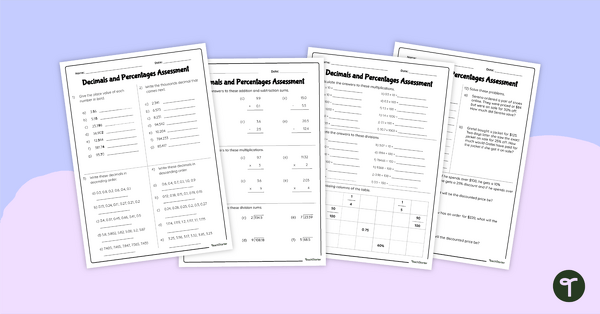
Decimals and Percentages Assessment
Assess students' knowledge of various decimals and percentages concepts with this four-page worksheet.
- Plus Plan

Decimal Place Value Worksheets
Use these decimal place value worksheets to help your students analyse patterns in decimal place values out to the thousandths place.
- Plus Plan
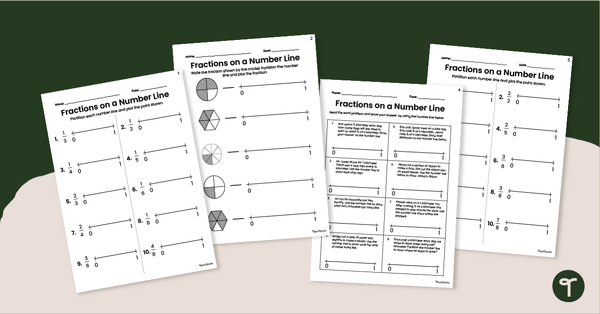
Fractions on a Number Line Worksheets
Represent fractions greater than zero and less than or equal to one with a pack of fraction number line worksheets.
- Plus Plan
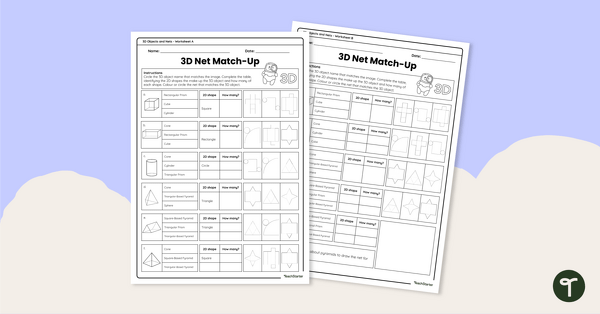
3D Objects and Their Nets - Worksheet
Connect 3D objects with their nets and other 2D representations with this differentiated worksheet.
- Plus Plan
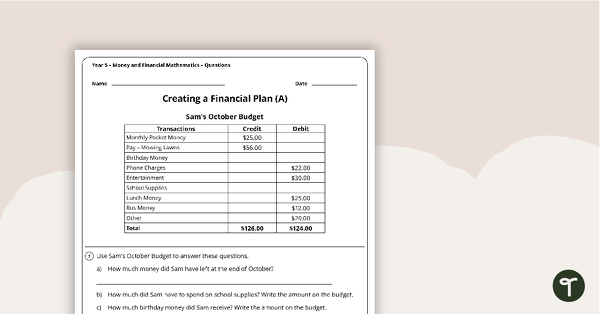
Money and Financial Mathematics Worksheets - Year 5
2 money and financial mathematics worksheets linked to the Australian Curriculum.
- Plus Plan
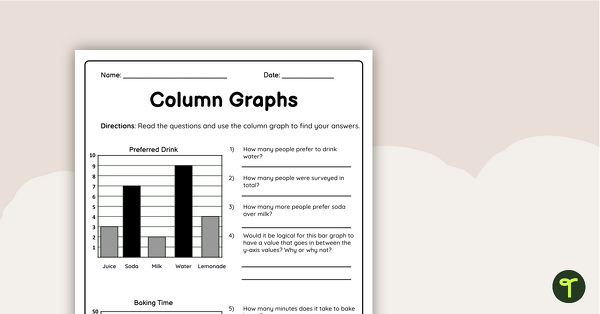
Column Graphs Grade 5 Worksheet
Use this double-sided column graphs worksheet to check your students’ understanding of interpreting and drawing column graphs.
- Plus Plan
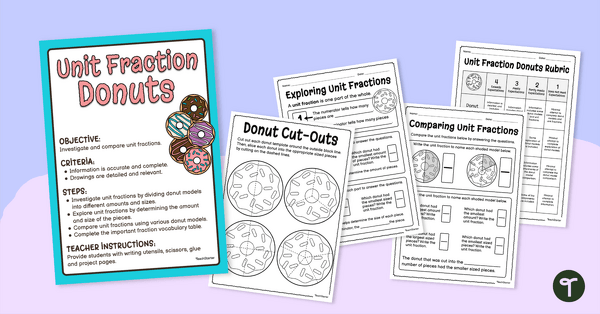
Unit Fraction Donut Investigation
Explore unit fractions in this fun donut-themed maths investigation for your students.
- Plus Plan
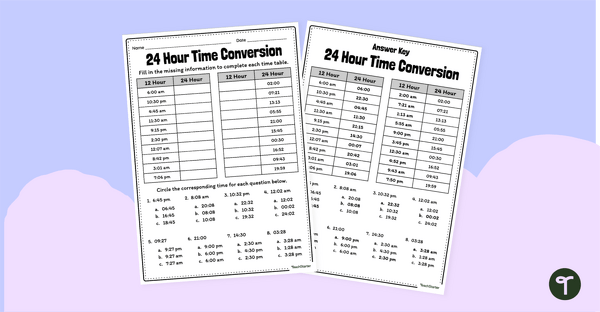
Converting Time Worksheet - 12 to 24 Hour Time
Review how to convert 12-hour to 24 hour time with a printable converting time worksheet.
- Plus Plan
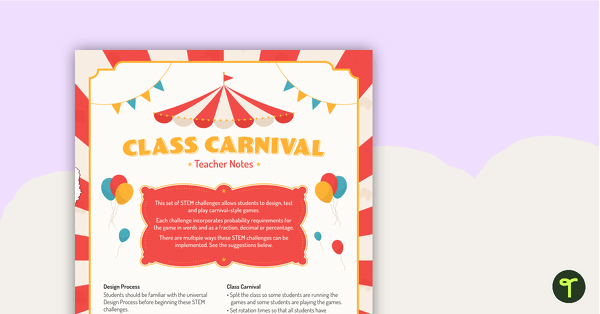
Class Carnival – Probability STEM Challenges
A set of four carnival-themed STEM challenges where students create fun games that incorporate probability.
- Plus Plan
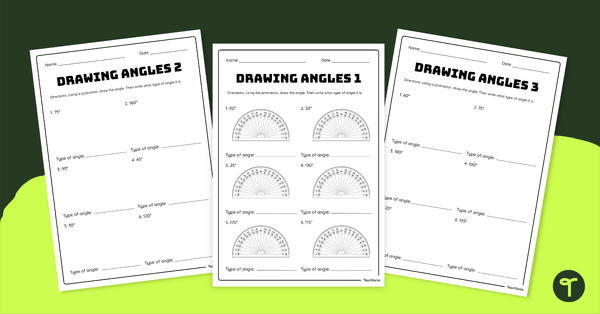
Drawing Angles Activity Sheet Set
Use our drawing angles activity sheet set to give students differentiated practice in classifying and constructing angles.
- Plus Plan
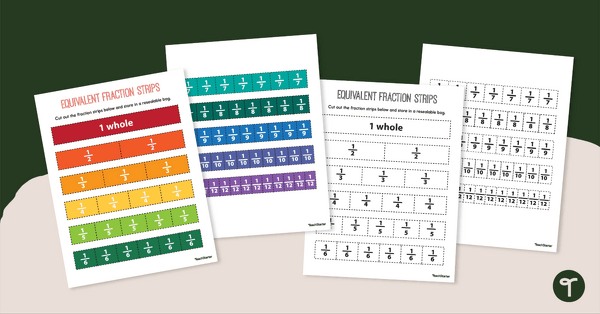
Fraction Strips
Print a set of fraction strips for the classroom! Keep the handy maths manipulative on hand for fraction games, showing equivalent fractions and more!
- Plus Plan
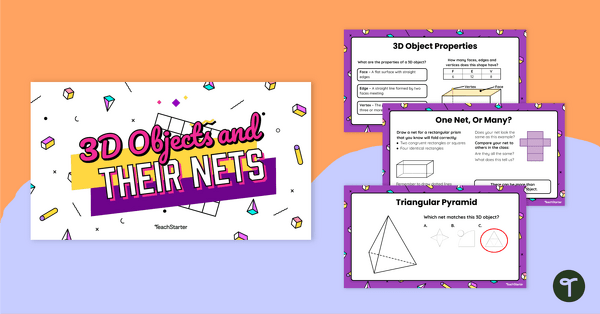
3D Objects and Their Nets - Teaching Presentation
Explore the connection 3D objects have with their nets and other 2D representations with this comprehensive set of teaching slides.
- Plus Plan
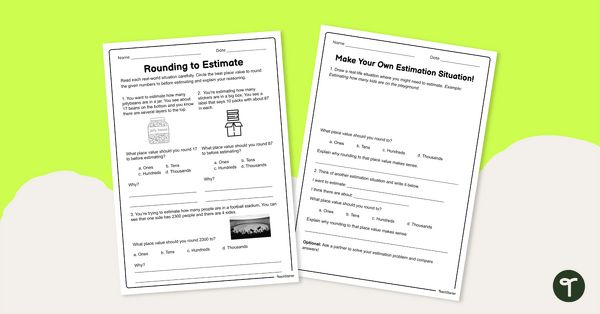
Rounding to Estimate Worksheet Set
Use our rounding to estimate worksheet set to sharpen number sense and mental maths skills.
- Plus Plan
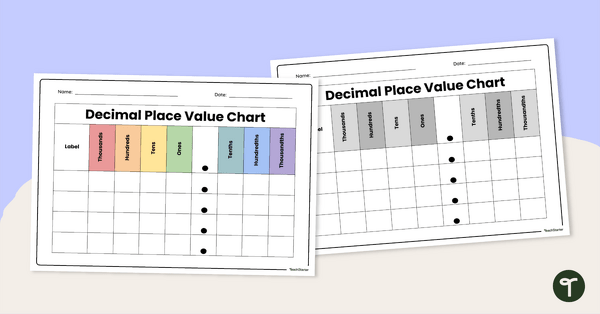
Decimal and Place Value Chart
Provide your students with our decimal and place value chart to make comparing and ordering decimals a breeze!
- Plus Plan
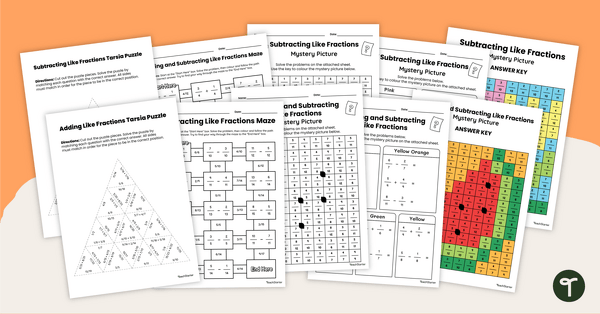
Adding and Subtracting Like Fractions Puzzle Pack
Get your students adding and subtracting fractions with like denominators with this set of nine fraction puzzles!
- Plus Plan
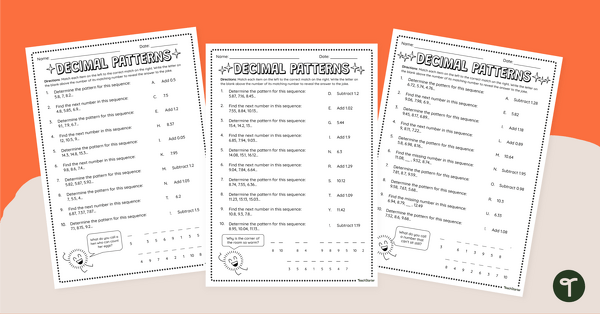
Decimal Number Patterns – Differentiated Worksheets
Practise determining a pattern and next value in a numerical sequence of decimals to the hundredths place.
- Plus Plan
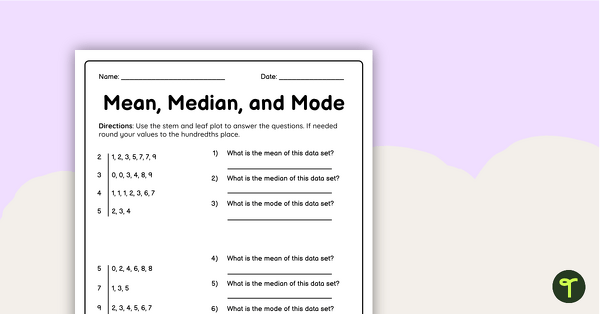
Mean Median Mode Worksheet
Use this double-sided worksheet to check students’ ability to find the mean, median and mode of given data sets.
- Plus Plan
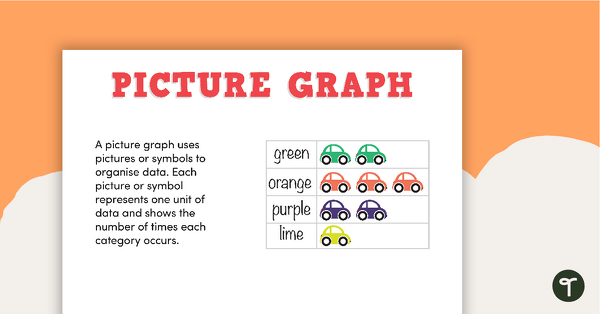
Types of Graphs Posters and Worksheets
A collection of posters displaying the different types of graphs along with matching worksheets to assist students with laying out graphs on the page.
- Plus Plan
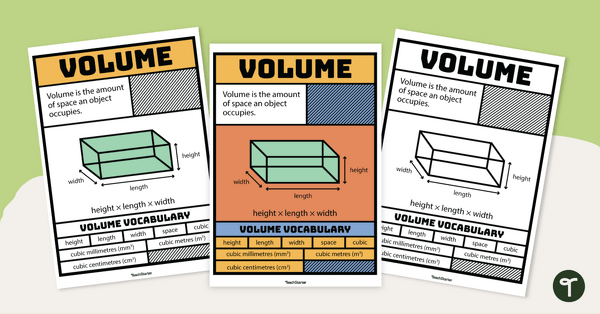
Volume Poster
Display our volume poster in your classroom to give students an easy reference for the volume formula and related vocabulary.
- Free Plan
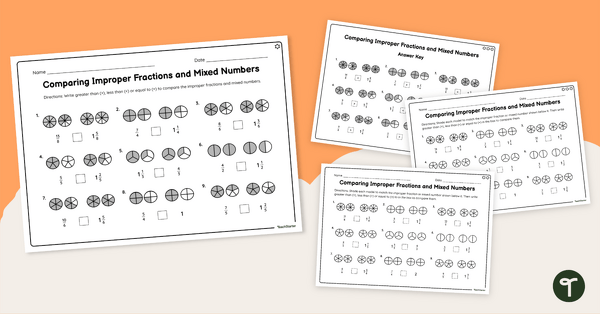
Comparing Improper Fractions to Mixed Numbers Worksheet Set
Use our comparing improper fractions to mixed numbers worksheet set to give your students practise representing and comparing fractions.
- Plus Plan
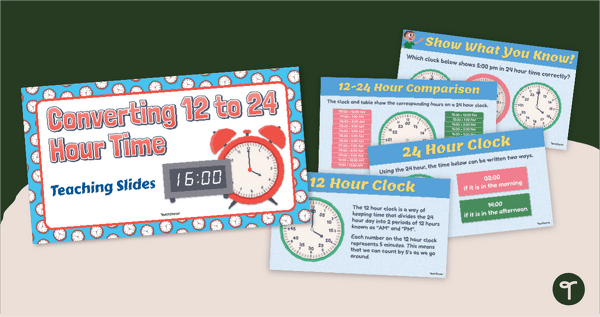
Converting 12 to 24 Hour Time Teaching Slides
Teach your students to convert between 12 and 24-hour clock times with an interactive teaching slide presentation.