Year 7
The proficiency strands understanding, fluency, problem-solving and reasoning are an integral part of mathematics content across the three content strands: number and algebra, measurement and geometry, and statistics and probability. The proficiencies reinforce the significance of working mathematically within the content and describe how the content is explored or developed. They provide the language to build in the developmental aspects of the learning of mathematics. The achievement standards reflect the content and encompass the proficiencies.
At this year level:
- understanding includes describing patterns in uses of indices with whole numbers, recognising equivalences between fractions, decimals, percentages and ratios, plotting points on the Cartesian plane, identifying angles formed by a transversal crossing a pair of lines, and connecting the laws and properties of numbers to algebraic terms and expressions
- fluency includes calculating accurately with integers, representing fractions and decimals in various ways, investigating best buys, finding measures of central tendency and calculating areas of shapes and volumes of prisms
- problem-solving includes formulating and solving authentic problems using numbers and measurements, working with transformations and identifying symmetry, calculating angles and interpreting sets of data collected through chance experiments
- reasoning includes applying the number laws to calculations, applying known geometric facts to draw conclusions about shapes, applying an understanding of ratio and interpreting data displays.
(source: www.australiancurriculum.edu.au)
Achievement Standard
By the end of Year 7, students solve problems involving the comparison, addition and subtraction of integers. They make the connections between whole numbers and index notation and the relationship between perfect squares and square roots. They solve problems involving percentages and all four operations with fractions and decimals. They compare the cost of items to make financial decisions. Students represent numbers using variables. They connect the laws and properties for numbers to algebra. They interpret simple linear representations and model authentic information. Students describe different views of three-dimensional objects. They represent transformations in the Cartesian plane. They solve simple numerical problems involving angles formed by a transversal crossing two lines. Students identify issues involving the collection of continuous data. They describe the relationship between the median and mean in data displays.
Students use fractions, decimals and percentages, and their equivalences. They express one quantity as a fraction or percentage of another. Students solve simple linear equations and evaluate algebraic expressions after numerical substitution. They assign ordered pairs to given points on the Cartesian plane. Students use formulas for the area and perimeter of rectangles and calculate volumes of rectangular prisms. Students classify triangles and quadrilaterals. They name the types of angles formed by a transversal crossing parallel line. Students determine the sample space for simple experiments with equally likely outcomes and assign probabilities to those outcomes. They calculate mean, mode, median and range for data sets. They construct stem-and-leaf plots and dot-plots.
(source: www.australiancurriculum.edu.au)
- Plus Plan
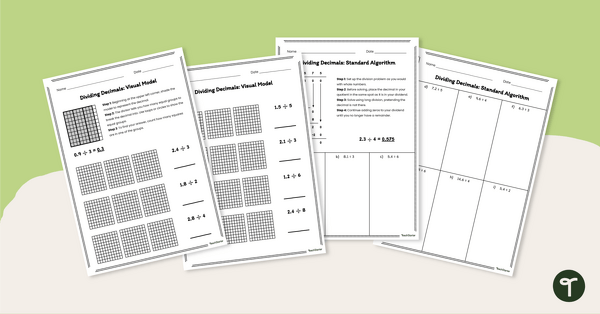
Dividing Decimals by Whole Numbers Worksheet Pack
Download these dividing decimals by whole numbers worksheets to provide your students with practice using visual models and the standard algorithm.
- Plus Plan
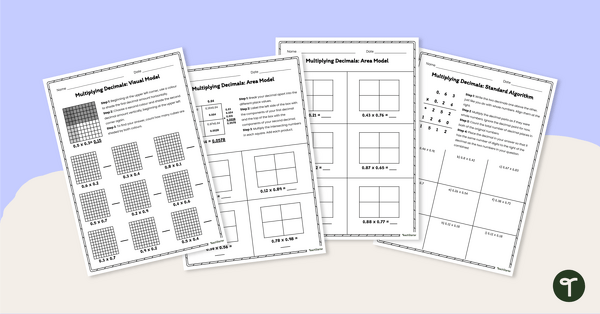
Multiplying Decimals by Decimals Worksheet Pack
Download these multiplying decimals by decimals worksheets to provide your students with practice using visual models, area models and the standard algorithm.
- Plus Plan
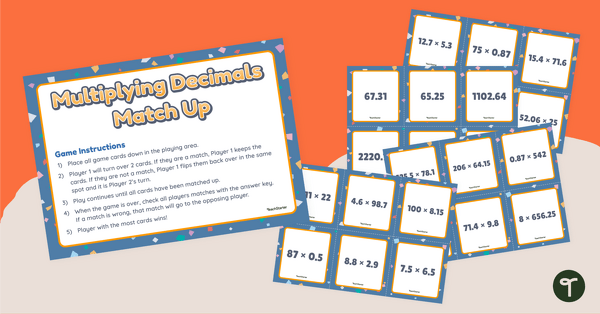
Multiplying Decimals Match-Up Activity
Get students multiplying decimals with this engaging card game, perfect for maths groups.
- Plus Plan
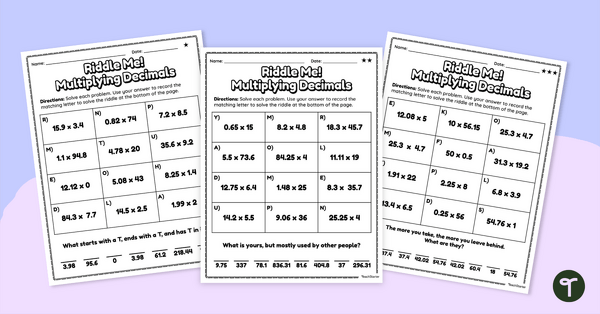
Multiplying Decimals – Riddle Worksheets
Get students solving decimal multiplication problems with this set of 3 differentiated riddle worksheets.
- Free Plan
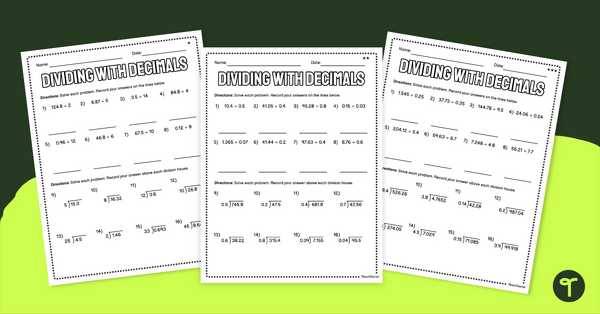
Dividing with Decimals – Differentiated Worksheets
Download this set of differentiated dividing decimals worksheet to help your students practice this key maths skill.
- Plus Plan
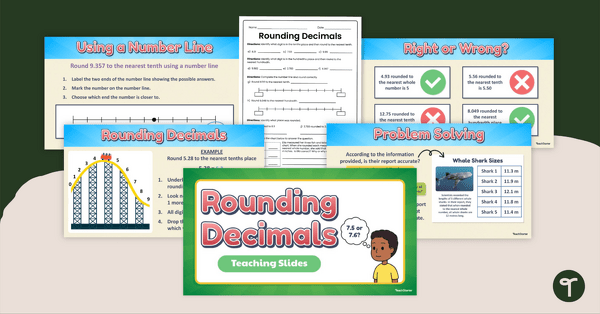
Rounding Numbers With Decimals Teaching Slides and Worksheet
Teach your students how to round to the nearest whole number, tenth and hundredth with this set of teaching slides and accompanying worksheet.
- Plus Plan
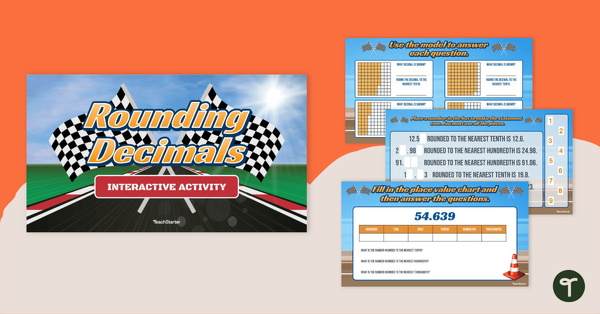
Race Car Rounding With Decimals Interactive Activity
Rev up your maths engines and take the rounding decimals race! Download this interactive activity and challenge your students to become a decimal rounding champion!
- Plus Plan
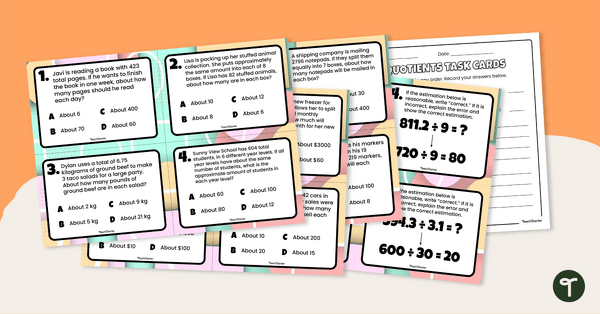
Estimating Quotients Task Cards
Give your students the opportunity to use rounding and compatible numbers to answer estimation questions with this set of 24 task cards.
- Plus Plan
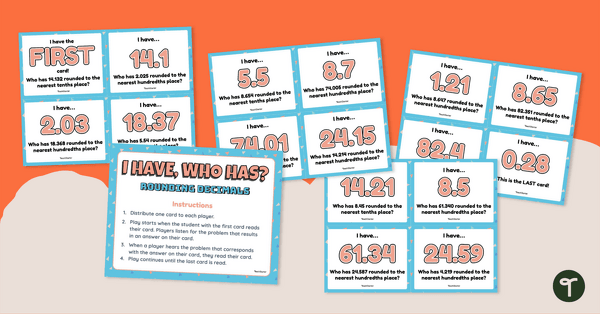
Rounding Decimals – I Have, Who Has? Game
Review with your students how to round decimals with an exciting I Have, Who Has? game!
- Plus Plan
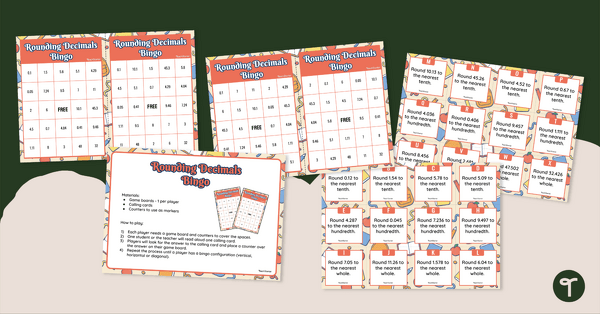
Rounding Decimals Bingo
Review how to round decimals to the nearest whole, tenth and hundredth with a whole-class bingo game.
- Plus Plan
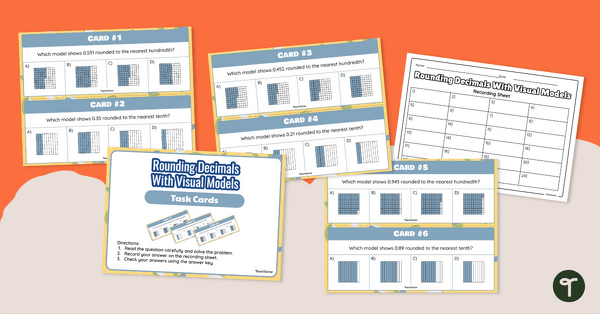
Rounding Decimals With Visual Models – Task Cards
Use these task cards to round decimals to the nearest tenth or hundredth and match each value with a corresponding decimal model.
- Plus Plan
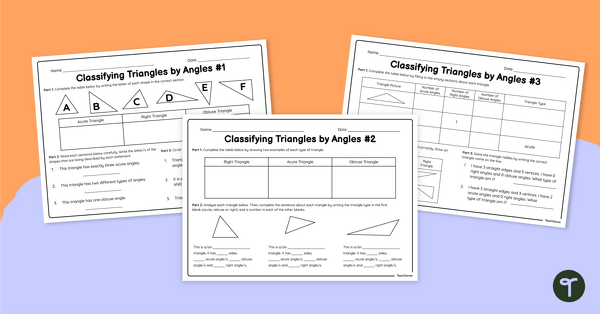
Classifying Triangles (By Angles) Worksheets
Practise classifying and sorting triangles based on their internal angles with this set of 3 worksheets.
- Plus Plan
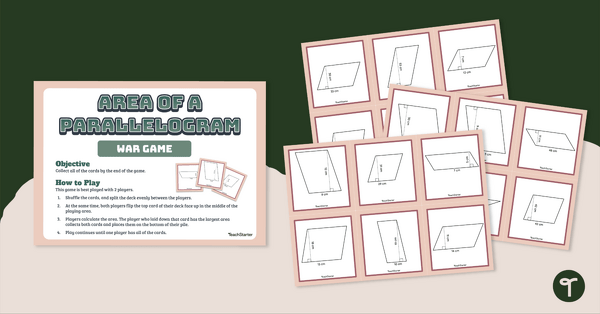
Area of a Parallelogram – War Game
Practise finding and comparing the area of a parallelogram with a game of WAR!
- Plus Plan
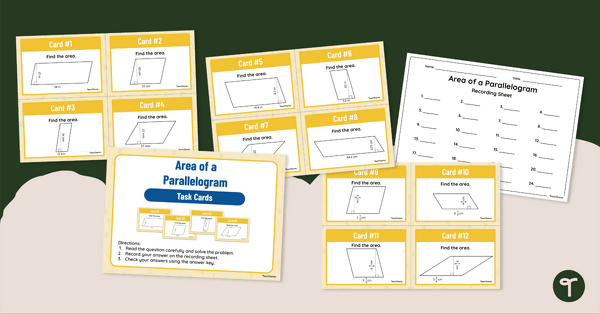
Area of a Parallelogram – Task Cards
Practise calculating the area of a parallelogram with this set of 24 task cards designed for year 7 students.
- Plus Plan
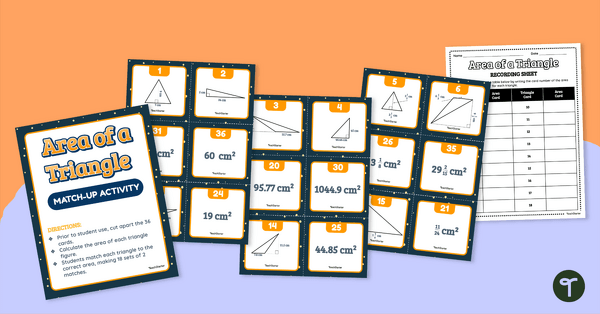
Area of a Triangle – Match-Up Activity
Calculate the area of triangle figures and match them with their corresponding areas with this match-up activity.
- Plus Plan
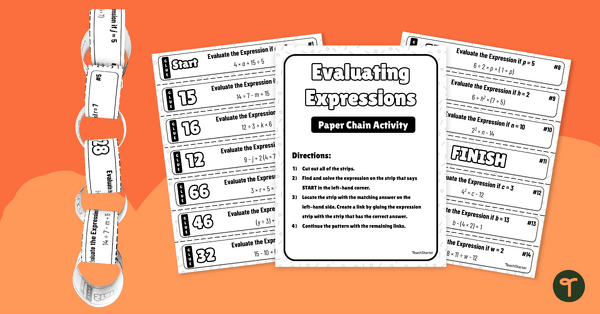
Evaluating Expressions – Paper Chain Activity
Use your understanding of the order of operations to evaluate expressions with one or two variables with this paper chain activity.
- Plus Plan
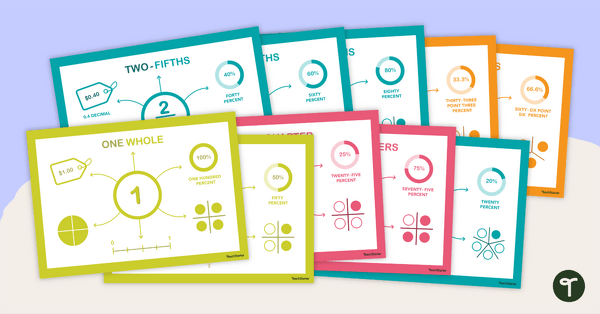
Fraction Representations Posters - Whole, Halves, Quarters, Thirds and Fifths
Display these posters when working with fractions and their different representations.
- Plus Plan
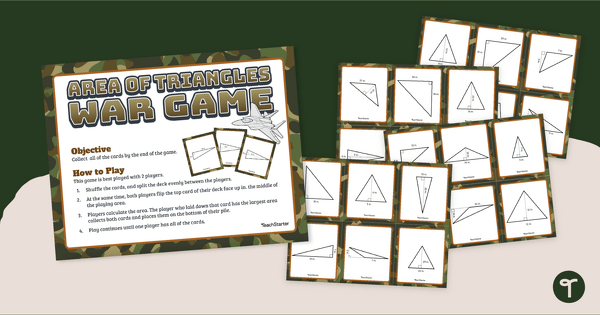
Area of a Triangle - Maths Game
Practice finding and comparing the area of a triangle with a game of WAR!
- Plus Plan
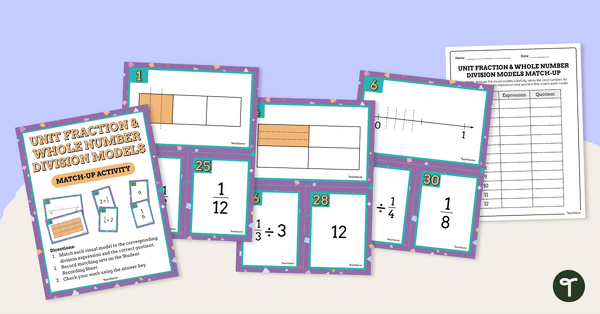
Unit Fraction & Whole Number Division Models – Match-Up Activity
Practise how to divide a unit fraction by a whole number and divide a whole number by a unit fraction with this match-up activity.
- Plus Plan
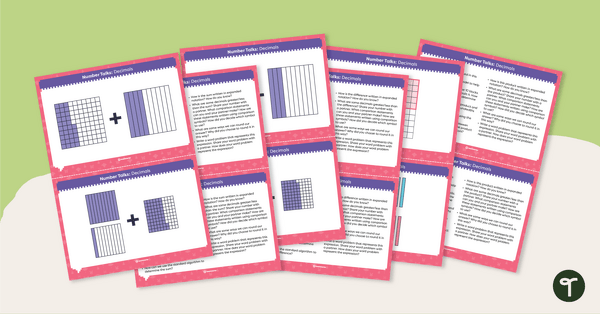
Number Talks – Decimal Operations Task Cards
Explore decimal operations with your students using this set of 26 number talk task cards.
- Plus Plan
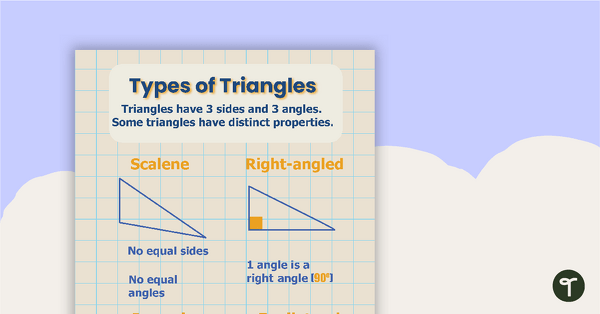
Types of Triangles Poster
A poster depicting and explaining the four types of triangles.
- Plus Plan
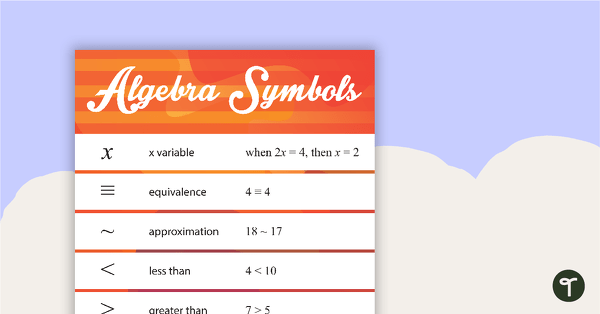
Basic Algebra Symbols Poster
A poster with eight basic mathematics algebra symbols to display in your classroom.
- Plus Plan
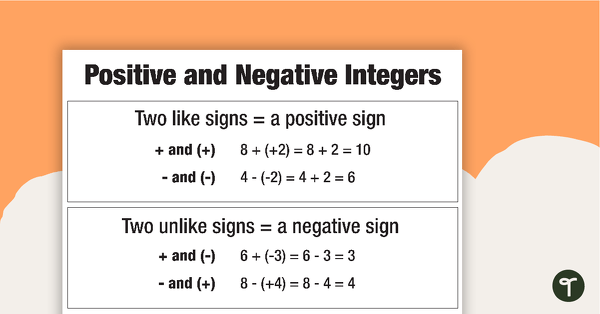
Positive and Negative Integers Poster
A poster showing when to add and subtract positive and negative integers.
- Plus Plan
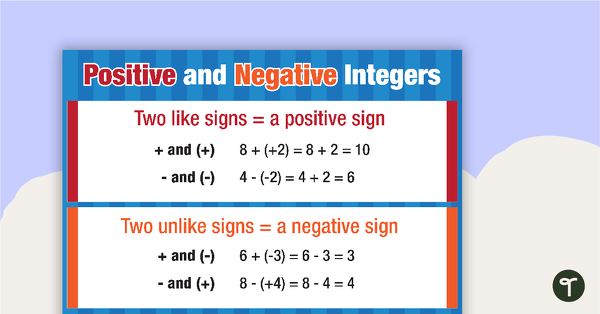
Positive and Negative Integers Poster
A poster showing when to add and subtract positive and negative integers.
- Plus Plan
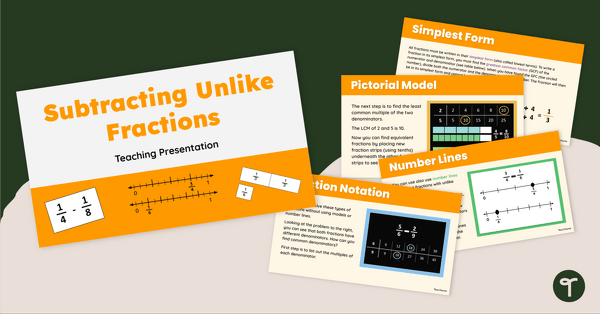
Subtracting Unlike Fractions Teaching Slides
Teach your students how to subtract fractions with unlike denominators using a variety of strategies with this comprehensive slide deck.
- Plus Plan
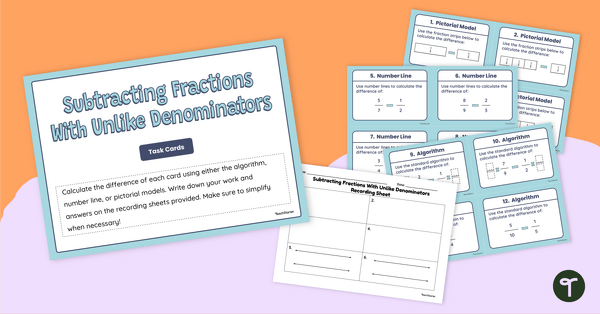
Subtracting Fractions With Unlike Denominators Task Cards
Get your students subtracting fractions with unlike denominators using this set of task cards focusing on a variety of strategies.
- Plus Plan
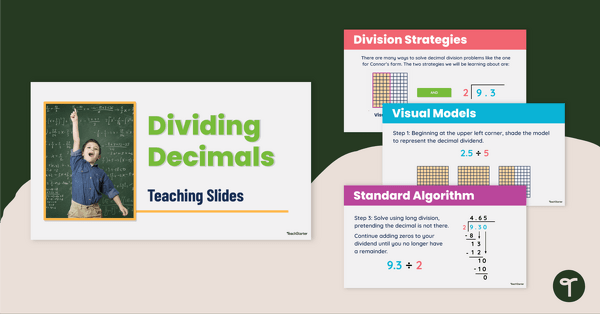
Dividing Decimals by Whole Numbers Teaching Slides
Teach your students how to divide decimals by whole numbers using visual models and the standard algorithm using this step-by-step teaching presentation.
- Plus Plan
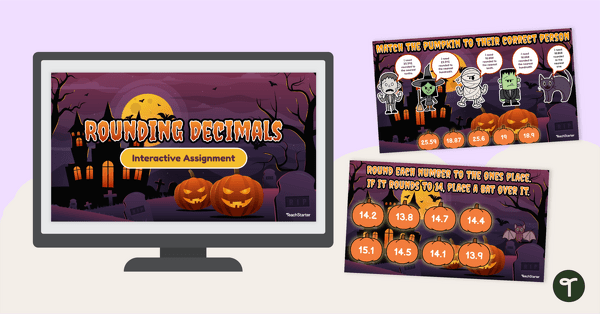
Halloween Interactive Assessment- Round to Three Decimal Places
Scare up some new assessment data when your student's round decimals to the nearest tenth, hundredth, and thousandth with a Halloween-themed rounding decimals quiz.
- Plus Plan
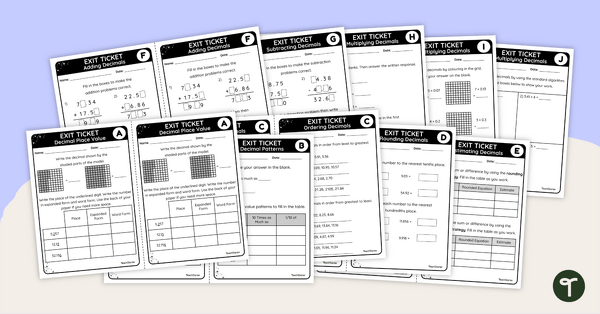
Decimal Exit Tickets (Place Value, Rounding, Ordering and Computation)
Assess student understanding of decimal place value, rounding, ordering and computation with this set of 21 exit tickets.
- Plus Plan
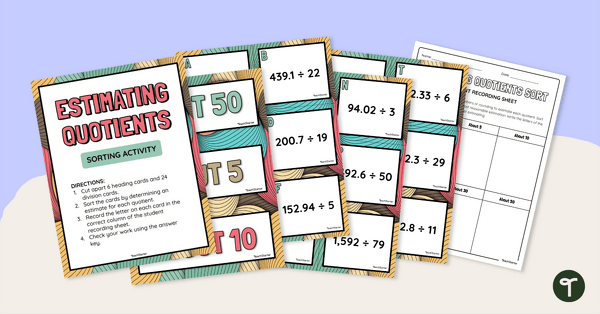
Estimating Quotients Sorting Activity
Guide your students to use rounding and compatible numbers when estimating quotients with this 24-card sorting activity.
- Plus Plan
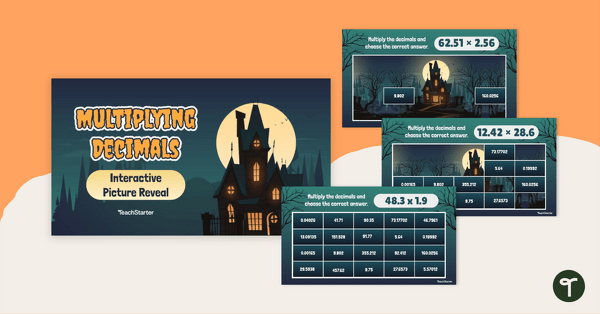
Multiplying Decimals – Interactive Picture Reveal (Halloween)
Sharpen your students' decimal multiplication skills with an interactive Halloween picture reveal.
- Plus Plan
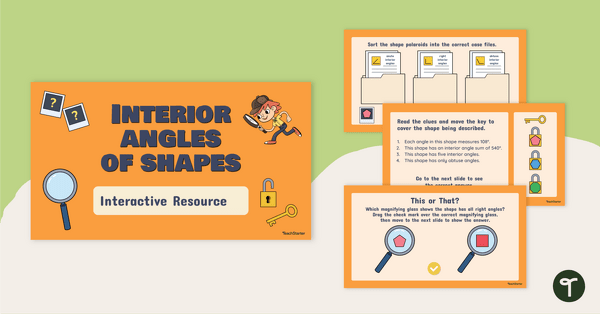
Interior Angles of Shapes Interactive Game
Explore the interior angles of regular polygons with this detective-themed interactive maths activity.