Addition Teaching Resources
Introduce addition this school year with printable worksheets, digital activities, adding games, addition word problems, flashcards and more to help students understand how to add numbers and apply addition strategies to maths problems.
This teaching resource collection was created by the teachers on the Teach Starter team for primary teachers like you. Each Australian curriculum-aligned resource has been carefully reviewed and curated by our expert teachers to ensure it's ready to use with your students! Browse printables and digital activities for teaching students how to make 10, how to add integers and more, plus find differentiated resources to help you meet each student's needs!
New to teaching addition, or just looking for new ways to engage your students? Read on for a primer from our teacher team, including a kid-friendly definition and some common vocabulary!
What Is Addition? A Kid-Friendly Definition
Let's start with a definition of this maths operation that's easy for them to understand!
Addition is a maths operation that involves combining two or more numbers to find a total. The symbol (+) is used to indicate addition, and this is called a plus sign.
Here's an example of addition at work!
In the equation 2 + 3 = 5, the numbers 2 and 3 are added together to get a sum of 5.
Addition Terms
There are plenty of new vocabulary words for your students to learn when introducing addition. Here are some of the terms you will want to start with.
Sum
The sum is the result of adding two or more numbers. It's the solution or answer to an addition problem!
In the equation 2 + 3 = 5, 5 is the sum.
Addend
The numbers being added in an addition equation are called addends.
For example, in the equation 2 + 3 = 5, both 2 and 3 are addends.
Commutative Property
The commutative property states that changing the order of the addends in your addition problem does not change the sum.
For example, 2 + 3 is the same as 3 + 2.
Associative Property
The associative property states that changing the grouping of the addends in your maths problem will not change the sum.
For example, (2 + 3) + 4 is the same as 2 + (3 + 4).
Repeated Addition
Sometimes a math problem involves adding the same number multiple times. We call this repeated addition, and it's a way to find the product of two numbers where one of the numbers is repeated a certain number of times.
Repeated addition is handy for helping students understand multiplication. After all, multiplication can be thought of as repeated addition.

Cartoon plus sign
What Is Partial Sums Addition?
If you know what a sum is, you're halfway to understanding partial sums addition! This maths vocabulary term refers to adding two or more numbers by breaking apart the addends and adding the value of the digits in each place value position from right to left.
This handy strategy is great for students when they are first learning to add two or more numbers. Partial sums addition breaks down the process of addition into smaller, more manageable steps.
Let's look at an example.
If you have the 36 + 27 and want to use partial sums addition, you start by determining the value of the digits in the ones place, adding them together, and writing down the sum (6 + 7 = 13).
Next, add the value of the tens place digits together (30 + 20 = 50), and write down the answer under the previous sum. Add together the two partial sums to get your answer, 63.
- Plus Plan
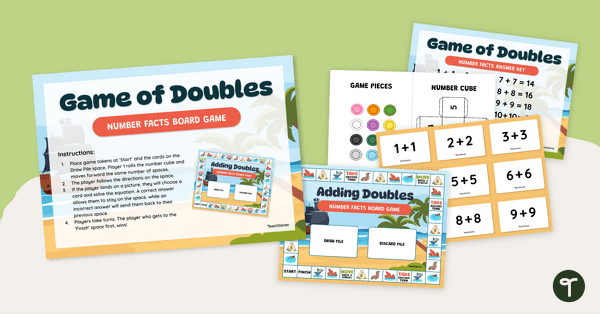
Game of Doubles
Play our adding doubles board game to give your students a chance to practise their addition fact fluency.
- Plus Plan
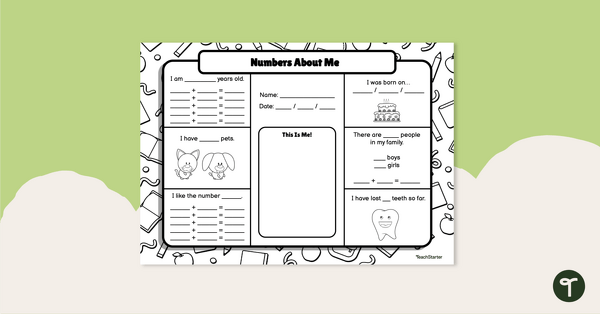
My Life in Numbers Worksheet
Use this numbers worksheet as a means of student introductions early in a new school year.
- Plus Plan
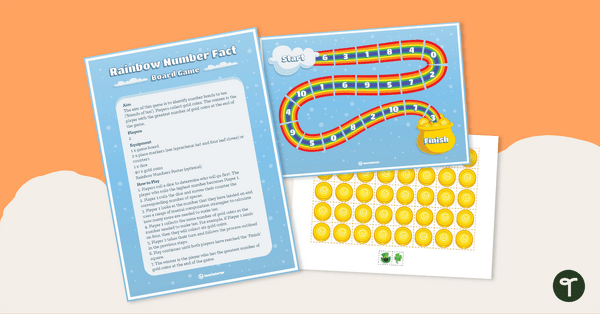
Rainbow Number Facts Board Game
A fun, hands-on board game to consolidate students' understanding of the 'Friends of 10'.
- Plus Plan
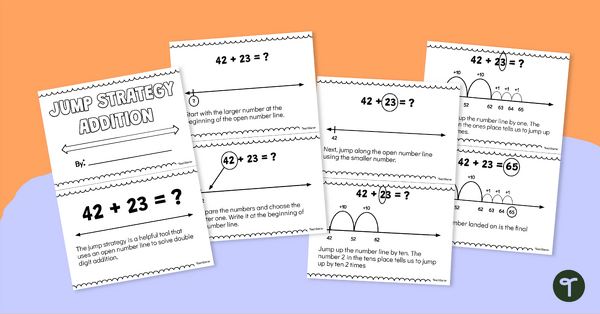
Jump Strategy Addition Mini Book
Use this mini-book to help your students learn how to use the jump strategy to solve addition sums.
- Plus Plan
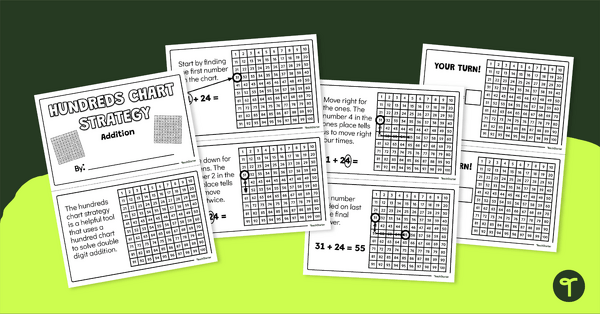
Hundreds Chart Strategy Addition Mini Book
Use this mini-book to help your students learn how to use the hundreds chart as a strategy to solve addition sums.
- Plus Plan
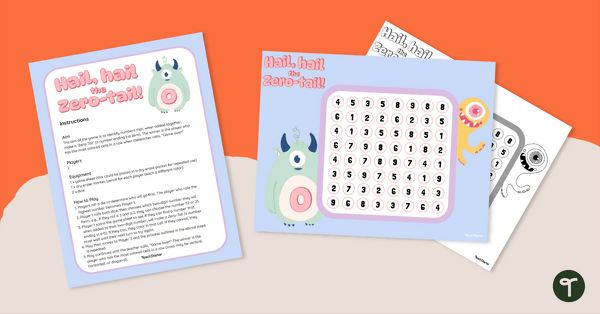
Rainbow Facts - Zero-Tail Game
Practise rainbow number facts when solving addition problems involving two-digit numbers with this fun game.
- Plus Plan

Split Strategy Addition Dominoes
A set of addition dominoes to use in the classroom when applying the split strategy.
- Plus Plan

Jump Strategy Addition Game
Practise using the jump strategy for multi-digit addition with a fun maths game.
- Plus Plan
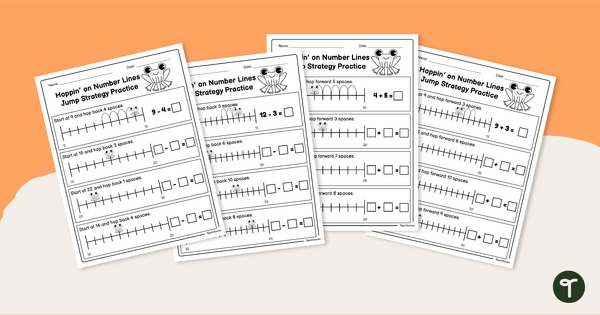
Hop on Number Lines - Worksheet Pack
Hop your way to addition mastery with a pack of two addition on a number line worksheets.
- Free Plan

Counting On Fact Families Worksheet
Begin from the larger number and count on to find the total with this worksheet.
- Free Plan

Adding 2-Digit Numbers Task Cards
Practice adding 2-digit numbers with this set of 18 number sentence task cards.
- Plus Plan
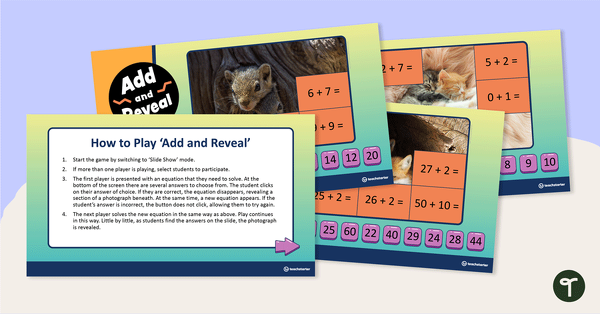
Add and Reveal the Picture PowerPoint – Addition Practice (Basic)
An appealing PowerPoint for students to interact with when practising addition facts.
- Plus Plan

Plus One and Minus One Math Machine Worksheet
A worksheet to practise generating a number that is one more than or one less than another number.
- Plus Plan
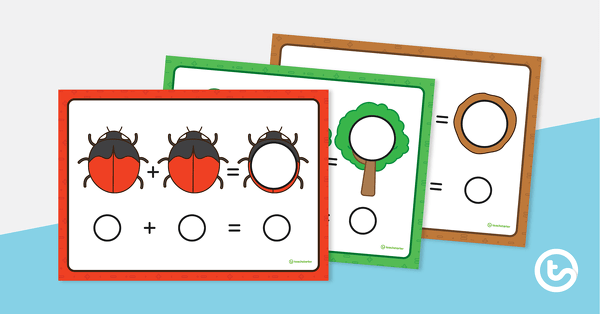
Addition Mats
A set of three working mats to explore simple addition.
- Plus Plan

Number Talks - Three-Digit Addition Task Cards
Build number sense skills with this set of 24 task cards.
- Plus Plan
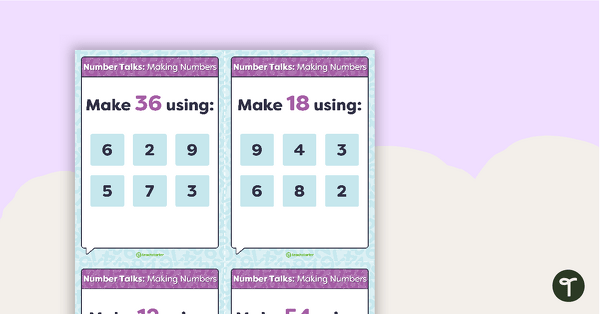
Number Talks - Making Numbers Task Cards
Build number sense skills with this set of 20 task cards.
- Plus Plan

Number Talks - Fluency to 20 Task Cards
Build number sense skills with this set of 24 task cards.
- Plus Plan
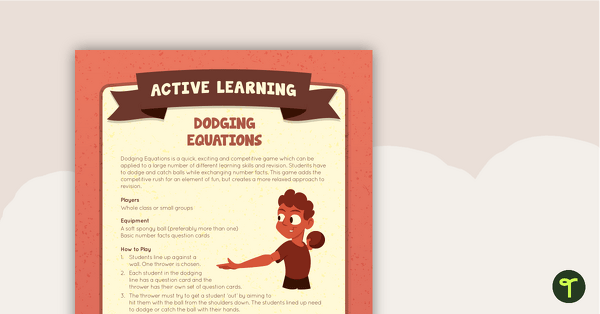
Dodging Equations Active Learning
A whole class active game that encourages learning through a physical setting.
- Free Plan
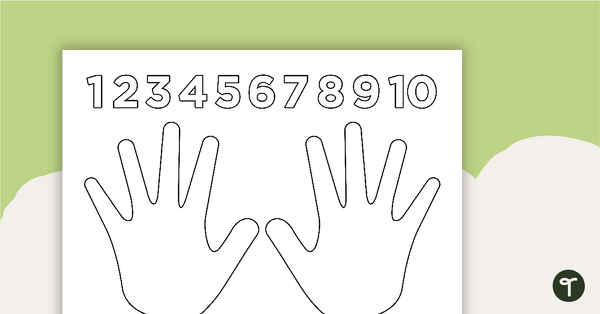
Hands and Numbers 1-10 Counting Activity Template
Teach counting from 1 to 10 and one-to-one correspondence with a creative (and free) printable activity.
- Plus Plan
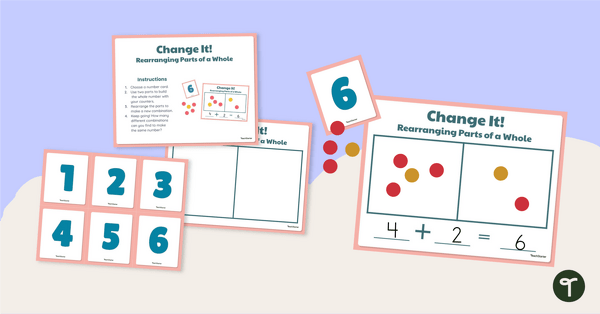
Rearrange the Parts – Addition to 20 Hands-On Activity
Practise addition to 20 by rearranging the parts of whole numbers into different combinations with this hands-on maths activity.
- Plus Plan
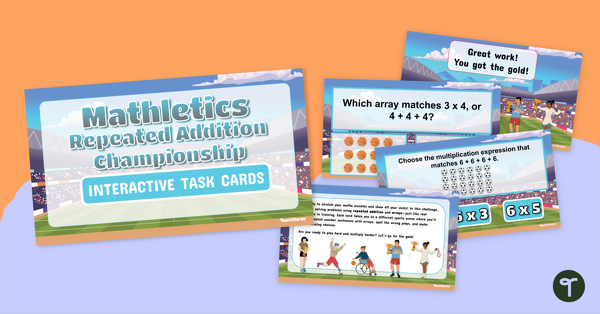
Repeated Addition Arrays Interactive Task Cards
Use our repeated addition arrays interactive task cards to introduce multiplication in a way your learners will more easily understand.
- Plus Plan

Friends of 10 Addition Poster Bundle
Print the ultimate Friends of 10 poster bundle with 10 printable classroom posters designed to show students how different combinations of numbers connect to make the same number.
- Plus Plan

Combinations of 10 and 20 Posters
Easily recognise combinations of 10 and combinations of 20 with this visual poster set.
- Plus Plan
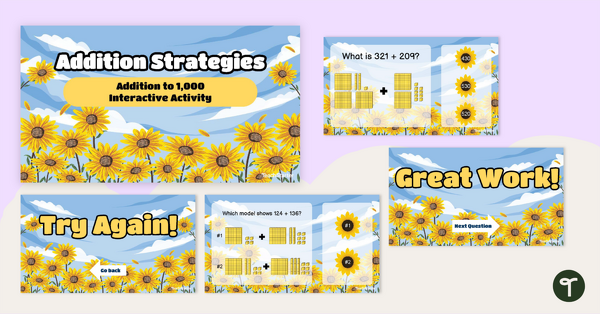
Addition to 1000 Sunflower Interactive Activity
Practise solving addition problems using a variety of addition strategies with this interactive activity.
- Plus Plan
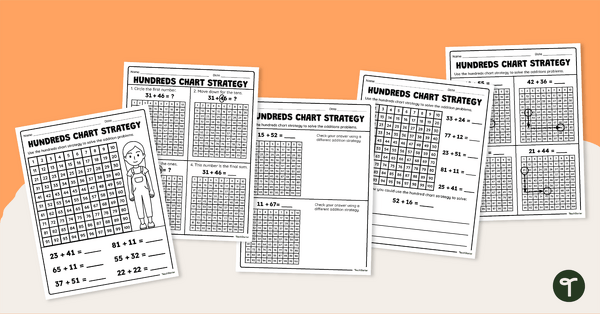
Hundreds Chart Strategy Addition Worksheet Pack
Practise using the hundreds chart strategy with this worksheet set.
- Plus Plan
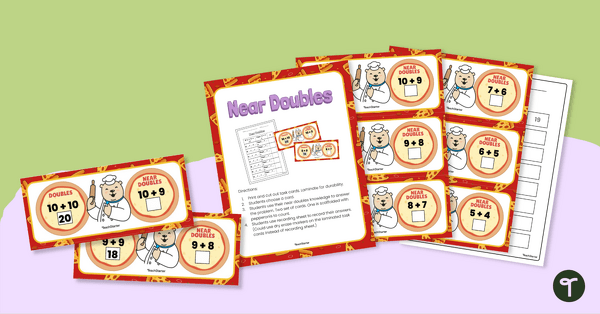
Pizza-Themed Near Doubles Task Cards
Practise quick recall of near doubles facts with this cute pizza-themed task cards activity.
- Plus Plan

Adding within 1000 Bar Model Match Up Activity
Practise using the bar diagram to add numbers within 1000 with this match up activity.
- Plus Plan

Hundreds Chart Addition Strategy Interactive Activity
Practise using the hundreds chart as an addition strategy with this fun interactive activity.
- Plus Plan

Adding within 1000 Addition Strategy Task Cards
Practise using a number of addition strategies to add numbers within 1000 with this set of task cards.
- Plus Plan

Adding within 100 Bar Model Task Cards
Practise using the bar model to add numbers within 100 with this set of task cards.
- Plus Plan
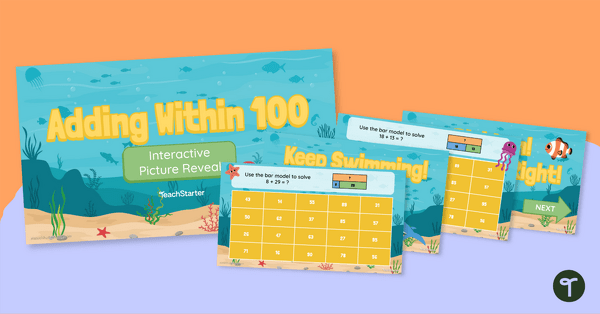
Addition Within 100 Bar Model - Interactive Mystery Picture
Take a deep dive using the bar model for addition within 100 with this fun mystery reveal interactive activity.
- Plus Plan

Adding Within 100 - Bar Model Match-Up Activity
Practise using the bar model to add numbers within 100 with this match-up activity.