Addition Teaching Resources
Introduce addition this school year with printable worksheets, digital activities, adding games, addition word problems, flashcards and more to help students understand how to add numbers and apply addition strategies to maths problems.
This teaching resource collection was created by the teachers on the Teach Starter team for primary teachers like you. Each Australian curriculum-aligned resource has been carefully reviewed and curated by our expert teachers to ensure it's ready to use with your students! Browse printables and digital activities for teaching students how to make 10, how to add integers and more, plus find differentiated resources to help you meet each student's needs!
New to teaching addition, or just looking for new ways to engage your students? Read on for a primer from our teacher team, including a kid-friendly definition and some common vocabulary!
What Is Addition? A Kid-Friendly Definition
Let's start with a definition of this maths operation that's easy for them to understand!
Addition is a maths operation that involves combining two or more numbers to find a total. The symbol (+) is used to indicate addition, and this is called a plus sign.
Here's an example of addition at work!
In the equation 2 + 3 = 5, the numbers 2 and 3 are added together to get a sum of 5.
Addition Terms
There are plenty of new vocabulary words for your students to learn when introducing addition. Here are some of the terms you will want to start with.
Sum
The sum is the result of adding two or more numbers. It's the solution or answer to an addition problem!
In the equation 2 + 3 = 5, 5 is the sum.
Addend
The numbers being added in an addition equation are called addends.
For example, in the equation 2 + 3 = 5, both 2 and 3 are addends.
Commutative Property
The commutative property states that changing the order of the addends in your addition problem does not change the sum.
For example, 2 + 3 is the same as 3 + 2.
Associative Property
The associative property states that changing the grouping of the addends in your maths problem will not change the sum.
For example, (2 + 3) + 4 is the same as 2 + (3 + 4).
Repeated Addition
Sometimes a math problem involves adding the same number multiple times. We call this repeated addition, and it's a way to find the product of two numbers where one of the numbers is repeated a certain number of times.
Repeated addition is handy for helping students understand multiplication. After all, multiplication can be thought of as repeated addition.

Cartoon plus sign
What Is Partial Sums Addition?
If you know what a sum is, you're halfway to understanding partial sums addition! This maths vocabulary term refers to adding two or more numbers by breaking apart the addends and adding the value of the digits in each place value position from right to left.
This handy strategy is great for students when they are first learning to add two or more numbers. Partial sums addition breaks down the process of addition into smaller, more manageable steps.
Let's look at an example.
If you have the 36 + 27 and want to use partial sums addition, you start by determining the value of the digits in the ones place, adding them together, and writing down the sum (6 + 7 = 13).
Next, add the value of the tens place digits together (30 + 20 = 50), and write down the answer under the previous sum. Add together the two partial sums to get your answer, 63.
- Plus Plan
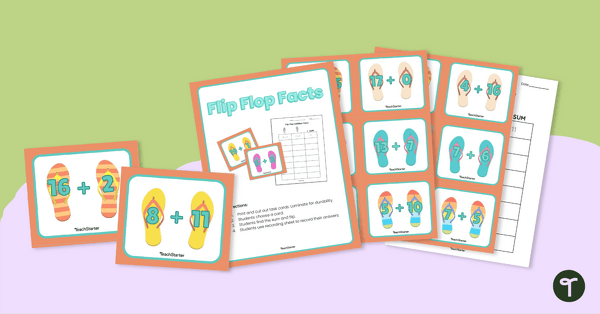
Addition Turnarounds Flip Flop Task Cards
Develop number sense with addition turnaround facts to 20 with these cute flip flop fact task cards.
- Plus Plan
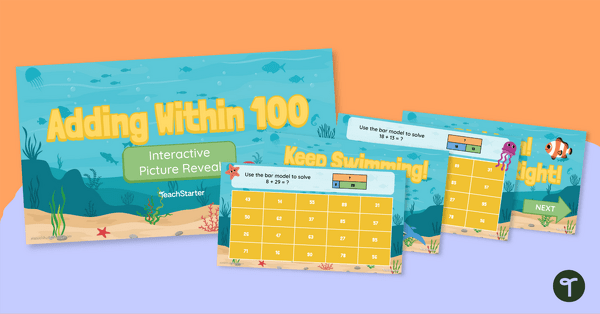
Addition Within 100 Bar Model - Interactive Mystery Picture
Take a deep dive using the bar model for addition within 100 with this fun mystery reveal interactive activity.
- Plus Plan
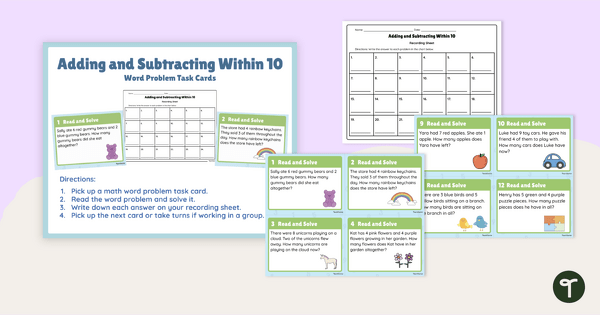
Adding and Subtracting Within 10 - Word Problem Task Cards
Solve word problems practicing addition and subtraction to ten with a set of printable task cards.
- Free Plan
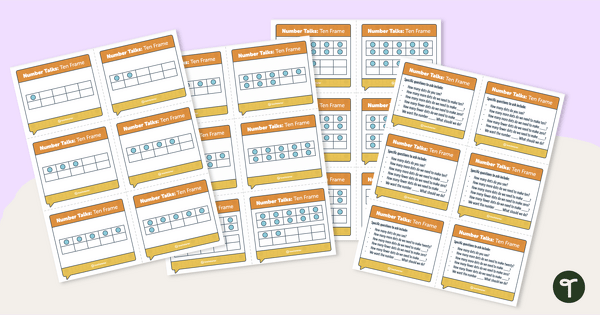
Number Talk Task Cards - Ten Frames
Build number sense skills with this set of 30 ten and double ten frame maths talk task cards.
- Plus Plan
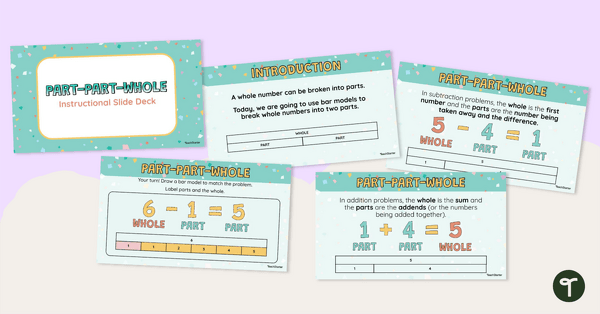
Part-Part-Whole - Addition and Subtraction Teaching Presentation
Teach your students how to effectively use a bar model to solve 1-digit addition and subtraction number facts using the part-part-whole strategy.
- Plus Plan
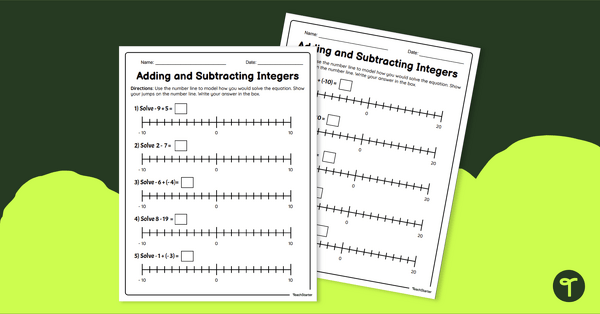
Adding and Subtracting Integers on Number Lines - Worksheet
Help your students learn to add and subtract integers on a number line with a printable adding and subtracting integers worksheet.
- Plus Plan
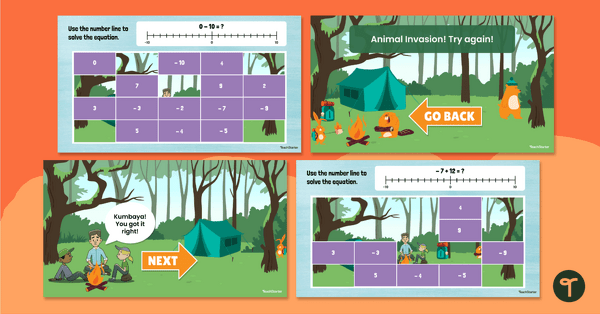
Add and Subtract Integers on a Number Line - Interactive Picture Reveal
Practise solving addition and subtraction equations with positive and negative numbers using an interactive mystery picture reveal.
- Plus Plan
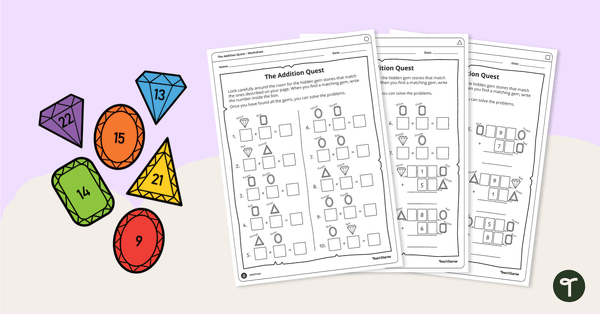
The Addition Quest – Whole Class Game
Find the hidden gems and place their numbers into the correct positions on the worksheet to solve the sums.
- Plus Plan
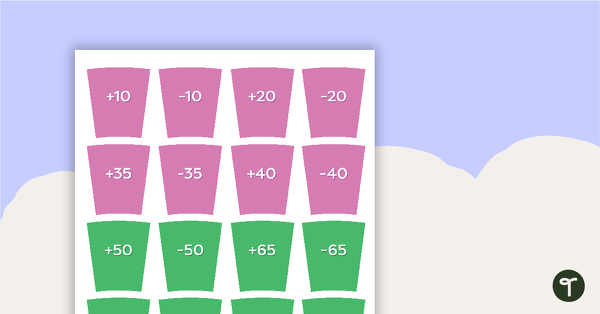
Classroom Spinner Template - Maths Equations
Classroom spinner template focusing on maths equations using addition and subtraction.
- Plus Plan
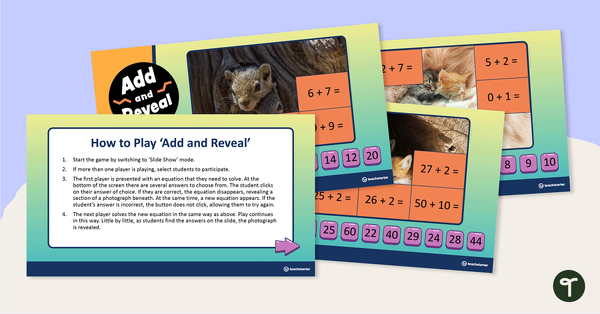
Add and Reveal the Picture PowerPoint – Addition Practice (Basic)
An appealing PowerPoint for students to interact with when practising addition facts.
- Plus Plan
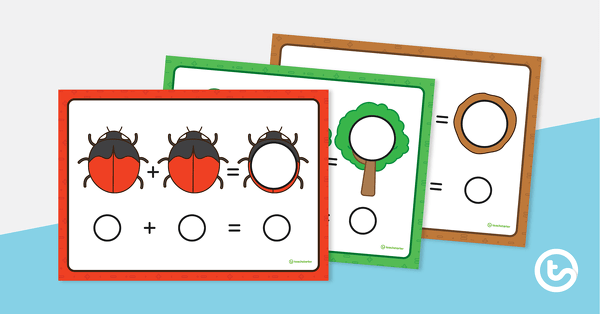
Addition Mats
A set of three working mats to explore simple addition.
- Plus Plan
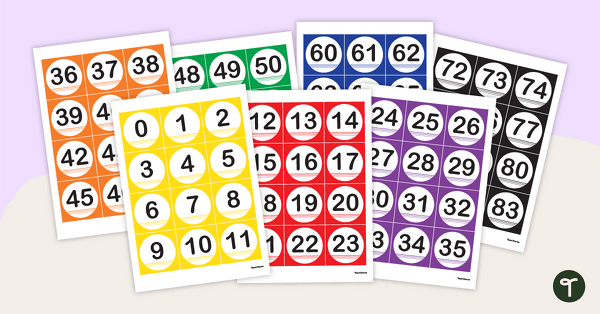
Numbers and Symbols Mini Flashcards
Print a set of colourful number and symbol cards for various maths lessons.
- Plus Plan
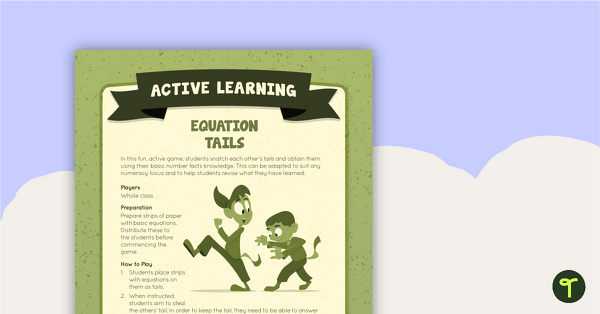
Equation Tails Active Learning
A whole class active game that encourages learning through a physical setting.
- Plus Plan
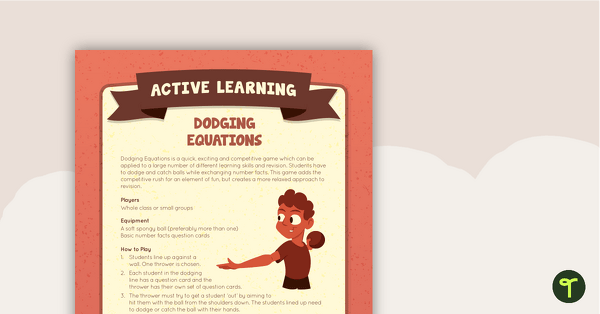
Dodging Equations Active Learning
A whole class active game that encourages learning through a physical setting.
- Plus Plan
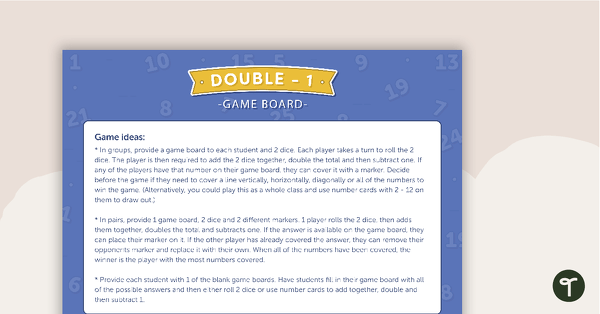
Double Minus 1 – Game Boards
30 game boards to use when working with near doubles.
-
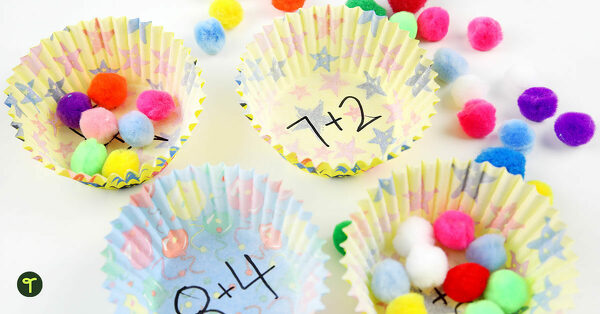
10 Easy, Simple Addition Activities for Kids
Are your students frustrated with the concept of addition? Make addition fun in the classroom, or even at home, with these creative, easy and effective hands-on activities.
-
What Is a Bar Model? How to Use This Maths Problem-Solving Method in Your Classroom
The Bar Model is a popular strategy for mathematical problem solving, so how do you use it in your classroom, and should you?