Persuasive Writing Teaching Resources
Explore persuasive writing topics, activities and more — aligned to the Australian Curriculum and created by teachers for your primary classroom!
Whether you're introducing the persuasive text type for the first time to your foundation or year 1 class, or you're preparing year 3 or year 5 students to sit the Naplan persuasive writing tests, this collection of teaching resources will help you save time on your lesson plans so you have more time to spend doing what you really love — engaging with your students!
Best of all, each printable worksheet and interactive game has undergone careful review by a member of the Teach Starter team to ensure it's ready for your classroom and your students!
Are you new to teaching persuasive writing, or are you just looking for fresh ideas and tips on the topic? Read on for a primer from our teacher team!
What Is Persuasive Writing? A Kid-Friendly Definition
If you're introducing this type of writing to your students, a definition may come in handy. Try this one from our teacher team!
Persuasive writing is a type of writing that we use to convince a reader to adopt a particular viewpoint or do a certain thing.
This writing type uses persuasive techniques to present the reader with logical arguments, supporting evidence and emotional appeals to help convince them.
5 Persuasive Writing Examples for Kids to Share With Students
Examples of persuasive writing from some of their favourite picturebooks can also be helpful when you're launching your writing unit.
Popular children's books often provide excellent examples of persuasive writing suitable for young kids. Here are a few examples that are favourites with our teacher team!
- Click, Clack, Moo: Cows That Type by Doreen Cronin — The cows on a farm use persuasive writing techniques to demand electric blankets from the farmer by leaving notes in this silly book from American author Doreen Cronin. The cows argue that they deserve the blankets for their comfort and better milk production.
- The Three Little Pigs — This classic fairy tale is a great example of persuasive writing that many students will already know, even if they don't realise it contains persuasive devices.
- Click, Clack, Peep! by Doreen Cronin — Yes, it's another book from Cronin that works well for teaching persuasive writing! Instead of cows writing, however, the persuasive arguments in this tale come from ducklings who convince the farm animals to join them in disrupting Farmer Brown's sleep. The story showcases the ducks' ability to influence and rally others.
- My Lucky Day by Keiko Kasza — In this silly story, a clever pig uses persuasive tactics to convince a hungry wolf that it would be a better meal if it were fattened up first.
- I Can't Believe You Said That! by Julia Cook — This book focuses on the importance of using persuasive language in a respectful manner and makes a great example for teaching your class how to express their thoughts and opinions without hurting others' feelings.
What Is the Persuasive Writing Structure?
Next, students will need to learn the basic persuasive writing structure to give shape to their arguments. While there can be some variation, persuasive writing typically follows a clear and organised framework in order to effectively present arguments and convince the reader.
The most popular structure is typically as follows:
- Introduction — The writer should grab the reader's attention and provide an overview of the topic or issue at the beginning of their essay, speech or other piece of persuasive writing. A good introduction will include:a. Hook or Attention-Grabbing Opening — This is a compelling statement, question or fact that captivates the reader's interest.b. Background Information — Brief context or background information about the topic will help the reader understand the subject matter.c. Thesis statement — This is a clear and concise statement that presents the writer's main argument or position.
- Body Paragraphs — The body paragraphs form the core of a persuasive essay, and this is where students can present supporting evidence, reasons and counterarguments. Each body paragraph typically focuses on a single point or supporting argument and follows a consistent structure:a. Topic Sentence — This is a clear statement that introduces the main idea or argument of the paragraph.b. Supporting Evidence — Strong persuasive writing uses examples, statistics, expert opinions or anecdotes to strengthen the argument.c. Explanation and Analysis — Each body paragraph should have a sentence or two connecting the evidence to the main argument and explaining how it supports the thesis statement.
- Conclusion — In the final section of a persuasive essay, students should wrap things up by restating the thesis statement, summarising the main points and leaving a lasting impression on the reader. A strong conclusion includes:a. Restatement of the Thesis — This reaffirms the main argument or position from the introduction.b. Summary of Main Points — Students should briefly summarise the key supporting arguments or evidence presented in the body paragraphs.c. Closing Statement — The end should leave the reader with a thought-provoking or impactful final statement, a call to action or a suggestion for further consideration.
Persuasive Writing Techniques
Are you looking for some strategies to share with your students to make their writing more convincing and compel the reader? Let's take a look at some of the persuasive writing techniques they can use!
- Appealing to the Reader's Emotions — Using language and storytelling techniques to evoke strong emotions in the audience — such as fear or empathy — can be a strong way to persuade a reader to act.
- Using Repetition — Repeating key phrases or ideas throughout an essay or letter will help reinforce their importance and make them memorable.
- Asking Rhetorical Questions — Asking questions that lead the audience to a desired conclusion can make them think about the topic and engage with the argument.
- Relying on Authority — Citing credible experts or sources is a technique that lends credibility and support to the writer's claims, making it more appealing for a reader.
Fun Persuasive Writing Activities for the Primary Classroom
This collection of Australian Curriculum English resources is full of fun activities to engage your students with persuasive writing, but we didn't stop there.
Take a look at some more fun activities to do with your class!
- Create persuasive posters with your year 2 class that include simple slogans and visuals to convince others to join a school activity.
- Set up a debate for your year 3 students, brainstorming an either/or concept that students feel strongly about (such as a type of fruit). Split the class in two, and have the two groups of students debate the topic, attempting to convince the others. This could also be done in small groups or even in pairs.
- Challenge your year 4 students to write a letter convincing you to wear a silly costume to school. If you have a school or classroom mascot, they might try to convince you to dress like the mascot!
- Ask students to take a stand on which of the seasons is better: summer or winter.
- Pretend you have $1 million to give away, and challenge your year 6 students to a quick write, explaining why they deserve the money.
- Plus Plan
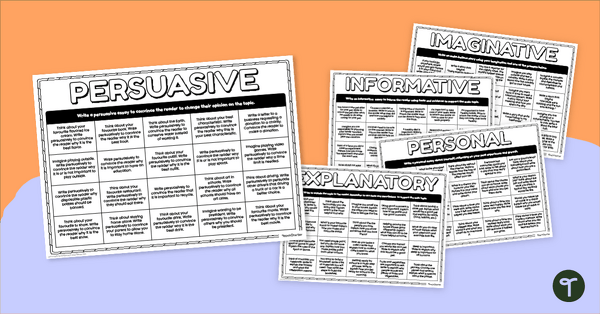
Genre of the Month - Writing Prompt Grids (Upper)
Introduce your students to a variety of writing genres with our printable genre-specific writing prompt grids.
- Plus Plan
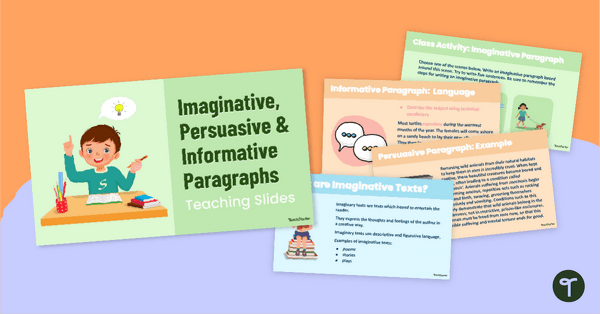
Imaginative, Persuasive and Informative Paragraphs Teaching Slides
Learn about the different structures of imaginative, persuasive and informative paragraphs.
- Plus Plan
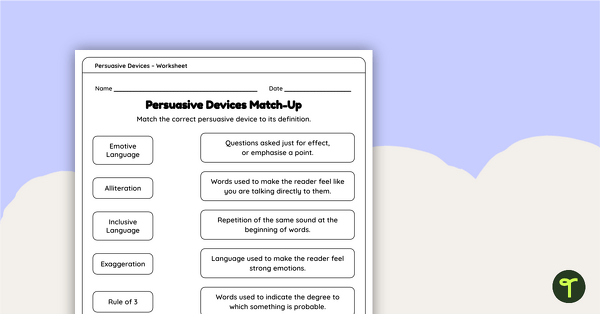
Persuasive Device Definitions – Match-Up Worksheet
Have students match the persuasive devices with their definitions using this simple one-page worksheet.
- Plus Plan
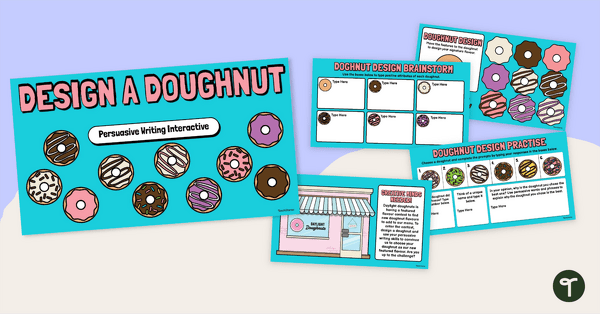
Design a Doughnut Persuasive Writing Interactive
Explore persuasive writing with this fun doughnut-themed interactive activity.
- Plus Plan
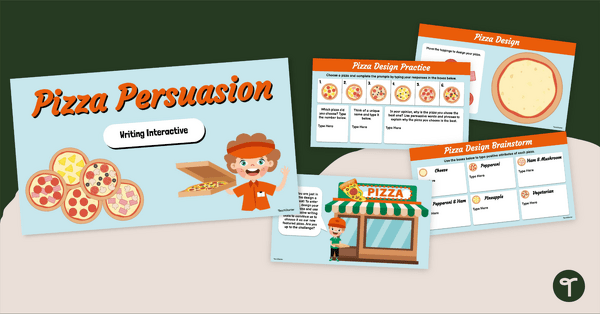
Persuasive Writing Interactive (Design Your Own Pizza)
Explore persuasive writing with this fun pizza-themed interactive activity.
- Plus Plan
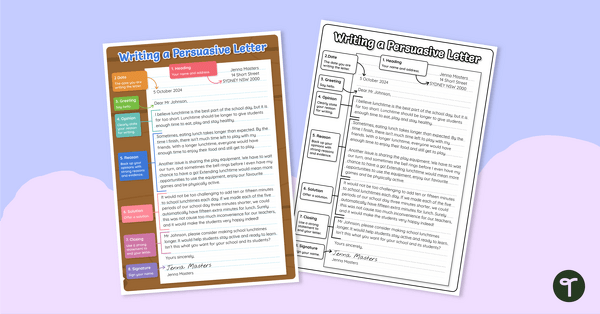
Writing a Persuasive Letter Poster
Use this writing a persuasive letter poster to teach your students the structure and features of persuasive letters.
- Plus Plan
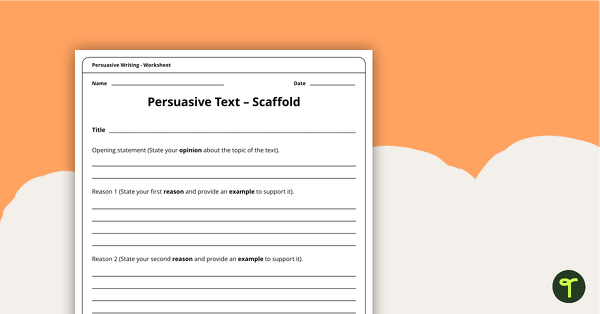
Persuasive Texts Writing Scaffold
A one page scaffolding sheet which can be used to write a persuasive text.
- Plus Plan
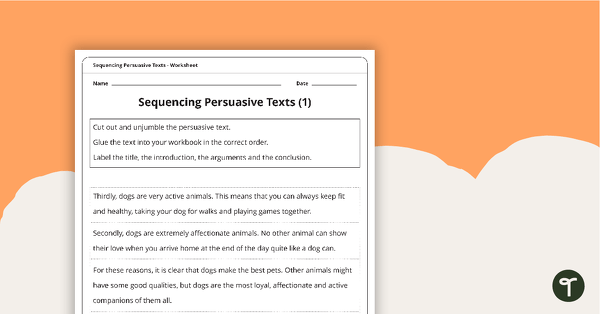
Persuasive Essay Structure Sorting Worksheet
Teach your students about persuasive essay structure with this cut-and-paste sequencing worksheet.
- Plus Plan
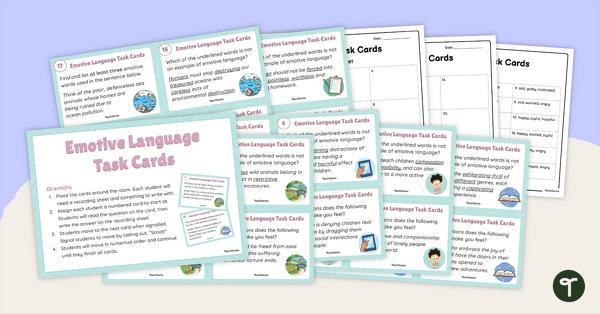
Emotive Language Task Cards
Get students exploring emotive language examples with this set of task cards perfect for your persuasive writing unit.
- Plus Plan
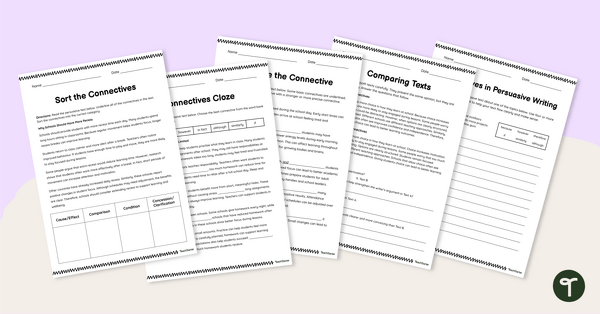
Linking Devices in Persuasive Writing Worksheet Pack
Teach how linking devices can be used to connect ideas in persuasive writing with this set of 5 activity worksheets with answers.
- Plus Plan
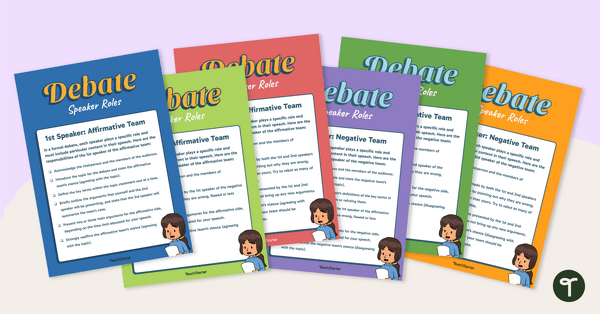
Debate Speaker Roles Poster Pack
Download and display these colourful classroom posters that clearly explain every debate speaker role for each member of a debating team.
- Plus Plan
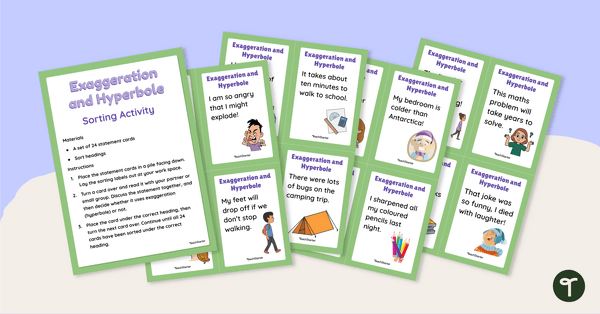
Exaggeration and Hyperbole Sorting Activity
Explore examples of hyperbole with your students using this set of 24 sorting cards perfect for your collaborative group work.
- Plus Plan
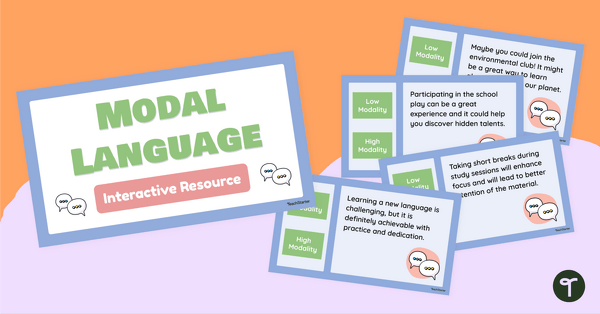
Modal Language Interactive Activity
Explore the language of modality with your students using this digital game perfect for your persuasive writing lessons.
- Plus Plan
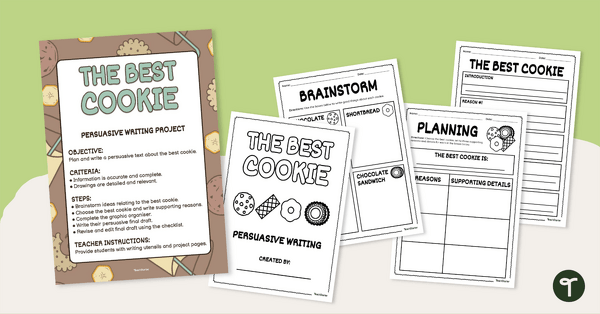
Persuasive Writing Project (The Best Cookie)
Help students plan out persuasive writing with this ‘The Best Cookie’ persuasive writing project.
- Plus Plan
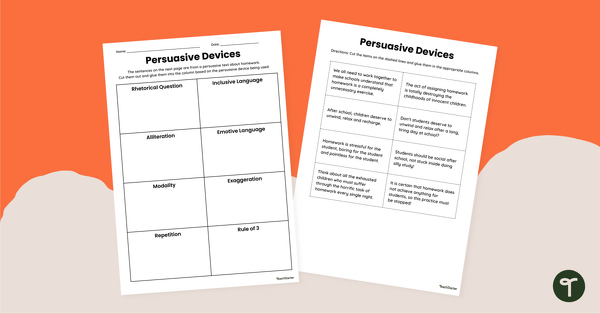
Persuasive Device Examples – Cut and Paste Worksheet
Match the persuasive writing techniques with the correct examples using this simple cut-and-paste worksheet perfect for your persuasive writing unit.
- Plus Plan
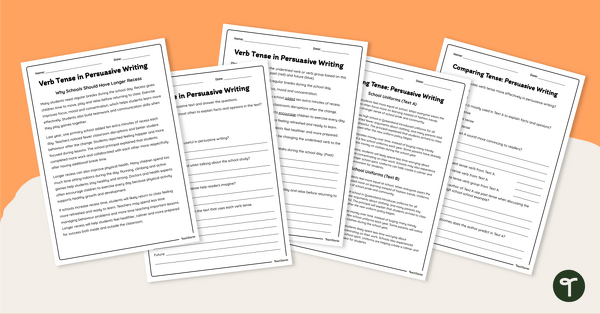
Verb Tense in Persuasive Writing Worksheet Pack
Download these persuasive writing worksheets to help your students understand how verb tense can help them craft clearer, more convincing arguments.
- Plus Plan
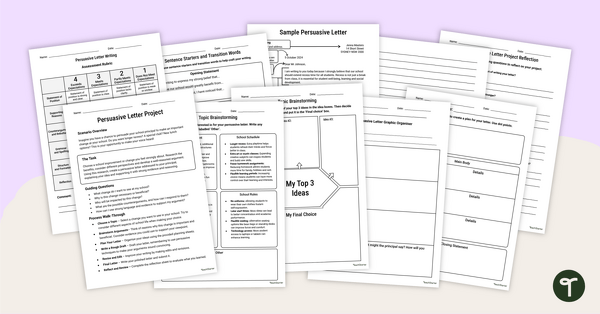
Write a Persuasive Letter Project
Help your students write a persuasive letter to their school principal with this engaging project that builds essential writing skills while making learning meaningful.
- Plus Plan
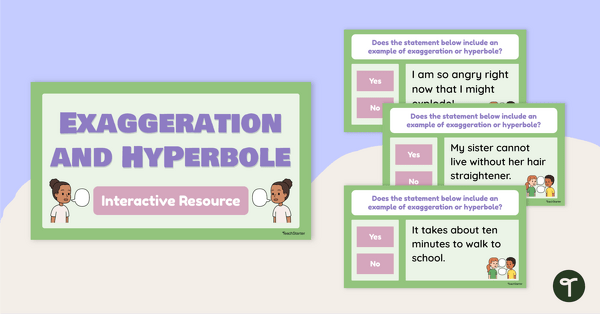
Exaggeration and Hyperbole Interactive Activity
Explore hyperbole examples with your students using this digital game perfect for lesson warm-ups or lesson wrap-ups.
- Plus Plan
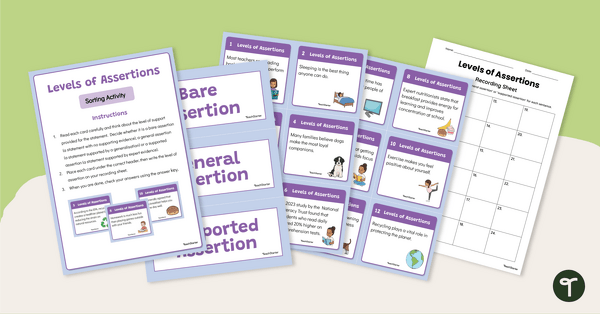
Types of Assertions Sorting Activity
Explore types of assertions with this interactive sorting activity that helps students distinguish between bare, generalised and supported assertions.
- Plus Plan
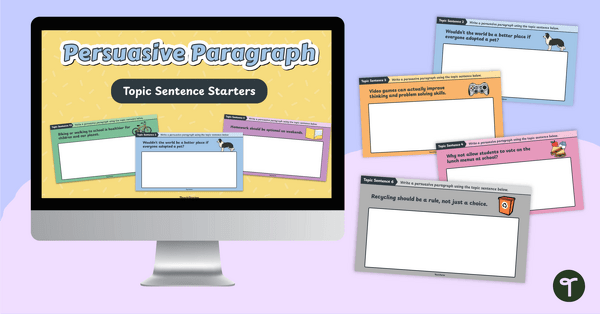
Persuasive Paragraph Topic Sentences – Digital Template
Unlock persuasive writing paragraph starters with this ready-to-use slide deck designed to inspire confident, well-structured writing.
- Plus Plan
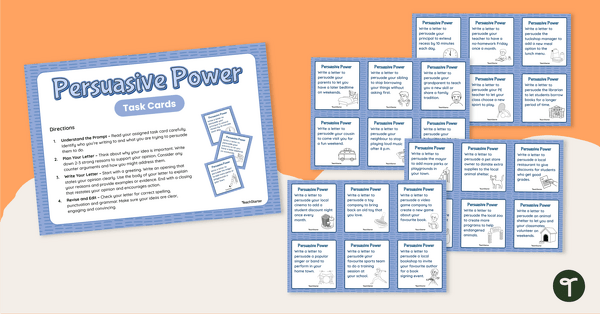
Persuasive Letter Prompts Task Cards
Use these persuasive letter prompts to get your students writing convincing persuasive letters on a variety of topics.
- Plus Plan
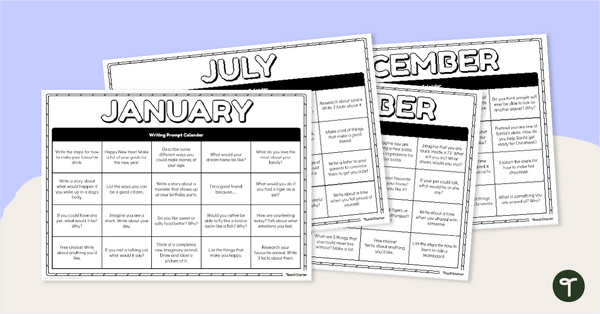
Creative Writing Prompt Choice Boards - Lower Primary
Encourage your little learners to write with fun writing prompts for years 1 and 2.
- Plus Plan
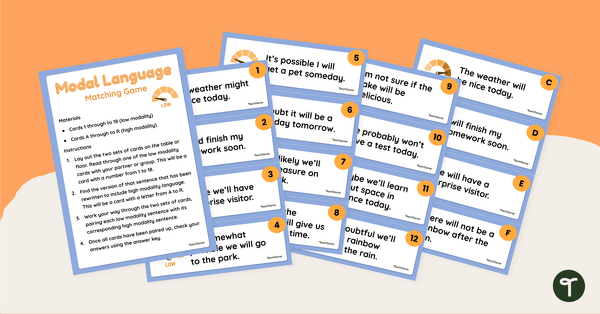
Modal Language Matching Activity
Have students explore high modality and low modality language with this matching game to use during your persuasive writing unit.
- Free Plan
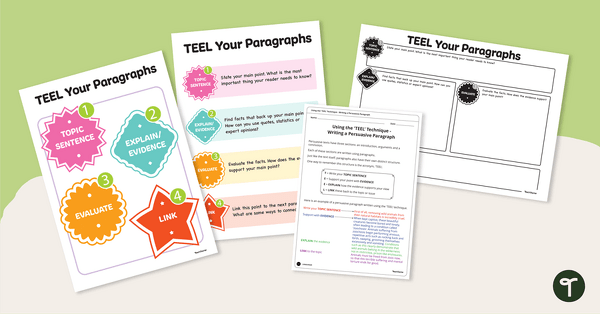
TEEL Paragraph Structure Poster and Worksheets
Explore the acronym TEEL to help with paragraph technique during persuasive writing lessons.
- Plus Plan
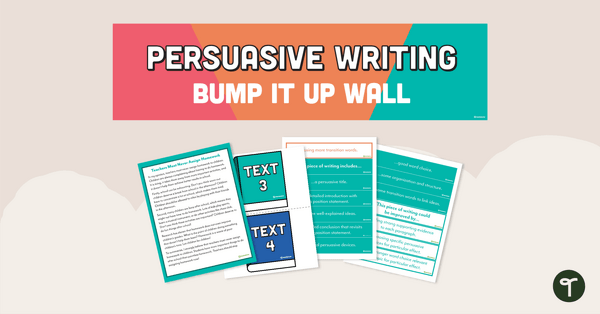
Persuasive Writing Bump It Up Wall – Year 5
A visual display for your classroom to help students 'bump up' their persuasive writing.
- Plus Plan
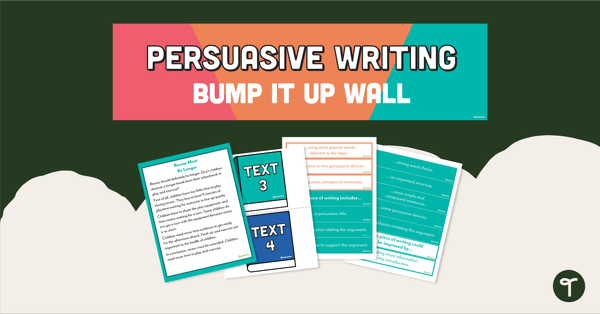
Persuasive Writing Bump It Up Wall – Year 3
A visual display for your classroom to help students ‘bump up’ their persuasive writing.
- Plus Plan
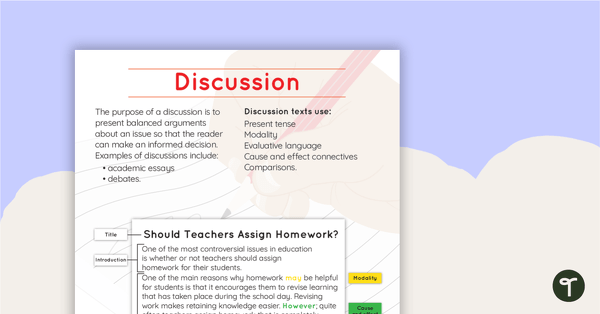
Discussion Text Type Poster With Annotations
A poster about discussions, including an annotated example.
- Plus Plan
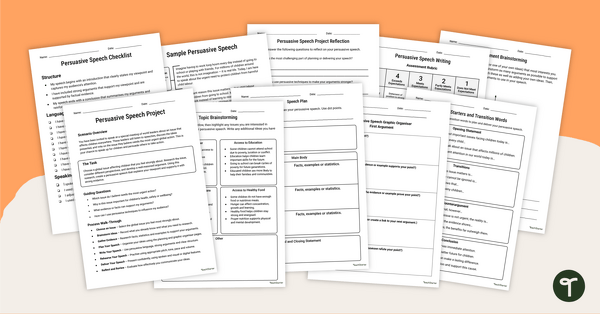
Persuasive Speech Writing Task
Use this writing project to guide your students through the process of researching and constructing a persuasive speech about a significant global issue
- Plus Plan
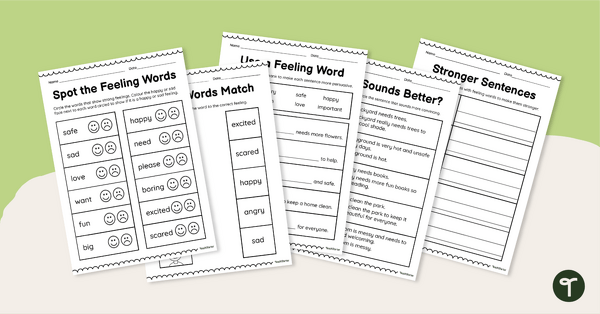
Emotive Vocabulary Worksheet Pack
Use this emotive vocabulary worksheet set to build persuasive writing skills in your early writers.
- Plus Plan

Comparing Assertions Worksheet Pack
Get your students to compare assertions with this engaging set of worksheets designed to help students distinguish between strong and weak persuasive writing.
- Plus Plan
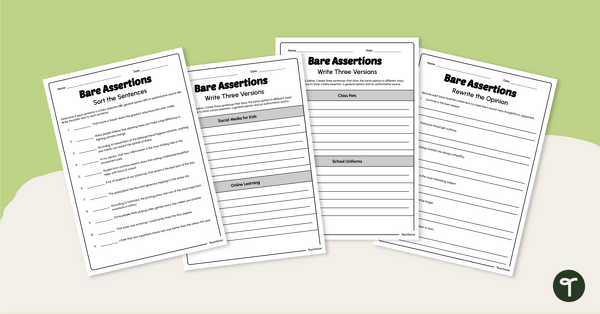
Bare Assertions Worksheet Pack
Strengthen student writing by helping them turn bare assertions into well-supported opinions using these engaging and practical worksheets.
- Plus Plan
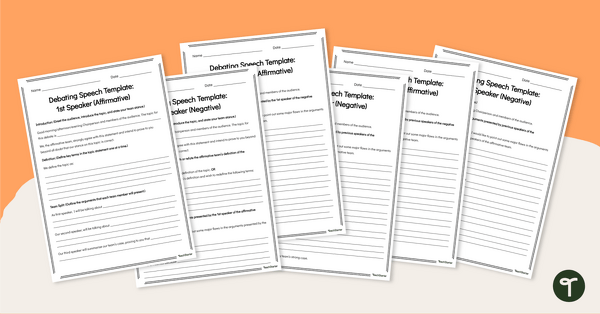
Debate Speech Template Pack
Support student success with a debate speech template that guides them through writing and delivering persuasive speeches in every debate role.