Reading Comprehension Teaching Resources
Explore printable reading comprehension worksheets, digital activities and more to teach reading comprehension strategies in your primary classroom. Created by teachers, for teachers, the teaching resources in this collection are aligned with the Australian curriculum and have undergone a careful review by a member of our expert teaching team.
You'll find editable versions to easily differentiate your instruction for individual students, plus various options to make your lesson planning easier this school year!
New to teaching this portion of the English curriculum or just looking for fresh and engaging ways to teach reading comprehension strategies? Read on for a primer from our teacher team, including a simple definition of reading comprehension, a look at different strategies students can use and more!
What Is Reading Comprehension?
We'll start at the beginning! Reading comprehension is a skill that's hard to overestimate in terms of its importance for early years students to develop.
Defined as the ability to understand and interpret written language, reading comprehension involves the process of decoding text, extracting meaning from it, and then integrating that meaning with prior knowledge and understanding.
Not only does comprehension comprise the ability to recognise and understand individual words, but it also involves the ability to recognise patterns and relationships within sentences and paragraphs, as well as the ability to make inferences and draw conclusions based on the information presented.
This isn't just important for reading, of course.
Comprehension is all about making meaning, and it includes various levels of understanding, including:
- Literal
- Inferential
- Evaluative
- Critical
If you think about it, we rely on these skills on a daily basis — when we notice the stooped shoulders of a partner as they walk in the door or when we listen to the weather report and observe how heavily laden the sky is with grey clouds.
To develop those same skills in a reading context, our students need to build a variety of language skills, such as vocabulary knowledge, grammar and syntax, as well as cognitive processes, such as attention, memory and critical thinking.
So how do they get there? Let's talk strategies!
What Are Reading Comprehension Strategies?
As you well know, students don't start off being able to comprehend every single thing they read. But teaching them strategies to understand better and retain information will allow them to go from recognising individual words to understanding a range of texts.
Some common reading comprehension strategies include:
- Previewing — This is the process of skimming the text before reading it in detail to get an overall sense of what it is about.
- Activating Prior Knowledge — Students can draw on existing knowledge and experience to help them understand new information, such as a new text.
- Making Connections — This strategy focuses on teaching students to make connections between a text and their own experiences and understandings. Research into the science of reading has shown enhanced comprehension when students are able to connect new information to information they already know.
- Questioning — In this comprehension strategy, students ask and answer questions to clarify the meaning of the text and deepen their understanding. When you centre questioning activities around the familiar open-ended prompts of who, what, when, where, how, why, and which, students assert their understanding and identify any gaps in their comprehension of the text. Questions can be posed by a teacher, by their peers, or by the students themselves.
- Visualising — Visualisation provides both teachers and students with another means to extend their exploration of a text and deepen understanding. This reading comprehension strategy asks students to create and describe an image in their mind, centered around a place, situation, or character in the text. Visualising has been proven in research to improve student recall! Using the five senses is a great way to scaffold student comprehension through visualising.
- Summarising — Summarising is a reading comprehension strategy that asks students to reflect on the text and communicate their understanding of it. A well-formed summary is made up of the main idea of the text and the key details that support the main idea, showing that the student has understood what they’ve read well enough to write a summary that’s not merely a repetition of the text.
- When summarising, students may complete one or more of the following:
- Recount the text in their own words
- Identify the main idea, topic or purpose
- List key words or phrases
- Identify structural elements of the genre
- Using the SWBST process can help students with this reading comprehension strategy. The steps in the SWBST process are:
- Somebody
- Wanted
- But
- So
- Then
- When summarising, students may complete one or more of the following:
- Inferring — The process of drawing conclusions based on clues or evidence presented in the text is called inferring, and it involves readers using what they know and pairing it with what they read in the text to make a conclusion. You may also call this 'reading between lines!'
- Monitoring Comprehension — When monitoring comprehension, students reflect on and assess their understanding as they progress through the text. In this metacognitive process, students may ask themselves questions like 'Is this making sense?' or 'Do I need to read this again?'
- Some comprehension strategies that may be effective may include going back to reread a section of a text, slowing down or speeding up your reading rate, and using text features to help understand difficult parts of a passage. All of these are active reading strategies that students can do to help them better understand what they are reading, while they are reading!
- While monitoring asks students to identify hurdles and barriers, students also benefit from connecting this reading comprehension strategy with explicit strategies to help them pass their hurdles.
All of these comprehension strategies can be taught and practised explicitly.
- Plus Plan
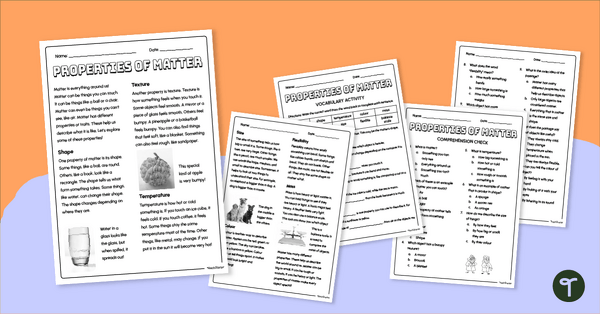
Properties of Matter Reading Comprehension Pack (Year 3)
Read and discover the properties of matter with a set of Year 3 Reading Comprehension Worksheets.
- Plus Plan
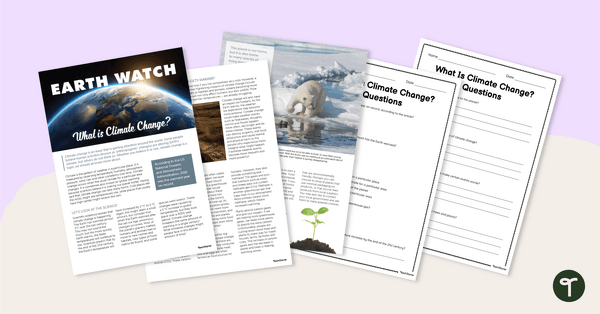
What Is Climate Change? Worksheet Pack
Teach your students about the perils of climate change with this comprehensive article with accompanying comprehension questions.
- Plus Plan
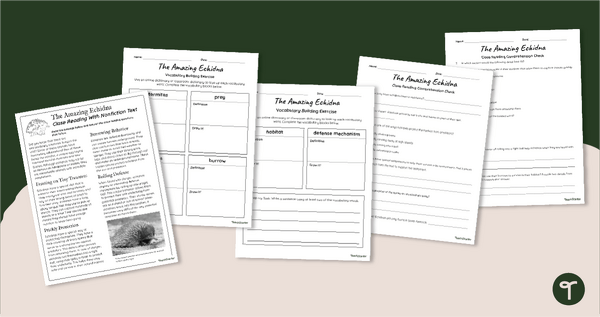
Echidna Adaptations – Reading Worksheet Pack
Discover the adaptations of the echidna with a printable reading passage and comprehension worksheet pack.
- Plus Plan
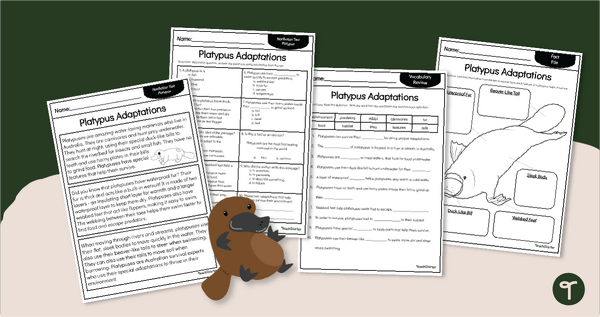
Platypus Adaptations - Reading Passage & Questions
Learn about the physical and behavioural adaptations of the platypus with a set of printable reading comprehension worksheets for Years 3-5.
- Plus Plan
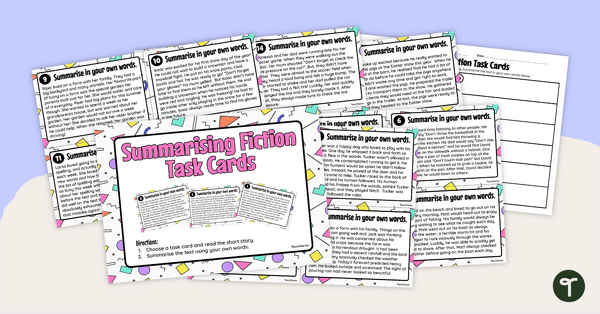
Summarising Fiction Task Cards
Guide students along their summarising journey with this set of Fiction texts on task cards for students to summarise.
- Plus Plan
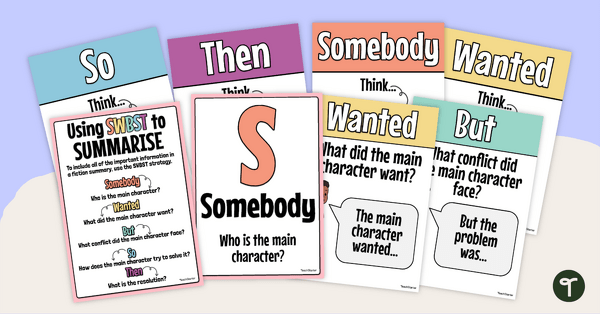
Summarising Fiction Poster Set
Help students remember what to include in a summary of a fiction text with this easy to use SWBST acronym.
- Plus Plan
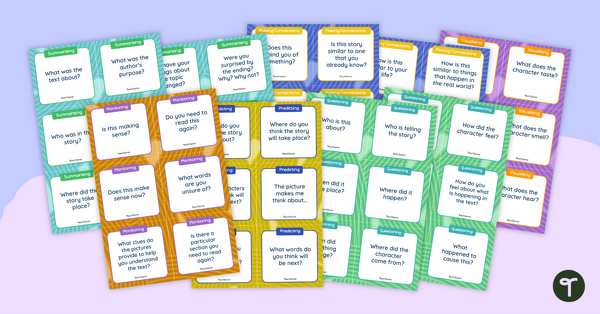
Super Six Reading Comprehension Question Cards
Help students with six different comprehension skills with this set of super 6 comprehension task cards and mats.
- Plus Plan
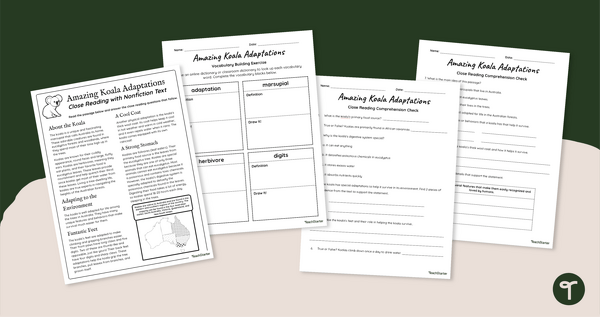
Koala Adaptations Reading Comprehension Worksheets
Learn about the physical and behavioural adaptations of the koala with a set of printable reading comprehension worksheets for Year 4-5.
- Plus Plan
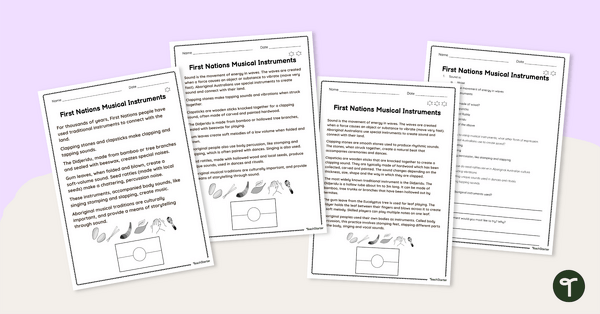
First Nations Instruments Reading Comprehension Worksheets
Use First Nations Instruments Reading Comprehension Worksheets to help your Year Two students learn about some traditional First Nations Australians musical instruments and their characteristic sounds.
- Plus Plan
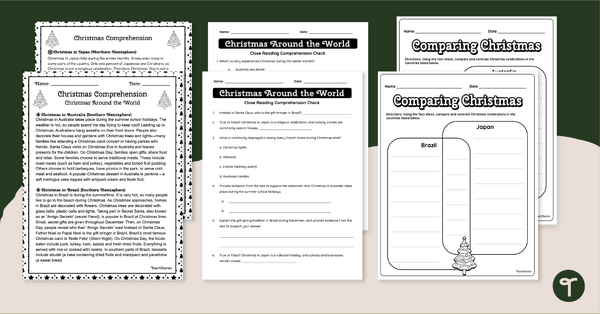
Christmas Around the World - Year 3 Reading Comprehension
Discover how Christmas is celebrated in the northern and southern hemispheres with printable reading comprehension sheets for Year 3.
- Plus Plan
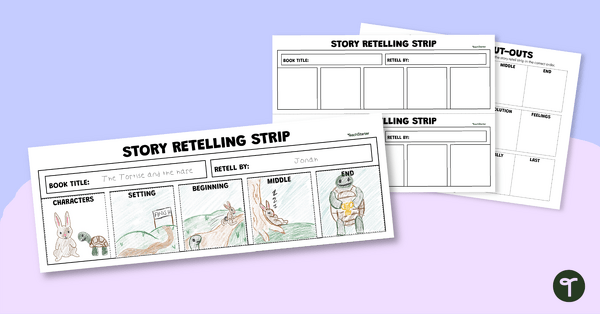
Story Retelling Strips
Explore a story with your students with this story-retelling cut-and-paste worksheet.
- Plus Plan
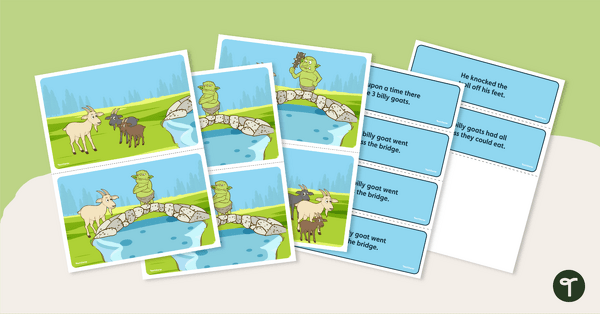
3 Billy Goats Gruff Retelling Activity Cards
Teach your students about retelling with this set of sequencing cards for 3 Billy Goats Gruff.
- Plus Plan
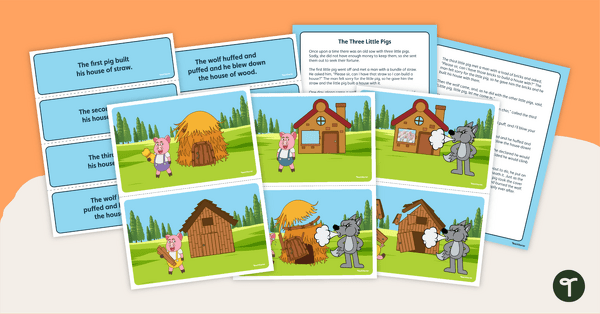
Three Little Pigs Retelling Activity Cards
Teach your students about retelling with this set of sequencing cards for The Three Little Pigs.
- Plus Plan
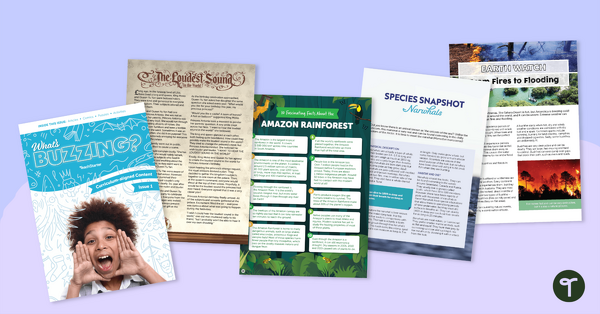
Year 5 Magazine - What's Buzzing? (Issue 1)
A beautifully designed, 24-page reading magazine specifically designed for Year 5 students.
- Plus Plan
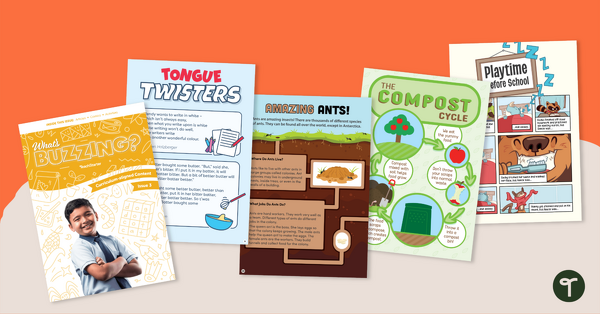
Year 1 Magazine – What's Buzzing? (Issue 3)
Issue 3 of our beautifully designed, 22-page reading magazine specifically designed for Year 1 students.
- Plus Plan
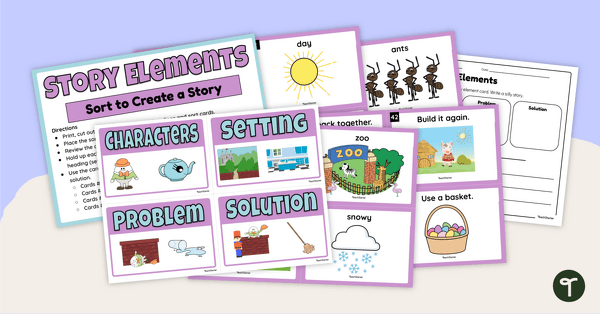
Create a Silly Story – Sorting Activity
Explore story characters, settings, problems and solutions by creating a silly story!
- Free Plan
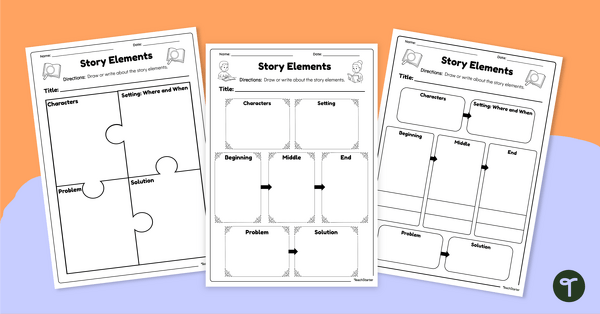
Narrative Elements Graphic Organisers – Portrait
Encourage your students to write and draw about various story elements with this set of differentiated graphic organisers.
- Plus Plan
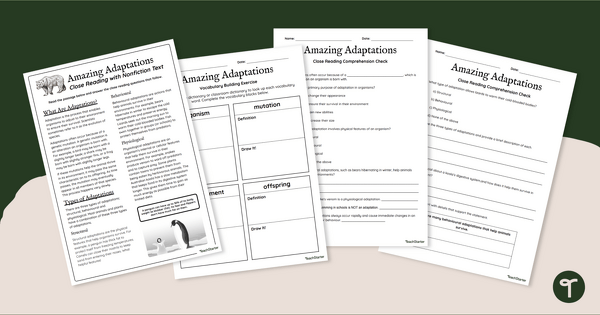
Plant and Animal Adaptations - Reading Comprehension Passage
Boost reading comprehension skills with a comprehension passage, with questions, about structural, behavioural and physiological adaptations.
- Plus Plan
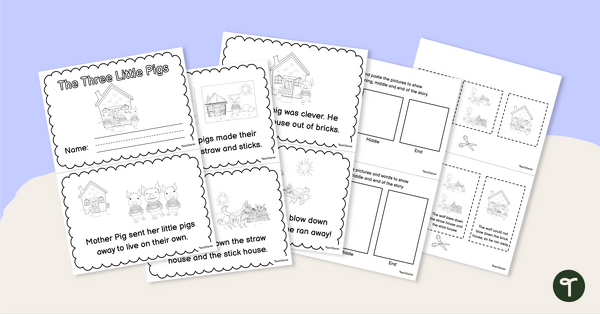
Beginning, Middle and End Mini-Book - The Three Little Pigs
Teach your students about the beginning, middle and end of a story with this mini-book retell of The Three Little Pigs.
- Free Plan
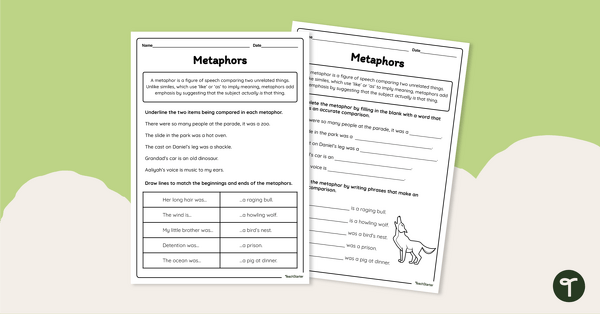
Metaphors Worksheet
Practise identifying and using metaphors with this differentiated metaphors worksheet.
- Free Plan
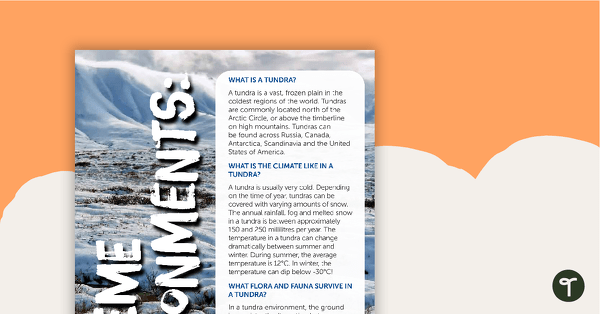
Extreme Environments: Lands of Ice and Sand – Worksheet
A comprehension worksheet for an information report from the Year 4 magazine (Issue 3).
- Plus Plan
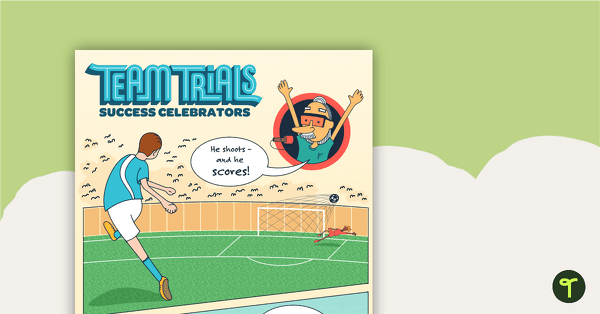
Teamwork and Sportsmanship – Comic and Comprehension Worksheet
Teach your students about teamwork and sportsmanship with this soccer-themed comic, perfect for use during National Simultaneous Storytime 2026.
- Plus Plan
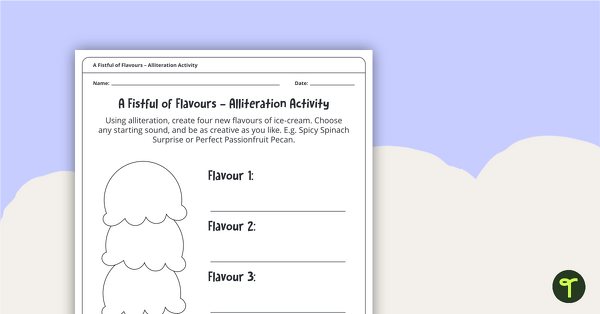
A Fistful of Flavours Alliteration Activity
Make alliteration fun with a printable worksheet that challenges students to create flavours of ice cream.
- Plus Plan
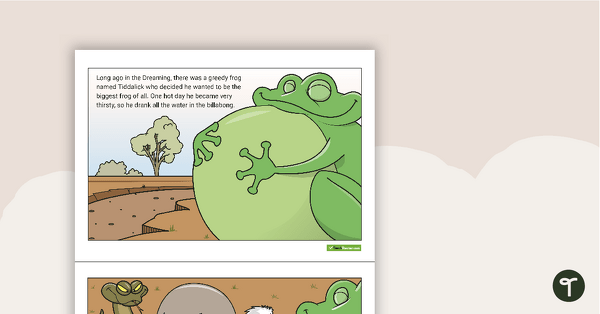
Tiddalick the Frog Dreaming Story Sequencing Activity Cards
Use these Tiddalick the Frog sequencing activity cards as a resource for teaching Australian Dreaming Stories.
- Free Plan
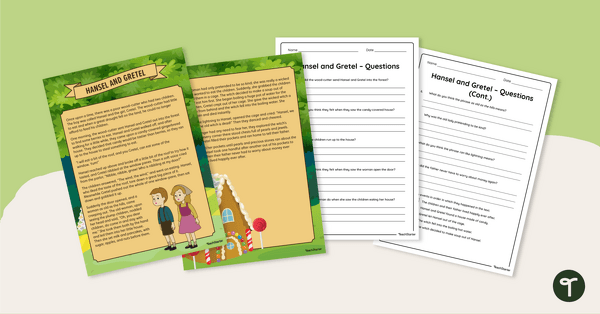
Hansel and Gretel – Comprehension Worksheet
Develop your students' reading comprehension skills with a well-known fairy tale.
- Plus Plan
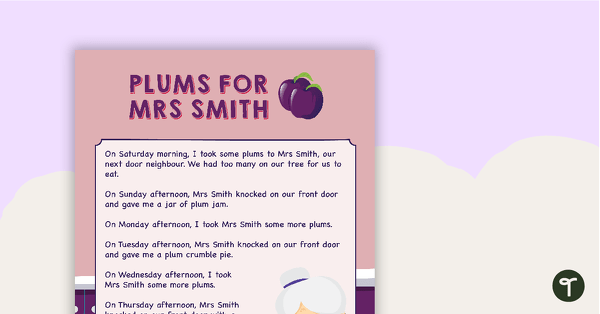
Comprehension - Plums For Mrs Smith
A comprehension activity using a recount for lower grades.
- Plus Plan
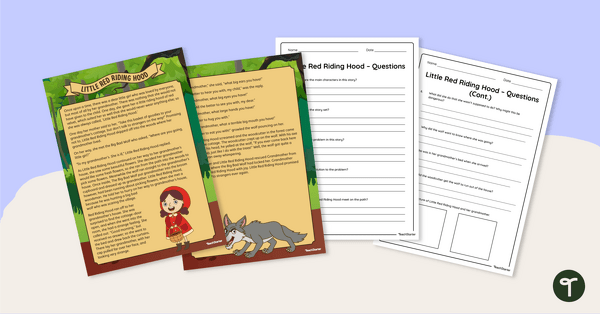
Little Red Riding Hood – Comprehension Worksheet
Develop your students' reading comprehension skills with a well-known fairy tale.
- Plus Plan
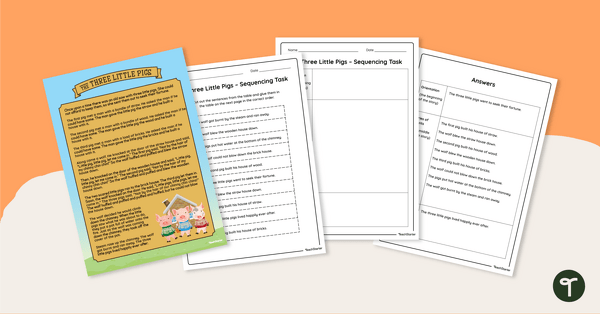
Three Little Pigs – Sequencing Worksheet
Identify the story beginning, series of events and ending with this narrative text sequencing activity.
- Free Plan
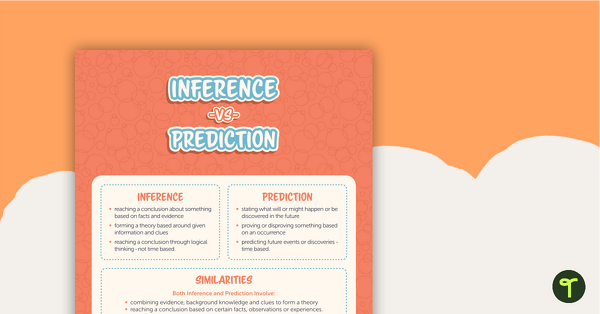
Predicting and Inferring Poster
Support predicting and inferring skills with this engaging one-page poster that helps students understand how to use clues and prior knowledge to think more deeply about texts.
- Plus Plan
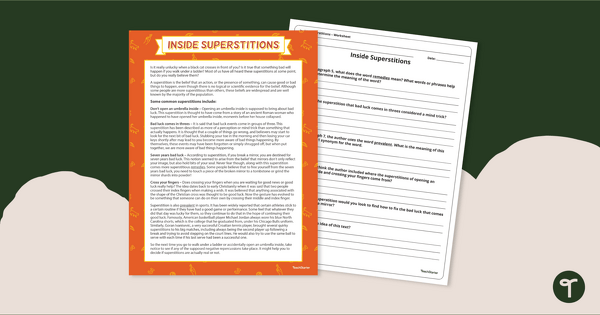
Year 5 Reading Comprehension Worksheets - Superstitions
Learn about common superstitions and beliefs with a printable reading comprehenion passage for Year 5.
- Plus Plan
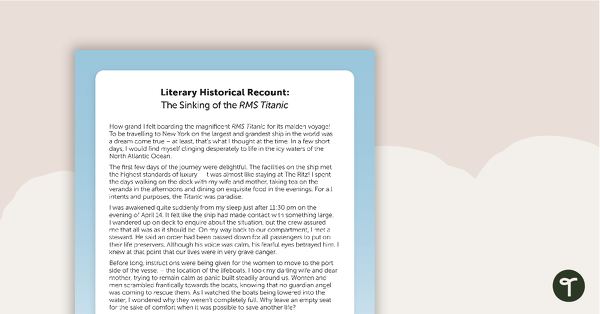
Historical Recounts Examples – Comparison Task
Explore historical recounts examples through a detailed comparison of two accounts of the RMS Titanic disaster, helping students analyse how historical events can be represented in different ways in texts.
- Plus Plan
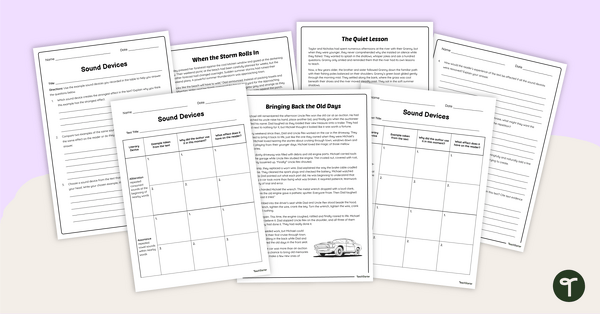
Analysing Sound Devices in Literature Worksheets
Teach sound devices in literature with three engaging passages and accompanying worksheets that help students identify, analyse and explain the effect of key sound devices in meaningful reading contexts.
- Reading Comprehension Worksheets
- Reading Comprehension Templates
- Reading Comprehension Teaching Presentations
- Reading Comprehension Games
- Reading Comprehension Posters
- Reading Comprehension Flashcards
- Reading Comprehension for Foundation Year
- Reading Comprehension for Year 1
- Reading Comprehension for Year 2
- Reading Comprehension for Year 3
- Reading Comprehension for Year 4
- Reading Comprehension for Year 5
- Reading Comprehension for Year 6
- Reading Comprehension for Year 7