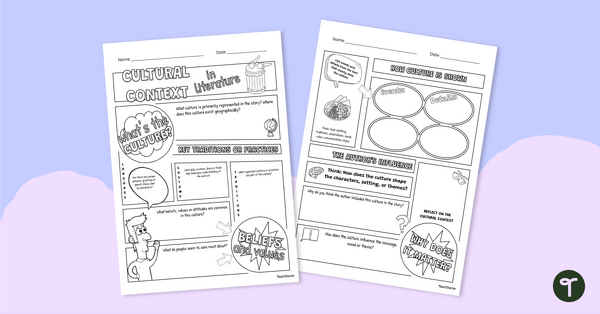
Explore cultural context in literature with this two-page graphic organiser that helps students examine how cultural traditions, values and norms influence texts.
What Is Cultural Context in Literature?
Cultural context in literature refers to the cultural customs, beliefs and values that shape the society in which a story is set. Cultural context helps explain why characters behave the way they do. Their decisions, motivations and relationships are often guided by the expectations of the culture they live in.
This two-page graphic organiser has been designed by the Teach Starter team to help students explore cultural context clues while reading. Its engaging design contains clearly structured spaces and guiding prompts, allowing students to consider how a particular culture is reflected in a text’s setting, characters, storyline and themes.
Some of the prompts on this cultural context in literature graphic organiser include:
- What culture is represented in the story, and where does it exist geographically?
- What daily routines, dress or foods help build your understanding of the culture?
- What beliefs, values or attitudes are common in this culture?
- Why do you think the author included this culture in the story?
- How does the culture influence the message, mood or theme?
If your students are reading a novel that is set in a different country or cultural community from their own, this organiser gives them structured prompts to record their thinking and encourages an appreciation for diverse perspectives.
Ways to Explore Cultural Context in Literature in the Classroom
This two-page graphic organiser can be used to promote considered, in-depth discussions about how cultural context shapes literary texts. Here are some ideas for using this resource in your English lessons:
- Before Reading – Introduce the novel by exploring its cultural background. Students can fill out what they already know about the setting’s culture or what they predict they might encounter while reading the text.
- During Reading – Use the graphic organiser as an active reading tool. Students can monitor their comprehension by pausing to note cultural practices, language use, customs and values as they encounter them in the text.
- After Reading – Use the students’ completed graphic organisers to prompt and drive a class reflection on how cultural context influenced the characters’ behaviours, the plot development and the author’s overall message.
Download This Cultural Context in Literature Graphic Organiser
Use the dropdown arrow on the Download button to choose between the editable Google Slides file or the easy-print PDF. Please note that you will be prompted to make a copy of the Google Slides file.
For sustainability purposes, please consider printing this two-page resource double-sided.
This resource was created by Kaylyn Chupp, a teacher and a Teach Starter collaborator.
More Resources for Exploring Literary Context
Click below to browse more teacher-created, curriculum-aligned resources to use when exploring social, historical and cultural contexts and their effects on literature with your students.
[resource:5157434] [resource:5157075] [resource:5157507]



0 Comments
Write a review to help other teachers and parents like yourself. If you'd like to request a change to this resource, or report an error, select the corresponding tab above.