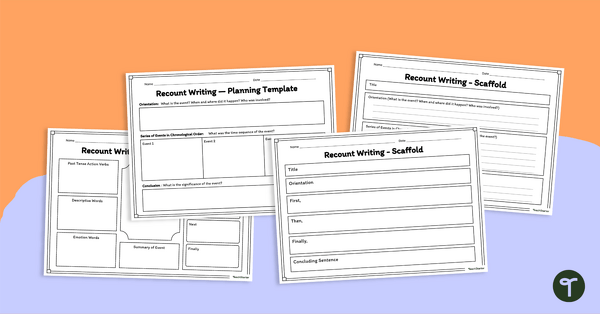
A template for students to use when planning a recount.
Use this teaching resource when studying recount writing with your students.
Encourage them to use the planning template to record their ideas before writing.
Updated: 07 May 2026
A template for students to use when planning a recount.
Editable: Google Slides
Non-Editable: PDF
Pages: 3 Pages
Years: 1 - 2
Explore how texts are organised according to their purpose, such as to recount, narrate, express opinion, inform, report and explain
Create and edit short imaginative, informative and persuasive written and/or multimodal texts for familiar audiences, using text structure appropriate to purpose, simple and compound sentences, noun groups and verb groups, topic- specific vocabulary, simple punctuation and common 2-syllable words
Create short narrative, informative and persuasive texts for familiar audiences using simple text structures, topic-specific vocabulary and multimodal elements as appropriate
Re-read and edit texts for spelling, sentence boundary punctuation and text structure
Create narrative, informative and persuasive texts, written and spoken, with ideas grouped in simple paragraphs, using topic-specific and precise vocabulary and multimodal elements as appropriate
Re-read and edit texts for meaning, appropriate structure, grammatical choices and punctuation
Create narrative, informative and persuasive texts, written and spoken, using relevant, linked ideas for a range of audiences and using multimodal elements as appropriate
Re-read and edit texts for meaning by adding, deleting or moving words or word groups to improve content and structure
Plans, creates and revises texts written for different purposes, including paragraphs, using knowledge of vocabulary, text features and sentence structure
Reads and comprehends texts for wide purposes using knowledge of text structures and language, and by monitoring comprehension

A template for students to use when planning a recount.
Use this teaching resource when studying recount writing with your students.
Encourage them to use the planning template to record their ideas before writing.
Explore how texts are organised according to their purpose, such as to recount, narrate, express opinion, inform, report and explain
Create and edit short imaginative, informative and persuasive written and/or multimodal texts for familiar audiences, using text structure appropriate to purpose, simple and compound sentences, noun groups and verb groups, topic- specific vocabulary, simple punctuation and common 2-syllable words
Create short narrative, informative and persuasive texts for familiar audiences using simple text structures, topic-specific vocabulary and multimodal elements as appropriate
Re-read and edit texts for spelling, sentence boundary punctuation and text structure
Create narrative, informative and persuasive texts, written and spoken, with ideas grouped in simple paragraphs, using topic-specific and precise vocabulary and multimodal elements as appropriate
Re-read and edit texts for meaning, appropriate structure, grammatical choices and punctuation
Create narrative, informative and persuasive texts, written and spoken, using relevant, linked ideas for a range of audiences and using multimodal elements as appropriate
Re-read and edit texts for meaning by adding, deleting or moving words or word groups to improve content and structure
Plans, creates and revises texts written for different purposes, including paragraphs, using knowledge of vocabulary, text features and sentence structure
Reads and comprehends texts for wide purposes using knowledge of text structures and language, and by monitoring comprehension

We create premium quality, downloadable teaching resources for primary/elementary school teachers that make classrooms buzz!
Would you like something changed or customised on this resource? While our team makes every effort to complete change suggestions, we can't guarantee that every change will be completed.
Did you spot an error on this resource? Please let us know and we will fix it shortly.
Are you having trouble downloading or viewing this resource? Please try the following steps:
If you are still having difficulty, please visit the Teach Starter Help Desk or contact us .

Use this future tense worksheet pack to help your students identify and use future tense verb forms in a variety of contexts.

Use these present tense verbs worksheets to help your students identify and use present tense verb forms in a variety of contexts.

Use these past tense verbs worksheets to help your students identify and use past tense verb forms in a variety of contexts.

Engage students with this past, present and future game that turns verb tense practice into an exciting escape room challenge where they apply skills to crack a secret code.

Review vocabulary skills and boost your students’ knowledge of synonyms and antonyms with a crossword puzzle worksheet.

Review verb types with your Year 3 students using this engaging 20-question digital quiz, ideal for lesson warm-ups or informal assessment.

Explore types of verbs (doing, saying, thinking, feeling and relating) with your students with this set of 6 engaging, ready-to-use worksheets.

Use this Exploring Simple Explanations PowerPoint to teach your students about what explanation texts are, why they are written, and how they are structured.

Use our Tropical Cyclone worksheet pack to teach your students about natural disasters.

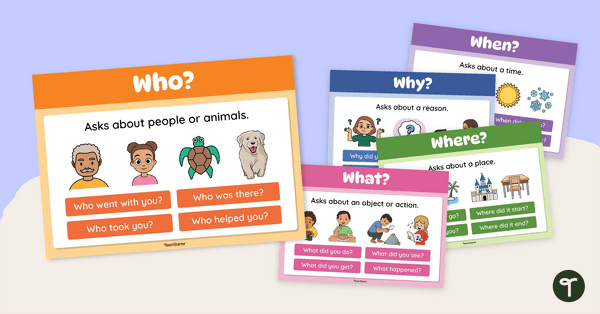
Support young learners to confidently retell events with this set of WH Question posters, designed especially for Early Years and Lower Primary classrooms.
0 Comments
Write a review to help other teachers and parents like yourself. If you'd like to request a change to this resource, or report an error, select the corresponding tab above.