

It’s back-to-school season, which means it’s time to pull out your favorite getting-to-know-you activities and icebreakers! Looking for some fresh ideas to help students connect as they settle into a new classroom community for the 2026-27 school year?
Whether you’re welcoming a class of students who are meeting for the first time, supporting new students joining your school, or helping young learners navigate their very first weeks in the classroom, the right icebreaker activities can make a big difference. Fun, low-pressure games help students build confidence, make connections, and start developing a sense of belonging from day one.
We know the start of a new school year comes with a long to-do list, so the Teach Starter teacher team has rounded up some of our favorite classroom-tested activities to help you get off to a strong start. From engaging first-day games to creative ways for students to learn about their classmates, these ideas are designed to foster positive relationships and build a welcoming classroom environment.
Read on for tips on introducing getting-to-know-you activities in your classroom, plus plenty of fun icebreakers for your elementary students!
What Is a Get to Know You Game?
At first glance, getting-to-know-you activities might seem pretty self-explanatory — they’re designed to help students learn more about their classmates. But these activities do much more than simply introduce names and favorite foods.
The first few weeks of school play an important role in shaping your classroom culture for the year ahead. Alongside establishing routines and expectations, you’re also creating opportunities for students to build connections, develop trust, and feel like they belong within the class community.
Getting-to-know-you activities, often called icebreakers, provide a fun, low-pressure way for students to share about themselves and learn about the people around them. They also give teachers valuable insights into their new class, helping identify emerging leaders, thoughtful collaborators, students who may need additional support, and shared interests that can help strengthen classroom relationships.
As an added bonus, many icebreaker activities can double as informal assessments, giving you an early glimpse into students’ communication skills, creativity, problem-solving abilities, and prior knowledge.
Save time with a curated collection of teacher-created icebreakers for kids!
Get to Know You Games for Kids
Before diving into the activities, remember that the best getting-to-know-you games help students connect in a way that feels comfortable and inclusive. Choose activities that allow students to participate without feeling pressured to share personal information they’re not ready to discuss, and be mindful that what works for a group of first graders may not resonate with older elementary students.
Most importantly, look for opportunities to help students discover common interests, celebrate their differences, and begin building positive relationships with their new classmates from day one.
Lines and Blobs
This speedy game is a fun one that will get your new students up and moving. Challenge your students to organize themselves as quickly as they can in either ordered lines or groups (aka blobs) based on specific criteria that require them to talk to one another and work together.
Try these prompts to start with:
- Line up in alphabetical order of your first name.
- Create groups with students who have the same favorite color as you.
- Line up in order of your birthdays.
- Gather with those who are born in the same month as you.
- Line up in alphabetical order of your favorite fruit.
- Get into groups with those who have the same number of siblings as you.
- Line up from shortest to tallest.
- Get into groups with those who have the same number of letters in their first name as you.
To keep noise levels a little lower, you can also challenge students to do the activity with only gestures and body language where appropriate. This is a great way to get kids active, find what they have in common and get familiar with each other in an exciting format.
Go Fish
No, we don’t mean the card game! This fun fishing to know you game includes 20 prompts to get your students sharing information about themselves with you and their classmates.
Teacher Alexia shared how she uses this printable game to get her students engaged:
“I cut up all the fish and put them in a container … Students had turns to ‘fish’ out a question and read it aloud to everyone. They loved it and it sparked some fun and interesting discussions in our classroom.”
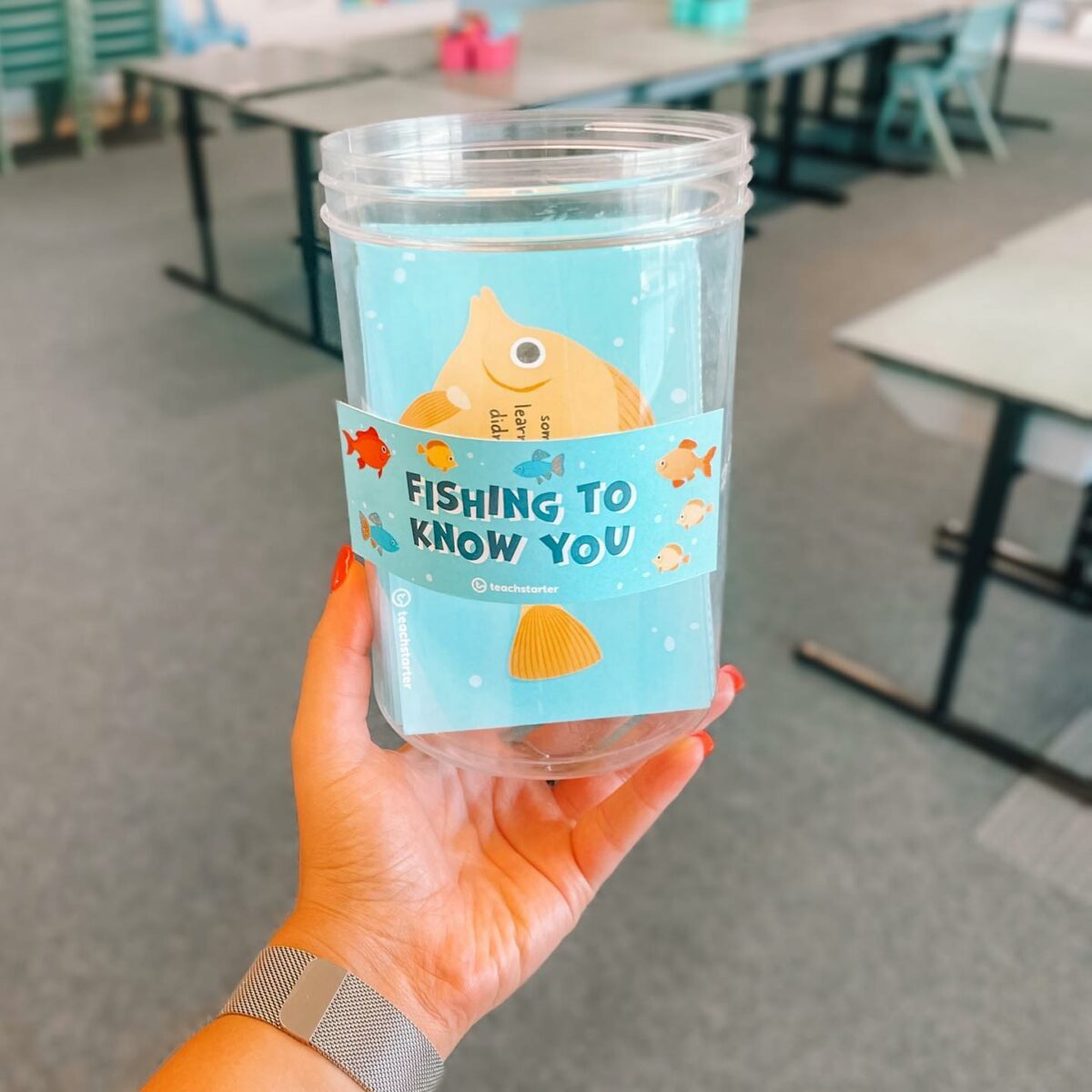
If you’re feeling extra punny, you can take this activity to the next level by having students actually fish for the cards! All you will need is some paperclips, a magnet and a basic kid’s fishing pole toy (even a string tied to a ruler would do).
- Print and cut the cards. Add one paperclip to each card.
- Attach the magnet to the end of your fishing line with glue or tape — this is your hook.
- Scatter the cards in a kiddie pool or a storage tub.
- Students take turns using the fishing rod to “catch” a card and answer the question they catch!
Musical Chairs — or Musical Facts!
Looking for another creative way to use the Fishing to Know You cards? Why not bring back a classic favorite—musical chairs!
Musical chairs is a fantastic way to ease those back-to-school nerves by playing some tunes and getting students moving and interacting with their classmates. Each time a student is left without a chair, instead of sitting out completely, have them pick a random Fishing to Know You card and share their answer with the group. It’s a fun, low-pressure way for students to learn more about each other—plus, expect plenty of laughs along the way!
Wipe That Smile Off Your Face
We said these games were fun, didn’t we? Well, this one is Fun with a capital F! It’s like the challenges popular on YouTube these days that ask students not to laugh, but we promise this is 100% classroom-appropriate.
How to play
- Students sit in a circle, and the teacher chooses one person to start the game.
- That person smiles their widest, biggest, cheesiest smile at everyone else in the circle, trying to make them laugh. However, they must be silent and cannot pull faces or be silly. All they can do is smile.
- For every person in the group who laughs at their smile, the smiling student receives one point.
- After they have smiled at everyone in the group, they “wipe” the smile off their face with their hand and “pass” the smile to the next person in the circle.
- The student with the most points can get a prize, such as being a line leader or perhaps a printed bookmark.
This…or That?
This classic game is a HIT with any class. We guarantee it! Similar to the Lines and Blobs activity, this game is a zero-prep way to get kids moving, talking to each other, building confidence in justifying their opinions, and discovering what they have in common.
It’s super simple — read out prompts with two possible responses to your class, such as “this or that” or “would you rather” questions. As you read them, students will move to each side of the room to indicate which answer they have chosen.
Try these prompts to start you off:
- Kittens or puppies?
- Chips or chocolate?
- Chocolate or sour candy?
- Beach or pool day?
- Playground or soccer field?
- Recess or PE?
- Field day or recess?
- Swings or monkey bars?
- Art or music?
- Reading or math?

Two Truths and a Lie
Two truths and a lie is a classic (and fairly addictive) getting-to-know-you exercise for kids that can be played as a whole class or in small groups. Here’s how it works:
- Each person in the class comes up with three statements about themselves — two true statements and one false. Some students may find it easiest to write these down.
- In turn, each student presents their statement to the rest of the class to determine which one they think is false.
Some different ways to play this game are:
- Have the entire class vote on which statement they think is false.
- Have each student write down which statement they believe is false and see who gets the most correct.

Emoji Charades Icebreaker Game
The Emoji Charades Icebreaker game is a modern and FUN way to get your students laughing and connecting at the start of the school year. It’s perfect for breaking the ice and sparking creativity!
Here’s how to play:
- Prepare a set of emoji cards on index cards. Each card should show a combination of 3–4 emojis that represent a simple phrase, activity, or object. For example:
- 🍕🎬 = Pizza and a movie
- ☀️🏖 = A day at the beach
- 🚶🐶 = Walking the dog
- Divide the class into small teams (3–4 students per team works well).
- One student from each team picks a card and acts out the emojis without speaking, while their team guesses the phrase.
- Set a timer (30–60 seconds per turn) to keep the game moving and exciting.
- Rotate players so everyone gets a chance to act and guess.
It’s a simple way to get students moving and laughing while easing into the day. Emojis make it familiar and fun, and acting out the clues adds just the right amount of challenge. Working together to figure them out helps students start building connections without even realizing it.
Personali-tees
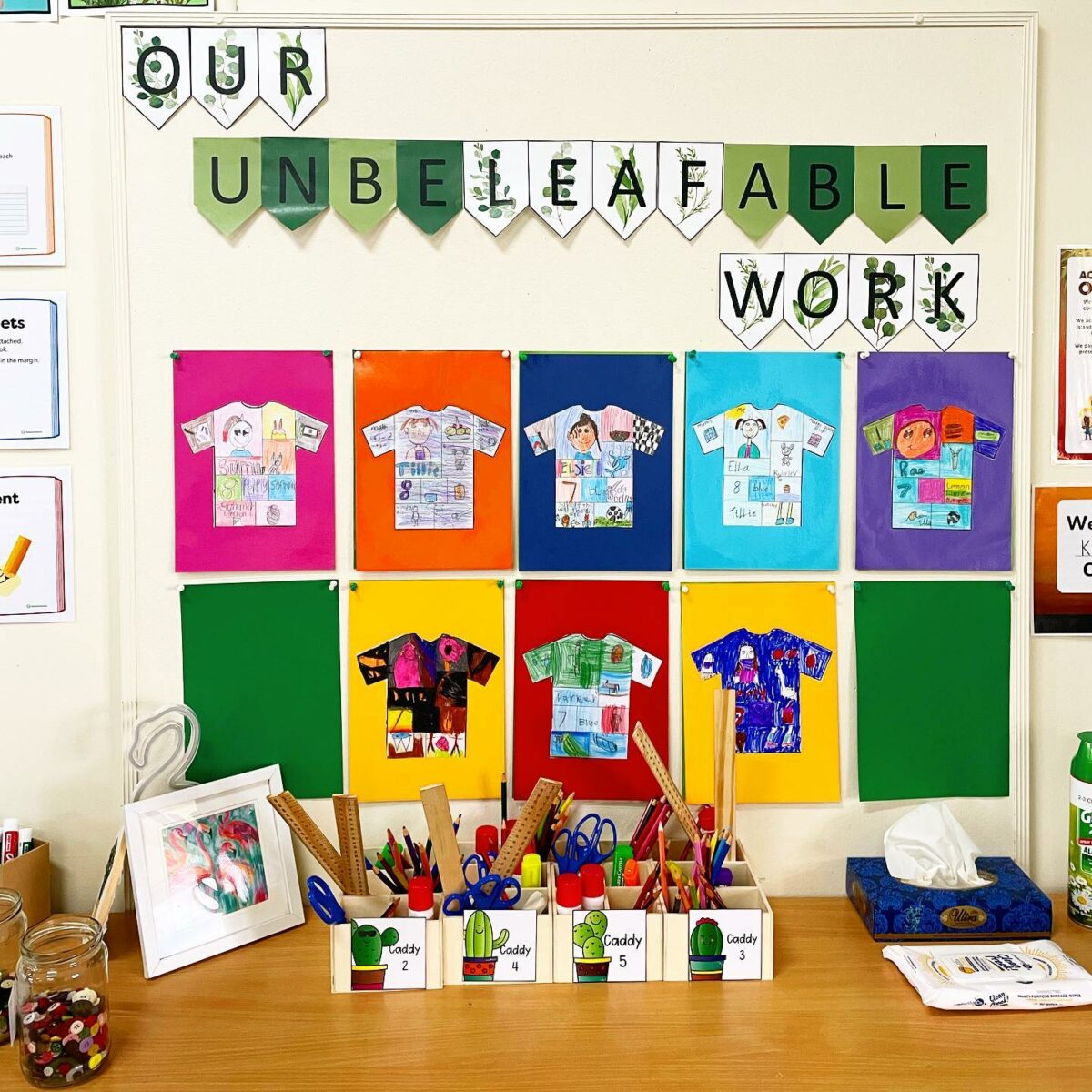
How about letting each student decorate their own personali-tee to share a bit about themselves with their classmates? Just print a ‘getting to know you’ t-shirt template, hand out the colored pencils and scissors, and let students get crafty!
Next, separate the students into different areas of the classroom based on what they wrote on their t-shirts.
For example, you might announce, “Everyone whose shirt says ‘8’ go to the right side of the classroom,” and “Everyone whose shirt says 7 goes to the left,” and so on.
These tees are a fantastic way to help students identify commonalities and learn something new about each other. When you’re done, you might like to make a classroom display of all the T-shirts like this ‘unbeleafable one from Kindergarten teacher @live.it.with.t below!
Kick Off with a Friendly Debate!
Starting a debate on the first day of school? It might sound a little risky, but this icebreaker is all about fun, not disagreement. The idea is simple: Give students four everyday favorites — think pizza, ice cream, basketball, or video games — and ask them to decide which one has to go. That’s right, one of their favorites is getting voted off the island!
Students share their choice and explain their reasoning, sparking a lighthearted discussion that gets everyone talking. It’s a great way to encourage critical thinking, build confidence in sharing ideas, and help students practice listening respectfully to different opinions. Best of all, there’s very little prep involved. Simply write four options on the board and let the debate begin!
Alternative examples you could rotate in depending on the age group:
- Pizza, tacos, burgers, and macaroni and cheese
- Soccer, basketball, baseball, and football
- Summer, fall, winter, and spring
- Video games, movies, books, and music
- Dogs, cats, dolphins, and pandas
 All About Me Cube Games
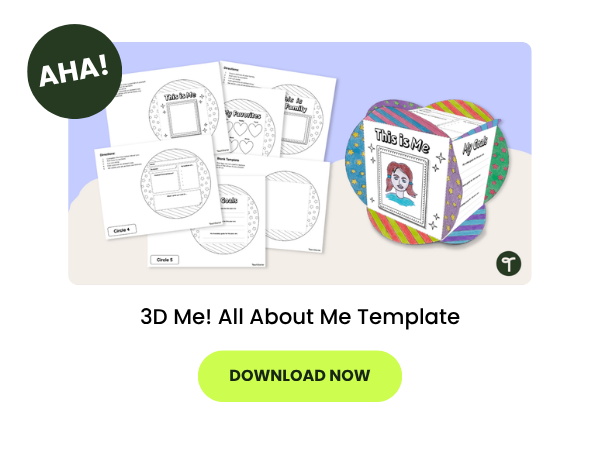
This is a super fun, hands-on activity that can be used in different ways. Simply download and print the All About Me 3D Cube Template. Make sure you print enough for every student in your class.
Here are a few ways you could use the cubes to turn this craft activity into a group-sharing icebreaker.
#1 Cube Clumps
- The teacher calls out one of the favorites on the My Favorites side (e.g. color, hobby, movie).
- Students find all of the other people in the class who share that same favorite and stand in a “clump.”
- For favorites that leave students standing alone (i.e. they are the only person in their class with that favorite), use this as a way to highlight the amazing diversity and individuality in your class!
#2 Cube Mix
- Students complete all cube sides except the “This is Me” side.
- Collect the cubes and mix them up in a bag or box.
- Hand a cube to each student, ensuring they don’t get their own.
- Students look at the cube they received and try to figure out who it belongs to.
#3 Cube Stack
In groups, students use the complete cubes to create 3D sculptures or displays in your classroom by stacking cubes with the same face out.
- The name and birthday side can be used to create a birthday display by stacking all of the cubes from each month together.
- Stack the cubes with the portrait side facing out to make a 3D sculpture.
- Use the My Favorites side to create a display, or even to use as writing prompts throughout the year.
STEM Activities
STEM (Science, Technology, Engineering, and Mathematics) activities make fantastic icebreakers, as students can work together in small groups with a common goal: tackling the challenge!
These sorts of activities also take some of the pressure off shy students who may feel uncomfortable with activities that focus on aspects of themselves and their own lives.
Our teacher team’s favorite STEM activity for back to school is Can You Save Fred? It requires students to work together to help Fred the worm get his boat upright and strap on his life vest, all without touching him! It will have your new students working together and giggling all on Day 1.
Name Chase
This variation of the tried-and-true game “Duck, Duck, Goose” is a great way to help new students remember each other’s names.
- Students sit in a circle with one person standing on the outside. That person is “it.”
- The person who is “it” walks around the circle, gently tapping each person on the head, saying that person’s name as they do (instead of saying “duck”).
- If the person who is “it” taps someone and says the class name instead (e.g. “Ms Davis’ class” instead of saying “goose”), the tapped person has to stand up and chase “it” around the circle, trying to tag them before “it” takes their spot.
Memory Chain
Another twist on a familiar classic, this is a simple, no-prep circle activity that helps students learn each other’s names while practicing listening and recall. The first student says their name and one thing they enjoy (for example, “I’m Sam and I like surfing”). The next student repeats the previous response before adding their own — “This is Sam, who likes surfing. I’m Alex, and I like drawing.” The chain continues around the circle, with each student repeating all prior names and interests before adding their own. This activity creates lots of laughs, encourages focus and respectful listening, and helps build a strong sense of classroom community from day one.

Speed Chats
This fast-paced partner activity gives students multiple opportunities to talk, listen, and connect with their classmates in a low-pressure way. Students pair up and respond to a teacher-prompted question for 60-90 seconds before rotating to a new partner. Questions can be light and fun, such as favorite foods, hobbies, or pets, or gently reflective (like something they’re proud of or looking forward to this school year). The quick rotations keep energy high, reduce anxiety for reluctant speakers, and help students practice turn-taking and respectful listening while getting to know many classmates in a short amount of time.
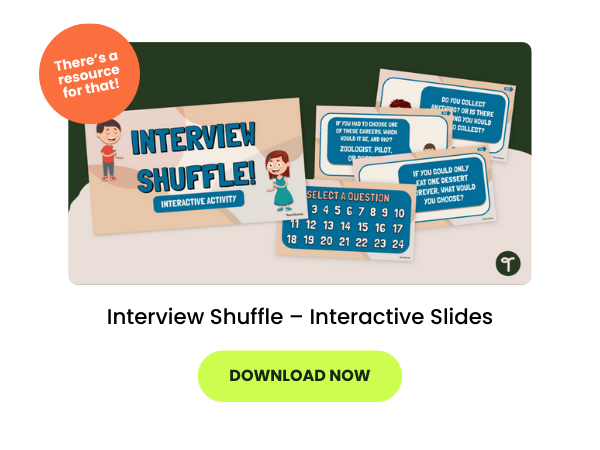 Interactive Icebreaker Wall Display
We love a good interactive wall display to engage students in their surroundings, and this one doubles as a getting-to-know-you activity. Our interactive icebreaker wall display isn’t just for week 1; it can be used throughout the first month of the school year.
The resource download includes a display banner, lily pads with “getting to know you questions,” and decorations to help create this super cute pond display.
You can use the cut-out frogs as markers to remember which questions you have completed. Alternatively, why not use the display like a board game? Each morning, choose a student to roll a number cube. The student moves that many lily pads along the pond. The question or activity where the frog lands is what the whole class completes for the day.
The beauty of this resource is its flexibility. Choose what you think is going to work best for your students in your class. Perhaps you feel it would be best to pair your students to discuss their answers to a question on the display.
Or, perhaps you’re interested in seeing some of their writing abilities. Why not turn it into a quick writing session? Pick and choose what works best for you and your class.
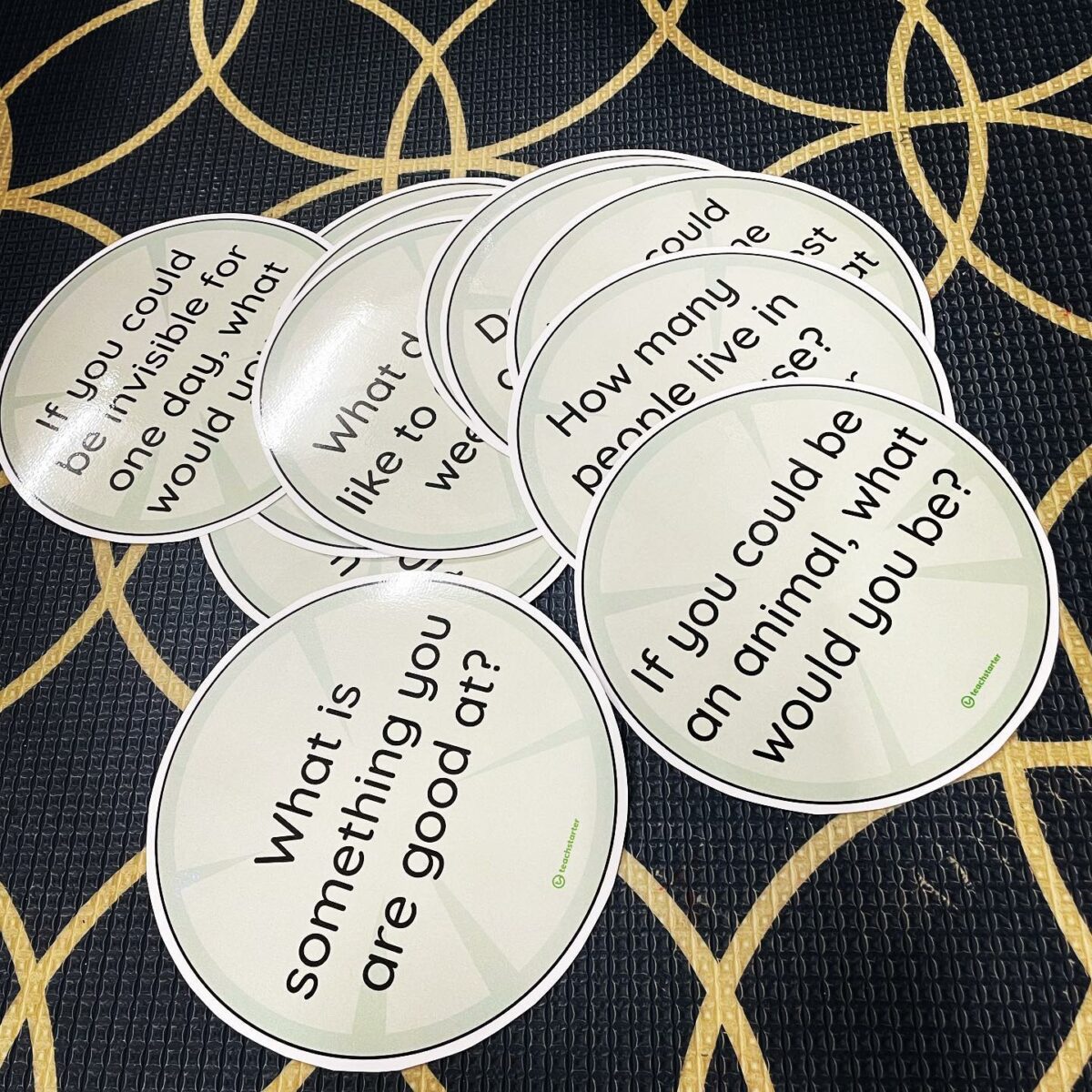
We also love this idea from teacher @mrsloudlife (below). She printed out each of the getting to know you questions, and popped them onto a key ring for easy access!
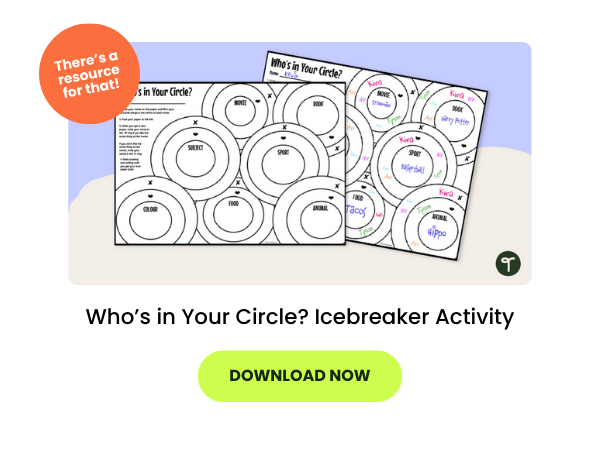
Pass the Paper
Kick off Week 1 with a fun icebreaker that helps students feel at ease and start building connections! Pass the Paper is a simple, low-pressure activity that gets everyone talking. Each student begins with a sheet of paper and writes their name at the top, then answers a light-hearted question, like their favorite sports team, go-to snack, or dream vacation spot, before passing the paper to a classmate. As the papers circulate, students add their own answers, and by the time the sheets return to their owners, they’re filled with fun facts about their peers. It’s an easy way to spark conversations and create a sense of community right from day one.
Our teacher team loves this activity on the first day, especially since you don’t have to manage a whole-class activity when you don’t yet know every student by name!
 Jump Rope Fun
Students choose a side of the jump rope based on their answer and then see where their classmates stand. Although it’s a fun activity for the first weeks of school, it can also be revisited later in the year as a math graphing activity or used as a quick brain break during transitions.
20 Icebreaker Activity Cards
Looking for an easy pack of resources that you can use to make the first few days of school as engaging as can be?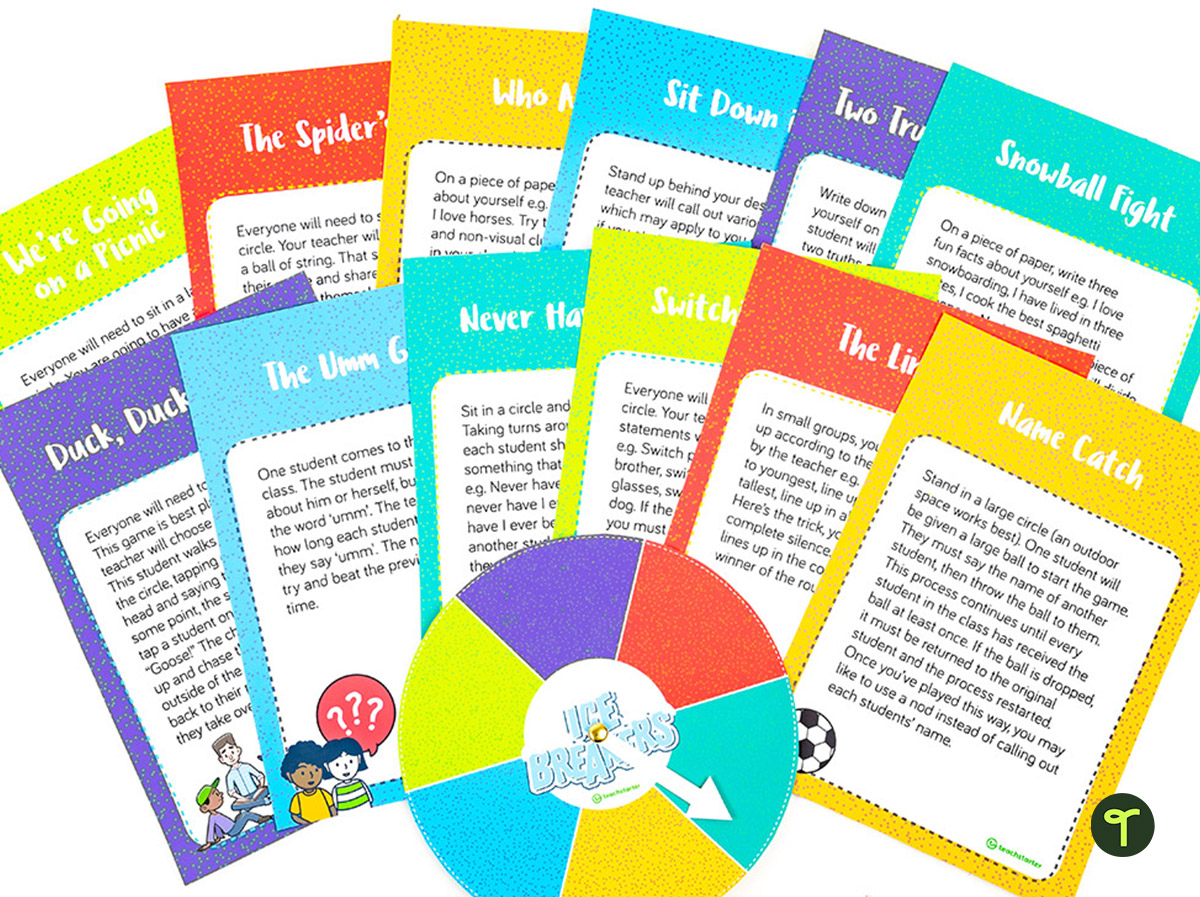
This icebreaker activity pack includes 20 different icebreaker activities for years 3 to 6! Each task card features a fun and engaging getting-to-know-you activity that your students will absolutely love!
Go on a Classmate Scavenger Hunt
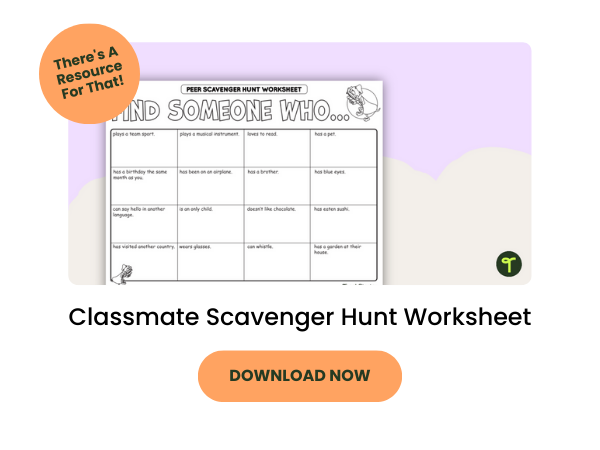
Send your students on a scavenger hunt to break the ice with their new classmates … only they don’t need to find something. They need to find someone, or rather several someones! Very similar to Find Four, this get to know you game for kids may be more appropriate for smaller classes where “finding four” might be tough or for younger students.
From someone who has a pet to someone who has blue eyes, this activity gets kids up and moving, as well as meeting and greeting their classmates.
 School-Wide Treasure Hunt
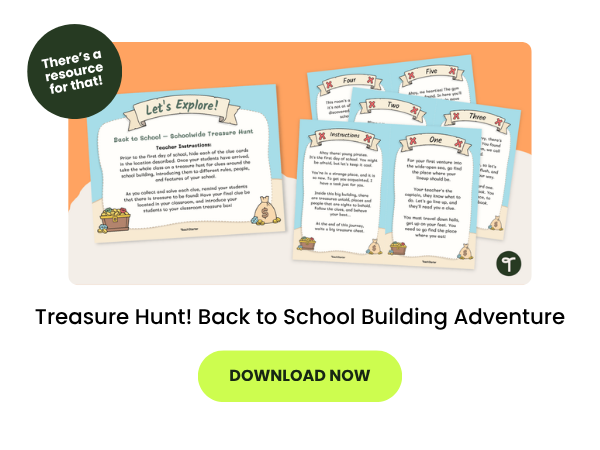
Get students moving and learning their way around the school with a whole-class treasure hunt! As a class, follow a series of clues that lead to important locations around the building, such as the library, cafeteria, gym, playground, nurse’s office, and main office.
This activity is a great opportunity to review school procedures while helping students become familiar with their surroundings. As you travel from one location to the next, students can practice walking safely in line, following hallway expectations, and transitioning responsibly between spaces. Returning students benefit from a refresher, while new students gain confidence navigating the school and learning where to find key resources. It’s a fun and engaging way to build excitement while reinforcing important routines for the year ahead


Comments