Classifying of Matter Teaching Resources
Teach students how to classify matter as pure substances or mixtures with engaging activities aligned with the NGSS curriculum.
This collection of printable and digital worksheets, experiments and activities was created by the teachers of the Teach Starter team to save you time on your lesson plans. That means you'll find resources already carefully reviewed by an expert teacher, plus editable options so you can make the adjustments you need to meet your students' needs.
Need some help with your lesson plans? Read on for a guide from our teacher team, including handy definitions of pure substances and mixtures to share with your students.
How Is Matter Classified?
Before you can dive into actually classifying matter, it helps to explain to students what it actually means to classify matter. Here's a helpful explanation from our teacher team that you can use with your class:
Classifying matter is how we organise different types of matter using its properties or characteristics to help us separate the types into different groupings.
We can classify all the matter around us into just two separate types:
- Pure substances
- Mixtures
What Is a Pure Substance? A Kid-Friendly Definition
Let's break down pure substances in a way your science classes can understand, shall we?
A pure substance has the following characteristics that help us with classification:
- It is made up of only one type of matter.
- It cannot be separated into other substances by physical means.
Pure substance can be broken down into two categories:
- Elements — These are substances made up of just one kind of atom and cannot be broken down or transformed by a chemical reaction. For example, helium is an element that we classify as a pure substance.
- Compounds — A compound is made up of two or more elements that have bonded together to form one. These elements are chemically bonded together and cannot be separated. Water is a compound that we classify as a pure substance as its elements — hydrogen and oxygen — are bonded together.
What Is a Mixture? A Kid-Friendly Definition
If a pure substance is comprised of just one type of matter and cannot be broken down, it might not surprise your students to hear that mixtures have the opposite characteristics.
A mixture:
- Is made up of two or more different types of matter
- Can be separated by physical means
A kid-friendly example of a mixture is a bowl of milk and cereal. There are two different types of matter in the bowl, and you can separate the two types (although it might get messy!).
- Plus Plan
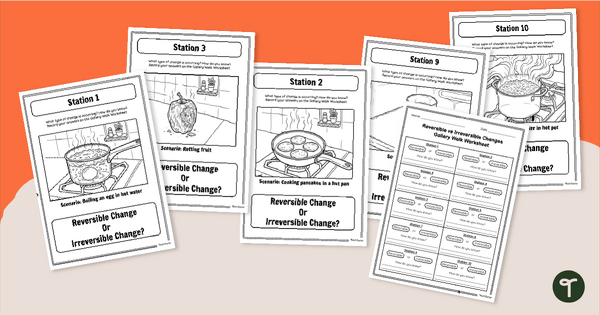
Reversible vs Irreversible Changes Gallery Walk Activity
Explore and explain chemical and physical changes with an engaging Reversible vs Irreversible Changes Gallery Walk Activity.
- Plus Plan
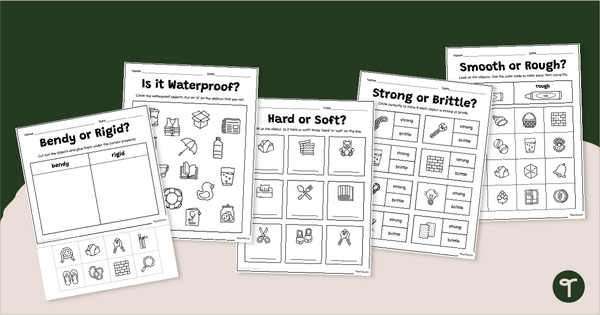
Observable Properties of Materials Worksheets
Explore the properties of different materials with a set of printable Materials and Their Properties Worksheets for little learners.
- Plus Plan
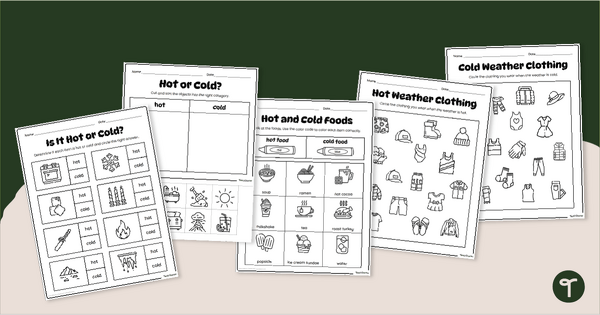
Hot and Cold Worksheets
Explore materials and their properties with a set of printable Hot and Cold Worksheets.
- Plus Plan
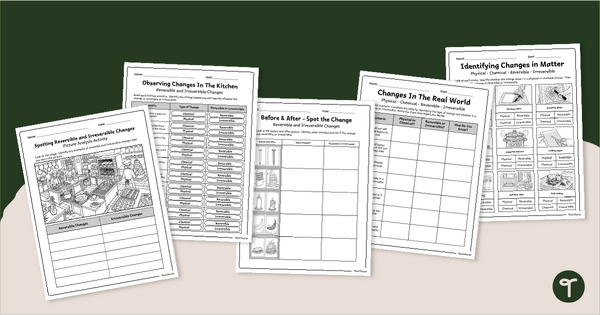
Irreversible & Reversible Changes Worksheet Pack (5-6)
Explore chemical and physical changes in matter with our Irreversible and Reversible Changes Worksheet Pack.
- Plus Plan
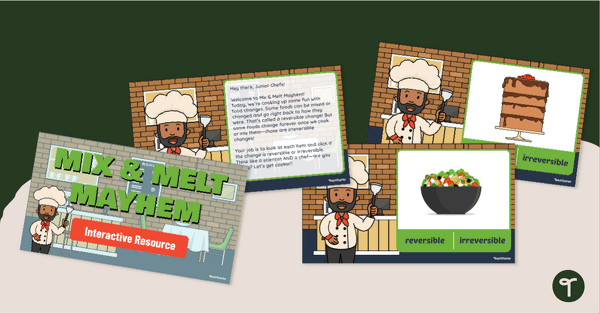
Mix & Melt Mayhem - A Physical and Chemical Changes Game
Play a physical and chemical changes game to teach your students about reversible and irreversible changes in matter.
- Plus Plan
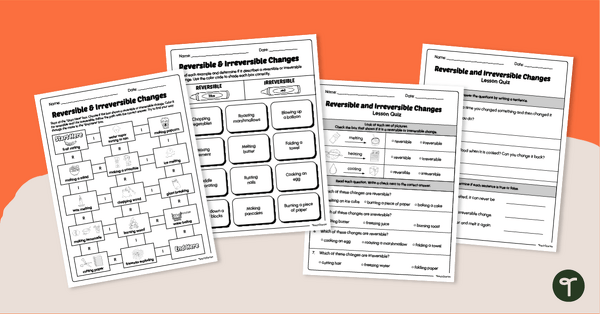
Reversible and Irreversible Changes Worksheet Pack
Download our Reversible and Irreversible Changes Worksheet Pack to help your first graders learn about temporary and permanent changes in matter.
- Plus Plan
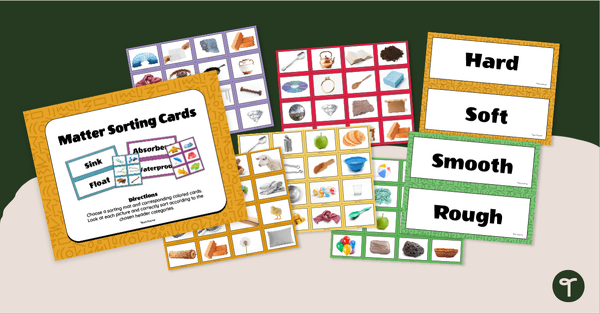
Sort It Out! Properties of Matter Activity
Use our Properties of Matter Sorting Activity cards to create an engaging Matter Sorting Station in your classroom.
- Plus Plan
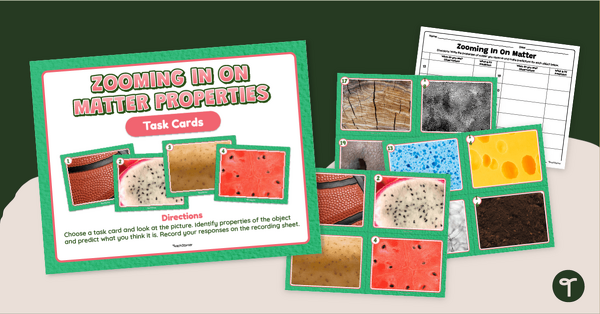
Observing Matter Picture Zoom Task Cards
Challenge your students to observe the properties of matter with an engaging Matter Observation Picture Zoom Activity.
- Plus Plan
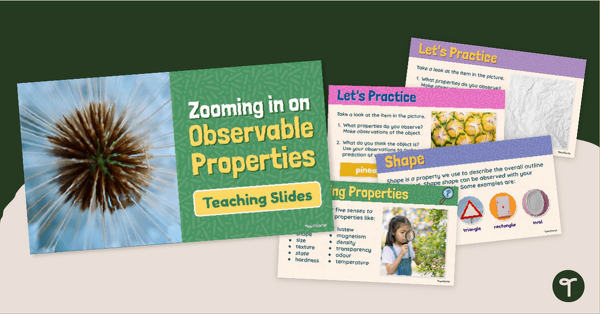
Zooming in on Matter Properties Teaching Slides
Zoom in on the Observable Properties of matter with an engaging Properties of Matter Teaching Slideshow.
- Plus Plan
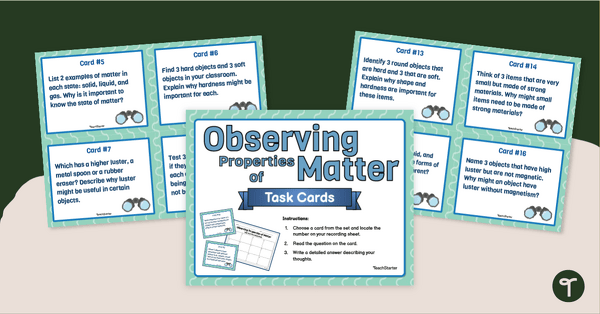
Observing Properties of Matter Task Cards
Practice observational skills and discover the characteristics of matter with a set of printable Properties of Matter Activity cards.
- Plus Plan
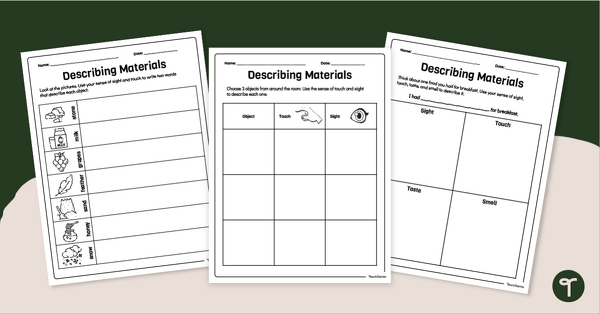
Describing Matter Properties Worksheet Pack (1-2)
Observe and describe examples of matter with a Matter Properties Worksheet Pack.
- Plus Plan
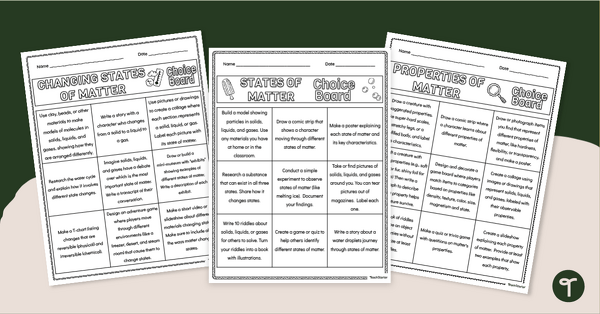
States, Properties, and Changes in Matter - Activity Choice Boards
Use printable Matter Choice Boards to assess student knowledge of states, properties, and changes in matter.
- Plus Plan
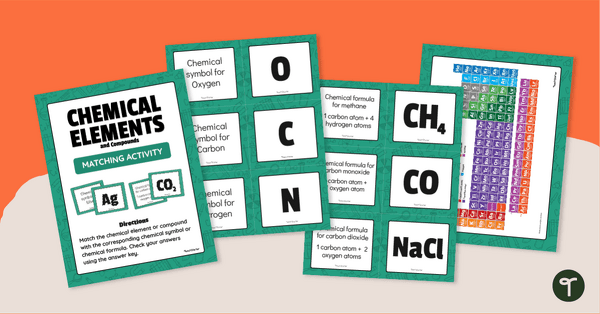
Chemical Elements and Compounds Matching Activity
Match chemical symbols and formulas with their corresponding elements and compounds with a printable Chemical Elements Matching Game.
- Plus Plan
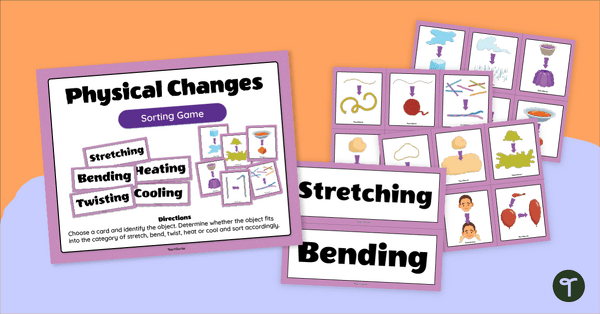
Types of Physical Change - Science Sort
Sort examples of physical changes with a printable Types of Physical Change Science Sort.
- Plus Plan
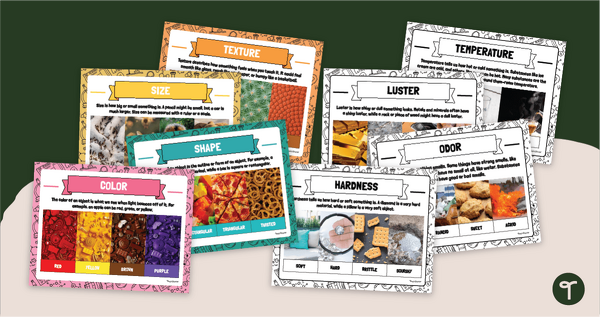
Physical Properties of Matter Poster Pack
Discover the physical properties of matter with a set of printable Properties of Matter Posters for the classroom.
- Plus Plan
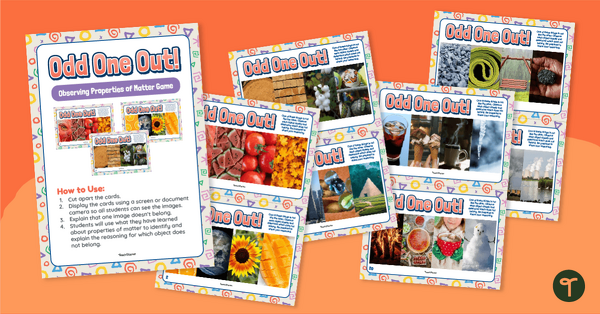
Odd One Out Game- Observable Properties of Matter
Use an exciting 'Odd One Out' Game to practice identifying the observable properties of matter.
- Plus Plan
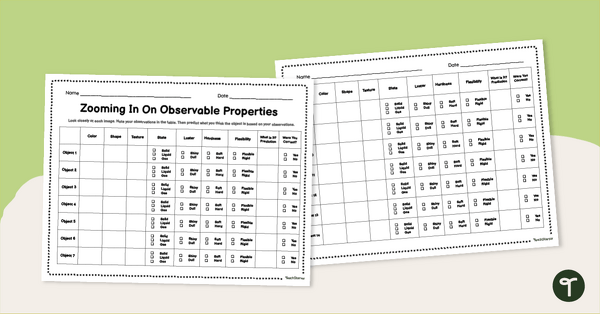
Characteristics of Matter Graphic Organizer
Use a Characteristics of Matter Graphic Organizer to explore and classify examples of matter in your upper-grade science classes.
- Plus Plan
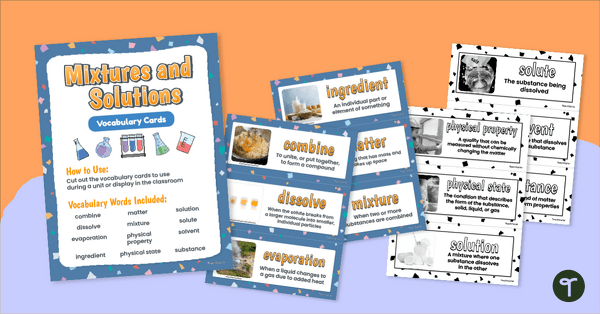
Mixtures & Solutions – Vocabulary Cards
Reinforce science vocabulary in your classroom with this set of word wall cards that focus on mixtures and solutions.
- Plus Plan
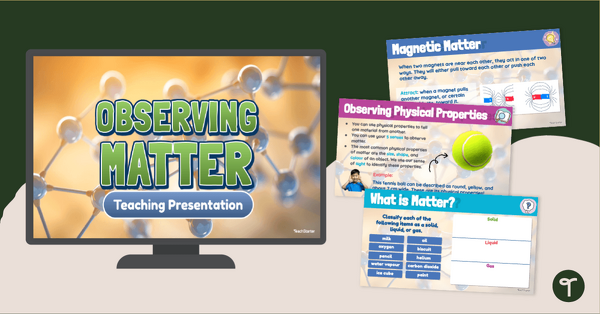
Observing Properties of Matter Teaching Slides
Teach your students about matter and its properties with an engaging interactive slide deck.
- Plus Plan
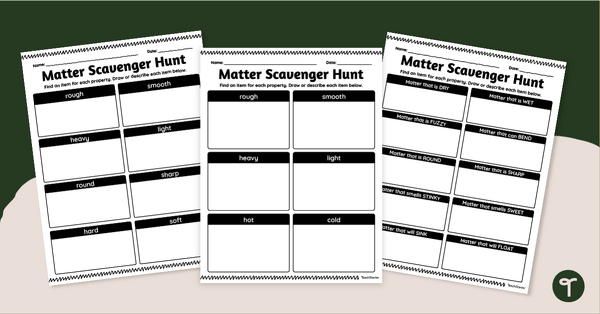
Observing Matter Activities - Differentiated Scavenger Hunts
Host an engaging science scavenger hunt to introduce your primary students to the observable properties of matter.
- Plus Plan
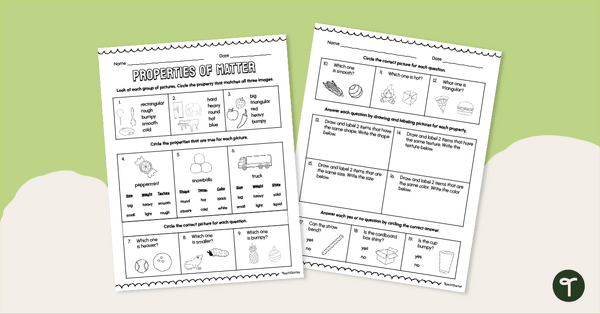
Observing Properties of Matter Quiz - 2nd Grade
Assess students’ knowledge of basic observable properties of matter with a printable 2nd grade Properties of Matter quiz.
- Plus Plan
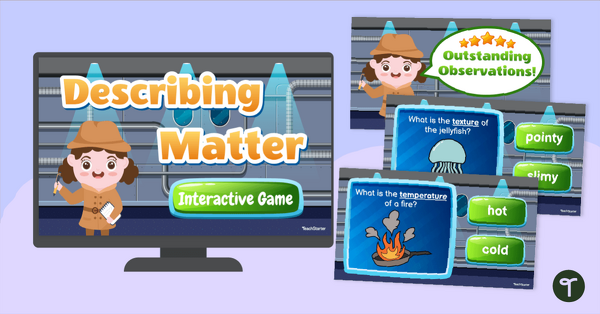
Describing Matter Interactive Game (Properties of Matter)
Practice describing matter with an engaging science game for primary grade students.
- Plus Plan
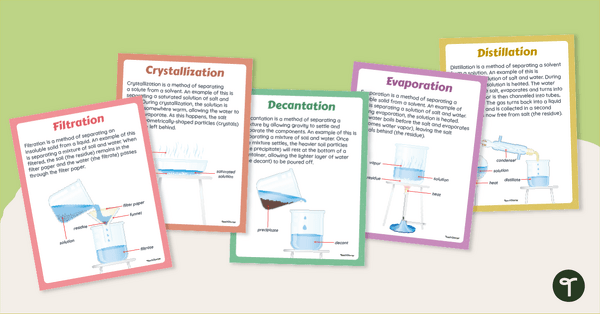
Methods for Separation of Mixtures Poster Pack
Identify common methods for separation of mixtures with our Separation Techniques Chemistry posters.
- Plus Plan
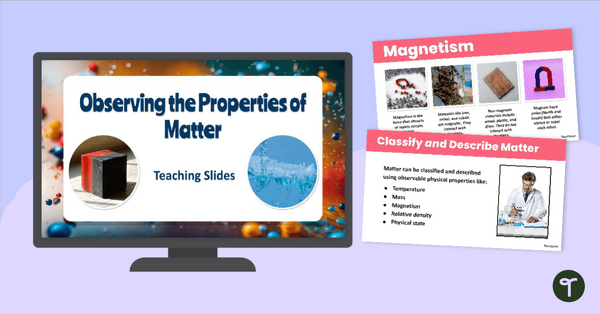
Observing Properties of Matter Teaching Slides
Introduce your students to the classification of matter based on measurable, testable, and observable physical properties with an interactive teaching slide deck.
- Plus Plan
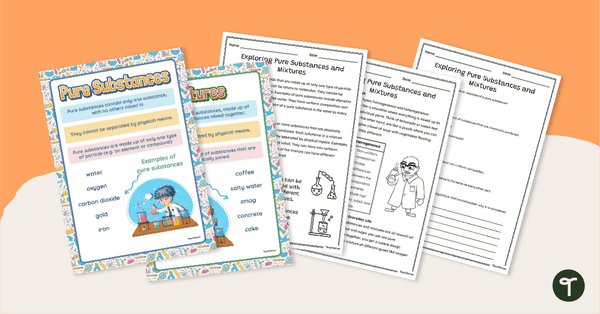
What Are Pure Substances and Mixtures? (Classroom Pack)
Explore pure substances and mixtures with a printable classroom pack that includes posters and comprehension worksheets.
- Plus Plan
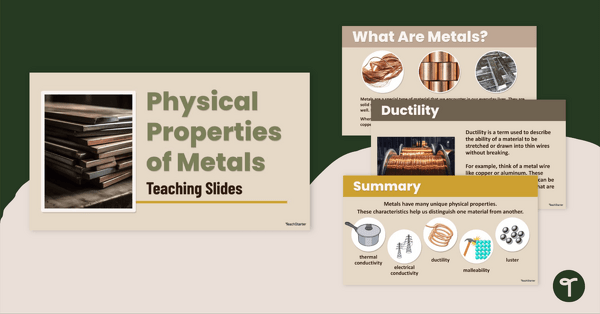
Physical Properties of Metals – Teaching Slides for 6th Grade
Explore and learn about different properties of metals such as luster, ductility, conductivity and malleability with this set of teaching slides.
- Plus Plan
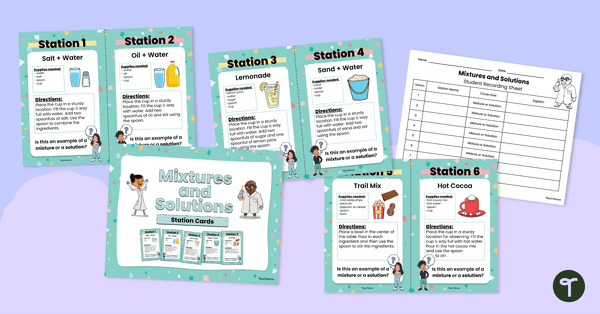
Mixtures and Solutions – Station Cards
Determine if a combination of ingredients makes a mixture or solution during your science centers with this set of station cards.
- Plus Plan
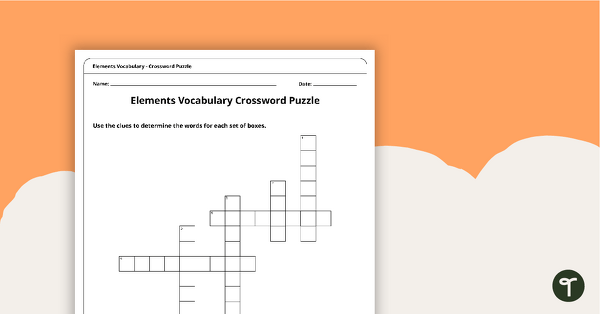
Elements Vocabulary - Crossword Puzzle
A crossword puzzle to practice terms associated with elements.
- Plus Plan
Pure Substances and Mixtures - Teaching Resource Pack
A collection of teaching resources to use when teaching a chemistry unit on pure substances, mixtures and separating techniques.
-
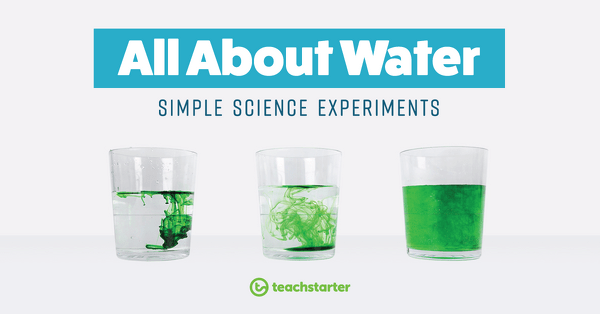
Water Experiments for Kids That Are a Big Hit in the Classroom
Teach kids about density, refraction of light, and more with these fun water experiments for kids that are easy to create in the classroom.