Plants Teaching Resources
Teach students all about the parts of a plant, plant adaptions, how plants grow and more important science topics for elementary school with printable worksheets, digital activities, games and more teaching resources.
Each resource in this NGSS curriculum-aligned collection has been created by a teacher on our team and carefully reviewed by an expert teacher to ensure it's ready to use in your classroom. Explore the whole collection to find editable options plus resources that have already been differentiated for your students!
New to teaching about plants or just looking for fresh ways to make your plant lesson plans engaging? Read on for major vocabulary terms, activity ideas and more in this primer from our teacher team!
What Are Plants? A Kid-Friendly Definition
You know what a plant is, and maybe you even have a few scattered around your classroom to make the place more cheerful! But how do you define plants for your students?
Here's a kid-friendly definition that you can use with young students! A plant is a living thing that usually has leaves, stems and roots. Unlike people and animals, a plant makes its own food from the sun, the air and water.
Some examples of plants that primary grade students may recognize are flowers and trees.
What Are the Parts of a Plant?
Understanding the basic structure of a plant and how it grows can help kids recognize the importance of these living things as a source of food, oxygen and even medicine.
So let's take a look at the basic parts of a plant.
Root
The root is the part of the plant that we usually don't see. The root is usually underground, and its job is to absorb water and nutrients from the soil to help the plant grow and thrive. Some plants have roots that go dozens of feet into the ground.
Stem
The stem is the part of the plant that supports the leaves and flowers and transports water and nutrients from the roots to the rest of the plant. On a tree, the stem is also called the trunk.
You might compare the stem of the plant to its elevator because it moves the water and nutrients up the plant!
Leaves
Leaves are the part of the plant that is responsible for absorbing the sun and producing food for the plant.
Leaves are sort of like the kitchen for a plant. They use sunlight to make food for the plant through a process called photosynthesis. They also help the plant breathe by taking in carbon dioxide and releasing oxygen.
Falling leaves from plants are a common sign of the fall season.
Flower
The flower of a plant is the part that produces seeds. Flowers are usually colorful and smell nice. They're the part of the plant that attracts insects and animals to help with pollination, which is how the plant reproduces.
Fruit
The fruit of the plant is the part that protects the seeds that the plant needs to grow new plants. When animals eat the fruit, they help spread the seeds to new places. This helps the plant grow in new areas and starts the life cycle for a new plant.
Speaking of the life cycle ...
What Is the Life Cycle of a Plant?
Are you exploring the different stages of a plant's life cycle — from seed to adult plant — this school year? Here's the process that they will go through!
- Seed — The first stage of the life cycle is the seed stage! This small — usually round or oval — object is produced by one plant to give life to another.
- Germination — The process by which a seed sprouts and begins to grow into a plant is called germination.
- Seedling — Once a young plant has started to sprout from the seed, we call it a seedling.
- Mature Plant — The final stage of the plant life cycle results in a fully-grown or mature plant that is capable of producing flowers and seeds that can start the cycle all over again!

Must-Know Plant Vocabulary to Share in Your Classroom
As students learn about plant growth and the way plants adapt to survive in different environments, they're going to encounter new and challenging vocabulary words. Here are a few to keep in mind!
Photosynthesis
Photosynthesis is a big word for a big process! This is the name for the process in which plants use sunlight, carbon dioxide and water to produce food (sugar) for themselves.
Chlorophyll
Have your students noticed that plants have green leaves and stems? That's because of chlorophyll. That's the green pigment in plants that helps them with photosynthesis.
Adaptation
Just like animals, plants have to change to survive in their environment through a process we call adaption.
For example, some plants will grow taller to reach sunlight. Others have developed thorns to protect against predators.
Fun Plant Activities for Kids to Add to Your Lesson Plans
Looking for some new activities to make teaching about the plant life cycle and plant adaptation more fun? In addition to the teacher-created printable and digital activities in this collection, we've put together a few favorites from our teacher team!
Planting Their Own Seeds
We know, we know. It's not the most original idea. But you don't need to reinvent the wheel to make the concepts stick. Spider plants and aloe are both easy to plant and grow quickly, allowing students to see the life cycle of a plant in real time in your classroom!
Opting for lima beans, butter beans or other veggies has the added benefit of reinforcing your lessons on the value of plants as sources of food for different animals (including people!)
You can try planting seeds in small soil cups or use wet paper towels and plastic baggies taped to your classroom window. The latter is a great visual for the life cycle process!
Follow the Entire Pumpkin Life Cycle
Pumpkins take just about two months to grow, and if you start school early enough in the summer, your students might just be able to follow the pumpkin all the way from seed to fruit in time for Halloween!
If you grow small pie pumpkins, the fun is just beginning. After the holiday, why not explore decomposition and regrowth by placing your pumpkin in an airtight jar with some damp soil and watch it break down and then regenerate from seed?

Build Their Own Plants
Challenge your students to build their own plants using different materials you provide (scrounge around in your craft supplies, bring in leftover pipe from home renovation projects ... anything will do). Once they've built their "plants," have students label the different parts to show their understanding of the parts of a plant!
Conduct Soil Experiments in Upcycled Terrariums
Emphasize the importance of recycling and explore the science of plants by asking students to bring empty 2-liter bottles or gallon milk jugs to school to create terrariums! Students can work in small groups to experiment with different soil types to see how it affects the growth of their seeds. The group should formulate a hypothesis of how they think the soil will help or hurt the seed, then record observations over a period of weeks.
Experiment With Light and Water
Different types of soil aren't the only option for plant-based science experiments. Students can also conduct in-class experiments to determine how different amounts of light (or no light at all) or different amounts of water affect the growth of a plant.
- Plus Plan
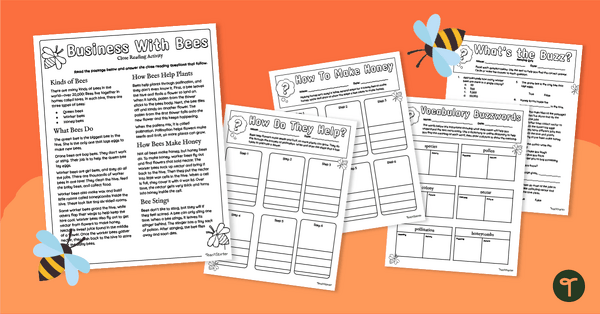
Printable Worksheets About Bees - 2nd Grade
Use our 2nd grade worksheets about bees to discover what there is to know about bees, how they help plants, and how they make honey.
- Plus Plan
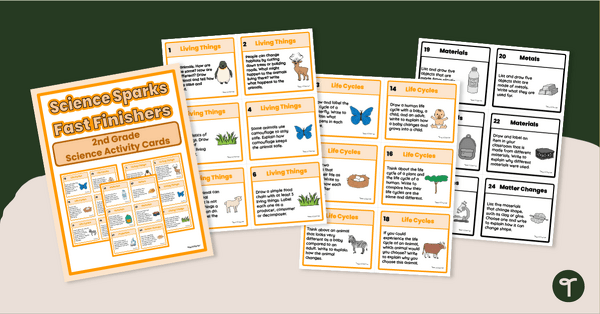
Science Sparks - 2nd Grade Science Activity Cards
Review science standards during classroom downtime with Science Sparks, a collection of 2nd grade science activities for fast finishers.
- Free Plan
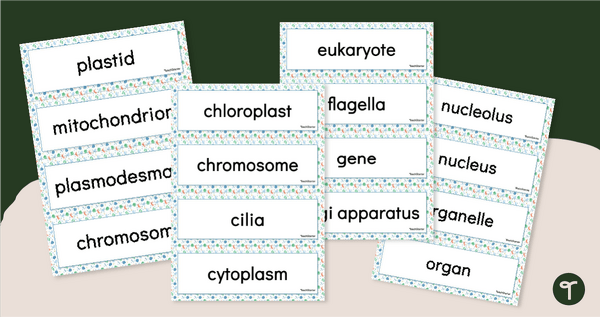
Word Wall - Plant and Animal Cells
Help your students understand the different structures found in Plant vs Animal Cells with printable Plant and Animal Cell Vocabulary Cards.
- Plus Plan
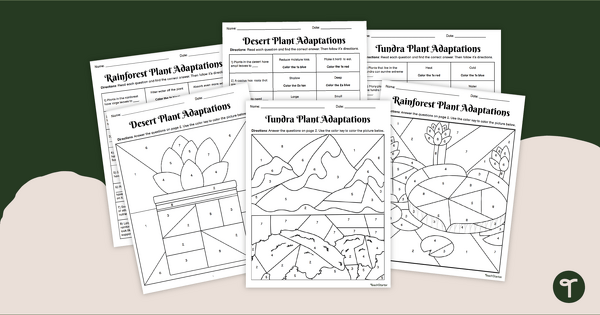
Plant Adaptations - Color by Number Worksheets
Learn about the adaptations of plants in the rainforest, tundra, and desert with color-by-number worksheets.
- Plus Plan
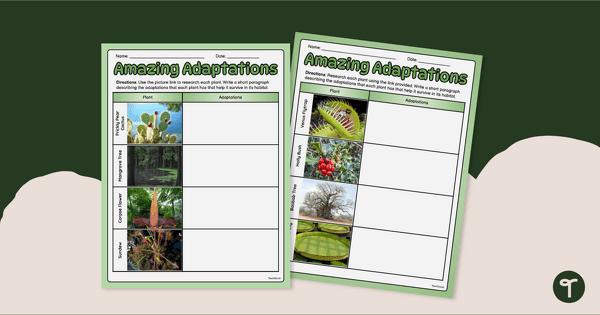
Plant Adaptations Webquest Activity
Research and learn about the amazing adaptations of eight unusual plants with an interactive webquest research activity.
- Plus Plan
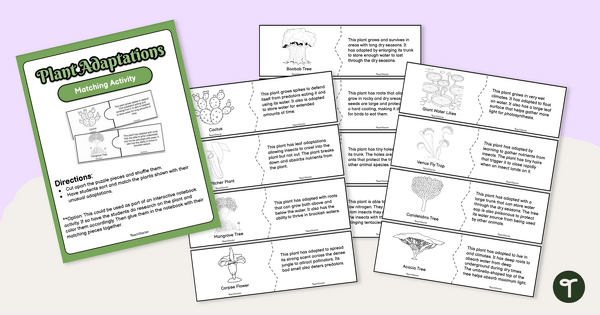
Plant Adaptation Puzzles - Matching Activity
Match plants with their unique adaptations using a printable puzzle-matching activity.
- Plus Plan
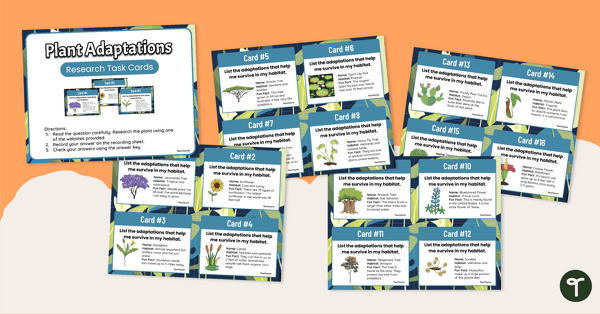
Plant Adaptations - Research Task Cards
Research behavioral, structural, and physiological adaptations with printable plant adaptation task cards.
- Plus Plan
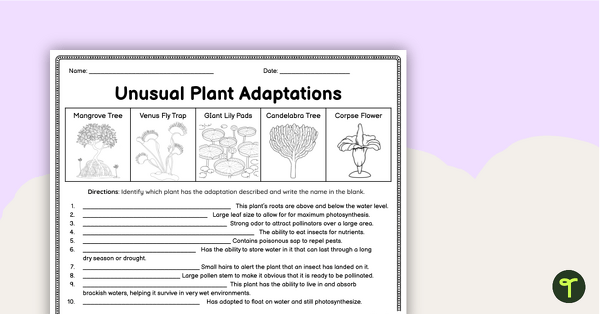
Unusual Plant Adaptations (3rd Grade Science Worksheet)
Teach your 3rd graders about unusual plant adaptations with a printable adaptation worksheet.
- Free Plan
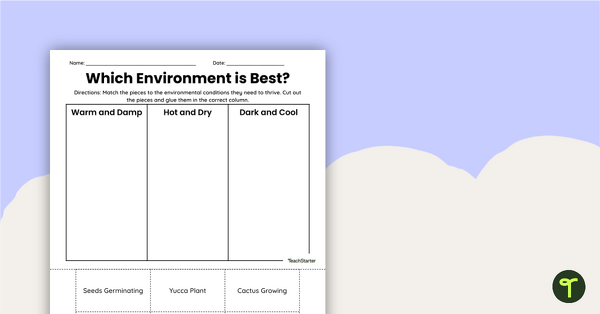
Which Environment is Best? - Worksheet
Identify the best environments for different plants to grow with a cut and paste worksheet.
- Plus Plan
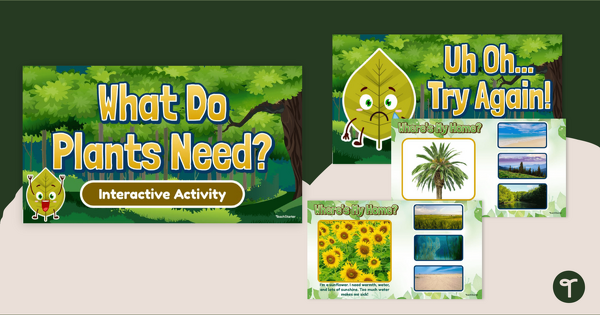
What Do Plants Need? Plant Habitat Interactive Game
Help some lost plants return to the correct habitat with a Google Slides interactive activity.
- Plus Plan
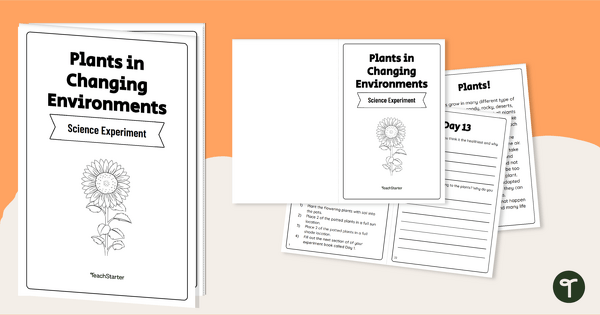
How Does the Environment Affect Plants? Science Experiment
Investigate the effect of the environment on plant life with a no-cut printable science experiment mini-book.
- Plus Plan
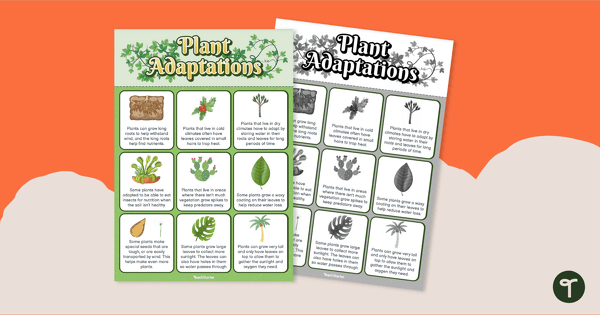
Plant Adaptations- Poster
Learn about different plants' behavioral, structural, and physiological adaptations with a printable plant adaptation anchor chart.
- Plus Plan
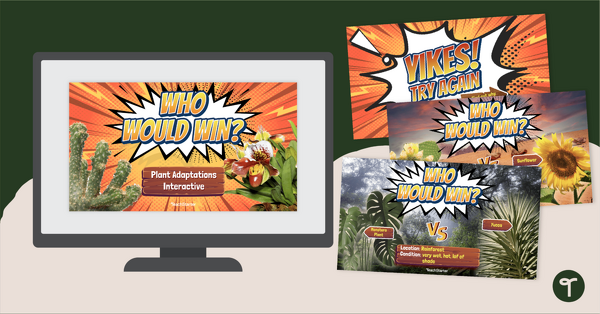
Who Would Win? - Plant Adaptation Interactive Game
Identify plants and plant adaptations that allow for survival in different environments with an exciting “Who Would Win?” showdown game!
- Plus Plan
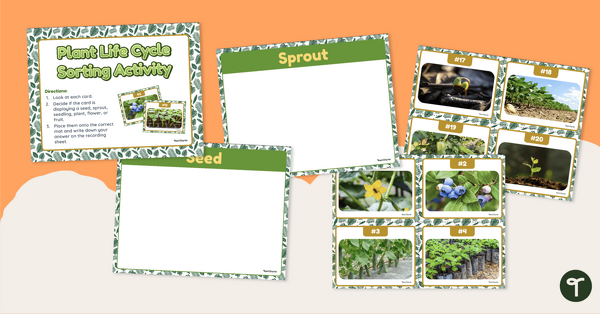
Plant Life Cycle Sorting Activity
Help your students identify the stages in a plant’s life cycle with a sorting activity..
- Plus Plan
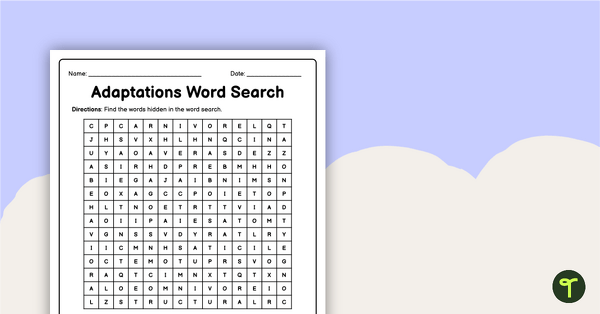
Animal Adaptations Word Search
Develop science vocabulary skills with a printable animal adaptations word search.
- Free Plan
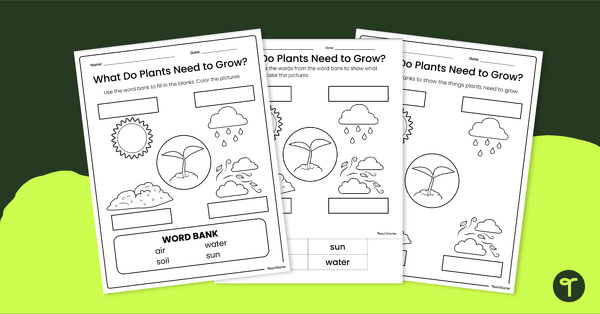
What Plants Need - Kindergarten Worksheet
Identify what plants need to survive with a group of free plant worksheets for kindergartners.
- Plus Plan
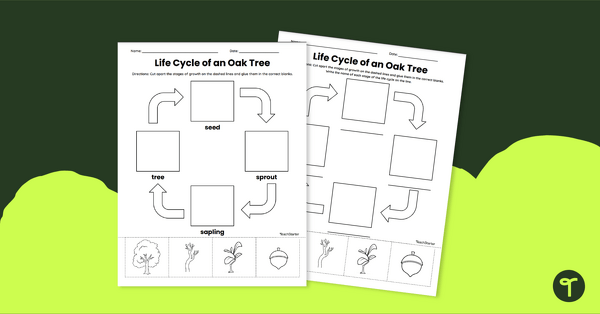
Life Cycle of an Oak Tree Worksheet
Sequence the life cycle of an oak tree with this cut-and-paste worksheet.
- Plus Plan
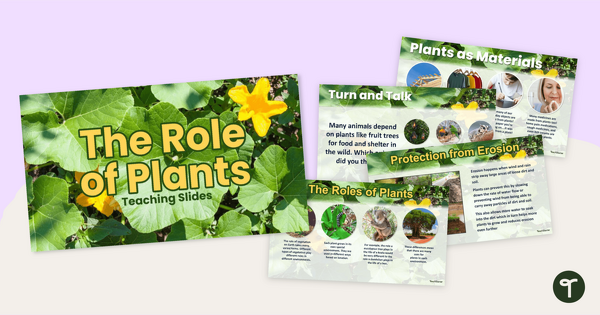
Why Are Plants Important? Teaching Slide Deck
Exploring the different ways that plants can be beneficial with an interactive slide deck.
- Plus Plan
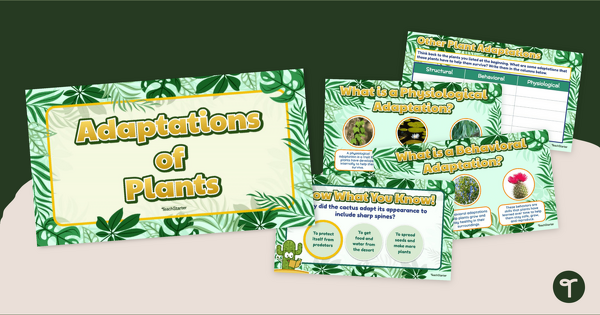
Plant Adaptations Slide Deck
Explore different plants' behavioral, structural, and physiological adaptations with an interactive slide deck.
- Plus Plan
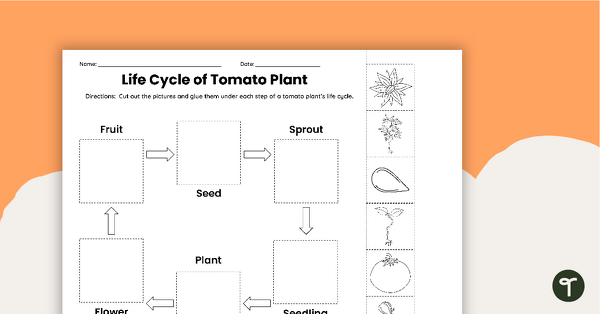
Tomato Plant Life Cycle - Cut and Paste Worksheet
Learn about the life cycle of a tomato with a cut-and-paste sequencing worksheet.
- Plus Plan
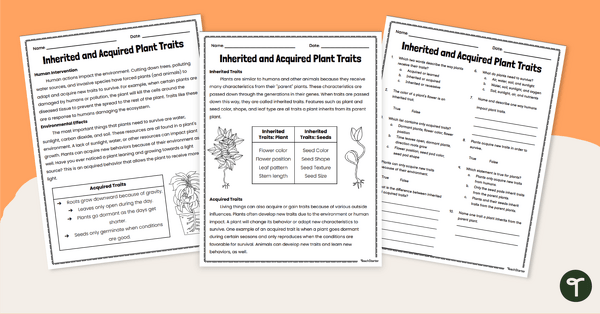
Inherited and Acquired Plant Traits - Reading Passage
Read and learn about inherited and acquired traits in plants with a printable reading comprehension passage and worksheet.
- Plus Plan
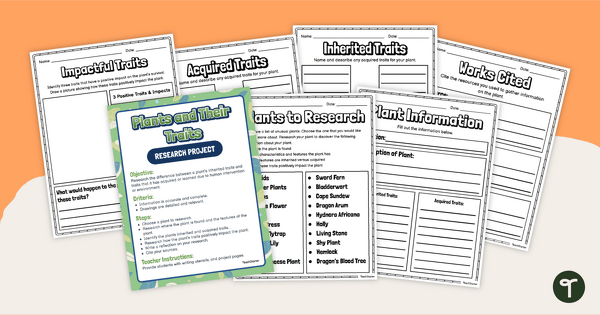
Inherited and Acquired Plant Traits Research Project
Help your students uncover the different inherited and acquired traits of plants with a research project!
- Plus Plan
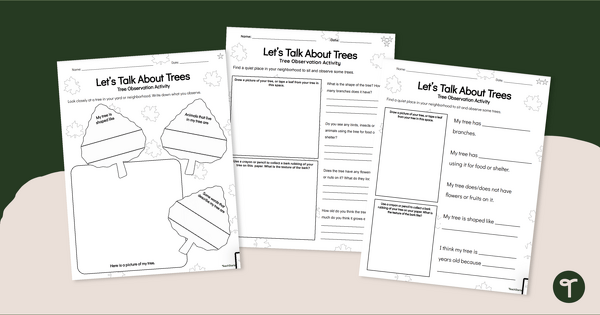
Tree Observation Worksheets
Record observations of trees in the environment with a printable graphic organizer.
- Plus Plan
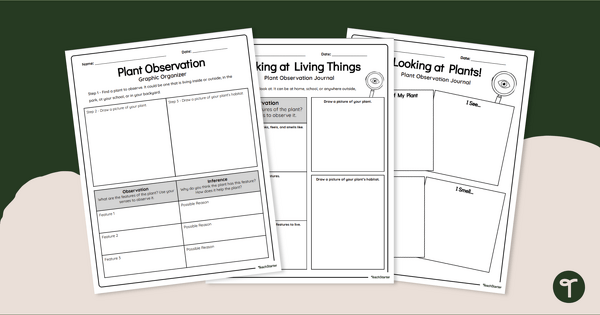
Plant Journal Observation Worksheets
Observe and record information about the features of plants with a plant journal worksheet.
- Plus Plan
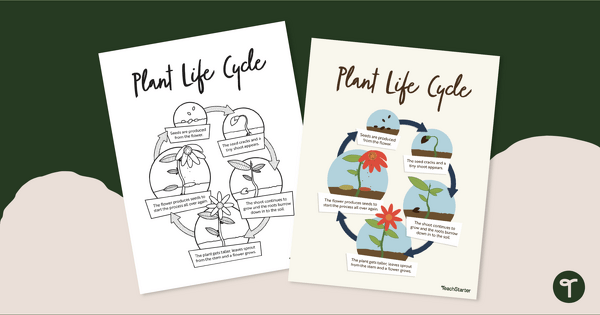
Plant Life Cycle Poster - Life Cycle of a Flower
Display and discuss the life cycle of a flower with a printable anchor chart.
- Plus Plan
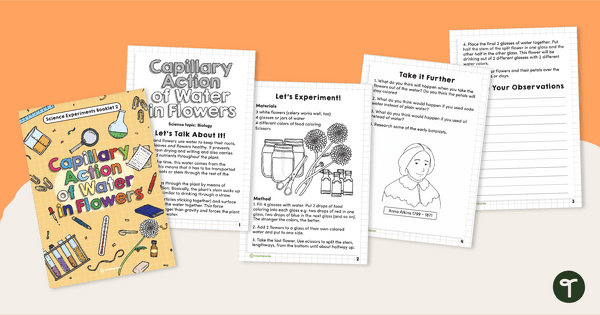
Capillary Action in Plants - Science Experiment Booklet
Observe and record learning about the Capillary Action of Plants with a printable science experiment guidebook.
- Plus Plan
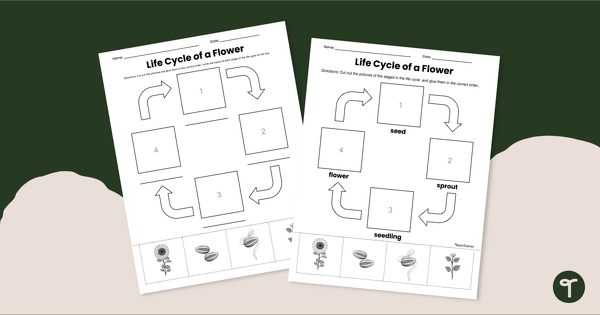
Life Cycle of a Flower Worksheet
Model the stages in the flower life cycle with a cut-and-paste worksheet.
- Plus Plan
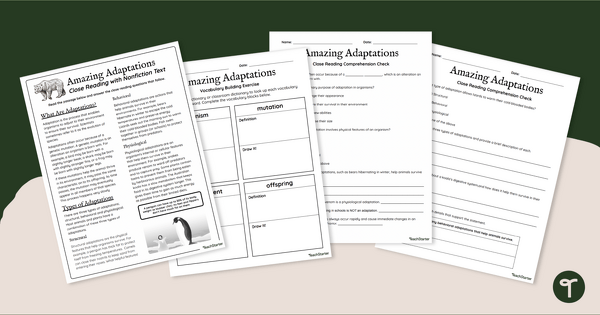
Plant and Animal Adaptations - Comprehension Worksheets
Boost reading comprehension skills with a comprehension passage, with questions, about structural, behavioral and physiological adaptations.
- Plus Plan
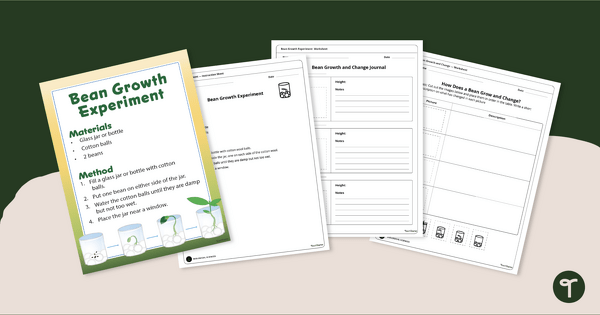
Bean Growth Experiment
“Grow” your students’ knowledge of plant life cycles with a plant growth experiment.
- Plus Plan
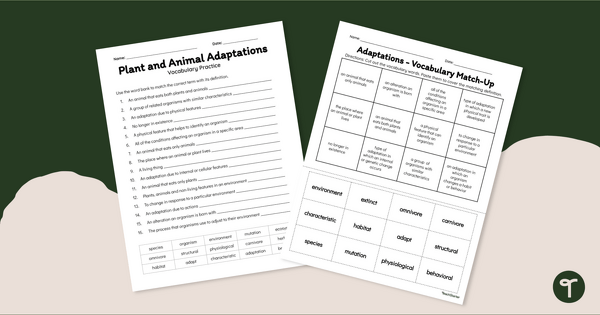
Plant and Animal Adaptations - Vocabulary Worksheets
Review key vocabulary associated with plant and animal adaptations with a pair of vocabulary worksheets.
- Plus Plan
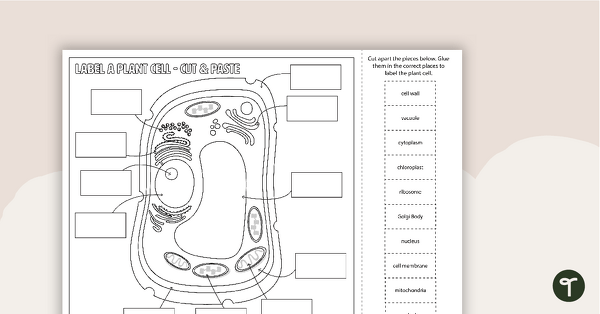
Plant Cell Diagram - Cut and Paste Worksheet
Label the different parts of a plant cell with a cut and paste worksheet.
- Plus Plan
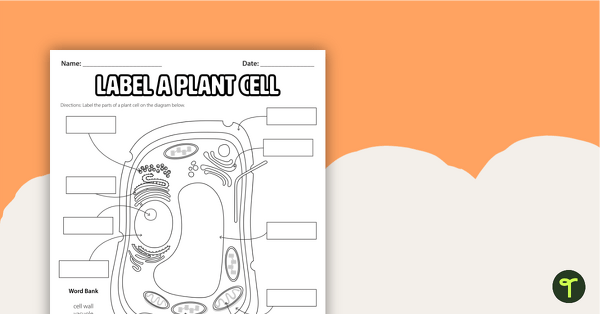
Label a Plant Cell Diagram Worksheet
Use this printable plant cell worksheet to allow students to make a labeled diagram of a plant cell.