Forces Teaching Resources
Teach students about types of force and how they make objects move with forces worksheets, science games, activities and more teacher resources.
Stocked with printables and digital activities that are NGSS curriculum-aligned, this resource collection has been created to save you time on lesson planning. Explore our teacher-created resources to find everything you need to teach about balanced and unbalanced forces, the effects of gravity and magnetism and more core physics concepts to meet your state standards.
Whether you're new to teaching this section of elementary science or your'e looking for fresh ways to engage your students, our teacher team has you covered. Read on for a definition of force for kids and a look at the different types of forces with kid-friendly ways to explain them all.
What Is Force in Science? A Kid-Friendly Definition
We've all experienced force — whether we knew it by name or not. But how do you explain what forces are to your students? Let's start with a kid-friendly forces definition that you can use in your science lessons.
Force is something that causes an object to move, stop moving or change direction or causes an object to change its shape or size.
Let's say the window of the classroom is open, and a gust of wind blows in, blowing a piece of paper off of your desk. That is an example of a force at work!
The gust of wind interacted with the piece of paper, and the force of the wind caused the paper to move.
2 Types of Forces Explained for Kids
There are two main types of forces found in nature — contact forces and non-contact forces.
Contact Forces
Contact forces are a type of force that involves direct contact between two things or objects.
This type of force is responsible for many of real-world examples that your students have likely experienced such as the force of a friend making a swing move by pushing it or the force that a child has to exert to push a bicycle across the grass.
The example described above, in which a piece of paper was moved by the force of the wind, is a prime example of contact forces.
Non-Contact Forces
If contact forces involve direct contact, it's no surprise that non-contact forces are the very opposite. These forces can make objects move or change even from a distance.
Some common examples of non-contact forces include magnetism and gravity.
What Are Balanced and Unbalanced Forces?
We've also found it can be helpful to keep an explanation of balanced and unbalanced forces at hand when you're teaching your forces unit!
Tied directly to Newton's Law of Motion, these two concepts help explain how a force will affect an object's motion.
- Balanced Forces — When an object is subject to balanced forces, it will remain at rest if it was initially at rest. If it was already in motion, it will continue moving at a constant velocity.
- Unbalanced Forces — If an object is acted upon by unbalanced forces, on the other hand, the object experiences a net force in a particular direction. Due to this imbalance, the object will accelerate in the direction of the net force.
- If the unbalanced force is in the same direction as the object's initial motion, the object to speed up. If the unbalanced force is in the opposite direction, the opposite will happen. It will cause the object to slow down.
- Free Plan
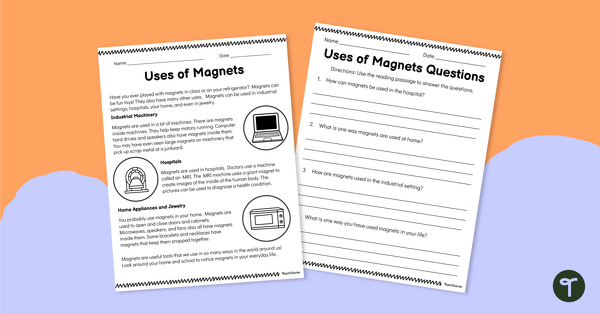
Uses of Magnets Comprehension Worksheet
Download this magnets worksheet to teach your 2nd grade students about the uses of magnets in our everyday lives.
- Plus Plan
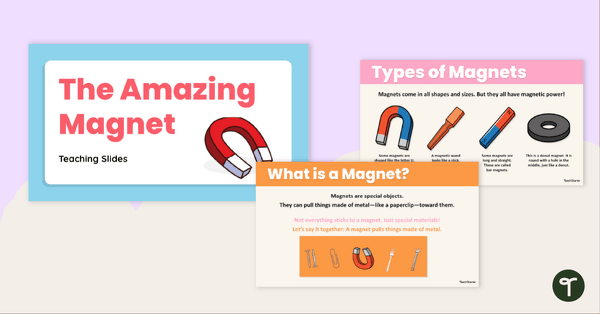
The Amazing Magnet Slide Deck
Use our ‘Amazing Magnet’ Slide Deck to teach your little learners about magnets and magnetism.
- Plus Plan
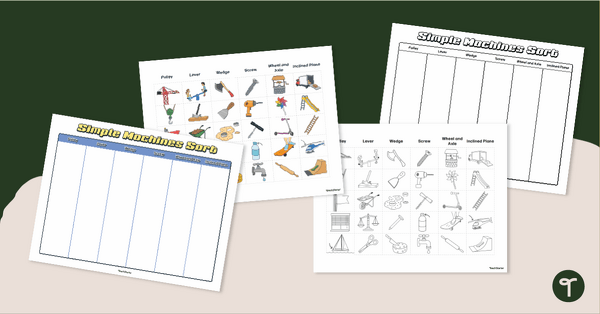
Simple Machines Sorting Activity
A fun sorting activity to use in the classroom when learning about simple machines and how they work.
- Plus Plan

Using Simple Machines - Worksheet
Download a set of simple machines worksheets to use in the classroom when learning about simple machines and how they can help use solve everyday problems.
- Plus Plan
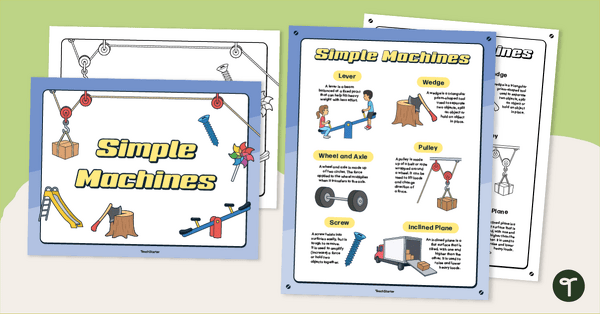
Simple Machines Posters
5 illustrated posters to display in the classroom when learning about simple machines.
- Plus Plan
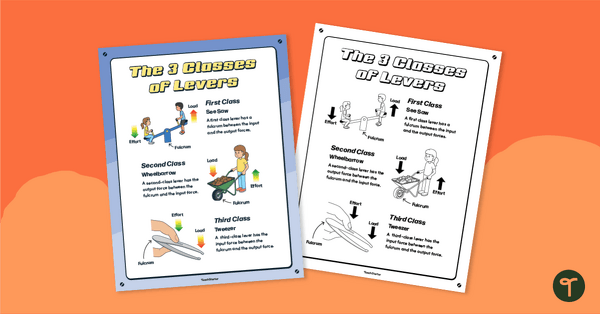
Simple Machines - 3 Classes of Levers Posters
An illustrated poster to use in the classroom when learning about different types of levers.
- Plus Plan
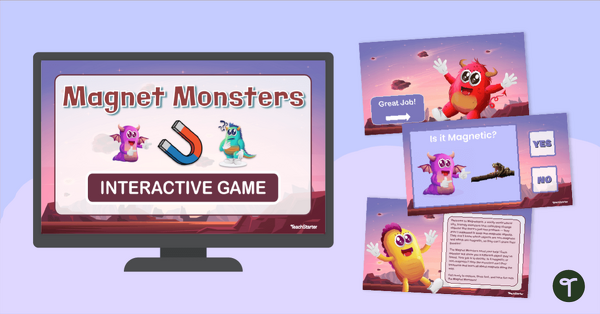
Magnet Monster Interactive Game (K)
Meet the Magnet Monsters, a friendly group of treasure hunters who’ll help your students learn about magnetic and non-magnetic objects.
- Plus Plan
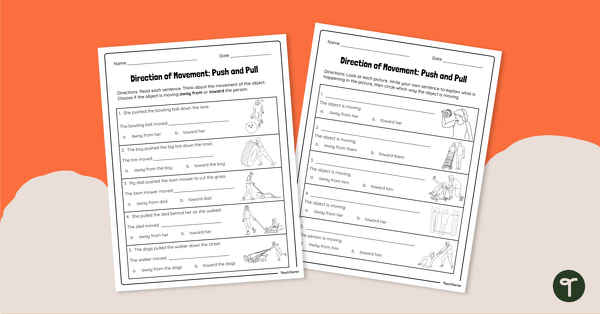
Direction of Force Worksheets
Teach students about the direction of forces applied to common objects with this two-page worksheet for lower elementary students.
- Plus Plan
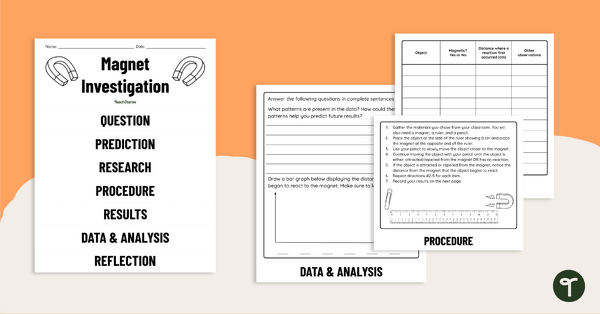
Magnet Investigation Flipbook
Explore magnetic and non-magnetic materials and investigate the strength of magnets with this investigation flipbook.
- Plus Plan
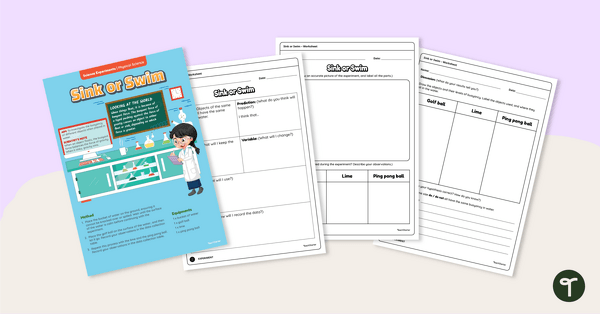
Buoyancy Experiment – Sink or Swim
Use this practical buoyancy experiment when teaching your students about why some objects float in water while others sink.
- Plus Plan
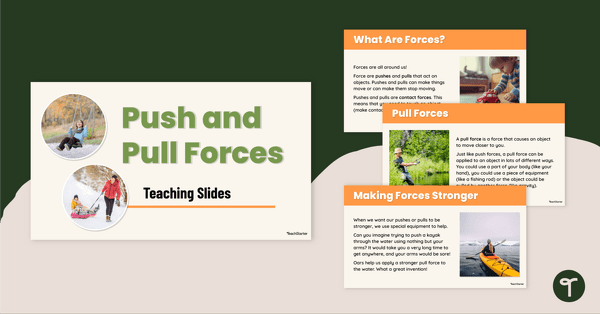
Push and Pull Forces Teaching Slides
Teach your students about push and pull forces with this comprehensive and age-appropriate teaching presentation for elementary school science lessons.
- Free Plan
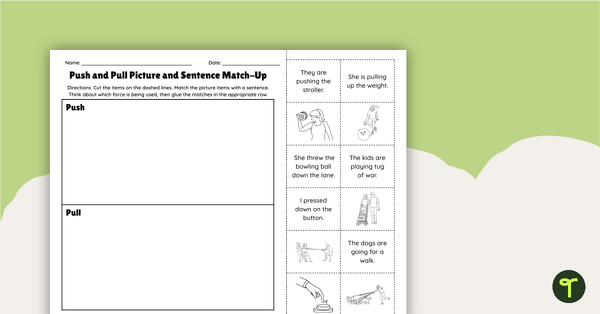
Push and Pull Sorting Worksheet
Use this push and pull sorting worksheet when exploring forces and motion with your 3rd grade students.
- Plus Plan
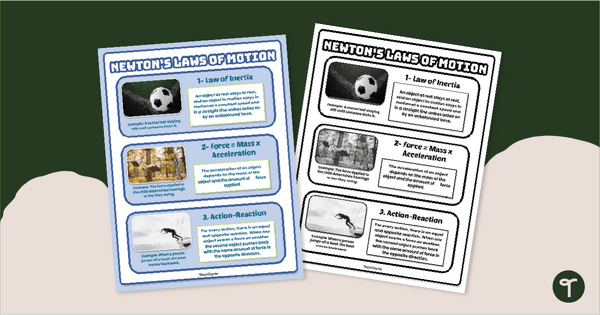
Newton's Laws of Motion Poster
Introduce the laws of motion and energy transfer with a printable Newton’s Laws of Motion Poster.
- Plus Plan
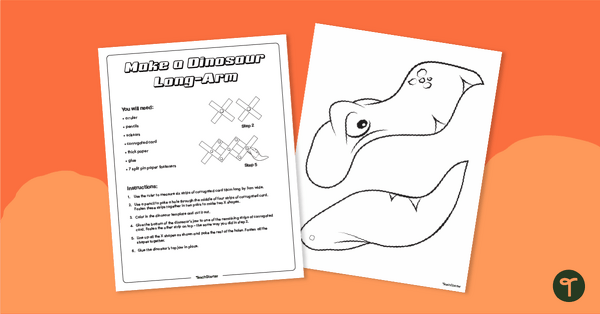
Make a Dinosaur Long-Arm Activity
A fun activity to use in the classroom when learning about simple machines and how they work.
- Plus Plan
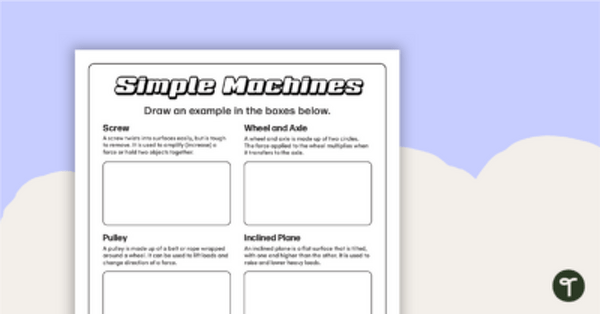
Drawing Simple Machines
A worksheet to use in the classroom when learning about simple machines and what they look like.
- Plus Plan
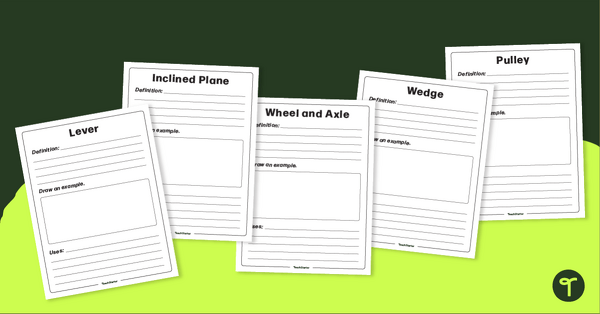
Simple Machines Definition Worksheets
6 definition worksheets to use in the classroom when learning about simple machines and their uses.
- Plus Plan
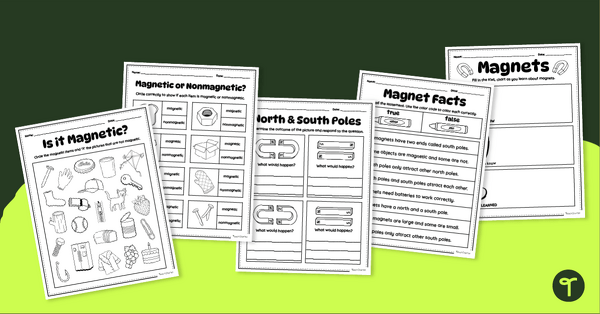
Kindergarten Magnet Printables
Use our Kindergarten magnet printables to engage your little learners and explore the world of magnets.
- Plus Plan
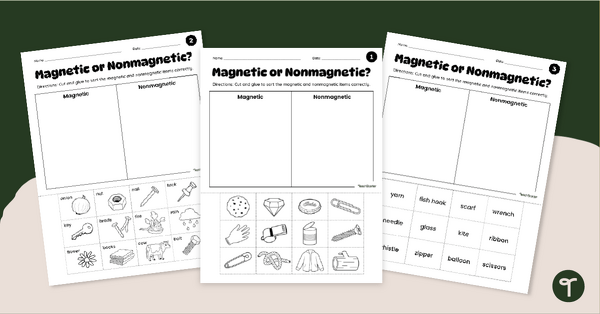
Cut and Sort - Magnet Worksheet Pack
Use a cut and sort magnet worksheet to introduce your students to magnetic and non-magnetic objects.
- Plus Plan
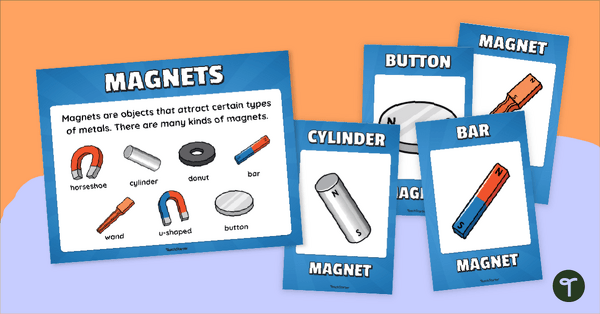
Types of Magnets Anchor Chart Pack
Download a Magnets Anchor Chart Pack to introduce your students to the different types of magnets.
- Plus Plan
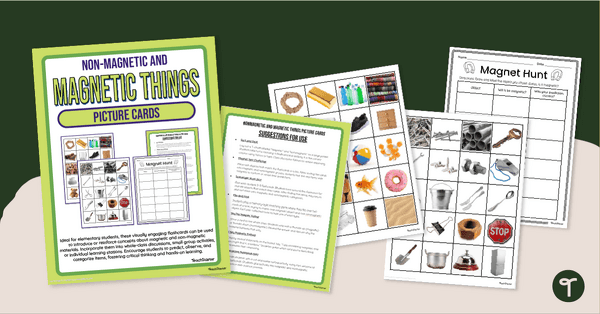
Non-Magnetic & Magnetic Things Picture Cards
Use our Nonmagnetic and Magnetic Things Picture Card set to introduce your students to everyday objects that are magnetic and nonmagnetic.
- Plus Plan
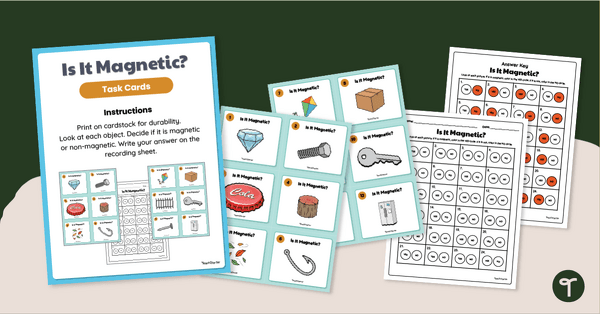
Task Card Activity - Magnets
This task card activity, Magnets for Kindergarten, is designed to help your little learners tell the difference between magnetic and nonmagnetic objects.
- Plus Plan
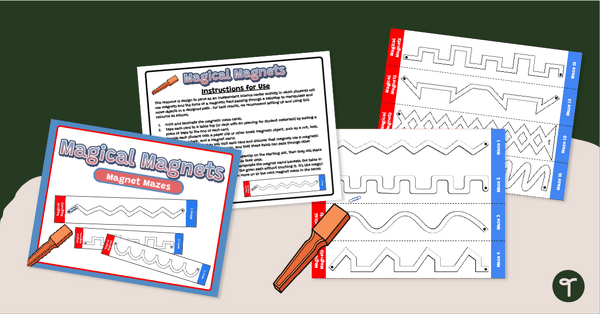
Magnetic Maze Science Center Activity Cards
Engage your students with a Magnetic Maze and help them discover the power of magnetic fields in the real world!
- Plus Plan
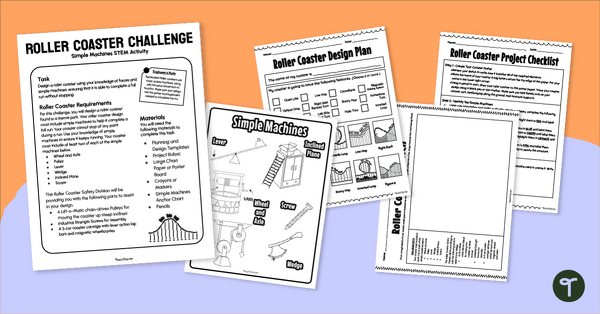
Simple Machines Roller Coaster Challenge - STEM Project
Implement a Roller Coaster Stem Project to help your students demonstrate knowledge of simple machines.
- Plus Plan
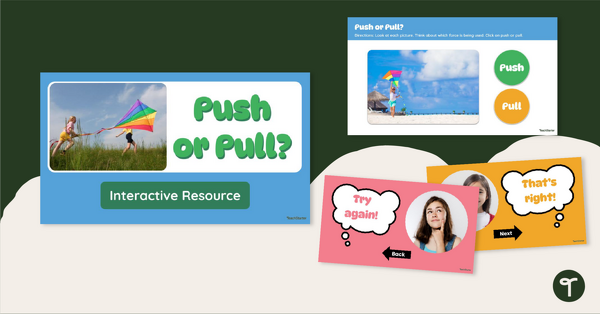
Push or Pull? Interactive Activity
Get students to determine whether a force is a push or a pull with this engaging digital game for Grade 3 science lessons.
- Plus Plan
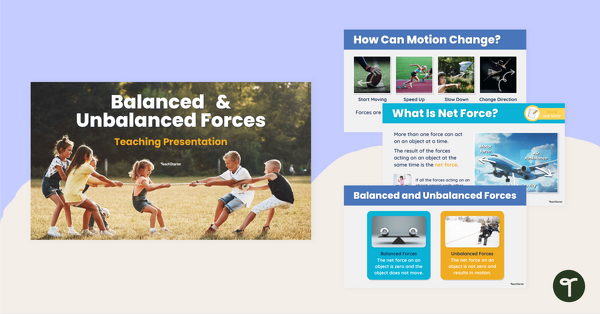
Balanced and Unbalanced Forces Teaching Slides
Teach your students about balanced and unbalanced forces with this comprehensive and age-appropriate teaching presentation for 6th grade science lessons.
- Plus Plan
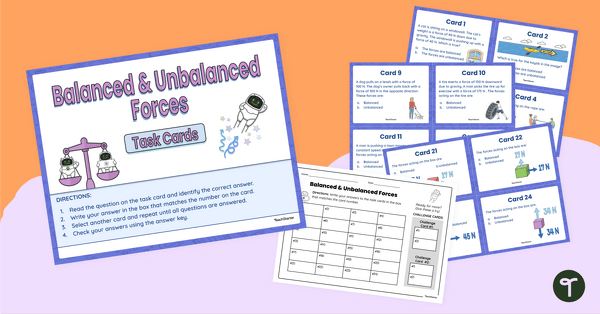
Balanced and Unbalanced Forces Task Cards
Use these force and motion task cards as a student review activity in your 6th grade science lessons.
- Plus Plan
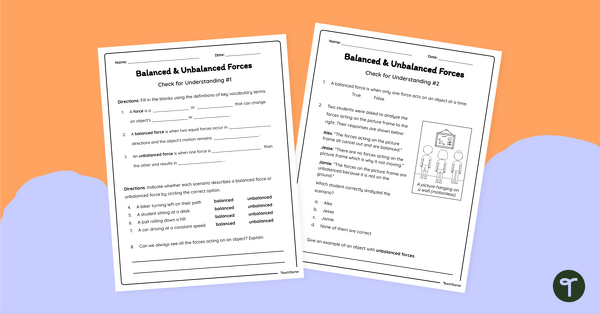
Balanced and Unbalanced Forces Quiz
Assess students' understanding of balanced and unbalanced forces with this force and motion quiz for 6rd grade students.
- Plus Plan
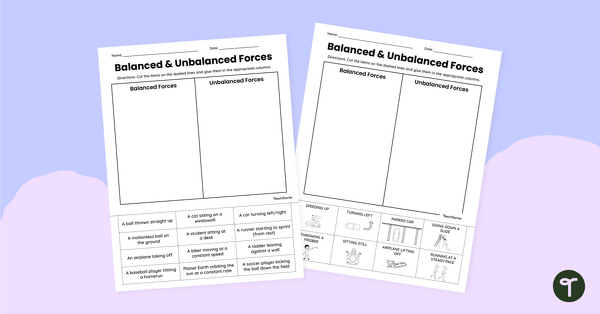
Balanced and Unbalanced Forces Cut-and-Paste Worksheets
Explore examples of balanced and unbalanced forces with your students using this set of two cut-and-paste worksheets.
- Free Plan
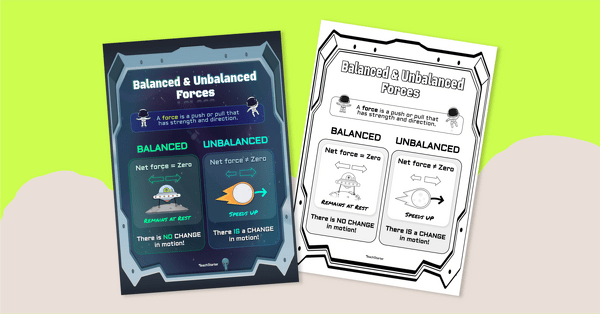
Balanced and Unbalanced Forces Anchor Chart
Use this force and motion anchor chart when teaching your students about balanced and unbalanced forces.
- Plus Plan
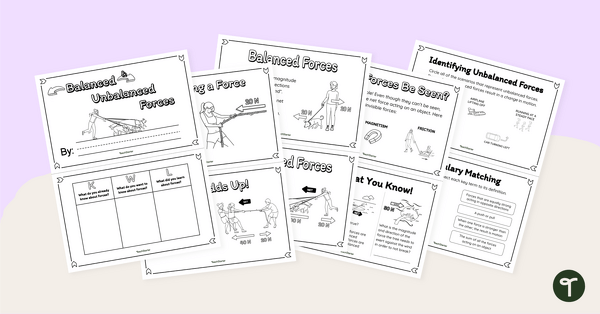
Balanced and Unbalanced Forces Minibook
Teach your students about balanced and unbalanced forces with this printable mini-book perfect for 6th grade science lessons.
- Plus Plan
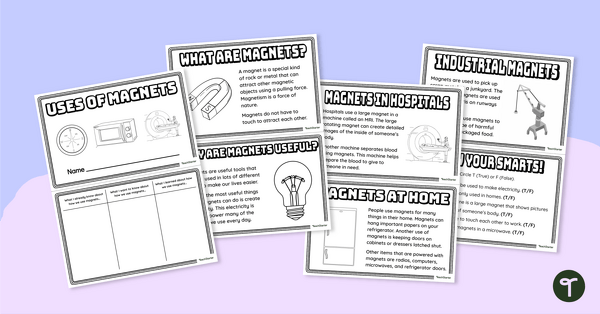
Uses of Magnets Mini-Book
Teach about everyday uses of magnets with this printable mini-book perfect for 2nd grade science lessons.
- Plus Plan
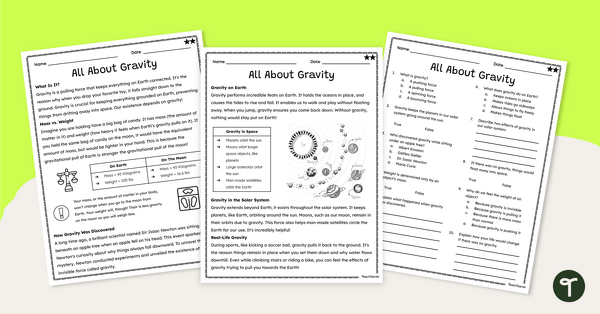
The Force of Gravity Comprehension Worksheets
Download this gravity worksheet to teach your 3rd grade students about the force of gravity and its impact on our daily lives.