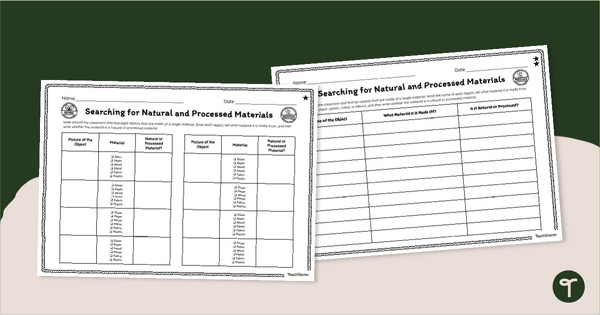
Explore the environment, identify common materials, and learn where they come from with a scavenger-hunt-styled Natural and Processed Materials Activity.
Get Moving With This Natural and Processed Materials Activity
Give your students a hands‑on way to explore the materials in their environment with this scavenger hunt-style Natural and Processed Materials Activity. This Natural and Processed Materials Activity guides students as they observe everyday objects, identify what they’re made from, and determine whether the material is natural or processed.
With two differentiated versions, this activity supports a wide range of learners, including those ready to write detailed responses and those who prefer drawing and using checklists.
Differentiated Natural vs. Processed Materials Worksheet
This pack includes two versions of the same core task, making it easy to support mixed‑ability groups.
Version 1: Write & Classify (Higher Level)
- Write the names of ten objects they find in the classroom.
- Write the material each object is made from.
- Decide whether the material is natural or processed.
Version 2: Draw, Check & Classify (Supported Level)
Students will:
- Draw eight objects that they find in the classroom.
- Use a material checklist (wood, metal, plastic, glass, fabric, stone, rubber, paper) to identify the material the object is made from.
- Write whether the material is natural or processed.
This version is perfect for struggling writers, ELL students, or learners who benefit from reduced assignment supports.
Download Your Natural vs. Processed Materials Activity Today!
This Natural vs. Processed Materials Activity pack is available as a PDF and as an Editable Google Slides resource file. To get your copy, click the dropdown arrow and download your preferred file type.
More Resources To Teach About Natural and Processed Materials
If you’re building a full unit on materials, you may also want to check out these amazing resources to help your students learn more about natural and processed materials.
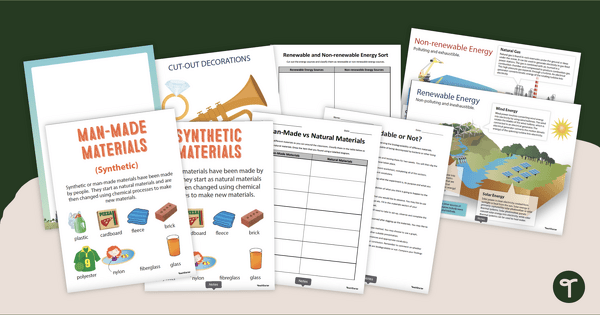
teaching resource
Material World Resource Pack
Learn about natural and manmade materials with a printable resource pack!
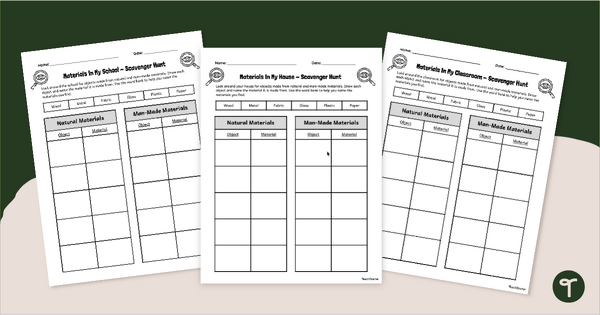
teaching resource
Natural vs Man-Made Materials Scavenger Hunt
Explore and identify examples of natural and processed materials with our Natural vs Man-Made Materials Scavenger Hunt Worksheets.
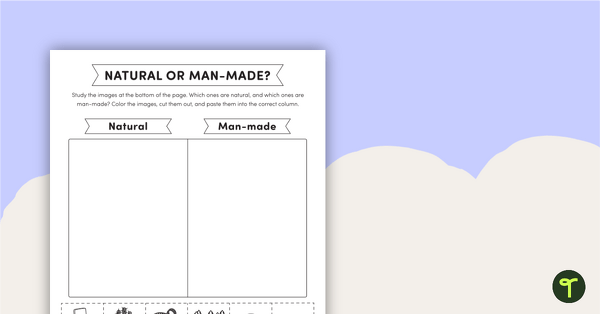
teaching resource
Natural or Man-made? - Worksheet
Distinguish between natural and man-made resources with this cut-and-paste worksheet.

0 Comments
Write a review to help other teachers and parents like yourself. If you'd like to request a change to this resource, or report an error, select the corresponding tab above.