ELAR 4.6
Comprehension skills: listening, speaking, reading, writing, and thinking using multiple texts. The student uses metacognitive skills to both develop and deepen comprehension of increasingly complex texts. The student is expected to:
- (1) establish purpose for reading assigned and
self-selected texts;
- (A) generate questions about text before, during, and after reading to deepen understanding and gain information;
- (B) make, correct, or confirm predictions using text features, characteristics of genre, and structures;
- (C) create mental images to deepen understanding;
- (D) make connections to personal experiences, ideas in other texts, and society;
- (E) make inferences and use evidence to support understanding;
- (F) evaluate details read to determine key ideas;
- (G) synthesize information to create new understanding; and
- (H) monitor comprehension and make adjustments such as re-reading, using background knowledge, asking questions, and annotating when understanding breaks down.
- Plus Plan
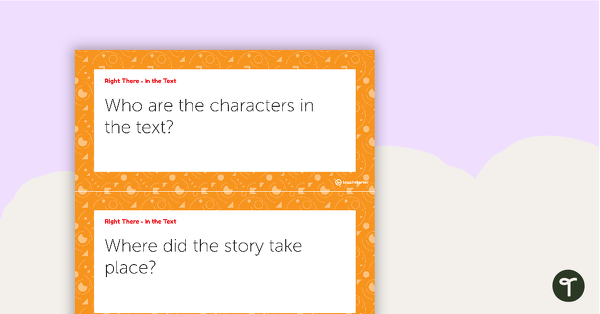
QAR Generic Question Cards
A set of 28 generic QAR question cards for students to use as a comprehension task after reading.
- Plus Plan
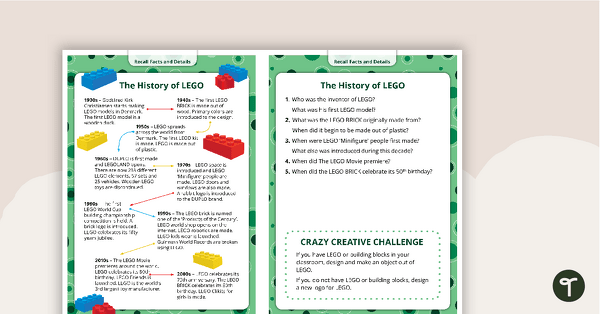
Facts and Details Task Cards and Worksheets
Use these facts and details reading comprehension task cards to help your students locate, remember and interpret important information when reading various texts.
- Plus Plan
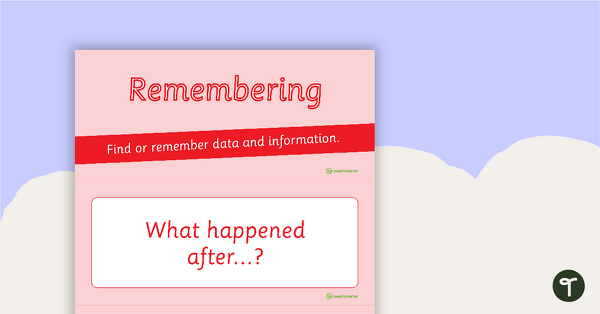
Bloom's Taxonomy Question/Sentence Starter Cards
A set of reading question and sentence starter cards aligned with Bloom's Taxonomy.
- Plus Plan
Comprehension Strategy Teaching Resource Pack - Recalling Facts and Details
A comprehensive resource pack helping students learn how to recall facts and details.
- Plus Plan
September Homeschool Resource Pack - Grade 4
A collection of age-appropriate, Grade 4 teaching resources and activities for homeschool parents to use with their children during the month of September.
- Plus Plan
Applying Reading Comprehension Strategies Unit Plan
This reading unit is designed to explicitly teach the reading comprehension strategies of activating prior knowledge, making connections, questioning, monitoring, predicting, inferring, visualizing, and summarizing to elementary students, with a focus on literary texts.
- Plus Plan
Monitoring
A 60-minute lesson in which students will learn and apply the reading comprehension strategy of monitoring.
- Plus Plan
Making Connections
A 60-minute lesson in which students will learn and apply the reading comprehension strategy of making connections.
- Plus Plan
Visualizing
A 60-minute lesson in which students will learn and apply the reading comprehension strategy of visualizing.
- Plus Plan
Inferring
A 60-minute lesson in which students will learn and apply the reading comprehension strategy of inferring.
- Plus Plan
Predicting
A 60-minute lesson in which students will learn and apply the reading comprehension strategy of predicting.
- Plus Plan
Questioning
A 60-minute lesson in which students will learn and apply the reading comprehension strategy of questioning.
- Plus Plan
Activating Prior Knowledge
A 60-minute lesson in which students will learn and apply the reading comprehension strategy of activating prior knowledge.