ELAR 4.9
Multiple genres: listening, speaking, reading, writing, and thinking using multiple texts--genres. The student recognizes and analyzes genre-specific characteristics, structures, and purposes within and across increasingly complex traditional, contemporary, classical, and diverse texts. The student is expected to:
- (1) demonstrate knowledge of
distinguishing characteristics of well-known children's
literature such as folktales, fables, legends, myths, and tall tales;
- (A) explain figurative language such as simile, metaphor, and personification that the poet uses to create images;
- (B) explain structure in drama such as character tags, acts, scenes, and stage directions;
- (C) recognize characteristics and structures of informational text, including:
- (D) the central idea with supporting evidence;
- (i) features such as pronunciation guides and diagrams to support understanding; and
- (ii) organizational patterns such as compare and contrast;
- (iii) recognize characteristics and structures of argumentative text by:
- (E) identifying the claim;
- (i) explaining how the author has used facts for an argument; and
- (ii) identifying the intended audience or reader; and
- (iii) recognize characteristics of multimodal and digital texts.
- Plus Plan
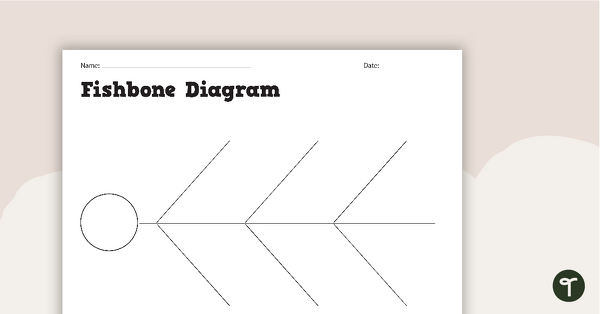
Fishbone/Herringbone Diagram Graphic Organizer
A blank fishbone and herringbone diagram to use in any subject area.
- Free Plan
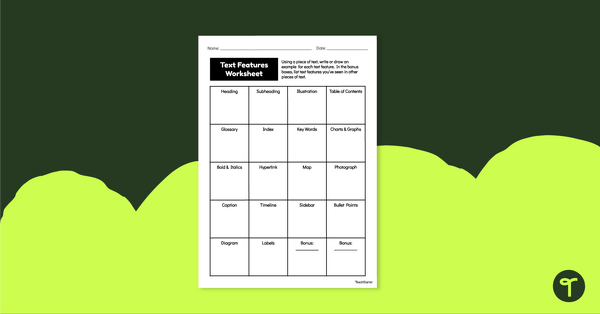
Text Features Worksheet
Download this nonfiction text features worksheet so students can practice locating different types of text features found in a nonfiction text.
- Plus Plan
Poetic Devices Teaching Slides
Explore examples of poetic devices using this comprehensive and age-appropriate slide deck perfect for your poetry writing unit.
- Plus Plan
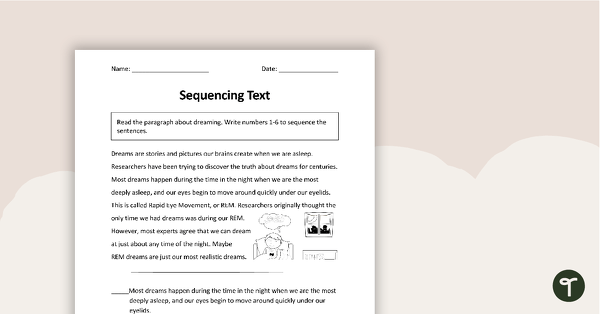
Sequencing Text - Worksheet
A worksheet to use when teaching students how to understand sequence when reading.
- Plus Plan
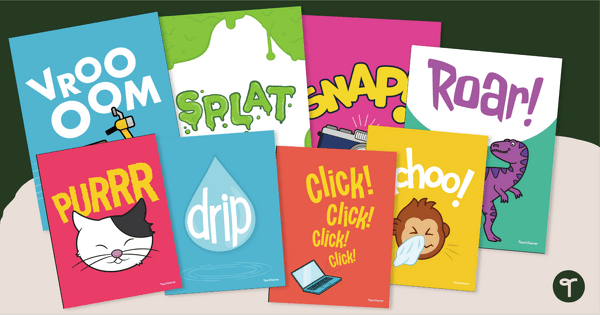
Figurative Language Anchor Chart - Onomatopoeia
Help young readers and writers recognize figurative language and onomatopoeia with a set of onomatopoeia anchor charts.
- Plus Plan
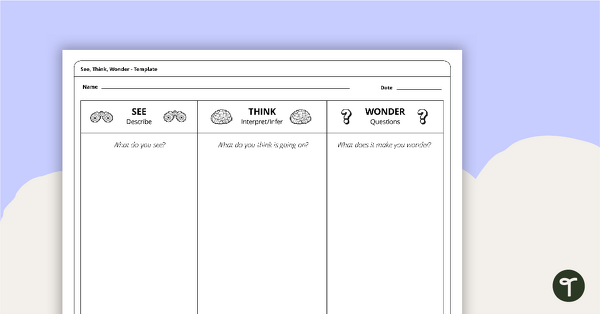
See, Think, Wonder - Template
A See, Think, Wonder Template is useful in encouraging students to make careful observations and interpretations.
- Plus Plan
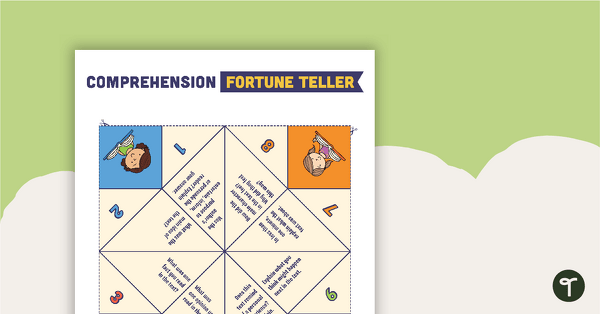
Comprehension Paper Fortune Teller
A fun reading comprehension strategy activity for students to use after reading a text.
- Plus Plan
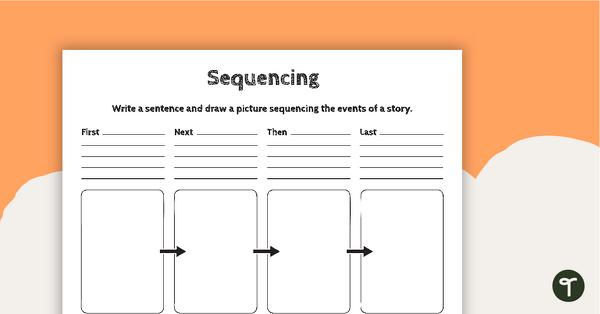
Story Sequencing - Template
A worksheet to use when teaching students how to sequence important events when reading.
- Free Plan
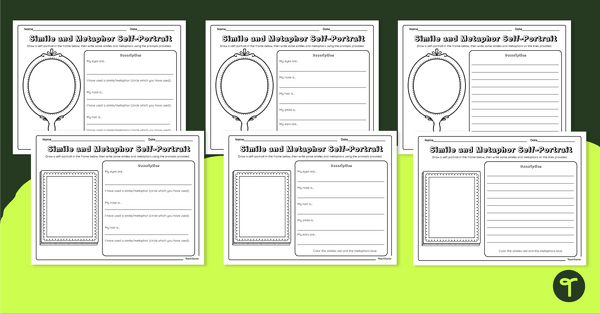
Simile and Metaphor Self-Portrait Worksheet
Teach students about similes and metaphors by asking them to describe... themselves!
- Plus Plan
Grammar Word Search with Solution
A word search to help your students learn a variety of grammatical terms.
- Plus Plan
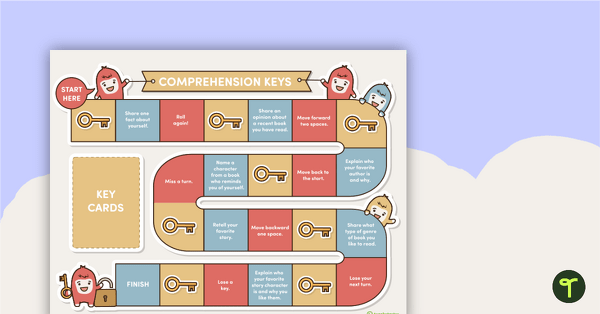
Comprehension Keys Board Game
A fun comprehension strategy board game for students to play during literacy rotations.
- Plus Plan
Sound Play in Poetry - Alliteration
A 60 minute lesson in which students will identify and explore alliteration in poetry.
- Plus Plan
Exploring Poetry - Year 3 and Year 4 Unit Plan
This English unit addresses common poetic devices such as sound play, word play and imagery and explores how these may be applied to narrative poetry.
- Plus Plan
Word Play in Poetry
A 60 minute lesson in which students will identify and explore word play in poetry.
- Plus Plan
Sound Play in Poetry - Onomatopoeia
A 60 minute lesson in which students will identify and explore onomatopoeia in poetry.
- Plus Plan
Exploring Poetic Devices
A 60 minute lesson in which students will explore the common literary devices found in poetry.