Victorian Curriculum
VC2M3A02
extend and apply knowledge of addition and subtraction facts to 20 to develop efficient mental strategies for computation with larger numbers without a calculator
- partitioning using materials and part-part-whole diagrams to develop subtraction facts related to addition facts, such as 8 + 7 = 15 therefore 15 − 7 = 8 and 15 − 8 = 7
- using partitioning to develop and record facts systematically (for example, ‘How many ways can 12 monkeys be spread among 2 trees?’, 12 = 12 + 0, 12 = 11 + 1, 12 = 10 + 2, 12 = 9 + 3, …), explaining how they know they have found all possible partitions
- understanding basic addition and related subtraction facts and using extensions to these facts; for example, 6 + 6 = 12, 16 + 6 = 22, 6 + 7 = 13, 16 + 7 = 23, and 60 + 60 = 120, 600 + 600 = 1200
Show more
5 of 37
teaching resources for those 'aha' moments
- Plus Plan
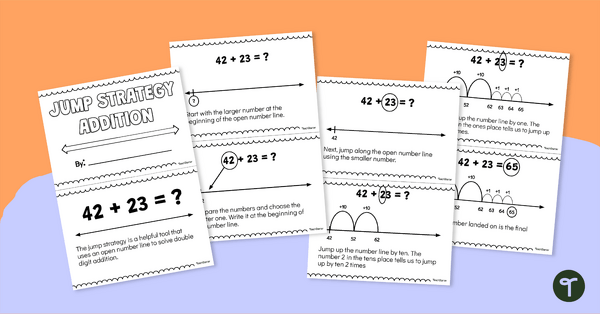
Jump Strategy Addition Mini Book
Use this mini-book to help your students learn how to use the jump strategy to solve addition sums.
- Plus Plan
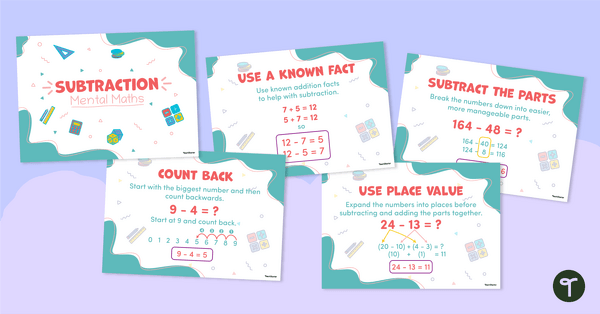
Mental Maths Subtraction Posters
Use this set of subtraction posters in your classroom when teaching different mental maths strategies.
- Plus Plan
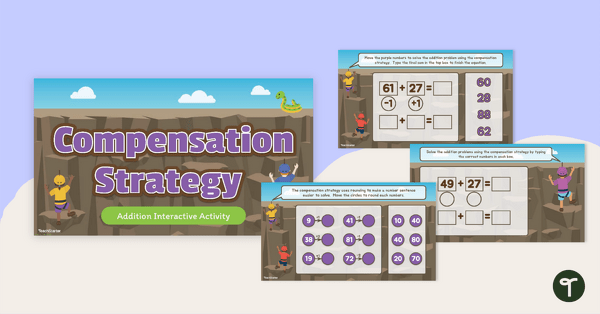
Compensation Strategy Addition Interactive Activity
Practise using the addition compensation strategy with this fun interactive activity.
- Plus Plan
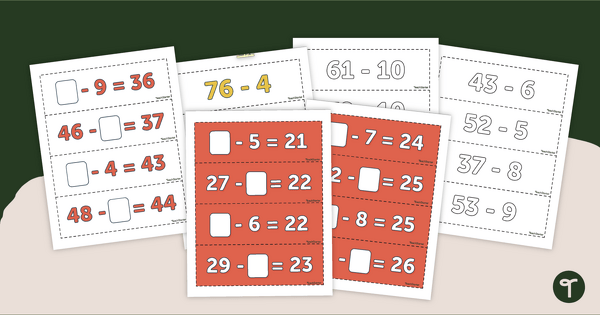
Subtraction Mental Computation Flashcards
Build up your students' mental maths skills with a set of 36 subtraction flashcards using one- and two-digit numbers.
- Plus Plan
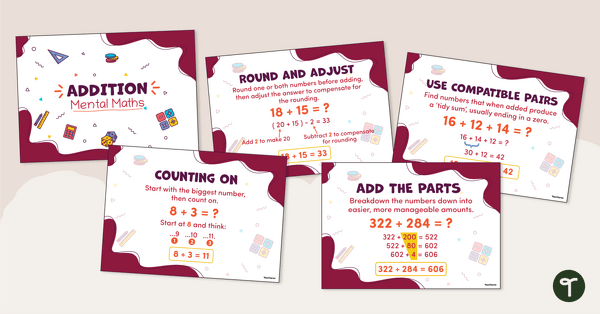
Mental Maths Addition Posters
Use this set of addition posters in your classroom when teaching different mental maths strategies.