Year 5
The English curriculum is built around the three interrelated strands of language, literature and literacy. Teaching and learning programs should balance and integrate all three strands. Together, the strands focus on developing students' knowledge, understanding and skills in listening, reading, viewing, speaking, writing and creating. Learning in English builds on concepts, skills and processes developed in earlier years, and teachers will revisit and strengthen these as needed.
In Years 5 and 6, students communicate with peers and teachers from other classes and schools, community members, and individuals and groups, in a range of face-to-face and online/virtual environments.
Students engage with a variety of texts for enjoyment. They listen to, read, view, interpret and evaluate spoken, written and multimodal texts in which the primary purpose is aesthetic, as well as texts designed to inform and persuade. These include various types of media texts including newspapers, film and digital texts, junior and early adolescent novels, poetry, non-fiction and dramatic performances.
The range of literary texts for Foundation to Year 10 comprises Australian literature, including the oral narrative traditions of Aboriginal and Torres Strait Islander Peoples, as well as the contemporary literature of these two cultural groups, and classic and contemporary world literature, including texts from and about Asia.
Literary texts that support and extend students in Years 5 and 6 as independent readers describe complex sequences, a range of non-stereotypical characters and elaborated events including flashbacks and shifts in time. These texts explore themes of interpersonal relationships and ethical dilemmas within real-world and fantasy settings. Informative texts supply technical and content information about a wide range of topics of interest as well as topics being studied in other areas of the curriculum. Text structures include chapters, headings and subheadings, tables of contents, indexes and glossaries. Language features include complex sentences, unfamiliar technical vocabulary, figurative language, and information presented in various types of graphics.
Students create a range of imaginative, informative and persuasive types of texts including narratives, procedures, performances, reports, reviews, explanations and discussions.
(source: www.australiancurriculum.edu.au)
Achievement Standard
Receptive modes (listening, reading and viewing)
By the end of Year 5, students explain how text structures assist in understanding the text. They understand how language features, images and vocabulary influence interpretations of characters, settings and events.
When reading, they encounter and decode unfamiliar words using phonic, grammatical, semantic and contextual knowledge. They analyse and explain literal and implied information from a variety of texts. They describe how events, characters and settings in texts are depicted and explain their own responses to them. They listen and ask questions to clarify content.
Productive modes (speaking, writing and creating)
Students use language features to show how ideas can be extended. They develop and explain a point of view about a text, selecting information, ideas and images from a range of resources.
Students create imaginative, informative and persuasive texts for different purposes and audiences. They make presentations which include multimodal elements for defined purposes. They contribute actively to class and group discussions, taking into account other perspectives. When writing, they demonstrate understanding of grammar using a variety of sentence types. They select specific vocabulary and use accurate spelling and punctuation. They edit their work for cohesive structure and meaning.
(source: www.australiancurriculum.edu.au)
- Plus Plan
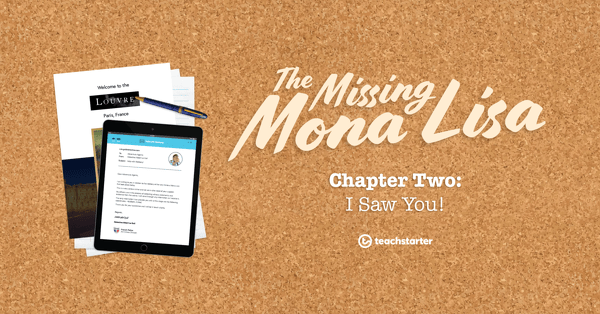
The Missing Mona Lisa - Chapter 2: I Saw You!
Now it's time for the Adventure Agents to learn some of the main characters and look at their witness statements. They will have the first pieces of this fun puzzle!
- Plus Plan
The Famous Faces of Yesteryear – Interviewer Skills Video
Teach your students how to interview someone with this engaging video exploring the life of Sir Edmund Hillary.
- Plus Plan
A Thinker Like Me – Animated Poem Video
Use this short animated poem video with your students to explore and appreciate the poem, 'A Thinker Like Me' by Stephanie Mulrooney.