Addition Teaching Resources
Introduce addition this school year with printable worksheets, digital activities, adding games, addition word problems, flashcards and more to help students understand how to add numbers and apply addition strategies to maths problems.
This teaching resource collection was created by the teachers on the Teach Starter team for primary teachers like you. Each Australian curriculum-aligned resource has been carefully reviewed and curated by our expert teachers to ensure it's ready to use with your students! Browse printables and digital activities for teaching students how to make 10, how to add integers and more, plus find differentiated resources to help you meet each student's needs!
New to teaching addition, or just looking for new ways to engage your students? Read on for a primer from our teacher team, including a kid-friendly definition and some common vocabulary!
What Is Addition? A Kid-Friendly Definition
Let's start with a definition of this maths operation that's easy for them to understand!
Addition is a maths operation that involves combining two or more numbers to find a total. The symbol (+) is used to indicate addition, and this is called a plus sign.
Here's an example of addition at work!
In the equation 2 + 3 = 5, the numbers 2 and 3 are added together to get a sum of 5.
Addition Terms
There are plenty of new vocabulary words for your students to learn when introducing addition. Here are some of the terms you will want to start with.
Sum
The sum is the result of adding two or more numbers. It's the solution or answer to an addition problem!
In the equation 2 + 3 = 5, 5 is the sum.
Addend
The numbers being added in an addition equation are called addends.
For example, in the equation 2 + 3 = 5, both 2 and 3 are addends.
Commutative Property
The commutative property states that changing the order of the addends in your addition problem does not change the sum.
For example, 2 + 3 is the same as 3 + 2.
Associative Property
The associative property states that changing the grouping of the addends in your maths problem will not change the sum.
For example, (2 + 3) + 4 is the same as 2 + (3 + 4).
Repeated Addition
Sometimes a math problem involves adding the same number multiple times. We call this repeated addition, and it's a way to find the product of two numbers where one of the numbers is repeated a certain number of times.
Repeated addition is handy for helping students understand multiplication. After all, multiplication can be thought of as repeated addition.

Cartoon plus sign
What Is Partial Sums Addition?
If you know what a sum is, you're halfway to understanding partial sums addition! This maths vocabulary term refers to adding two or more numbers by breaking apart the addends and adding the value of the digits in each place value position from right to left.
This handy strategy is great for students when they are first learning to add two or more numbers. Partial sums addition breaks down the process of addition into smaller, more manageable steps.
Let's look at an example.
If you have the 36 + 27 and want to use partial sums addition, you start by determining the value of the digits in the ones place, adding them together, and writing down the sum (6 + 7 = 13).
Next, add the value of the tens place digits together (30 + 20 = 50), and write down the answer under the previous sum. Add together the two partial sums to get your answer, 63.
- Plus Plan
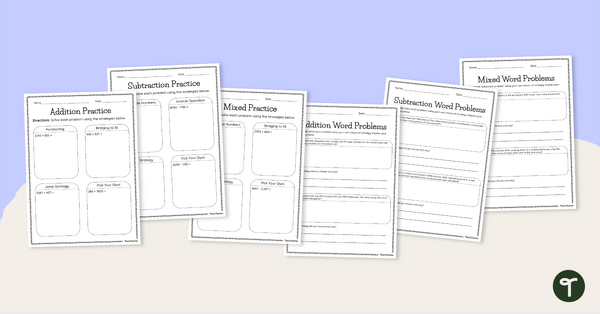
Addition and Subtraction Strategies Worksheet Pack
Support addition and subtraction strategies with this engaging worksheet pack.
- Plus Plan
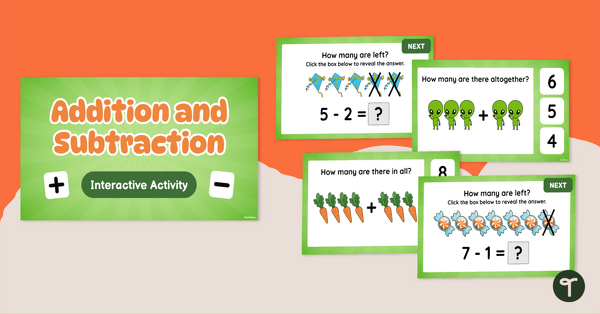
Addition and Subtraction Interactive Slides
Support addition and subtraction learning with interactive slides that help teachers build student confidence through clear, engaging practice.
- Plus Plan
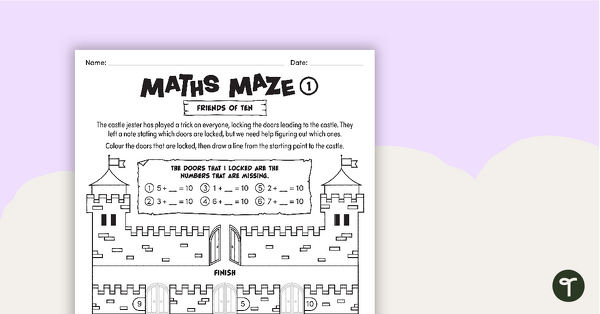
Maths Mazes (Friends of Ten)
A set of friends of ten mazes where students find missing addends to solve the maze.
- Plus Plan
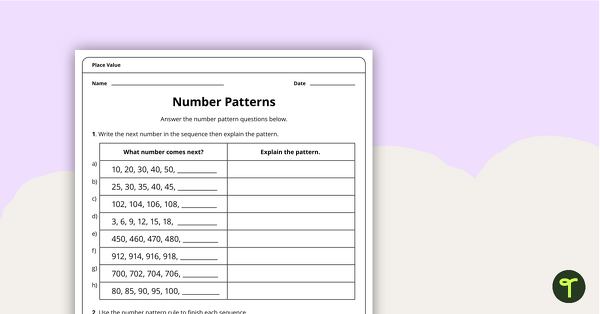
Additive Patterns Practice Worksheets
Create additive patterns with this worksheet pack designed to help students confidently recognise, describe and build increasing and decreasing sequences using numbers, shapes and objects.
- Plus Plan
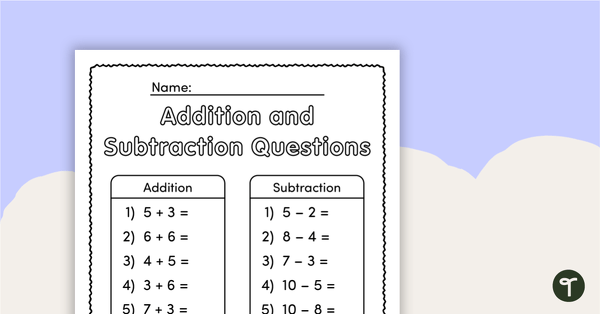
Simple Addition and Subtraction Questions
Use this versatile worksheet with your students when exploring early addition and subtraction number sentences.
- Plus Plan
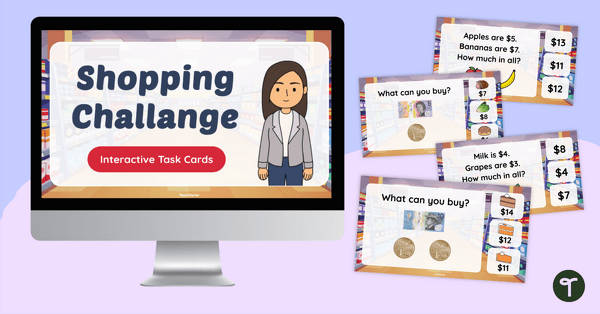
Adding with Money - Shopping Challenge Interactive Task Cards
Support adding with money through engaging, digital interactive task cards.
- Plus Plan
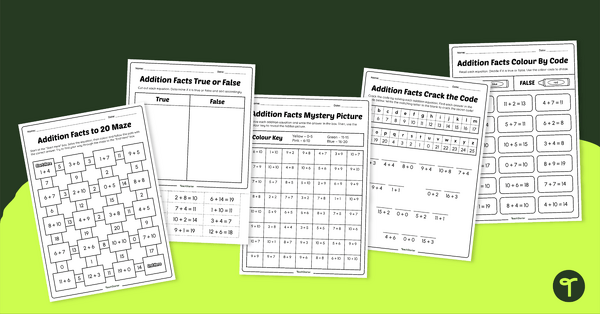
Addition Practice Worksheets
Support student fluency with addition practice worksheets that build confidence with addition facts from 0–20 through fun, varied and engaging tasks.
- Plus Plan
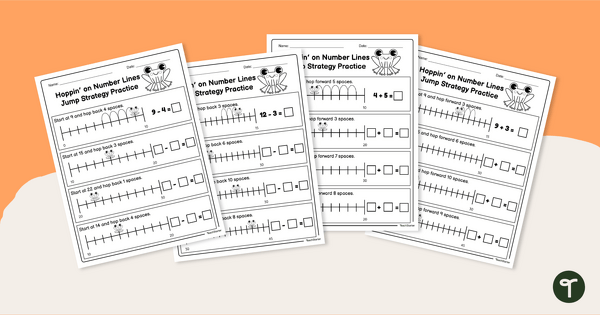
Hop on Number Lines - Worksheet Pack
Hop your way to addition mastery with a pack of two addition on a number line worksheets.
- Plus Plan
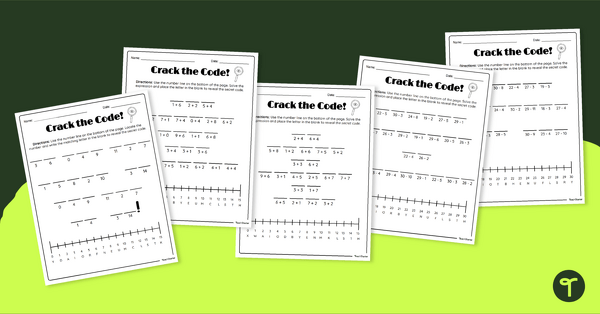
Secret Code Number Line - Worksheet
Crack the number line code with five number line codebreaker worksheets to practice number identification, addition, and subtraction.
- Plus Plan
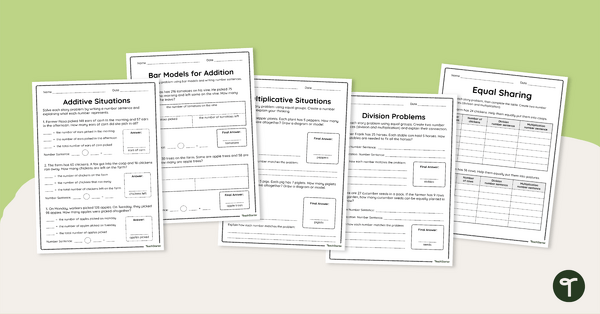
Year 3 Word Problems - Additive and Multiplicative Situations Worksheet Pack
Teach real world word problems with this engaging worksheet pack that helps students model additive, multiplicative and division situations.
- Plus Plan
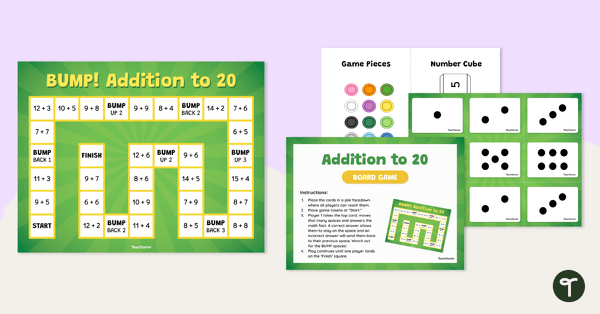
Bump! – Addition to 20 Game
Practise addition facts to 20 with a fun maths game.
- Plus Plan
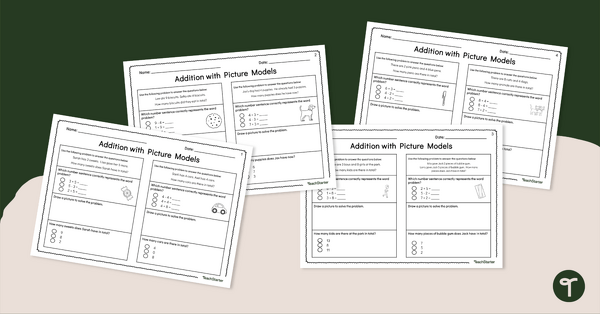
Modeling Addition Word Problem Worksheets
Modeling addition is easy with these word problem worksheets that provide practice with real-world addition scenarios.
- Plus Plan
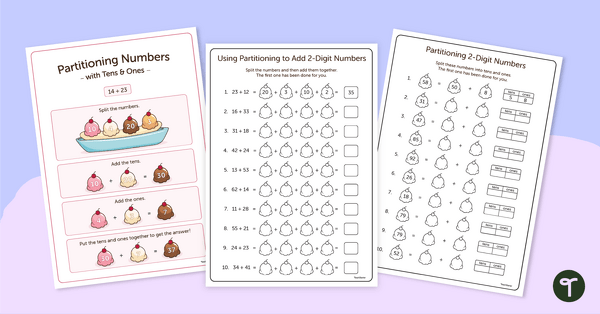
Two-Digit Addition Using Partitioning – Poster and Worksheet
Teach your students how to use partitioning for two-digit addition with this ice cream-themed poster and worksheets.
- Plus Plan
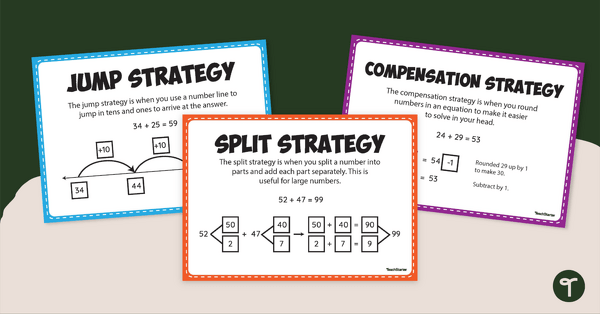
Double-Digit Addition Strategies Posters
Remind your students to use different addition strategies with a set of printable two-digit addition strategies.
- Plus Plan
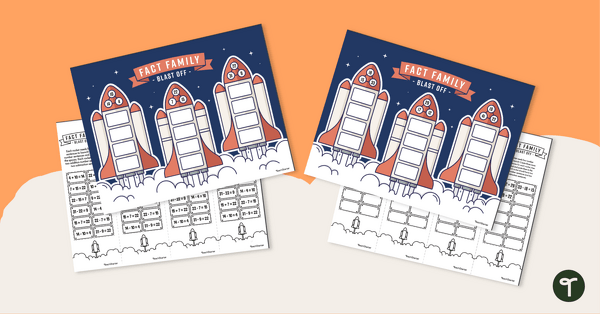
Fact Family Maths Blast Off - Addition and Subtraction
Demonstrate an understanding of addition and subtraction fact families with a fun cut and sort activity.
- Plus Plan
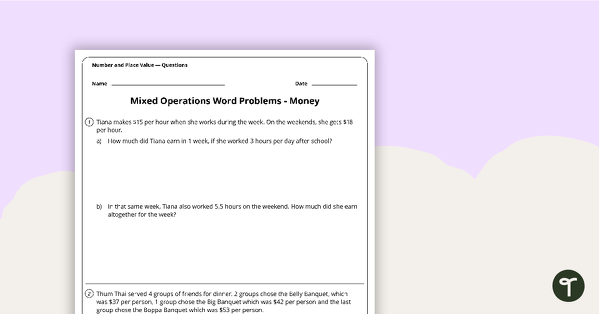
Word Problem Worksheets - Year 5 and Year 6
4 mixed operations word problem worksheets with answers.
- Free Plan
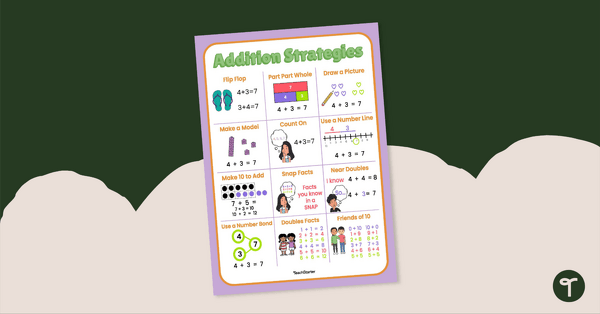
Addition Strategies Cheat Sheet
Help students understand the different addition strategies with this helpful cheat sheet.
- Plus Plan
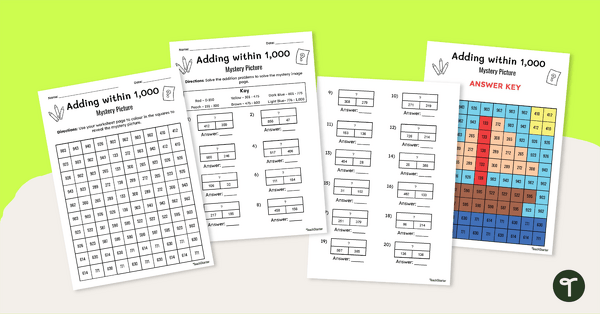
Adding within 1000 Mystery Image Reveal Worksheet
Practise using the bar model to work out addition sums within 1000 with this fun mystery picture reveal activity.
- Plus Plan
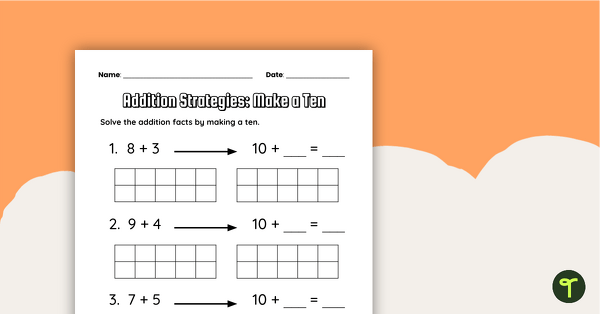
Addition Strategies: Make a Ten Worksheet
A 2-page worksheet that uses ten frames to model the “making ten” addition strategy.
- Plus Plan
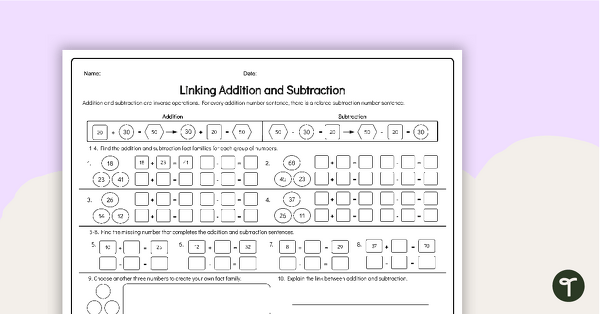
Linking Addition and Subtraction Worksheet
Help students discover the link between addition and subtraction through structured, student‑friendly worksheets.
- Plus Plan
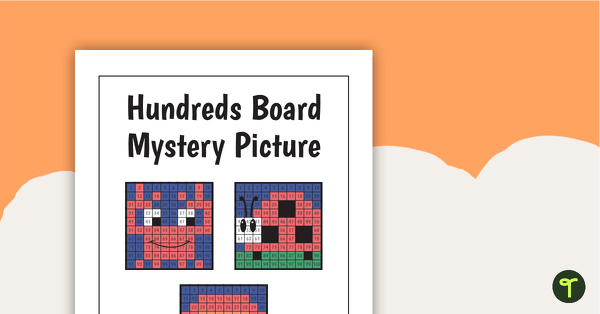
Hundreds Board Mystery Picture Addition Task Cards
A set of 32 activity task cards that require students to complete addition problems and colour in a hundreds chart to reveal a mystery picture.
- Free Plan
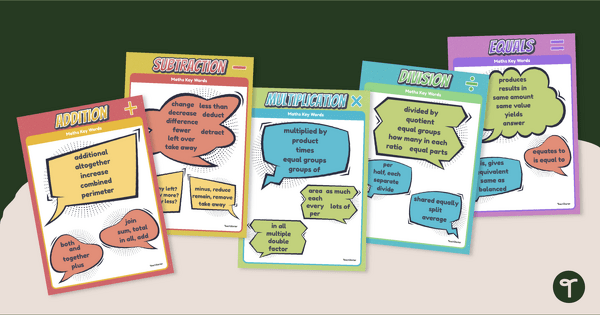
Maths Action Words – Keyword Sign Free Printables
Help your students decipher maths word problems with a set of printable maths keyword sign free printables.
- Plus Plan
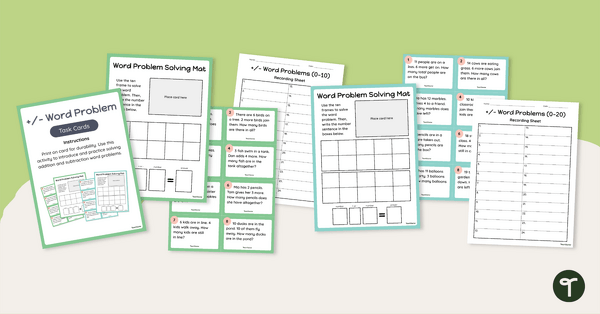
Year 1 Addition and Subtraction Solving Mats
Use these Year 1 addition and subtraction solving mats to support students as they practise solving word problems.
- Plus Plan
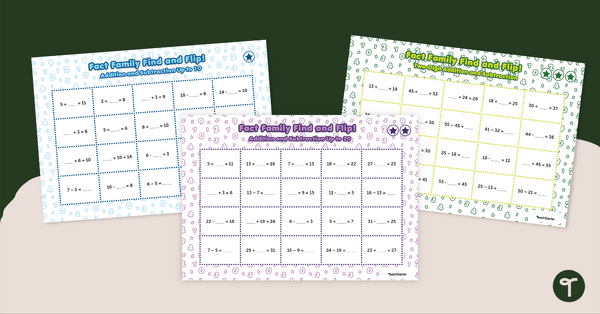
Fact Family Find and Flip - Addition and Subtraction
Bring number relationships to life with this ready‑to‑use fact family game that supports students as they practise addition and subtraction in a fun, interactive way.
- Plus Plan
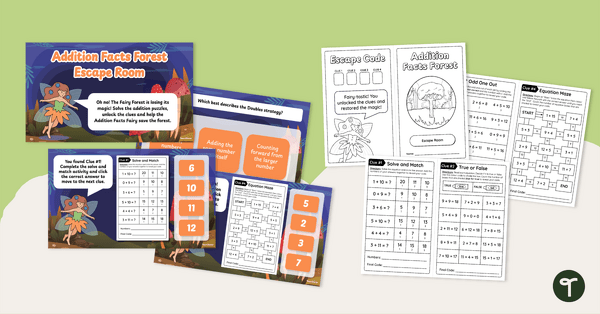
Addition Fact Practice: Numbers to 20 Escape Room
Engage students in addition fact practice with an interactive escape room and companion student notebook that make learning fun, hands-on and meaningful.
- Plus Plan
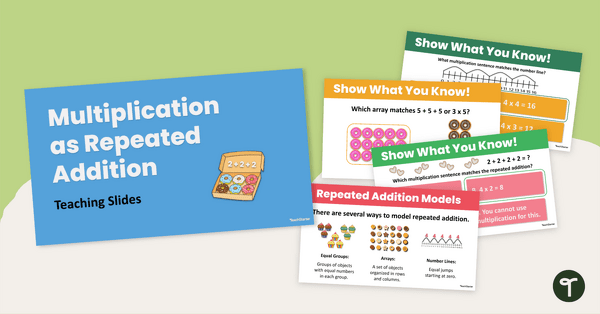
Multiplication as Repeated Addition PowerPoint
Teach multiplication as repeated addition with this easy-to-use PowerPoint presentation.
- Free Plan
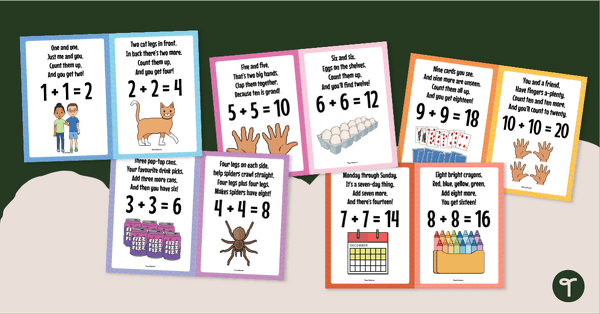
Doubles Facts - Doubling Numbers Addition Rhyme Posters
Help your students remember their doubles facts to twenty with a set of printable double facts addition rhyme posters.
- Plus Plan
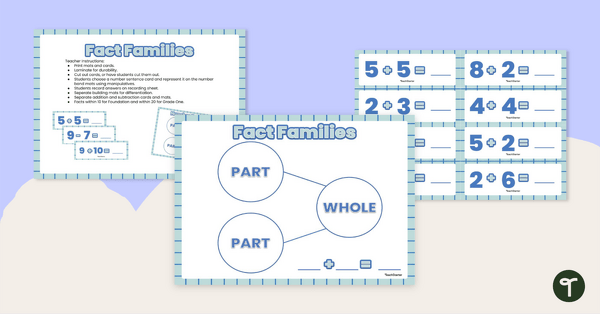
Part Part Whole — Hands-On Activity Mat
Use this hands-on addition and subtraction part part whole activity mat in your next guided maths group lesson!
- Plus Plan
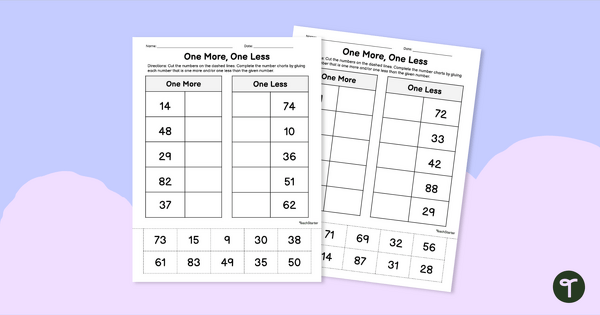
One More, One Less - Worksheet
Practise foundational addition and subtraction facts using the concepts of one more and one less.
- Plus Plan
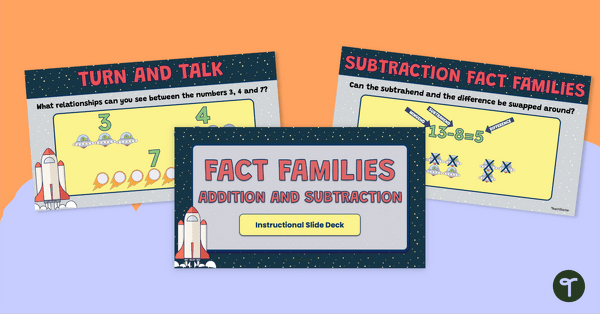
Addition and Subtraction Fact Families Teaching Presentation
A 19-page editable teaching presentation to use in the classroom when introducing addition and subtraction fact families.
- Plus Plan
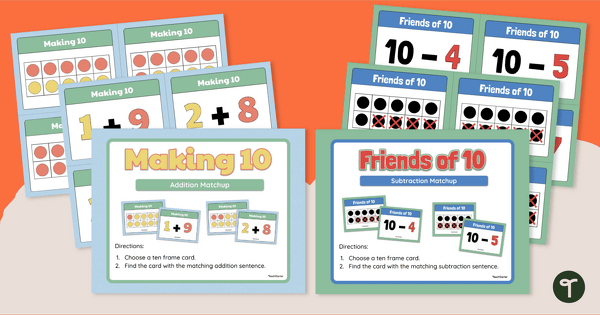
Tens Frame - Addition and Subtraction Match-Up Activity
Build addition and subtraction skills with two tens frame matching games.
- Plus Plan
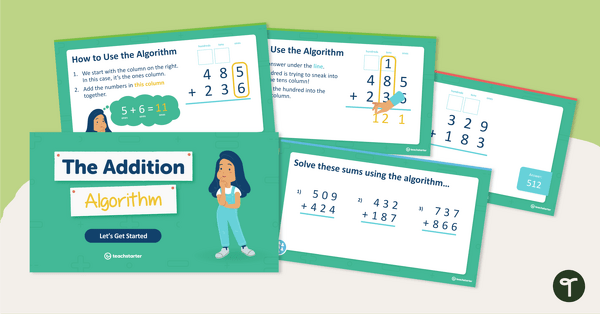
The Addition Algorithm – Teaching Slides
Use these editable, interactive teaching slides to guide your students through standard algorithm addition with regrouping.