Nouns Teaching Resources
Save time creating noun lesson plans with printable worksheets and digital activities, handy noun lists, part of speech games and more from the teachers of Teach Starter.
Aligned with the Australian English curriculum, the teacher resources in this collection are all teacher-created. You'll find printables to help students learn to differentiate nouns from verbs, digital activities to help teach kids about common, proper and possessive nouns and more!
Whether you're working on singular and plural forms of nouns with your year 3 class, exploring the functions of nouns in phrases and clauses with year 5 or starting at the very beginning with a noun introduction to your year 1 students, we've got you covered!
Aare you new to teaching this part of the curriculum or just looking for new ways to engage students as they learn about nouns? Take a peek at this primer from our teacher team, including a breakdown of the different types of nouns, a kid-friendly definition of noun, explanations of how to teach kids about possessive nouns and plenty more!
What Is a Noun? A Kid-Friendly Definition
Sure, you know the definition of this part of speech yourself, but we've filled the Teach Starter site with handy definitions and tools you can use to explain the various parts of speech to your students.
So, let’s start with a kid-friendly definition of noun!
A noun is a word that is used to identify a person, place, thing or idea.
Nouns are just one of the eight parts of speech that we use to create sentences when writing, but they're an important one. Most sentences that we write or say out loud will contain a noun.
Singular and Plural Nouns — What's the Difference?
Singular nouns refer to just one person, place, thing or idea. Plural nouns, on the other hand, identify multiple people, places, things or ideas!
How to Make a Singular Noun Plural
The challenge for most students is learning how to properly adjust a singular noun to its plural form.
Here are a few rules to help your students make the changes:
1. -s Rule
Many nouns can be made plural by simply adding the letter s to the end.
For example, if you change 'book' to 'books,' you've used the -s rule for plural nouns.
2. -es Rule
Nouns ending in s, x, z, ch, or sh require adding -es to the end to make them plural nouns. For example, box becomes boxes when it is in the plural form.
3. -ies Rule
If a noun ends in a consonant + y, teach your students to change the y to i and add -es. For example, baby becomes babies when it is made plural.
4. -ves Rule
Do you have a noun ending in f or fe? To create the plural form, change the f or fe to v and add -es. For example, leaf is changed to leaves.
5. Vowel + -y Rule
If you have a singular noun ending in a vowel + y, it can be written in plural form by adding -s. For example, key becomes keys.
6. Irregular Plural Nouns
Some nouns have irregular plural forms and don't follow specific patterns. For example, mouse becomes mice when it's made plural, and child becomes children. These irregular plurals often trip students up, so teaching word pairs is important to help build their understanding.
8 Singular Nouns That Don't Change When They're Plural — A List for Kids
Some nouns are tricksters that remain the same in both singular and plural forms. Here's a handy list for kids to help them keep track!
- deer
- scissors
- pants
- pyjamas
- fish
- moose
- sheep
- rice
2 Different Types of Nouns (With Examples) and What They Do
Considering how important this part of speech is in sentence writing, it's hardly surprising that there are different types of nouns that we can use to communicate. The two main types of nouns are common nouns and proper nouns. Let's break down common nouns vs. proper nouns and look at a few examples!
Common Nouns
Common nouns are the nouns we use to identify general people, places, things and ideas. For example, if we say the city, we are referring to a general place. In this case, 'city' is a common noun.
Common nouns only begin with a capital letter if they appear at the beginning of a sentence.
Examples of common nouns for kids include dog, pizza, girl, and post office.
Proper Nouns
Proper nouns are different from common nouns because they are used to identify specific people, places, things and ideas. For example, Brisbane is a proper noun because it refers to a specific city.
Proper nouns always begin with a capital letter, even if they appear in the middle of a sentence or at the end.
Examples of proper nouns for kids include Mrs. Habib, Rocks Grammar School and LEGO.
Common Nouns Lists – 4 Different Kinds to Teach About
There may be two different main types of nouns, but the variation doesn't stop with common and proper. Common nouns can be broken down into different categories as well.
Here's a list of common nouns most kids learn about in primary school!
Concrete Nouns
A concrete noun is a word we use to identify things that we can perceive using our five senses. Concrete nouns can be touched, tasted, smelled, felt and heard.
Examples of common nouns for kids include wind, pineapple, flowers, cotton and music.
Abstract Nouns
Unlike concrete nouns, abstract nouns refer to things we cannot actually sense with any of our 5 senses. These nouns are identifying things that are not physical.
Things like our ideas and our feelings are considered abstract nouns.
Examples of abstract nouns for kids include bravery, friendship and happiness.

Collective Nouns
A collective noun is a type of common noun that is used to identify a group or collection of people, places, things or ideas.
Examples of collective nouns for kids include team, family and class.
Countable Nouns vs. Uncountable Nouns — What's the Difference?
Another way to break down the main types of nouns is to look at whether they're countable or uncountable. So what's the difference?
Countable Nouns
Countable nouns are just what the name implies. These are nouns that identify things we can count! We can apply a specific number to a countable noun.
For example, if you look around a classroom, you can count the number of desks or tables. That makes both desks and tables countable nouns.
Uncountable Nouns
If countable nouns can be counted, it makes sense that uncountable nouns identify things that can't be counted.
For example, we can't count water or sadness. These are both uncountable nouns.
- Plus Plan
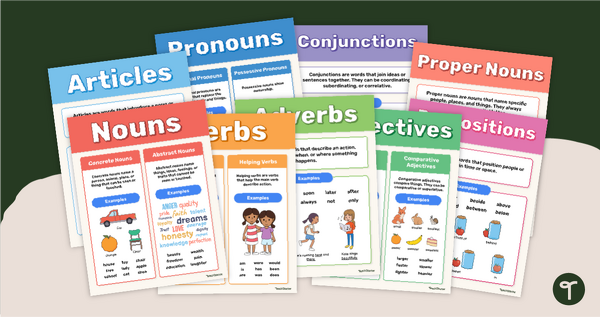
Nouns, Proper Nouns, Verbs, Adjectives, Adverbs and Conjunctions Posters
Enhance student understanding of the 8 parts of speech with these colourful, informative and easily-referenced grammar wall posters.
- Plus Plan
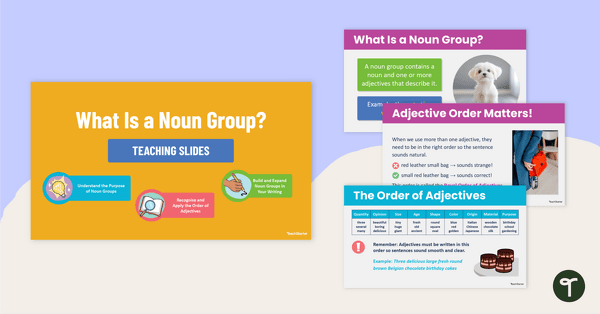
What Is a Noun Group? Teaching Slides
Answer the question “What is a noun group?” with this engaging slide deck designed to help primary students use descriptive language correctly in their writing.
- Plus Plan
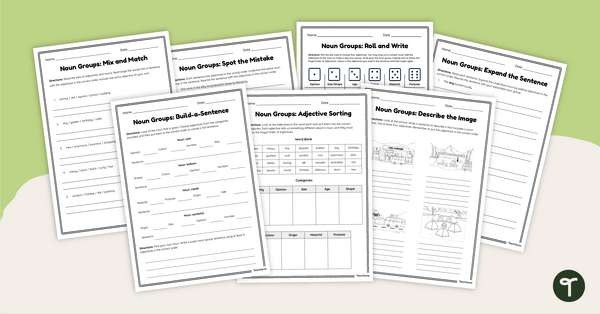
Noun Groups Worksheet Pack
Teach noun groups to your students with this set of 7 activity worksheets that help them use adjectives to build more descriptive and accurate sentences.
- Plus Plan
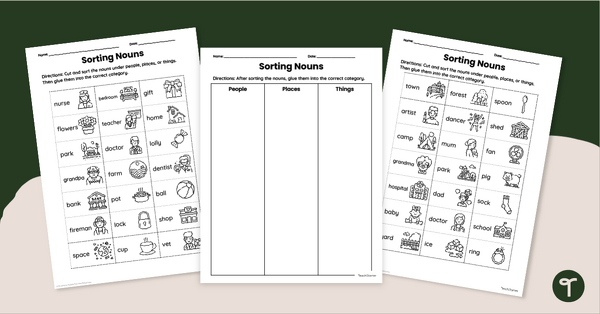
Noun Sort Worksheet Pack
Use a noun sort worksheet to help your students practise identifying people, places, and things.
- Free Plan
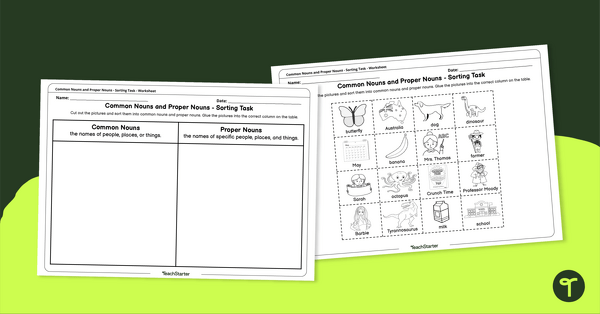
Common Nouns and Proper Nouns - Sorting Task
A sorting task to help students learn the difference between common nouns and proper nouns.
- Plus Plan
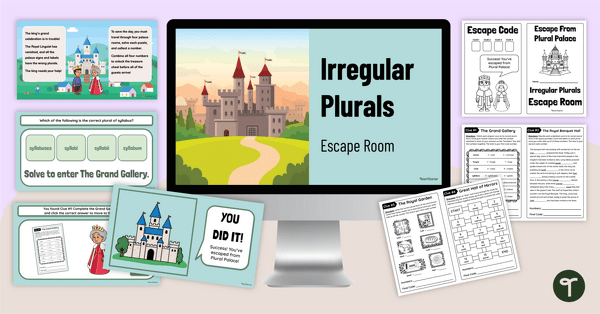
Irregular Plurals Escape Room
Teach irregular plurals with this engaging escape room game that helps teachers bring grammar lessons to life while keeping students motivated and excited to learn.
- Plus Plan
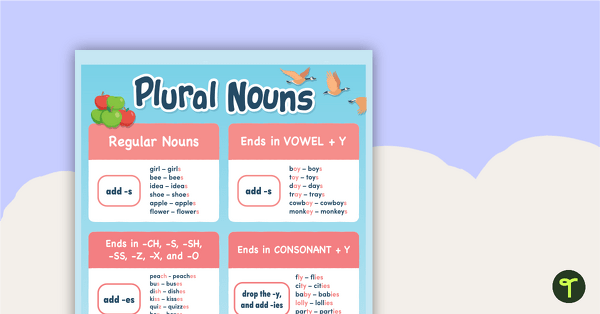
Rules for Plurals - s, es, ies, ves
Display the different rules for plurals with a printable plural noun anchor chart.
- Free Plan
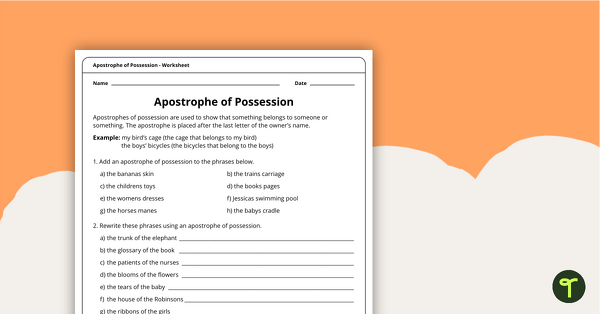
Apostrophe of Possession Worksheet
A 2 page worksheet to help students consolidate their understanding of the apostrophe of possession.
- Plus Plan
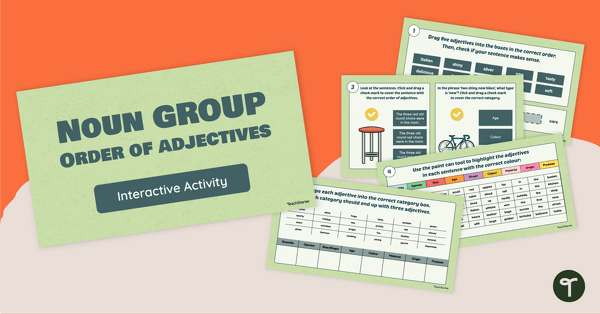
Noun Group Interactive Activity
Engage your students with this interactive noun group digital activity that helps them build descriptive noun groups by using the correct order of adjectives.
- Plus Plan
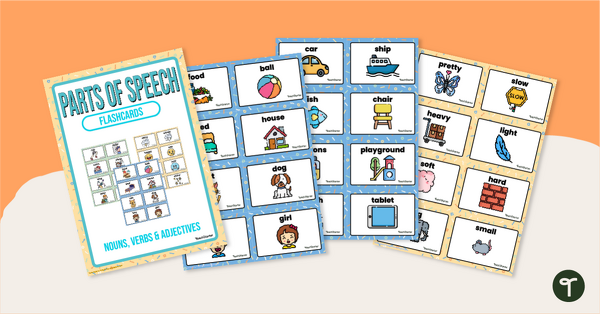
Nouns, Verbs and Adjectives Flashcards
Create a variety of grammar activities with 60 printable noun, verb and adjective flashcards.
- Plus Plan
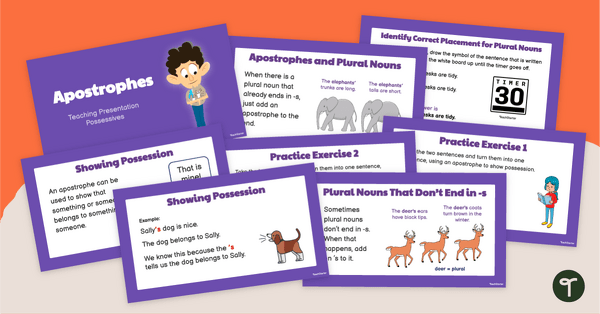
Apostrophes of Possession Teaching Presentation
Teach your students to use the correct forms of possessive nouns with an interactive teaching presentation.
- Free Plan
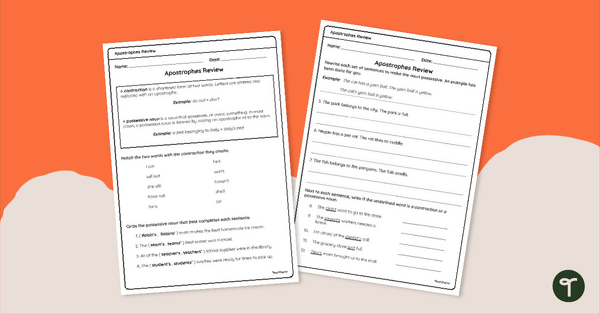
Apostrophe Review Worksheet
Practise using apostrophes with contractions and possessive nouns in this double-sided worksheet.
- Plus Plan
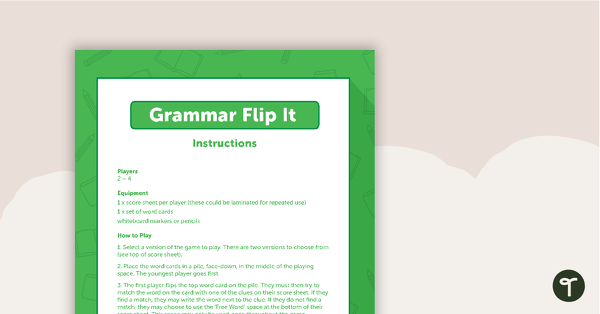
Adjective Grammar Card Game – Flip It!
A fun game for students to play in small groups to consolidate their understanding of adjectives.
- Plus Plan
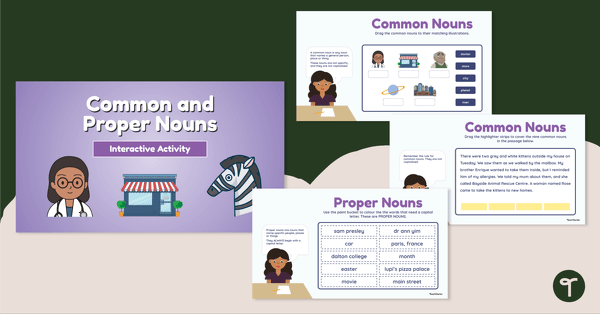
Common and Proper Nouns - Interactive Activity
Identify common and proper nouns by sorting words in their context.
- Plus Plan
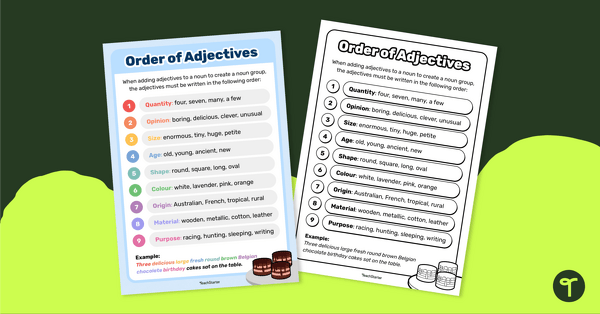
Order of Adjectives Poster
Use this order of adjectives poster to explain the sequence that must be followed when adding adjectives to a noun to create a noun group.
- Plus Plan
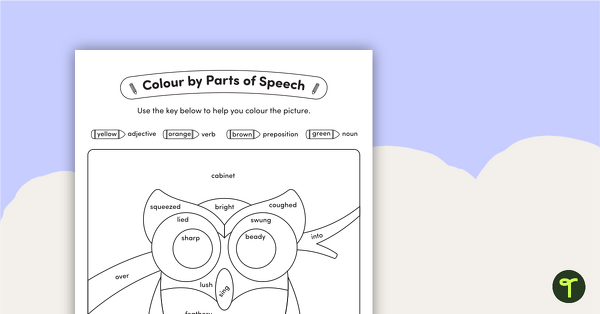
Colour by Parts of Speech - Nouns, Verbs, Adjectives and Prepositions - Owl
Consolidate parts of speech by colouring nouns, verbs, adjectives and prepositions on the owl.
- Plus Plan
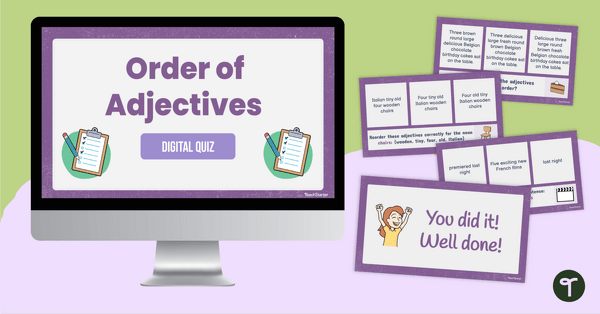
Order of Adjectives Digital Quiz
Engage your students with this order of adjectives digital quiz that helps them practise arranging adjectives in a fun and engaging way.
- Plus Plan
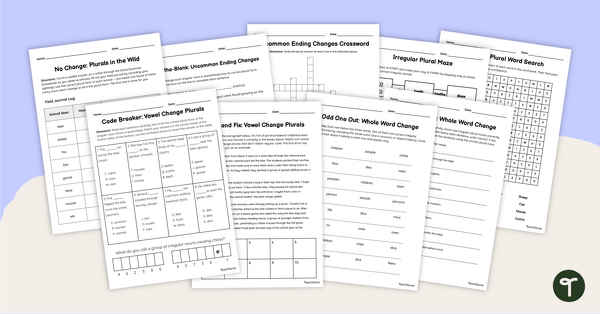
Irregular Plural Nouns Worksheets
Teach irregular plural nouns with this engaging set of 9 activity worksheets designed to reinforce key grammar concepts while keeping students motivated and on-task.
- Plus Plan
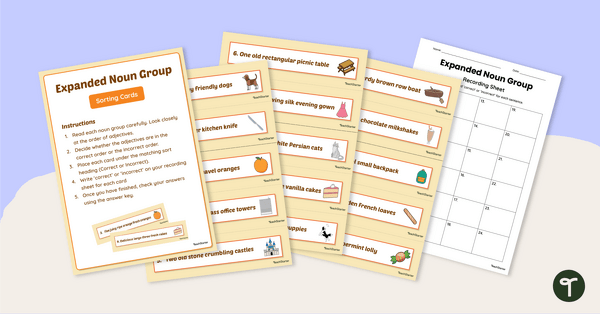
Expanded Noun Groups Sorting Activity
Teach expanded noun groups with this hands-on sorting activity where students decide whether the order of adjectives in each noun group is correct or incorrect.
- Plus Plan
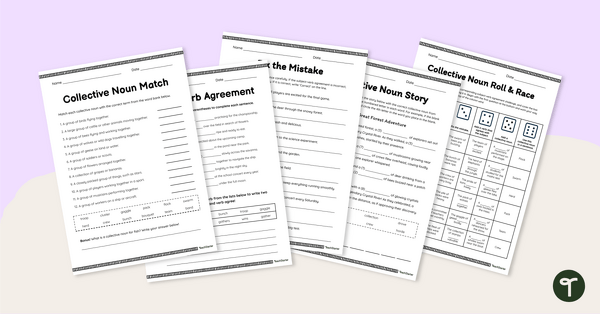
Subject Verb Agreement Collective Nouns Worksheet Pack
Download this subject-verb agreement collective nouns worksheet pack to help your students master tricky singular and plural verb choices when using collective nouns.
- Plus Plan
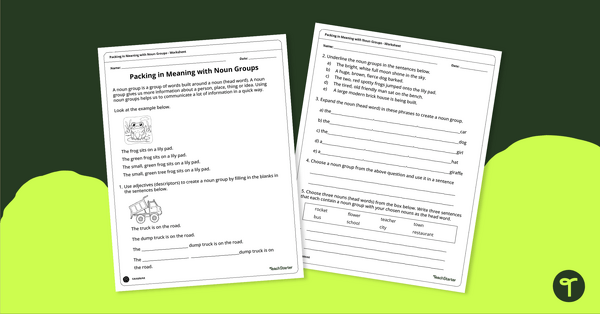
Packing in Meaning with Noun Groups Worksheet
Explore the concept of noun groups with this 2-page worksheet.
- Free Plan
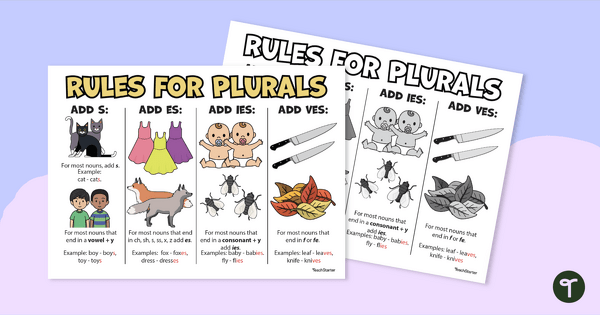
Plural Nouns Chart — Printable Plural Rules Guide
Help students remember the different plural rules with a handy printable guide created for teachers to hand out.
- Plus Plan
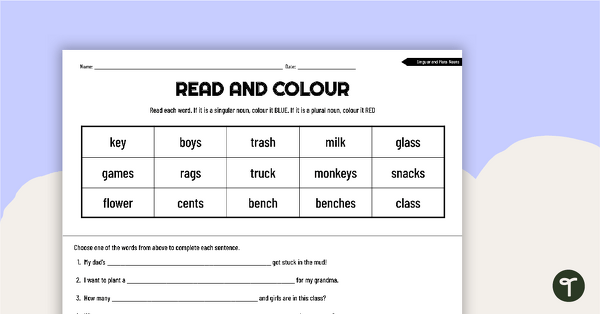
Read and Colour Worksheet – Singular and Plural Nouns
A worksheet to practise identifying singular and plural nouns.
- Plus Plan
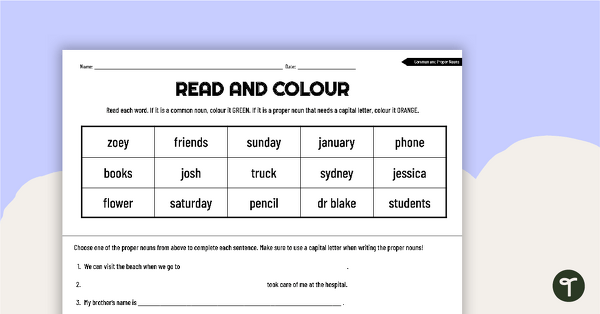
Read and Colour Worksheet – Common and Proper Nouns
A worksheet to practise identifying common and proper nouns.
- Plus Plan
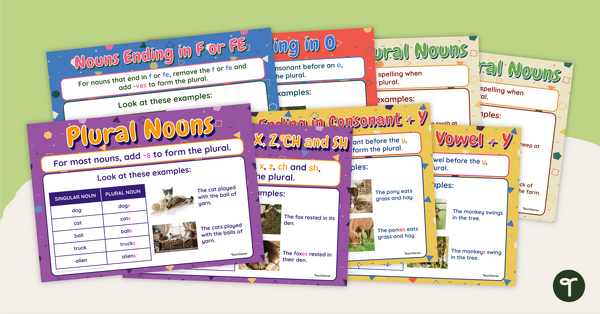
Plural Rules Poster Pack
Make plural rules a breeze to understand with plural noun posters.
- Plus Plan
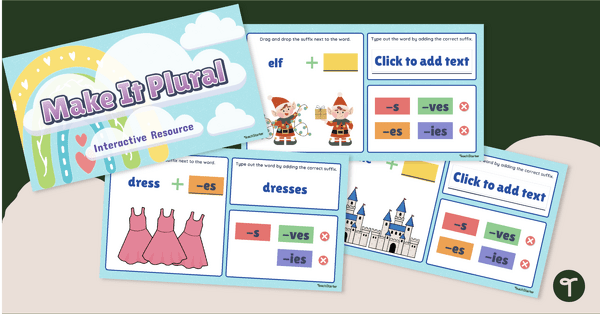
Make It Plural - Interactive Activity
Help children grasp the tricky concept of pluralising nouns with an interactive Google Slides activity.
- Plus Plan
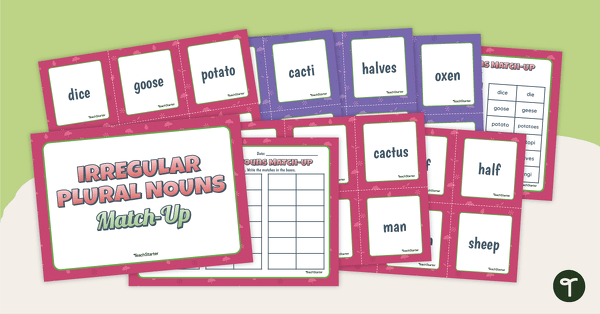
Irregular Plural Noun Match-Up
Practise using irregular plural nouns with an irregular plural noun matching activity.
- Plus Plan
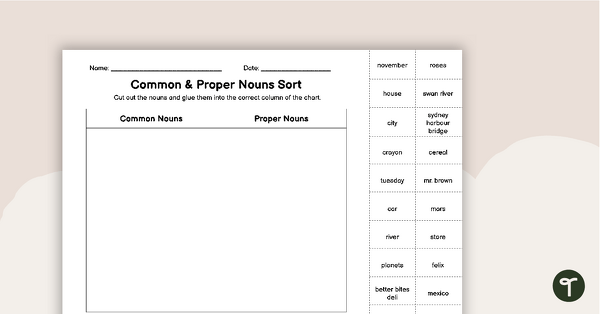
Common and Proper Nouns Sort - Cut and Paste Worksheet
A sorting worksheet to practise identifying common and proper nouns.
- Plus Plan
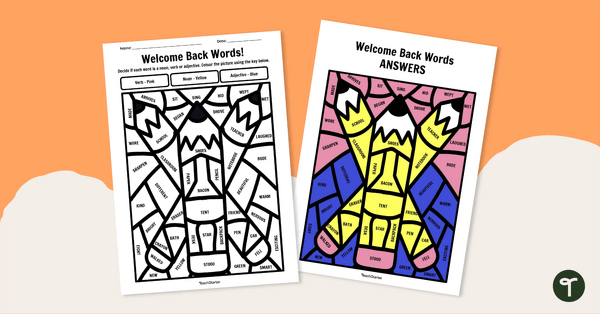
Parts of Speech Colouring Activity - Back to School
Use this Parts of Speech Colouring Activity as a back to school review activity with your students.
- Plus Plan
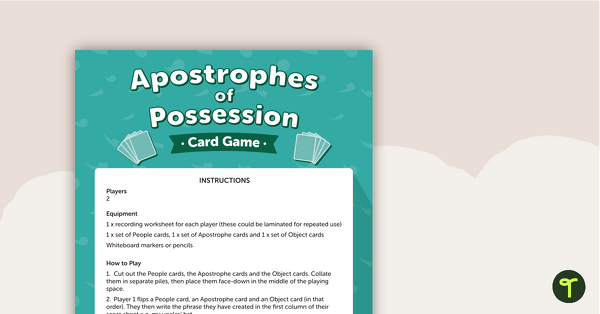
Apostrophes of Possession Card Game
An interactive card game for students to play when consolidating their understanding of apostrophes of possession.
- Plus Plan
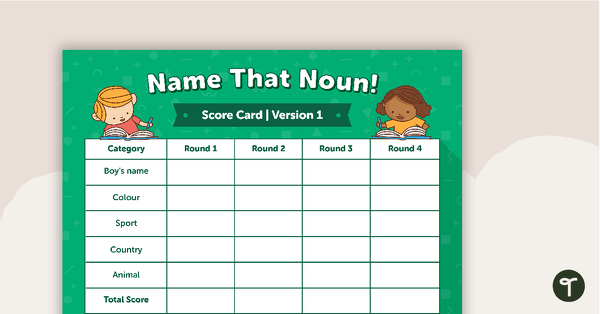
Grammar Game - Name That Noun!
A fun game for students to play in small groups to consolidate their understanding of nouns.
- Plus Plan
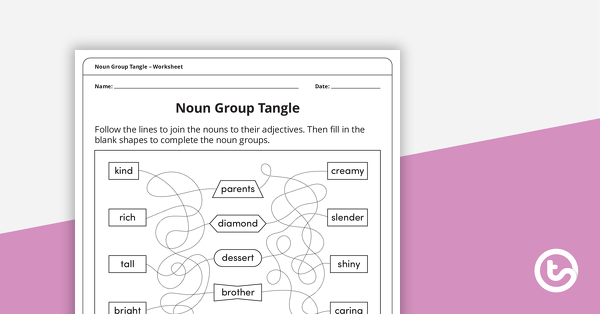
Noun Group Tangle – Worksheet
A worksheet that focuses on nouns combining with adjectives to create noun groups.