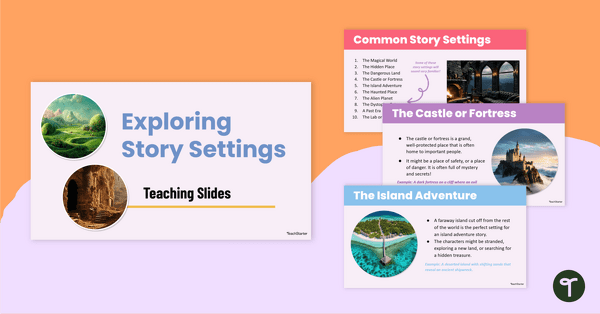
Discover engaging examples of story settings with this teaching presentation that introduces students to ten classic settings in children’s literature.
Examples of Story Settings Ready to Explore!
There are many common story settings that reappear in children’s literature. These settings provide the backdrop that shapes the events and characters’ experiences. Settings contribute to mood, influence the plot and help readers imagine the world of the story.
This comprehensive 30-slide teaching presentation has been created by our team to introduce your students to ten of the most common story settings found in children’s literature. Each setting is explained with clear examples, relatable visuals and discussion prompts to spark curiosity and comprehension.
The examples of story settings included in this presentation are:
- The Magical World
- The Hidden Place
- The Dangerous Land
- The Castle or Fortress
- The Island Adventure
- The Haunted Place
- The Alien Planet
- The Dystopian Future
- A Past Era
- The Lab or Workshop
This resource downloads as a Microsoft PowerPoint or Google Slides file. By engaging with this resource, students can share ideas, make connections to books they’ve read and become inspired by potential settings for their own stories.
More Ways to Explore Examples of Settings in Stories
Once students have engaged with this presentation, teachers extend learning by engaging students in a number of related activities. These activities allow students to apply their understanding and reinforce their grasp of how settings shape stories.
- Class Map – Have the students work collectively as a class to create a large story map depicting the setting of a class novel recently read. Students could label key landmarks and write a paragraph to describe the archetype features of the setting.
- Compare and Contrast – Explore how the same setting can shape the atmosphere of a text in very different ways, depending on the story. For example, a forest could be a magical land in one story but a dangerous land in another.
- Book Brainstorm – Place the students in small groups, the provide each group with an example story setting. See how many texts (books or movies) the students can list that are set in that particular environment.
Download to Investigate Setting Examples in Stories
Use the dropdown menu on the Download button to access your preferred version of this teaching presentation about setting examples in stories. (Note: You will be prompted to make a copy of the Google Slides presentation before accessing it.)
Designed for ease of use, it can be projected on a smartboard, shared on student devices or printed as discussion prompts. However you choose to use it, this presentation is a flexible tool for any primary teacher looking to boost engagement when teaching setting examples in stories.
This resource was created by Kaylyn Chupp, a teacher and a Teach Starter collaborator.
Complement This Story Settings Examples Resource
Looking for more time-saving materials to use in your literature unit? Click below to browse more curriculum-aligned, teacher-created resources from the Teach Starter team.
teaching resource
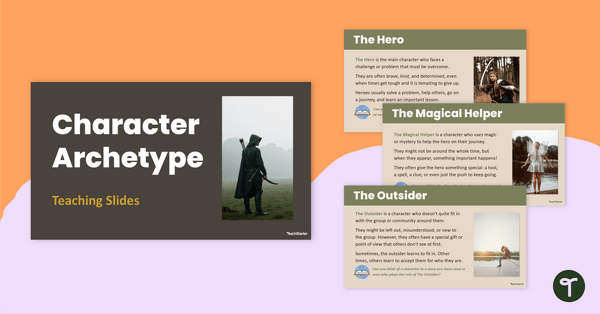
Character Archetype Teaching Slides
Download this character archetype slide deck to help your students identify and analyse common character types in literature.
teaching resource
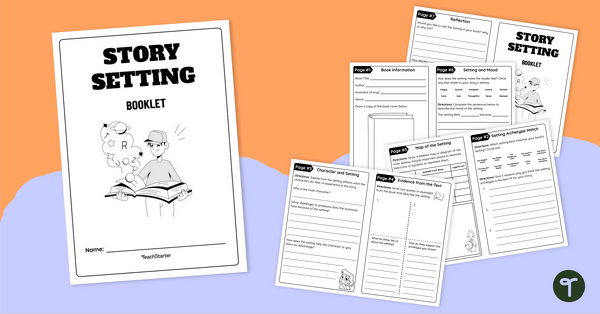
Story Settings Booklet
Explore common story settings in literature with this engaging 8-page mini book that helps students analyse settings from their own reading.

0 Comments
Write a review to help other teachers and parents like yourself. If you'd like to request a change to this resource, or report an error, select the corresponding tab above.