Year 5
The proficiency strands understanding, fluency, problem-solving and reasoning are an integral part of mathematics content across the three content strands: number and algebra, measurement and geometry, and statistics and probability. The proficiencies reinforce the significance of working mathematically within the content and describe how the content is explored or developed. They provide the language to build in the developmental aspects of the learning of mathematics. The achievement standards reflect the content and encompass the proficiencies.
At this year level:
- understanding includes making connections between representations of numbers, using fractions to represent probabilities, comparing and ordering fractions and decimals and representing them in various ways, describing transformations and identifying line and rotational symmetry
- fluency includes choosing appropriate units of measurement for calculation of perimeter and area, using estimation to check the reasonableness of answers to calculations and using instruments to measure angles
- problem-solving includes formulating and solving authentic problems using whole numbers and measurements and creating financial plans
- reasoning includes investigating strategies to perform calculations efficiently, continuing patterns involving fractions and decimals, interpreting results of chance experiments, posing appropriate questions for data investigations and interpreting data sets.
(source: www.australiancurriculum.edu.au)
Achievement Standard
By the end of Year 5, students solve simple problems involving the four operations using a range of strategies. They check the reasonableness of answers using estimation and rounding. Students identify and describe factors and multiples. They identify and explain strategies for finding unknown quantities in number sentences involving the four operations. They explain plans for simple budgets. Students connect three-dimensional objects with their two-dimensional representations. They describe transformations of two-dimensional shapes and identify line and rotational symmetry. Students interpret different data sets.
Students order decimals and unit fractions and locate them on number lines. They add and subtract fractions with the same denominator. Students continue patterns by adding and subtracting fractions and decimals. They use appropriate units of measurement for length, area, volume, capacity and mass, and calculate perimeter and area of rectangles. They convert between 12- and 24-hour time. Students use a grid reference system to locate landmarks. They measure and construct different angles. Students list outcomes of chance experiments with equally likely outcomes and assign probabilities between 0 and 1. Students pose questions to gather data, and construct data displays appropriate for the data.
(source: www.australiancurriculum.edu.au)
- Plus Plan
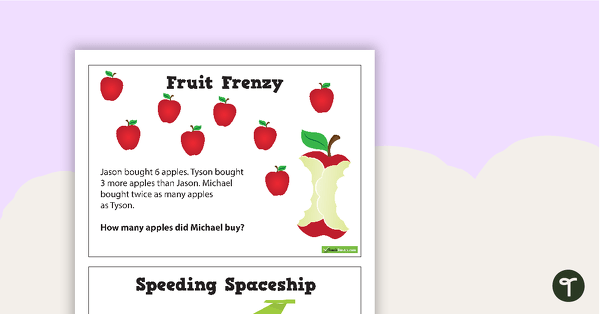
Maths Brain Teasers Task Cards
Spark critical thinking with maths brain teasers embedded in real-world scenarios to engage and challenge your upper primary students.
- Plus Plan
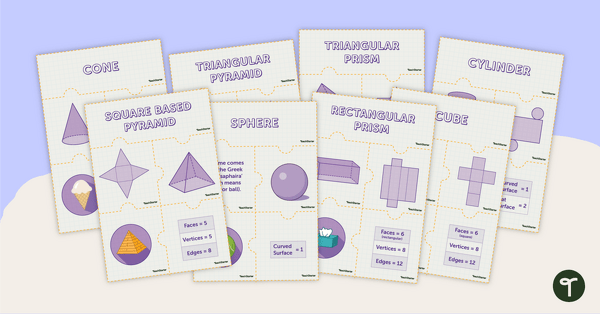
3D Objects and Their Properties - Puzzles
Explore the names and properties of some of the most common 3D shapes with this set of 8 puzzles.
- Plus Plan
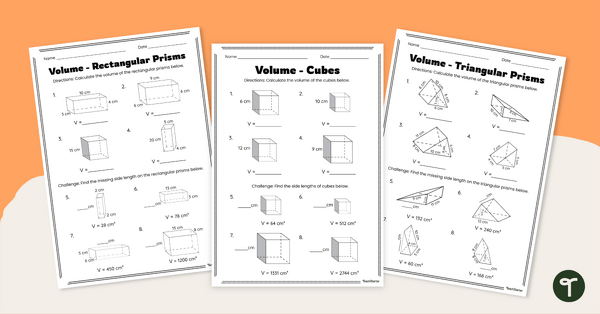
Volume Worksheets
Provide your students with these volume worksheets to help them master finding the volume of cubes, rectangular prisms and triangular prisms.
- Plus Plan
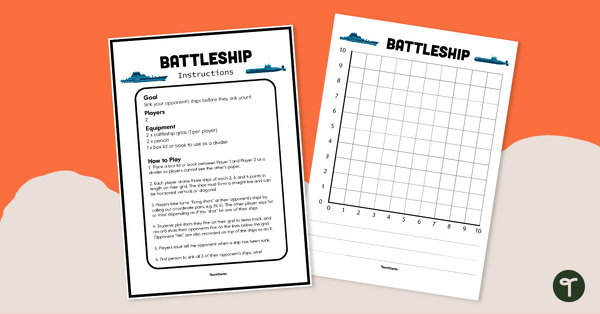
Battleship Plotting Game (Quadrant 1 of the Cartesian Plane)
Use this grid system game to practise plotting coordinates on Quadrant 1 of the Cartesian plane.
- Plus Plan
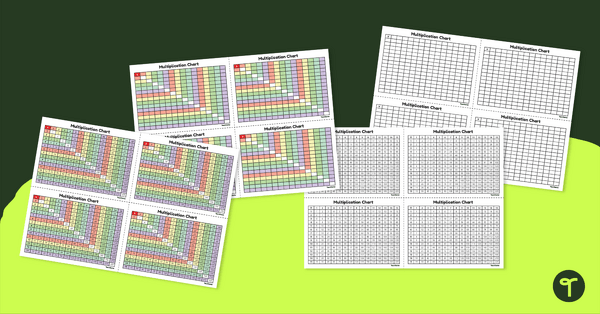
Desk-Sized Multiplication Charts for Students
Download 4 desk-size multiplication charts so every student can keep their own chart handy!
- Plus Plan
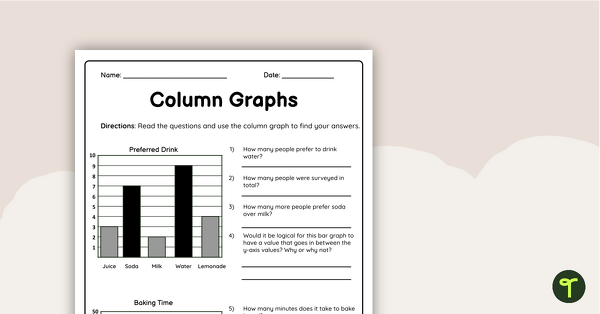
Column Graphs Grade 5 Worksheet
Use this double-sided column graphs worksheet to check your students’ understanding of interpreting and drawing column graphs.
- Free Plan
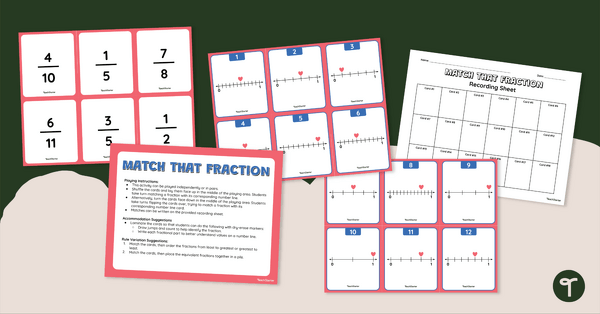
Match That Fraction! – Number Line Activity
Match fractions with their corresponding locations on a number line with a set of fraction task cards.
- Plus Plan
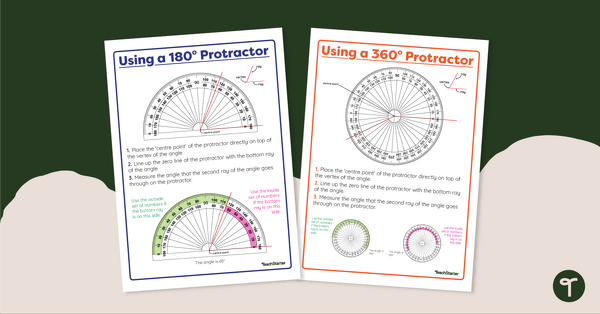
Measuring Angles Using a Protractor Posters
Remind your students how to measure angles using a protractor with this set of classroom posters.
- Plus Plan
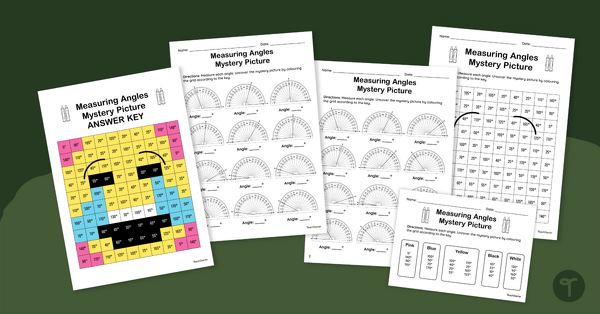
Measuring Angles – Mystery Picture Worksheet
Find the measure of each angle and use the colour guide to reveal a mystery picture with this worksheet designed for year 5 students.
- Plus Plan
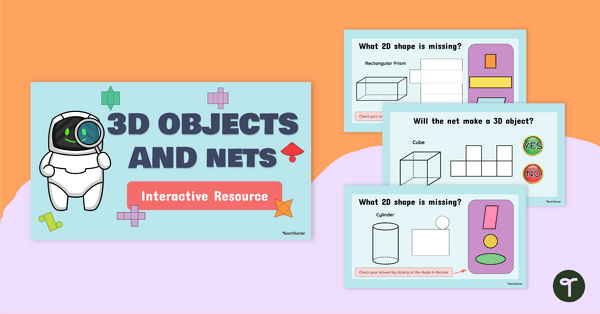
3D Objects and Nets - Interactive Activity
Explore the connection between 3D objects and their nets with this engaging digital activity.
- Plus Plan
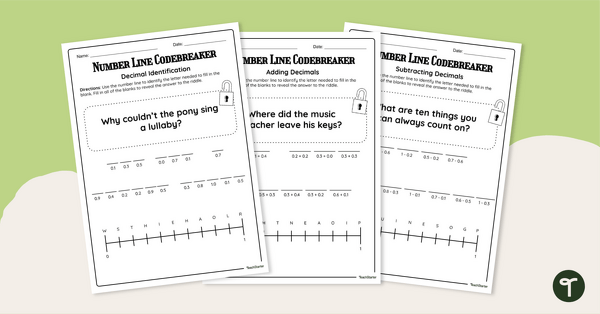
Decimals on Number Lines – Codebreaker Worksheets
Crack the number line code with worksheets practising identification, addition, and subtraction of decimal numbers.
- Plus Plan
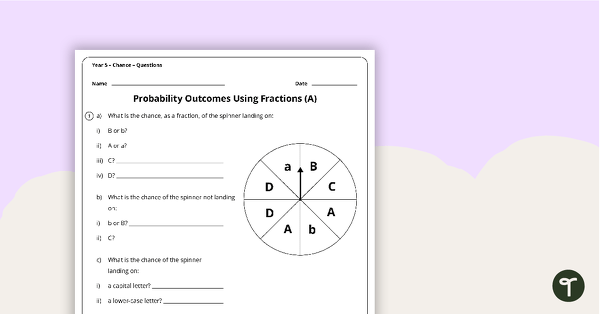
Chance Worksheets - Year 5
4 chance worksheets linked to the Australian Curriculum.
- Plus Plan
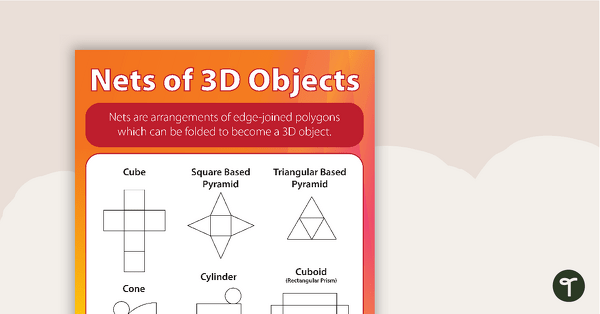
Nets of 3D Objects - Poster
A poster highlighting the nets of a selection of 3D Objects.
- Plus Plan
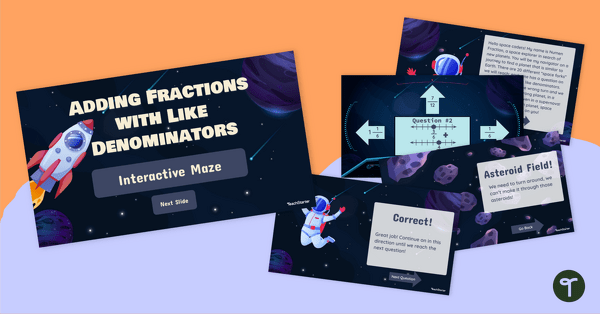
Adding Fractions With Like Denominators Interactive Maze
Get your students to add like fractions to find their way out of a space-themed digital maze!
- Plus Plan
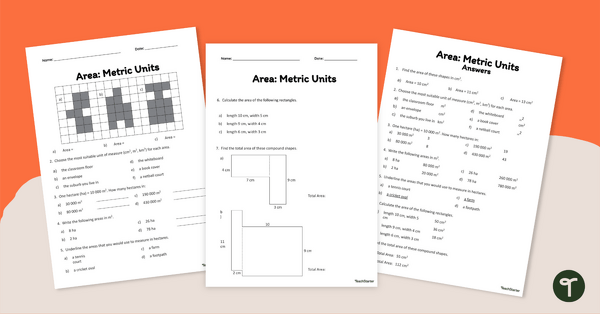
Using Metric Units of Area Worksheets
Use this set of three measurement math worksheets to help your students understand the concept of measuring area in metric units.
- Plus Plan
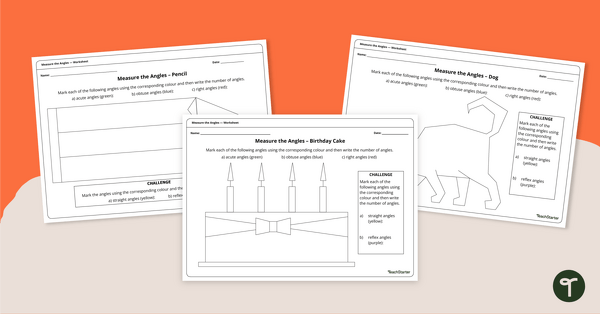
Measuring Angles in Images Worksheets
Get your students using their protractors to measure acute, obtuse, right, straight and reflex angles with this set of differentiated angles worksheets.
- Plus Plan
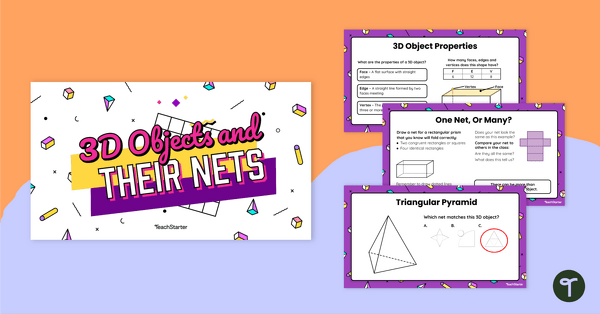
3D Objects and Their Nets - Teaching Presentation
Explore the connection 3D objects have with their nets and other 2D representations with this comprehensive set of teaching slides.
- Free Plan
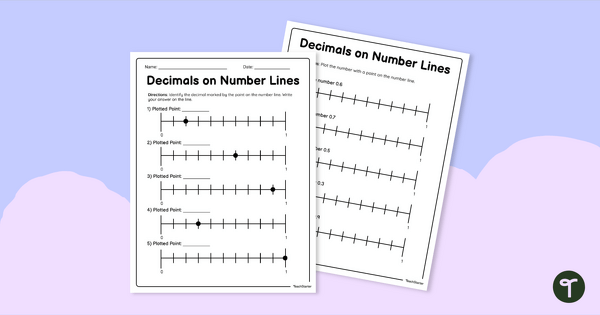
Plotting Decimals Number Line Worksheet
Practise identifying decimals on number lines with a decimal number line worksheet.
- Free Plan
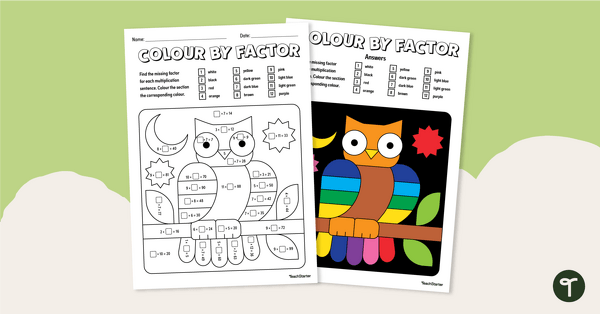
Colour by Factor – Worksheet
Solve missing factor equations and colour a picture according to a colour-by-number guide.
- Plus Plan
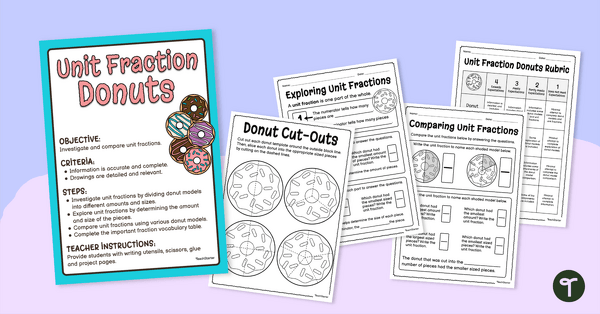
Unit Fraction Donut Investigation
Explore unit fractions in this fun donut-themed maths investigation for your students.
- Plus Plan
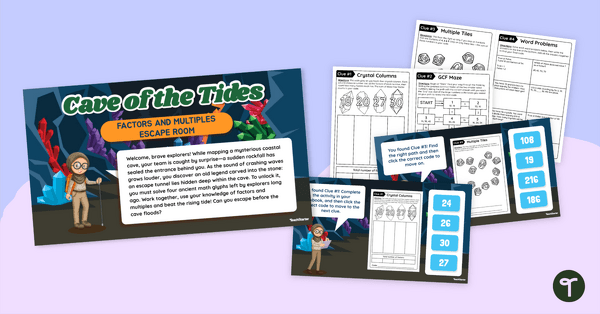
Factors and Multiples Game — 'Cave of Tides' Escape Room
‘Escape’ the ordinary with this factors and multiples game that will engage your students in maths review as they search for a secret tunnel.
- Plus Plan
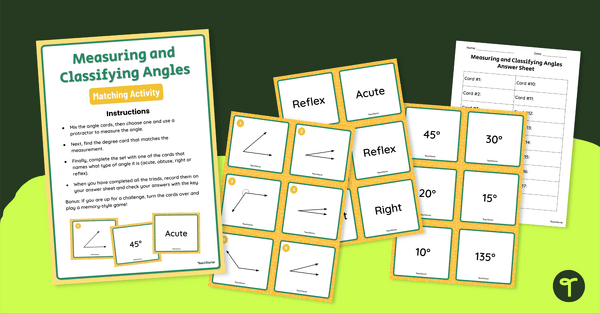
Measuring and Classifying Angles Activity
Introduce this measuring and classifying angles matching activity to your students to give them engaging, hands-on practice with key geometry concepts.
- Plus Plan
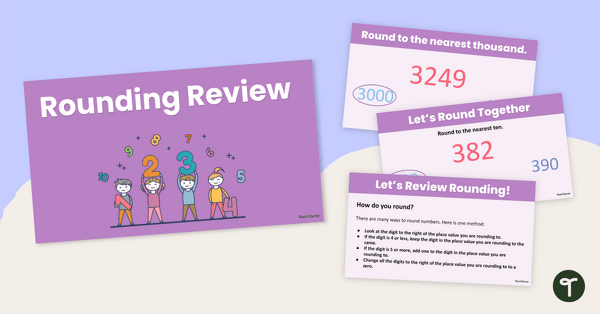
Rounding Activity (Warm-Up Teaching Slides)
Use this digital rounding activity to review rounding numbers to the tens, hundreds and thousands place.
- Free Plan
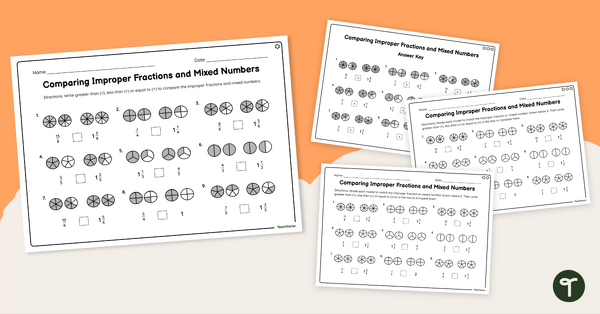
Comparing Improper Fractions to Mixed Numbers Worksheet Set
Use our comparing improper fractions to mixed numbers worksheet set to give your students practise representing and comparing fractions.
- Plus Plan
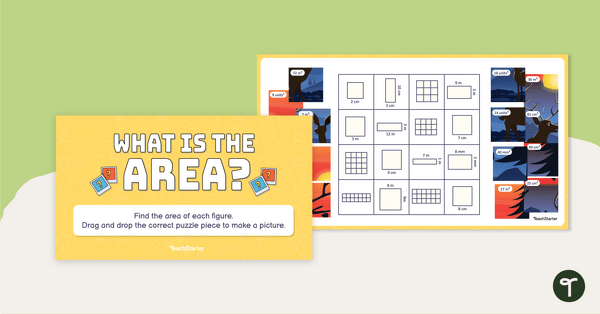
Interactive Area Puzzle (Squares and Rectangles)
Find the area of 16 shapes on the board and match the corresponding pieces to reveal a mystery picture.
- Plus Plan
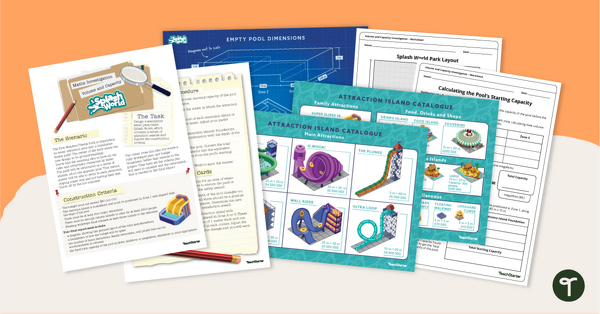
Volume and Capacity Activity — 'Splash World' Maths Investigation
Use this volume and capacity activity to expose your students to real-world volume applications by letting them design 'Splash World' — their very own waterpark!
- Plus Plan
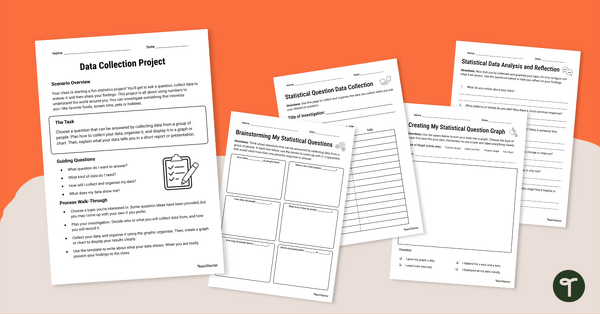
Data Collection Project
Complete this data collection project with your students to give them practise developing a statistical question, collecting data and displaying the results.
- Plus Plan
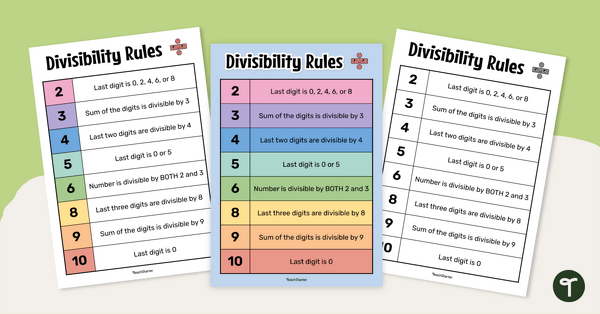
Divisibility Rules Chart
Hang our Divisibility Rules Chart in your classroom to give students a quick and easy reference for the rules of divisibility.
- Plus Plan
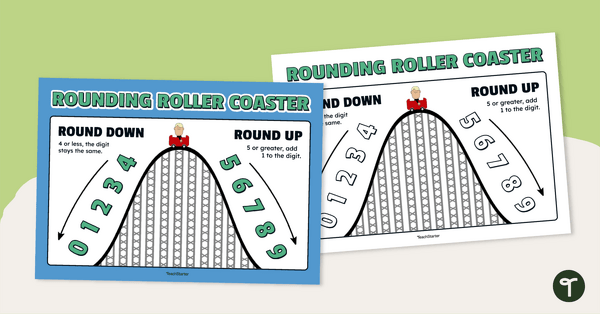
Rounding Anchor Chart — Rounding Roller Coaster!
Hang our rounding anchor chart in your classroom for a fun reminder of how to round numbers — roller coaster style!
- Plus Plan
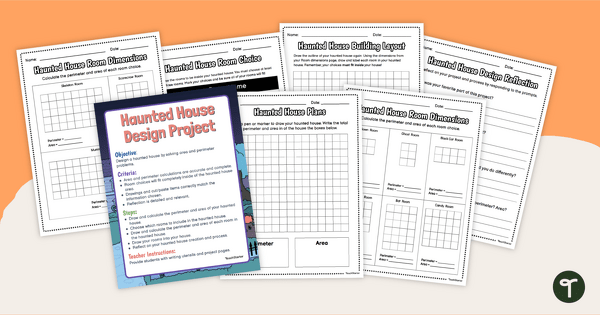
Area and Perimeter Haunted House - Year 5 Halloween Maths
Design your own haunted house and practise finding the perimeter and area of rectangular figures with an exciting Halloween mathss Activity!
- Plus Plan
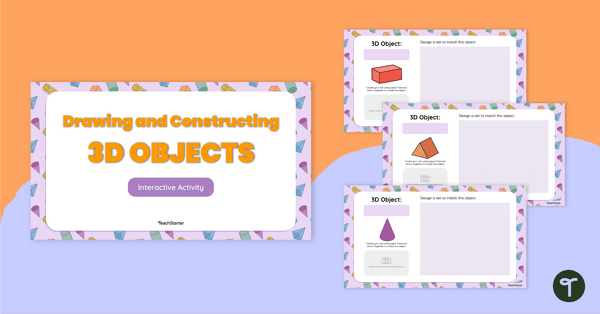
Drawing and Constructing 3D Objects – Interactive Activity
Construct digital and physical nets of some common 3D objects with this hands-on digital learning activity.
- Plus Plan
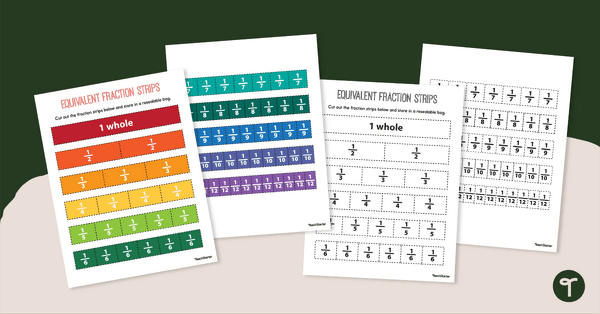
Fraction Strips
Print a set of fraction strips for the classroom! Keep the handy maths manipulative on hand for fraction games, showing equivalent fractions and more!