Animals Teaching Resources
Explore animal life in your science classroom with printable worksheets, classroom posters, and more teaching resources all about the different types of animals, their life cycles, characteristics and more!
This teacher-created collection includes a series of animal-focused teacher resources covering reptiles, birds, fish, mammals, and amphibians plus resources that classify a selection of vertebrates and invertebrates!
This comprehensive collection of teaching resources includes editable curriculum-aligned lessons on wildlife, endangered species and more — all ready to be printed and used in the classroom!
New to teaching this section of the science curriculum or looking for some fresh ideas? Read on for some tips on teaching about animal classification from our teacher team!
What Is Animal Classification? A Kid-Friendly Definition
In science class (and in professional study) animals are classified into groups based on physical and genetic characteristics. Scientists use a classification system called the Linnaean system to group different animals into progressively more specific categories, starting with the largest (and most inclusive group) and ending with the smallest and most specific group.
The categories are:
- Kingdom
- Phylum
- Class
- Order
- Family
- Genus
- Species
Helping students to remember these categories of biological animal classification, you might want to use a mnemonic such as:
- King Philip came over from Germany swimming.
- King Philip came over for good spaghetti.
- King Philip came over for good soup.
Sometimes the word "domain" is added to the top of the animal classification list, and in those cases you can add the word "dear" to your mnemonic sentences to help your students recall them all.
In the Linnaean system, every animal in nature is assigned a unique scientific name. The name includes their genus and species and it's used globally to refer to that animal — so, for example, a dog is a dog, but it's also a "canis lupus familiarise" according to its scientific name.
The animal classification system is used all around the world to help scientists understand the relationships between different animals and how they evolved over time.
Teaching About Animal Classification in Elementary School
How in-depth should your lesson planning be for animal classification? In the elementary grades, learning classifications of animals sets the stage for understanding how important this system is when scientists are studying animals in the natural world.
Consider this: In elementary school, students typically learn about the basic categories of animal classification, such as mammals, birds, fish, reptiles, and amphibians.
Your animal classification lessons can extend into learning about specific examples of animals within each category, such as lions and elephants for mammals, and eagles and penguins for birds.
By the time they head off to high school, students should already know the characteristics that define each group — such as the presence of fur or feathers (in birds) or most mammals' ability to give birth to live young. Students should also know about the classification of animals within each group, such as the different types of mammals or birds.
Ready to get started? Explore the resources in this collection!
- Free Plan
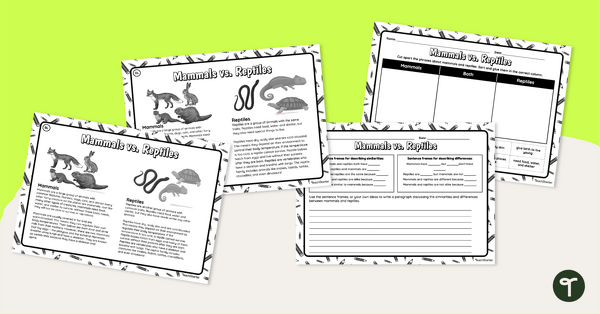
Paired Passage Worksheets-Mammals vs. Reptiles
Compare mammals vs. reptiles and add to your reading instruction with leveled nonfiction, compare and contrast passages and worksheets.
- Free Plan
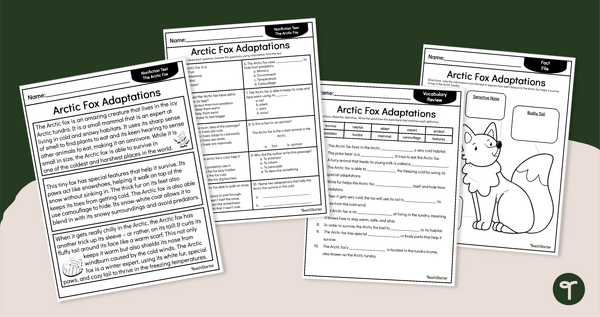
Arctic Fox Adaptations - Free Comprehension Worksheet
Read and learn about Arctic fox adaptations with a set of printable Reading Comprehension Worksheets for 2nd and 3rd grade.
- Free Plan
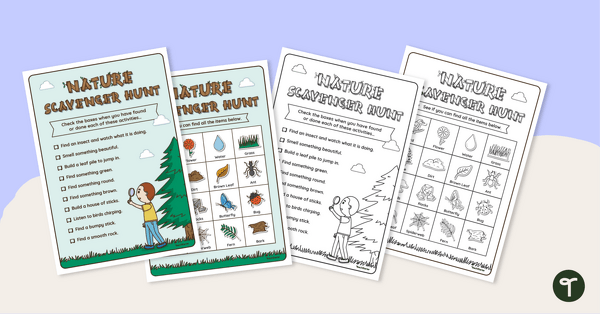
Free Printable Nature Scavenger Hunt
Make outdoor play a learning opportunity with our free printable nature scavenger hunt PDF.
- Free Plan
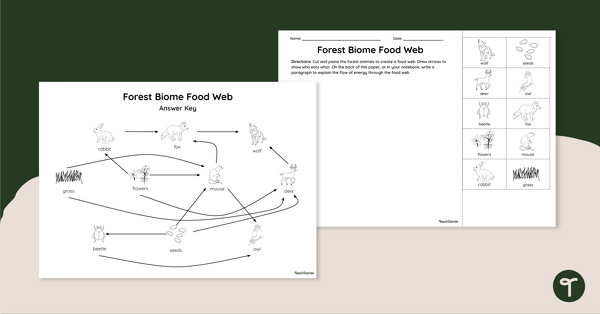
Forest Biome Food Web – Worksheet
Challenge students to create a food web and explain how energy flows between organisms with this cut-and-paste worksheet.
- Free Plan
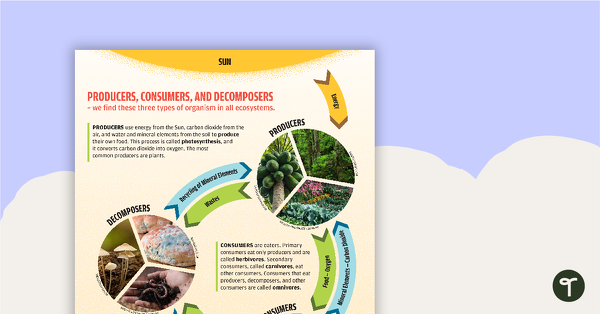
Producer, Consumer, Decomposer - Poster
A poster explaining the roles of the Sun, producers, consumers, and decomposers in the food chain.
- Free Plan
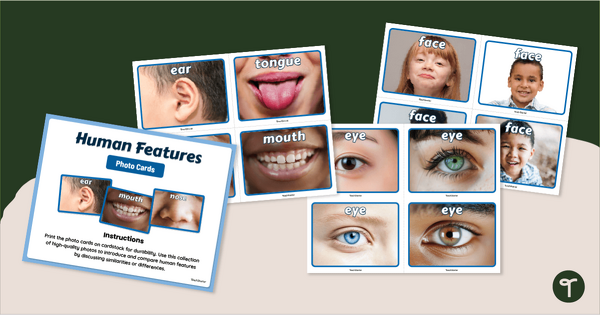
Human Features Picture Cards
Explore the similarities and differences between humans by using these printable Human Features Picture Cards.
- Plus Plan
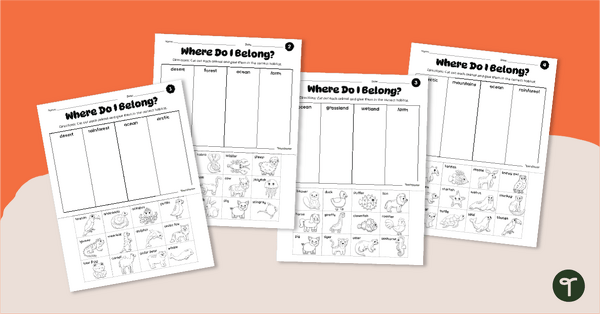
Animals and Their Habitats - Cut and Paste Worksheets
Match the animals and their habitats with a pack of printable cut and paste worksheets.
- Free Plan
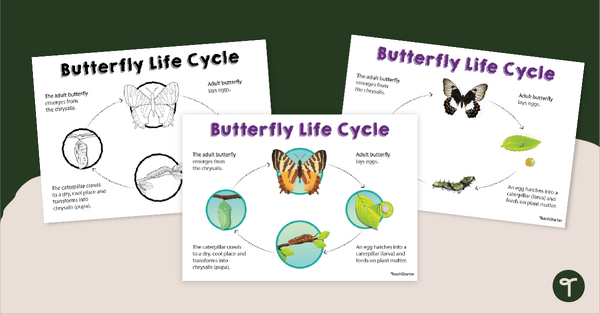
Butterfly Life Cycle Diagram Poster Pack
Display the stages in a butterfly's life with a printable Butterfly Life Cycle Diagram Poster Pack.
- Plus Plan
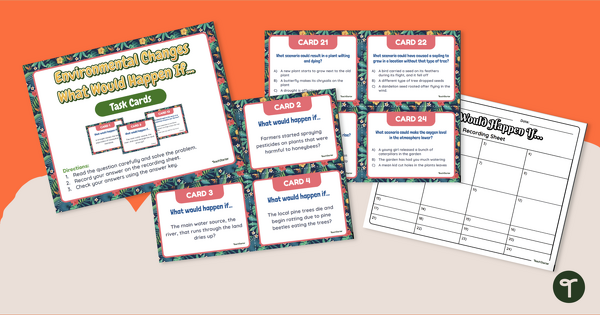
What Could Happen? Environmental Change Task Cards
Predict and identify the effects of environmental change on plants and animals with a set of printable science task cards.
- Plus Plan
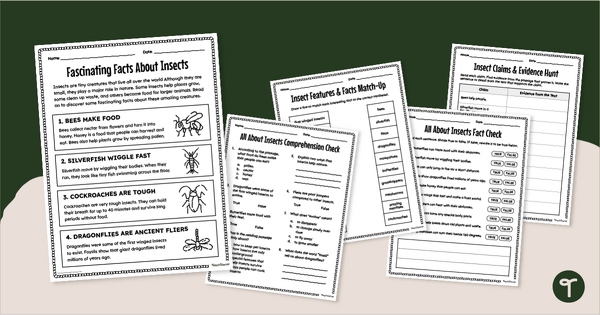
All About Insects - Reading Comprehension Worksheet Pack (3-4)
Learn all about insects and their body features with a printable All About Insects Reading Comprehension Worksheet pack.
- Plus Plan
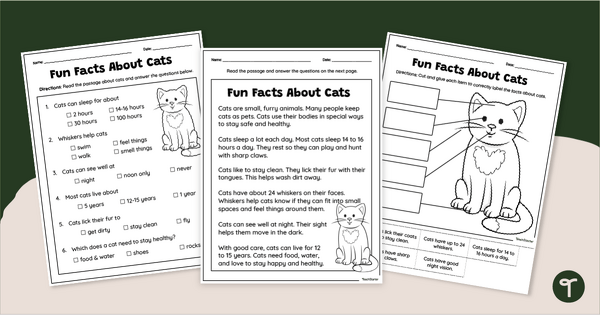
All About Cats - 1st Grade Reading Comprehension Passage
Explore informational text and learn all about cats and their external features with a printable 1st grade reading comprehension passage.
- Plus Plan
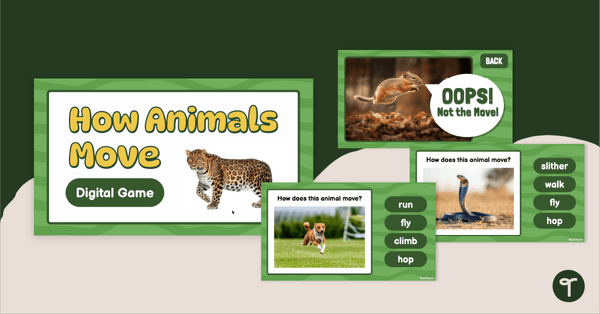
Interactive Animal Movement Game
Explore animals and how they move with an interactive Animal Movement Game.
- Free Plan
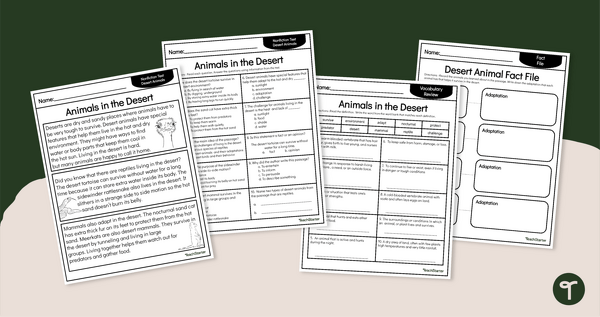
Free Desert Animal Adaptations Worksheets - Comprehension
Discover desert animal adaptations with a printable reading comprehension worksheet pack for 3rd grade.
- Free Plan
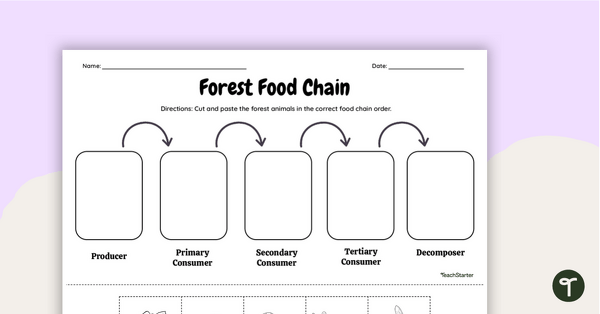
Forest Food Chain – Cut and Paste Worksheet
Create a forest food chain to show how energy flows between organisms with this cut-and-paste worksheet.
- Plus Plan
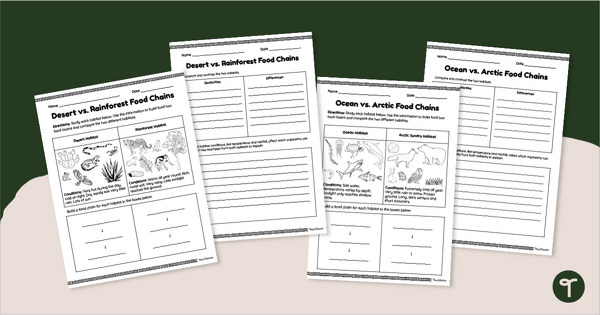
Comparing Food Chains Across Habitats Worksheet Pack
Compare and contrast different habitats and how energy flows through them with our Comparing Food Chains Across Habitats Worksheet Pack.
- Plus Plan
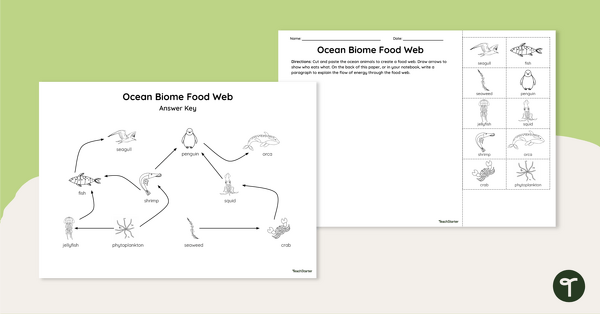
Ocean Biome Food Web Activity Worksheet
Challenge students to create a food web and explain how energy flows between organisms with this Ocean Food Web Activity Worksheet.
- Free Plan
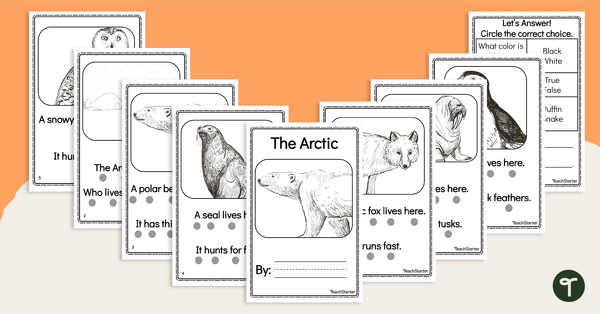
In the Arctic - Free Decodable Book
Engage your students and inspire them to read and learn about life in the Arctic with a printable book for 2nd grade.
- Plus Plan
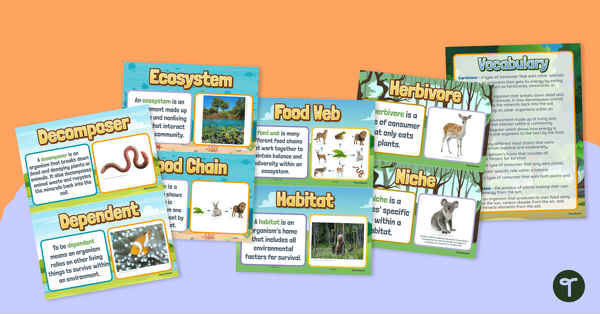
Food Chains & Food Webs – Vocabulary Posters
Display this set of science vocabulary posters in your classroom when learning about food chains and food webs.
- Plus Plan
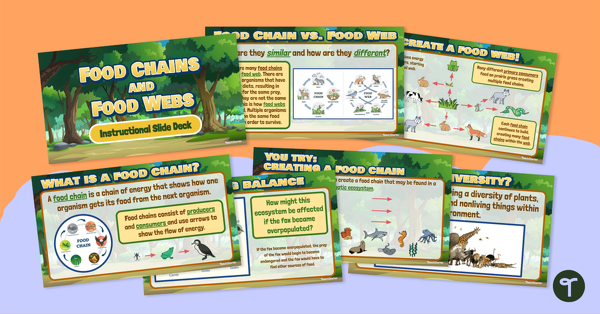
Food Webs vs. Food Chains – Instructional Slide Deck
Learn the difference between a food chain and a food web with this 18-slide instructional slide deck.
- Plus Plan
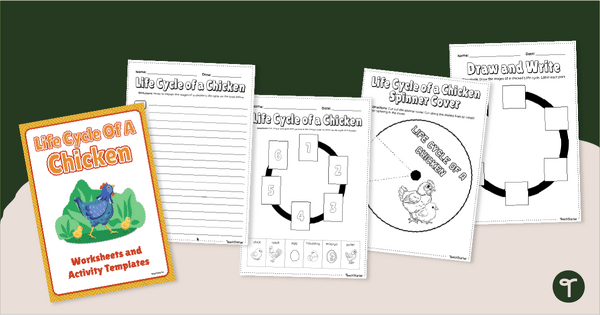
Life Cycle of a Chicken Worksheet Pack
Teach your students about the stages in a chicken's life cycle with our Life Cycle of a Chicken Worksheet Pack.
- Plus Plan
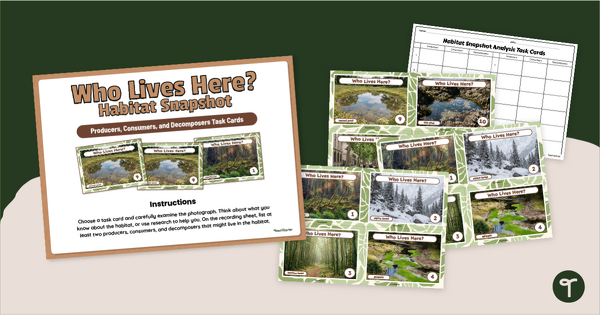
Who Lives Here? Animal Habitat Task Cards
Identify producers, consumers, and decomposers in different habitats with our Who Lives Here? Animal Habitat Task Cards.
- Plus Plan
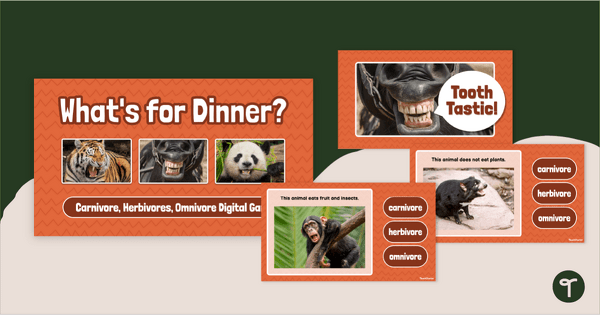
What’s for Dinner? Carnivore, Herbivore, Omnivore Game
Play ‘What’s for Dinner’, a Carnivore, Herbivore, or Omnivore game to explore animal teeth and eating habits.
- Plus Plan
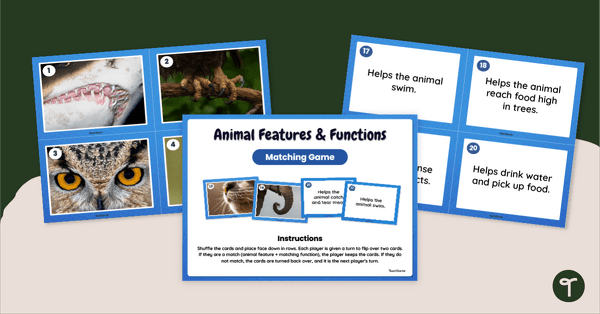
Animal Features and Functions Matching Activity
Explore animal features and their functions with an engaging Animal Features Matching Game.
- Plus Plan
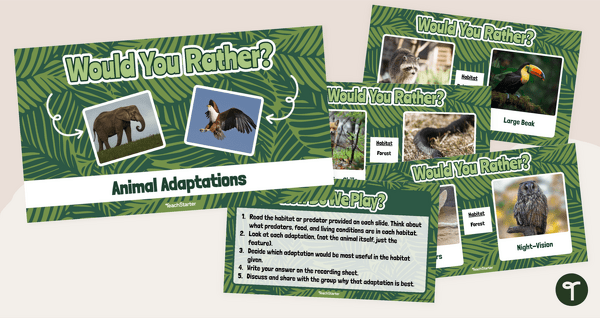
Would You Rather? Animal Adaptations Game
Discuss and debate the best animal adaptations with the Would You Rather? Animal Adaptation game.
- Free Plan
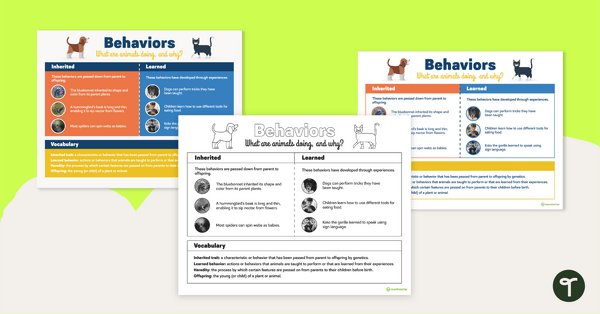
Inherited versus Learned Behaviors Poster
Explain the difference between inherited and learned behaviors with a set of printable anchor charts.
- Plus Plan
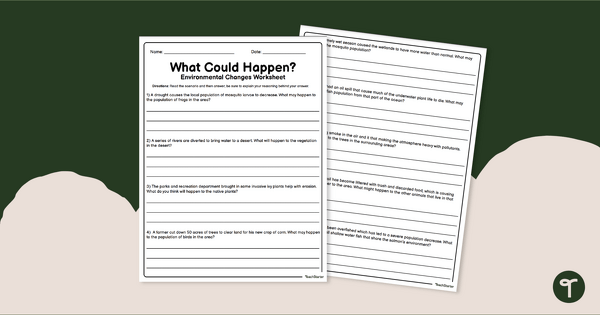
What Could Happen? - Environmental Changes Worksheet
Explore the effects of environmental change on plants and animals with a printable science worksheet.
- Plus Plan
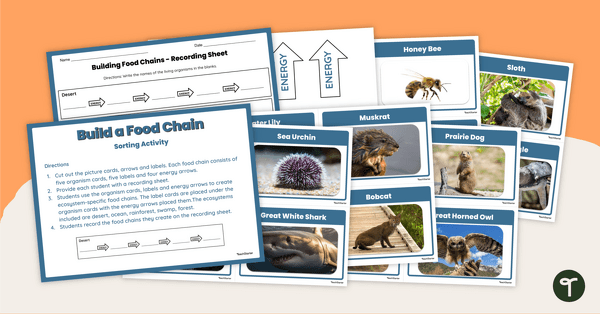
Build a Food Chain - Sorting Activity
Create food chains for a variety of ecosystems with this hands-on, student-centered activity.
- Plus Plan
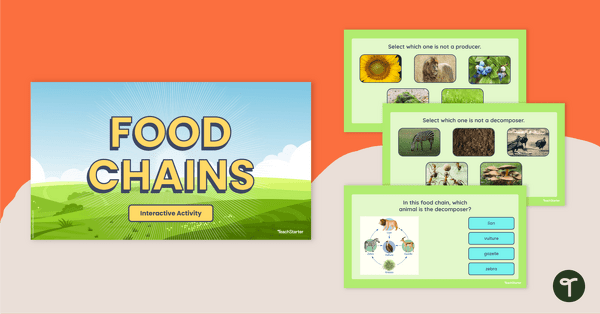
Food Chains - Interactive Activity
Review producers, consumers and decomposers in food chains with this interactive digital quiz.
- Free Plan
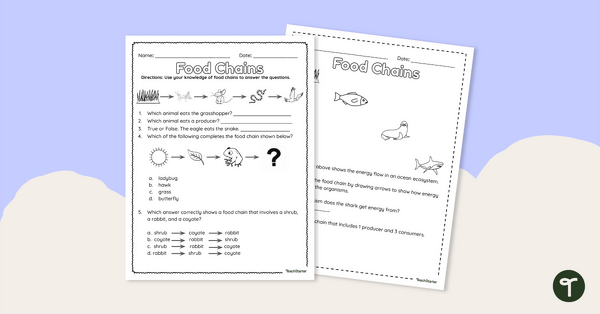
Food Chains – Worksheet
Use this worksheet to identify and describe the flow of energy in a food chain.
- Free Plan
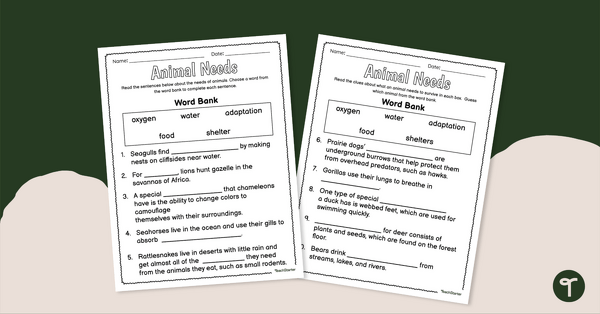
Animal Needs – Worksheet
Practice and review vocabulary associated with basic animal needs with this worksheet.
- Free Plan
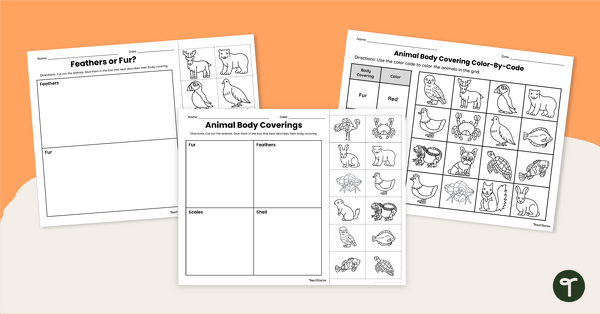
Animals With Scales, Fur, Shells and Feathers Worksheet Pack
Investigate different animal body coverings by sorting and coloring animals with feathers, fur, scales and shells.
- Plus Plan
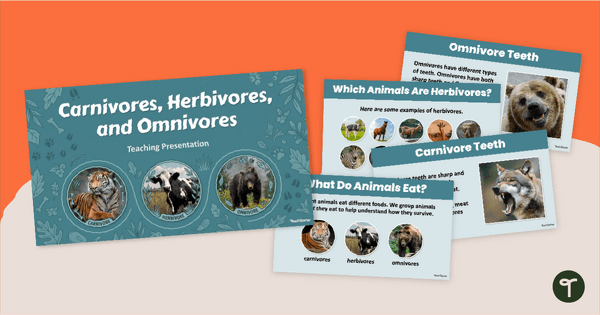
Carnivores, Herbivores, and Omnivores PowerPoint
Explore types of consumers and how they get their food with an engaging Carnivores, Herbivores, and Omnivores PowerPoint.