Fractions Teaching Resources
Make math lesson planning a breeze with printable fractions worksheets, fun activities, games, and more teaching resources for the elementary classroom.
This collection of curriculum-aligned printable and digital resources has been created just for teachers by the teachers on the Teach Starter team. That means each resource has undergone an in-depth review before being published to ensure it's ready for the classroom and your students! Inside this collection, you'll find editable resources you can easily differentiate for individual learners plus math center activities and fun games to help students understand how to add and divide fractions and more.
New to teaching this section of the math curriculum? Read on for a guide to all things fractions from our teacher team!
What Are Fractions?
It may be basic, but we need to start somewhere! Fractions are, of course, mathematical expressions that represent a part of a whole or a ratio of two quantities. Fractions can be used to represent quantities that are not whole numbers, and they are an important part of arithmetic, algebra, and other areas of math that our students explore throughout their elementary and high school education.

Understanding numerators and denominators is an essential skill as students dive into adding, subtracting, multiplying, and dividing fractions.
Next, let's dive into the most common topics we cover when we're teaching fractions!
Proper Fractions vs. Improper Fractions
Teaching fractions involves teaching students a lot of new vocabulary! Two terms your class will need to know early on in your lessons are:
- Proper Fractions: This is a fraction where the numerator (the top part) is less than the denominator (the bottom part). A proper fraction represents a value that is between 0 and 1. For example, 1/2 is a proper fraction because the numerator (1) is less than the denominator (2).
- Improper Fractions: This is a fraction where the numerator is greater than or equal to the denominator. An improper fraction represents a value that is greater than or equal to 1. For example, 3/2 is an improper fraction because the numerator (3) is greater than the denominator (2).

What Is a Unit Fraction?
We told you there was a lot of vocabulary involved! A unit fraction is a fraction whose numerator is 1 and whose denominator is a positive integer.
For example, 1/2, 1/3, 1/4, etc., are all unit fractions. Unit fractions are also examples of proper fractions, as they are always less than 1 in value.
When working with unit fractions in your classroom, students learn to represent these fractions with visual models where one piece of a partitioned shape is shaded in. Students also learn to build larger fractions by grouping unit fractions together.
As an example, 1/8 + 1/8 + 1/8 = 3/8.
What Is the Least Common Multiple?
Working on fractions with your upper elementary students? You may be tackling the least common multiple this school year. So let's talk about what that means. The least common multiple is another important term to define before diving into adding, subtracting, or comparing fractions.
Sometimes called the LCM, the least common multiple of two or more numbers is the smallest positive integer that is divisible by all of the numbers.
In order to find the LCM of two or more numbers, you can teach students to use one of several methods, including:
- The prime factorization method
- The listing method
- The division method

How Do You Add Fractions?
Once students understand the basics of fractions, it's time to teach how they work in relation to the different operations. We'll start with addition.
To add two or more fractions, students will need to:
- Find a common denominator (also known as the least common denominator or LCD) that is a multiple of the denominators of all the fractions. A common denominator can be found by finding the least common multiple (LCM) of the denominators.
- Once students have found the common denominator, they need to learn to convert each fraction so that it has the same denominator as the others. This is done by multiplying both the numerator and denominator of each fraction by the same number so that the denominator is equal to the common denominator.
- After converting the fractions to have the same denominator, they can add the numerators of the converted fractions.
- The denominator will be the least common denominator that was found earlier.
How Do You Subtract Fractions?
Finding the sum of fractions is one thing, but how do students find the difference?
- Students will once again need to find a common denominator — a common multiple of the denominators of the fractions.
- Once they have found a common denominator, they can convert each fraction so that it has the same denominator as the others.
- After converting the fractions to have the same denominator, students can subtract the numerators of the converted fractions to find the numerator of the difference. The denominator of the difference will be the common denominator that they found earlier.

How Do You Multiply Fractions?
Once students have adding and subtracting fractions down, they might find that multiplying is a lot simpler!
To multiply two or more fractions, you simply multiply the numerators (the top parts) together to get the numerator of the product, and then multiply the denominators (the bottom parts) together to get the denominator of the product.

How Do You Divide Fractions?
It's time for one last operation! Dividing fractions is one of the more complicated processes elementary students will have to handle when it comes to working with fractions. They will need to know how to invert fractions before they can dive in, aka flipping the numerator and denominator.
To divide fractions, teach students to:
- Invert the second fraction.
- Multiply the two fractions.
- Simplify the quotient — if possible — by finding the greatest common factor of the numerator and denominator and dividing both by it, to get the final answer in simplest form.
How Do You Simplify Fractions?
Simplifying a fraction is pretty, well, simple! It means reducing it to its simplest form. To do this, students will find an equivalent fraction that has the same value but with a smaller numerator and denominator. The numerator and denominator of a simplified fraction have no common factors other than 1.
To simplify a fraction, you can divide both the numerator and denominator by their greatest common factor. You'll then need to keep dividing by the greatest common factor until it is equal to 1, which means that the fraction can't be simplified any further. And there you have it — a simplified fraction!
- Plus Plan
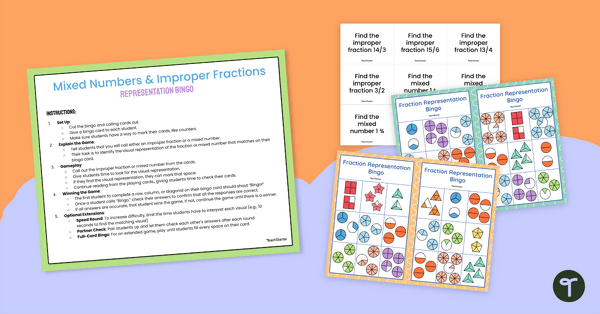
Mixed Numbers and Improper Fractions Visual Representation Bingo
Play our mixed numbers and improper fractions visual representation bingo with your students to increase their understanding with colorful fraction models.
- Plus Plan
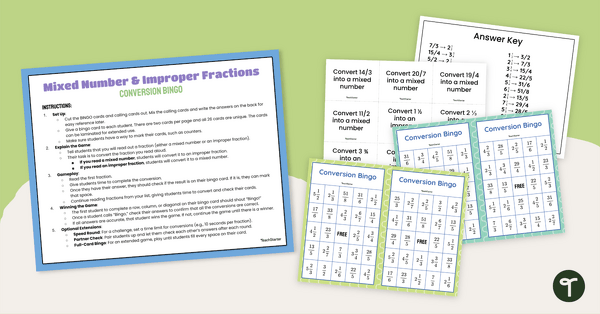
Converting Mixed Numbers to Improper Fractions Game (Bingo)
Play our converting mixed numbers to improper fractions game with your students for a fun review of fraction conversions.
- Plus Plan
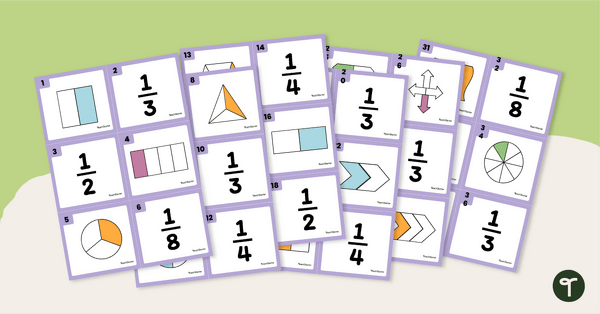
Unit Fraction Match Task Cards
Explore unit fractions with your students using this unit fraction match template that can be used for a variety of classroom activities.
- Plus Plan
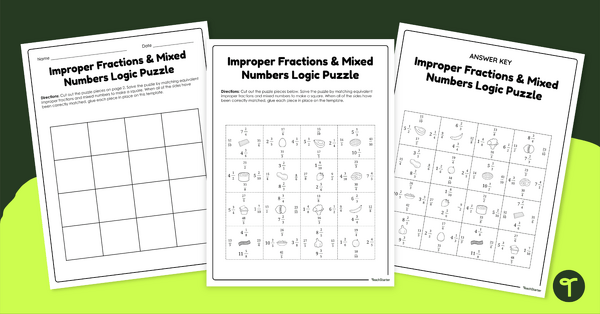
Improper Fraction to Mixed Number Activity
Share this improper fraction to mixed number activity with your students to engage them while they practice converting fractions of more than one.
- Plus Plan
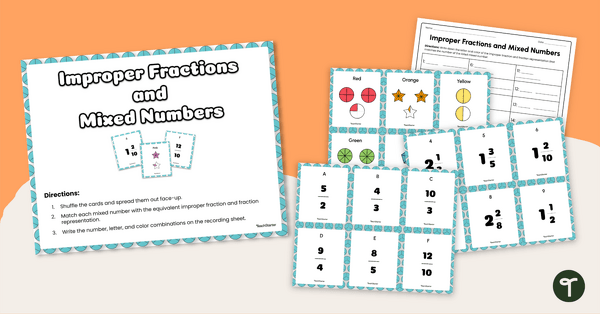
Matching Mixed Numbers and Improper Fractions Task Cards
Break out our matching mixed numbers and improper fractions task cards for a hands-on way to practice converting and representing amounts more than one.
- Plus Plan
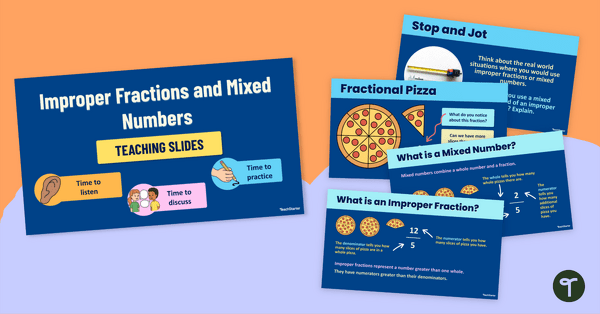
Improper Fractions and Mixed Numbers Practice (Teaching Slides)
Utilize our colorful Improper Fractions and Mixed Numbers Practice Teaching Slides to introduce improper fractions and mixed numbers.
- Plus Plan
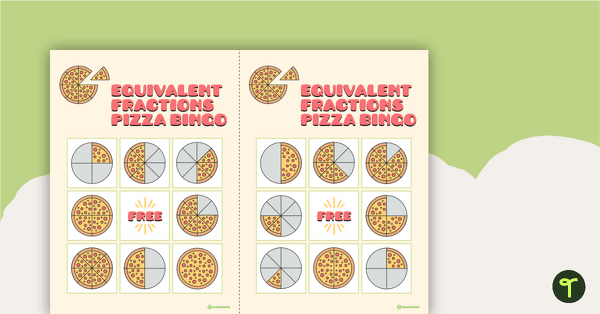
Equivalent Fractions Pizza Bingo - Whole, 1/2, 1/4, 1/8
32 different bingo cards to practice finding equivalent fractions involving 1, 1/2, 1/4, and 1/8.
- Plus Plan
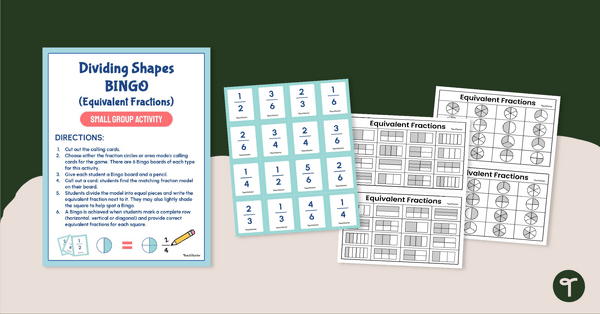
Dividing Shapes BINGO – Equivalent Fractions (Small Group)
Practice dividing shapes to generate equivalent fractions with this small group bingo game.
- Plus Plan
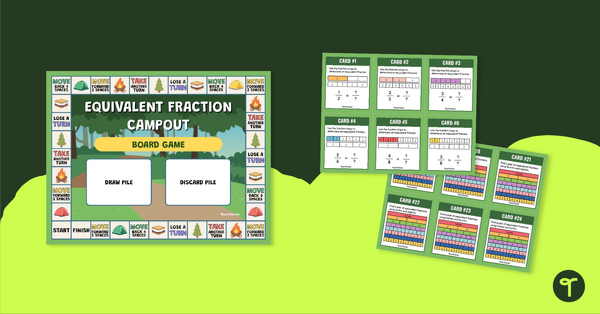
Equivalent Fraction Campout Board Game for 3rd Grade
Practice finding equivalent fractions using fraction strips with this camping-themed board game.
- Plus Plan
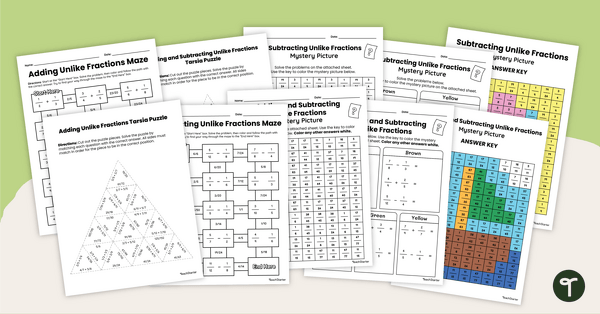
Adding and Subtracting Unlike Fractions Puzzle Pack
Get your students adding and subtracting fractions with unlike denominators with this set of nine fraction puzzles!
- Plus Plan
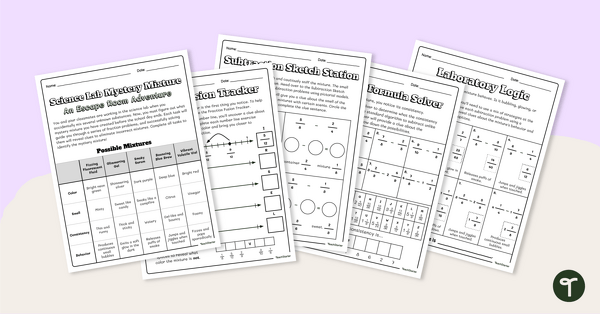
Subtracting Unlike Fractions Escape Room – The Mystery Mixture
Have your super-sleuth students solve this fractions escape room to discover the identity of the mystery mixture!
- Plus Plan
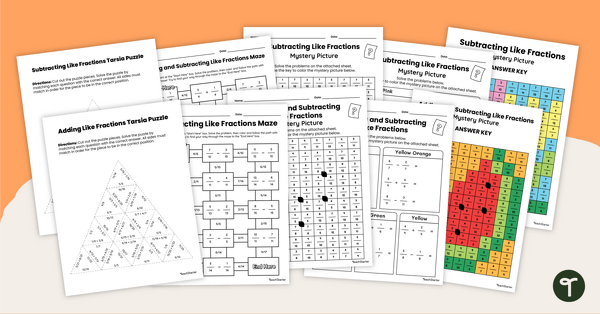
Adding and Subtracting Like Fractions Puzzle Pack
Get your students adding and subtracting fractions with like denominators with this set of nine fraction puzzles!
- Plus Plan
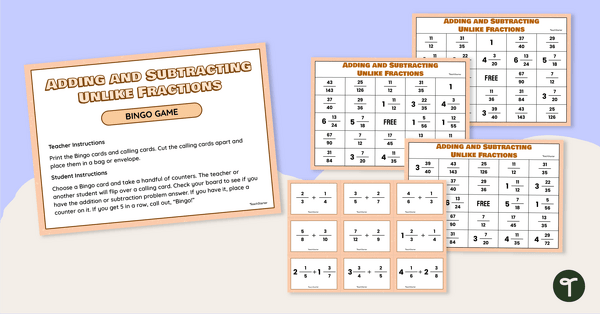
Adding and Subtracting Unlike Fractions Bingo
Download this fractions bingo game to get your students adding and subtracting fractions with unlike denominators.
- Plus Plan
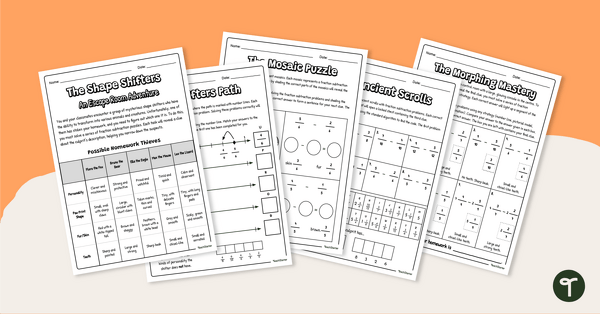
Subtracting Like Fractions Escape Room – The Shape Shifters
Have your super-sleuth students solve this fractions escape room to find out which shape shifter stole all the homework!
- Plus Plan
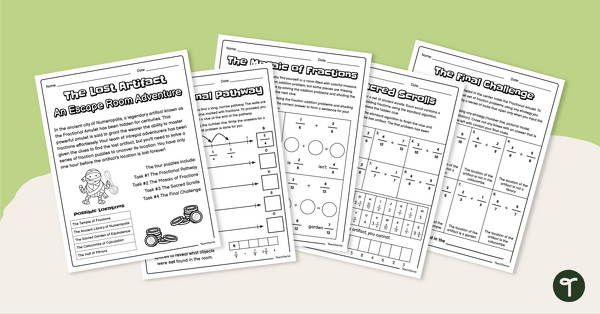
Adding Like Fractions Escape Room – The Lost Artifact
Have your super-sleuth students solve this fractions escape room to find out the location of the lost artifact!
- Plus Plan
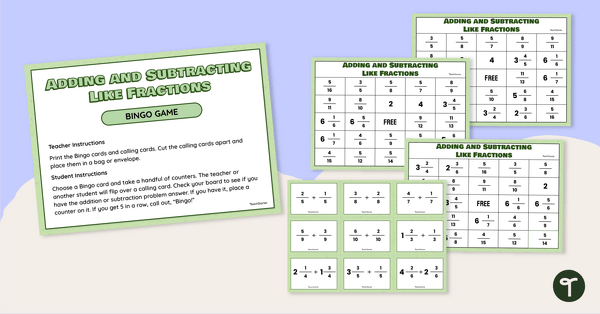
Adding and Subtracting Like Fractions Bingo
Download this fractions bingo game to get your students adding and subtracting fractions with like denominators.
- Plus Plan
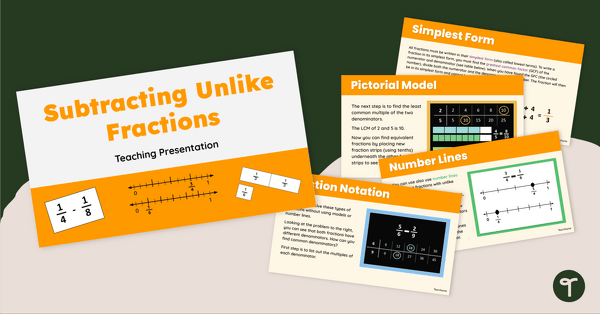
Subtracting Unlike Fractions Teaching Slides
Teach your students how to subtract fractions with unlike denominators using a variety of strategies with this comprehensive slide deck.
- Plus Plan
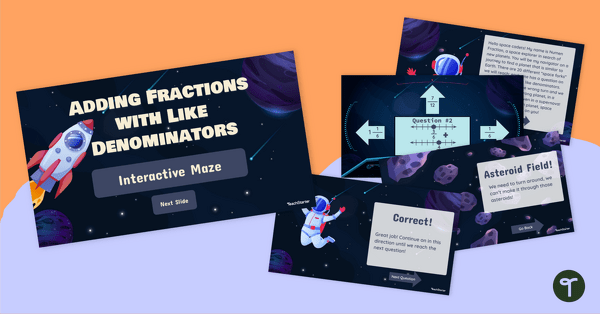
Adding Fractions With Like Denominators Interactive Maze
Get your students to add like fractions to find their way out of a space-themed digital maze!
- Plus Plan
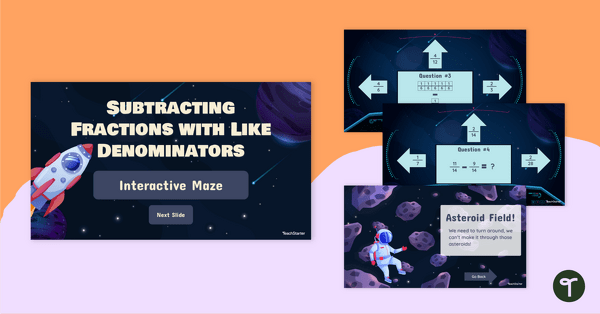
Subtracting Fractions With Like Denominators Interactive Maze
Get your students to subtract like fractions to find their way out of a space-themed digital maze!
- Plus Plan
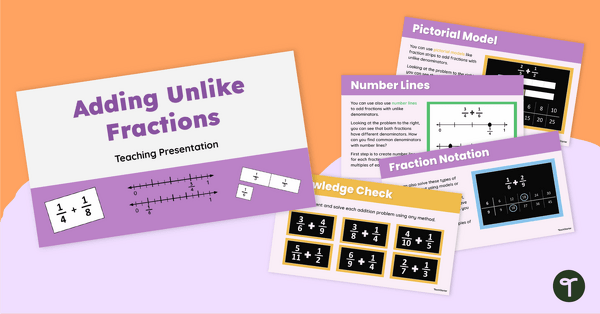
Adding Fractions With Unlike Denominators Slide Deck
Teach your students how to add fractions with unlike denominators using a variety of strategies with this comprehensive slide deck.
- Plus Plan
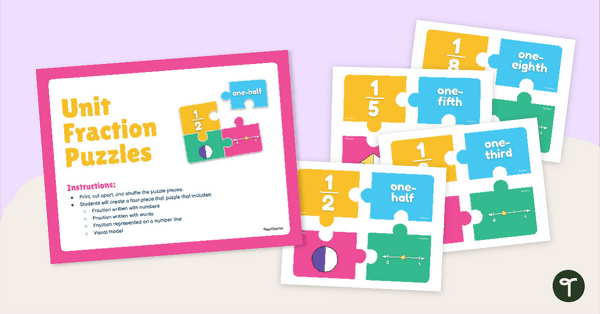
Unit Fraction Puzzles
Find matching representations of fractions on a number line and visual models while piecing together a 4-piece puzzle.
- Plus Plan
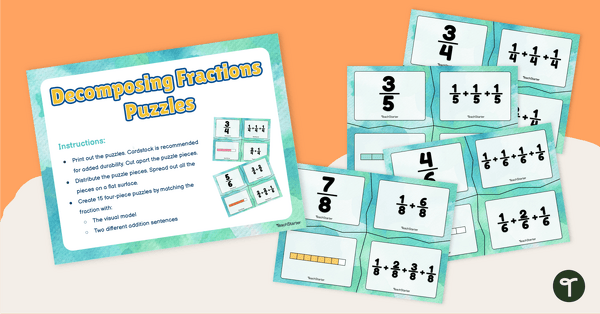
Decomposing Fractions Puzzles
Get your students decomposing fractions in more than one way with this set of puzzles perfect for math centers!
- Plus Plan
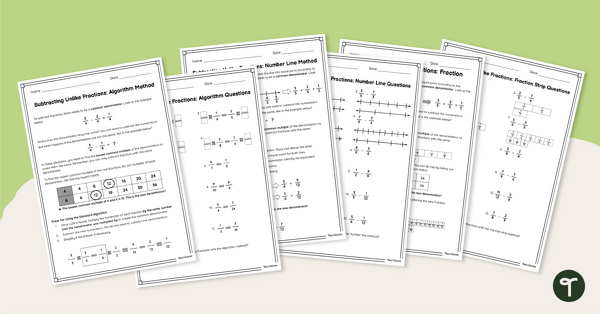
Subtracting Fractions with Unlike Denominators Worksheet Pack
Download this set of subtracting fractions with unlike denominators worksheets to help your students practice this important math skill.
- Plus Plan
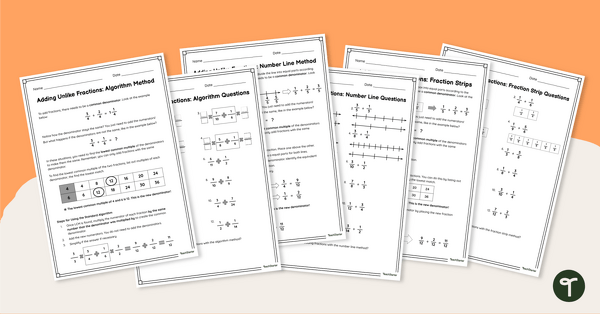
Adding Fractions with Unlike Denominators Worksheet Pack
Download this set of adding fractions with unlike denominators worksheets to help your students practice this important math skill.
- Plus Plan
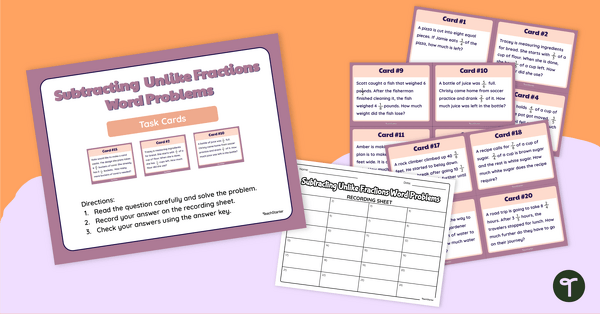
Subtracting Unlike Fractions Word Problems Task Cards
Use this set of word problems for subtracting fractions with unlike denominators to help your students practice this important math skill.
- Plus Plan
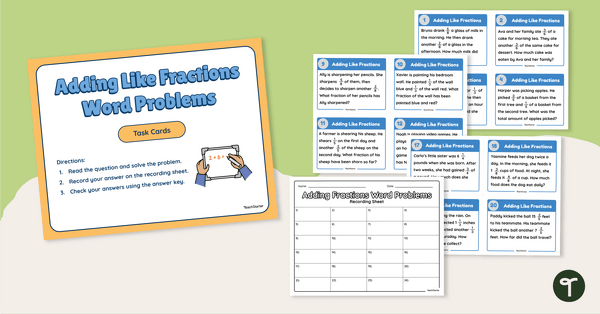
Adding Like Fractions Word Problems Task Cards
Use this set of adding fractions with like denominators word problems to help your students put their fraction computation skills into practice!
- Plus Plan
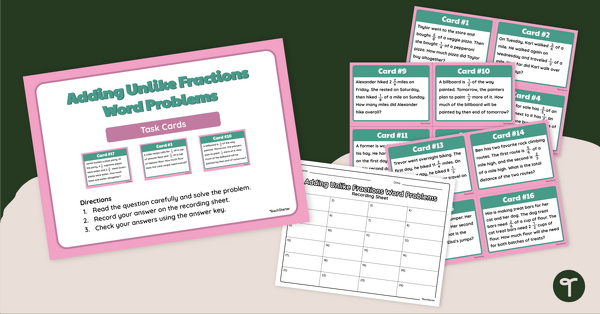
Adding Unlike Fractions Word Problems Task Cards
Use this set of word problems for adding fractions with unlike denominators to help your students practice this important math skill.
- Plus Plan
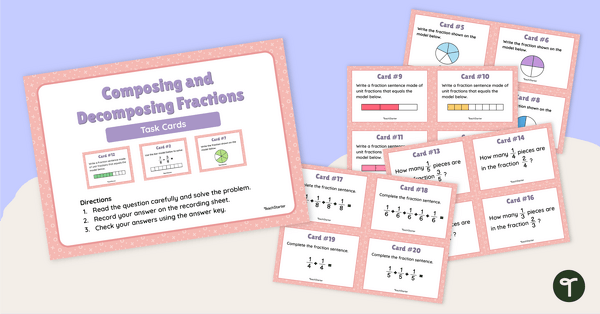
Composing and Decomposing Fractions Task Cards
Get your students composing and decomposing fractions with this set of task cards perfect for math centers.
- Plus Plan
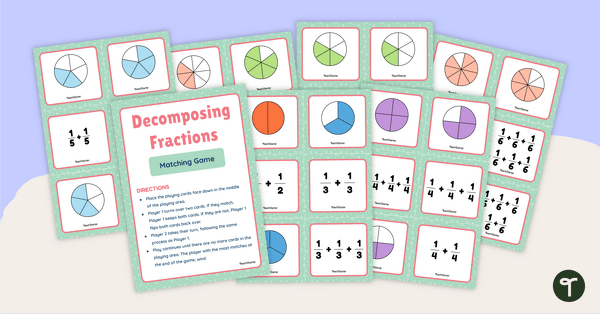
Decomposing Fractions Matching Game
Get your students decomposing fractions with this fun matching game for 4th graders!
- Free Plan
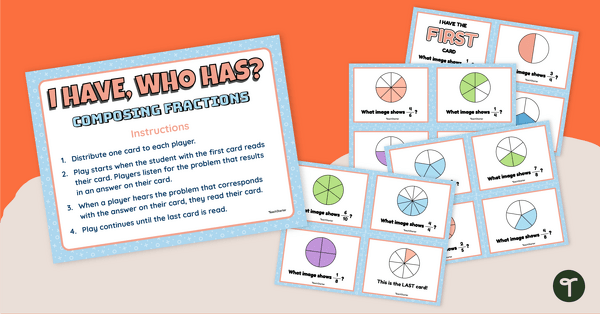
I Have Who Has? Game – Composing Fractions
Get your students to compose fractions with an engaging whole-class game perfect for lesson warm-ups or wrap-ups!
- Plus Plan
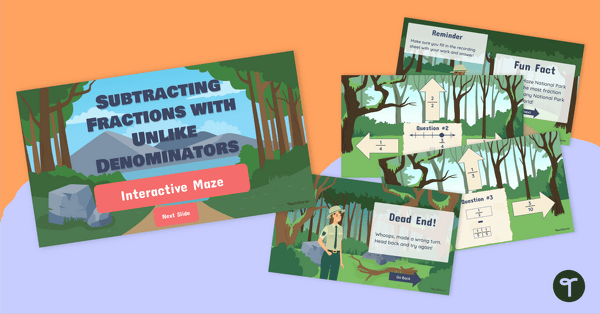
Subtracting Fractions with Unlike Denominators Interactive Maze
Get your students to subtract fractions with unlike denominators to find their way out of the digital maze!
- Plus Plan
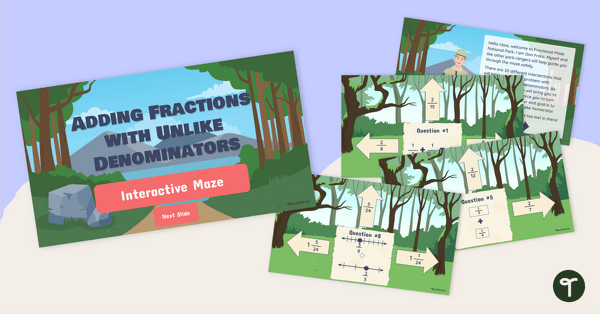
Adding Fractions with Unlike Denominators Interactive Maze
Get your students to add fractions with unlike denominators to find their way out of the digital maze!