Verbs Teaching Resources
Explain verbs to your elementary students with printable worksheets, digital activities, ELA games, and more from the teachers of Teach Starter.
Teachers designed this collection of teaching resources to help you help your students learn how to identify and use this part of speech correctly, including activities to learn action verbs, helping verbs, linking verbs and verb tenses.
With editable curriculum-aligned resources, you'll be able to meet Common Core and state standards while also differentiating instruction for the individual students in your classroom.
New to teaching this part of the English Language Arts curriculum or just looking for new ways to engage students as they learn about verbs? Take a peek at this primer from our teacher team!
What Is a Verb? A Kid-Friendly Definition
We know it's a bit obvious, but knowing the definition of this part of speech is only part of the battle. You'll also need to explain verbs to your students!
Try this verb definition for kids in your classroom:
Verbs are words that describe actions or states of being. They can describe what a person, animal or thing is doing or what they did.
For example, "run," "jump," "sing" and "sleep" are all verbs.
What Are Verb Tenses?
Different verbs can be used to indicate the time when an action occurred. They do this by something called tense. Verb tense refers to when the action or state of being expressed by a verb takes place.
In the English language, there are three main verb tenses — the past, the present and the future.
Past Tense
The past tense refers to actions or events that have already happened.
Past tense verbs are created by adding "-ed" to the base form of regular verbs or by using the unique form of irregular verbs.
For example, "walk" becomes "walked" in the past tense, while "go" becomes "went."
Present Tense
The term present tense refers to actions or events that are happening now or that happen regularly. It is the base form of the verb, without any additional endings or changes.
For example, "walk" is the present tense form of the verb, as in "I walk to school every day."
Types of Verbs
Now that we have the meaning and tenses covered, what about all the types of verbs that our students encounter as they read in the classroom and (hopefully!) at home? There are six main types of verbs likely to come up in your classroom at some point:
Action Verbs
Action verbs are verbs that show an action or a movement. Words like "run," "jump," "dance" or "sing" all fit the bill.
Action verbs can be used in present, past or future tenses.
Helping Verbs
Helping verbs help (!) to form verb phrases. They are also known as auxiliary verbs.
Examples of helping verbs that your students will regularly encounter in their reading and use in their writing include:
- am
- is
- are
- was
- were
- has
- have
- had
- do
- does
- did
- can
- could
- may
- might
- will
- would
- shall
- should
Linking Verbs
Linking verbs link the subject of a sentence to a word or phrase that describes or identifies it. These verbs do not show action, so they can be a bit tricky for students to identify.
Examples of linking verbs include:
- is
- be
- am
- was
- were
- seem
- become
Modal Verbs
Modal verbs are helping verbs that express the speaker's attitude towards the action or state of being expressed by the main verb. These are also tricky for younger writers to wrap their heads around as they express hypotheticals rather than specific actions.
Modal verb examples include words such as:
- can
- could
- may
- might
- should
- must
- shall
- will
- would
Regular Verbs
Regular verbs follow a predictable pattern when forming their past tense and past participle forms. To make them, you just add "-ed" to the base form of the verb!
For example, "walk" becomes "walked," "play" becomes "played," and "talk" becomes "talked."
Irregular Verbs
Irregular verbs are more challenging for young spellers because they don't follow the predictable pattern of adding "-ed" to form their past tense and past participle forms. They have unique forms for each tense.
Some examples of irregular verbs are:
- Eat/ate
- Go/went
- Write/write
- Catch/caught
How to Teach Verbs to Kids — Fun Verb Activities
When you first begin introducing verbs to your students, they'll learn to identify and use verbs in sentences and understand the concepts of past, present, and future tense. Students will learn more complex verb forms and tenses as they progress through elementary school and high school.
Looking for a few ways to make this fun and engaging? This teaching resource collection is chock full of fun reading center activities, engaging printables, and more ideas from our teacher team.
You might also want to try these ideas and activities:
- Action Charades — For kindergartners who are just learning about action words, action charades can be a lot of fun for the whole class. Act out words that they've learned, and have your students guess the word. It's simple, fun and engaging! You can also flip this activity on its head by having students act out the verbs themselves.
- Picture It — Provide a picture prompt, and ask your first graders to create a story about what is going on in the picture using verbs in the proper context. For students who need extra support, you can provide sentence starters.
- Show It — Make show and tell a verb activity! Have students bring special items to class to show off to their classmates, and encourage them to share details about it using verbs.
How to Teach Verb Tenses
Do your students already have the basics of this part of speech down? It's time to turn to verb tenses.
Teaching verb tenses can be a bit more complex than teaching verbs themselves, but there are a few strategies that can be effective:
- Verb Tense Stacking Block Game — Label wood blocks with action verbs and have students play a stacking tower game in small groups, carefully removing one block at a time to prevent the tower from falling. Each time they remove a block, the student will have to write down the past, future and present tense of the verb on their block.
- Verb Tense Timeline — Provide a timeline of events your class is studying in social studies, and challenge students to write sentences using verbs in different tenses to describe events that occurred in the past, are happening now, or will happen in the future. For kids who need extra support, provide visual or written cues to help them identify the different tenses.
- Plus Plan
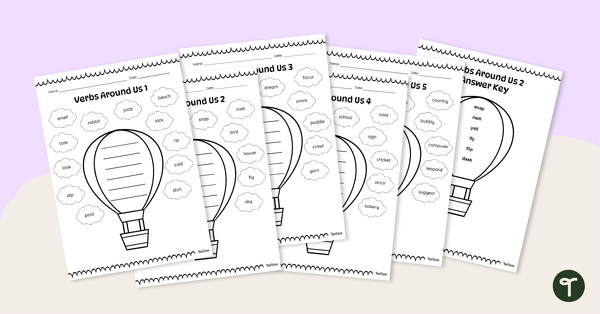
Verbs Around Us Worksheet Pack
Practice identifying verbs in a collection of words with this set of five verb worksheets.
- Plus Plan
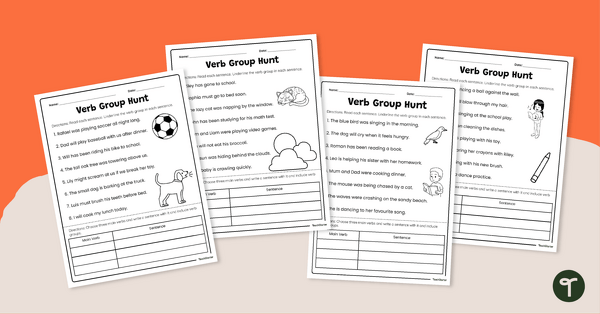
Verb Group Hunt Worksheet Pack
Explore verb groups with your students using this verb group hunt worksheet pack.
- Plus Plan
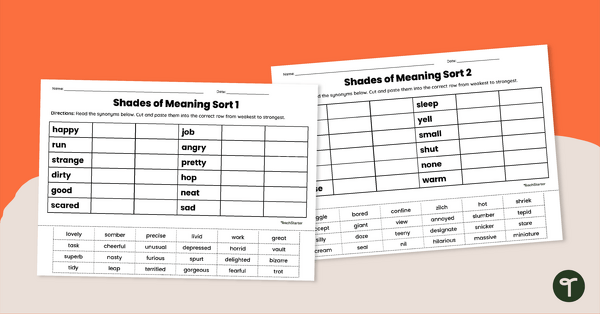
Cut and Paste Shades of Meaning Verb Sort
Engage your students in exploring subtle differences between verbs with this set of two cut and paste worksheets.
- Plus Plan
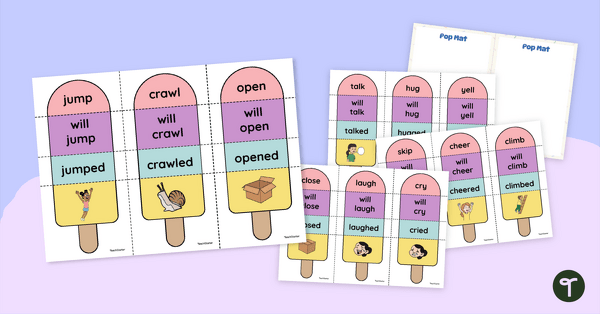
Verb Tense Puzzle Pop Activity
Grow your students' knowledge of the tense of verbs with this puzzle pop matching activity.
- Plus Plan
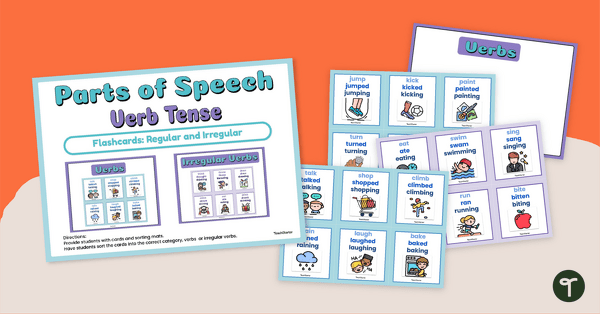
Verb Tense Regular and Irregular Sorting Activity
Help students understand the difference between a regular and irregular verb tense group with this hands-on verb sorting activity.
- Plus Plan
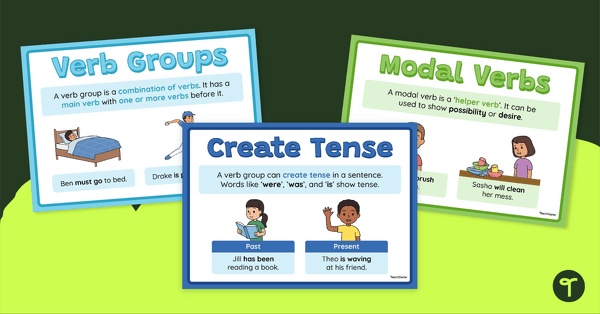
Verb Group Posters
Guide your students to be better writers with this verb group poster set to display in your classroom.
- Plus Plan
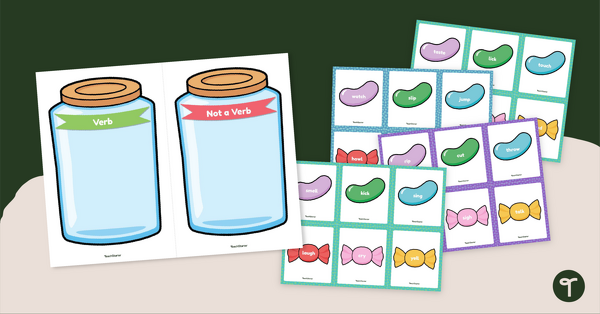
Verb or Not Sorting Activity
Allow students the opportunity to show their verb awareness with this verb or not a verb candy sorting activity.
- Plus Plan
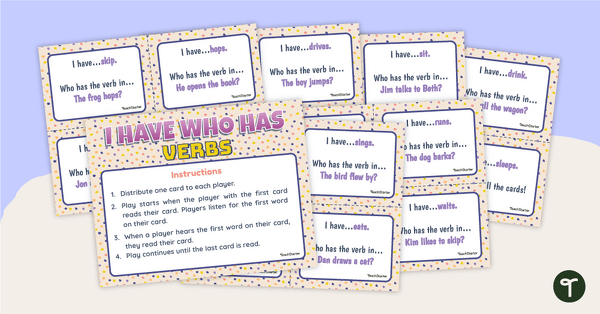
I Have, Who Has? Verb Card Game
Play a fun and exciting game that is great for students who are now learning how to identify action verbs.
- Plus Plan
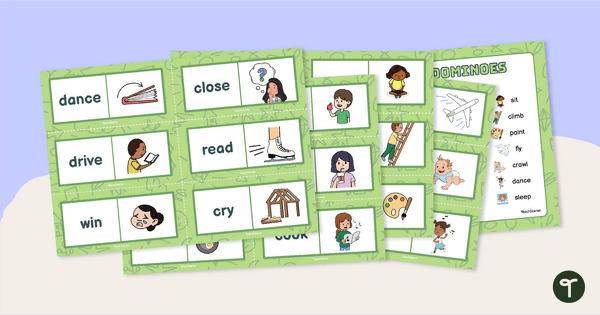
Action Verbs Dominoes
Practice recognizing and using action verbs with a set of 28 dominoes.
- Plus Plan
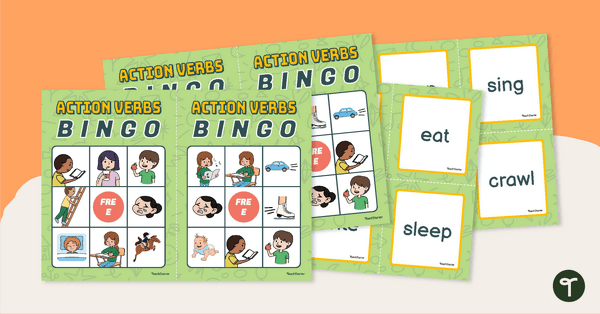
Action Verbs Bingo
Identify action verbs with this set of 20 BINGO cards.
- Plus Plan
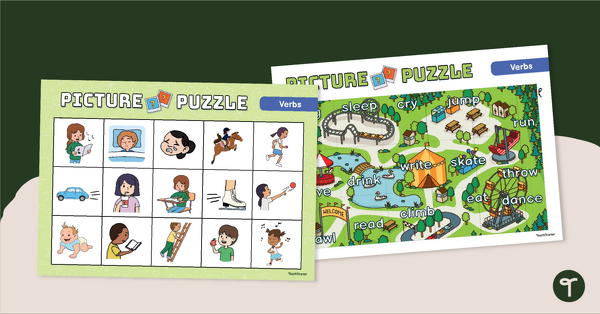
Action Verbs Picture Puzzle
Practice recognizing and using verbs with this 15 piece picture puzzle.
- Plus Plan
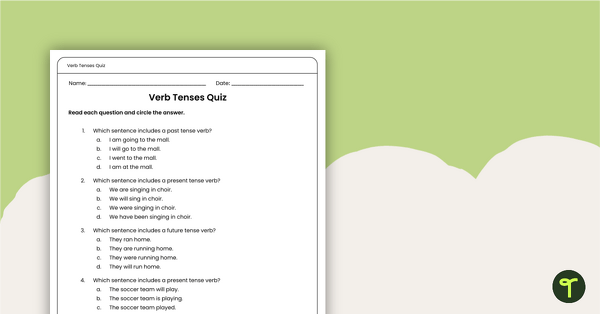
Verb Tenses Quiz
Assess your students' knowledge of verb tenses with this 5-question quiz.
- Plus Plan
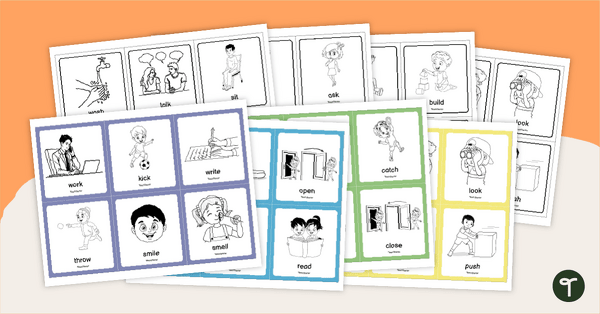
Commonly Used Verbs Flashcards
Teach commonly used verbs with this set of printable action cards.
- Plus Plan
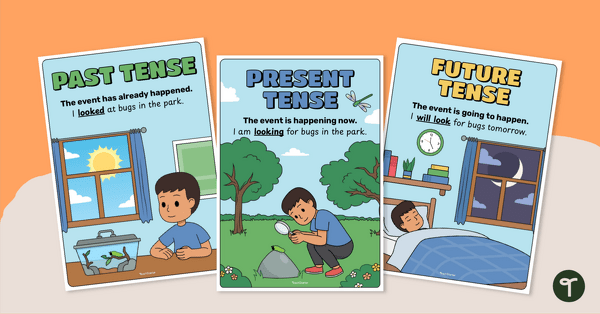
Past Tense, Present Tense and Future Tense Posters
Help your students understand verb tense with this set of past, present and future tense poster examples.
- Plus Plan
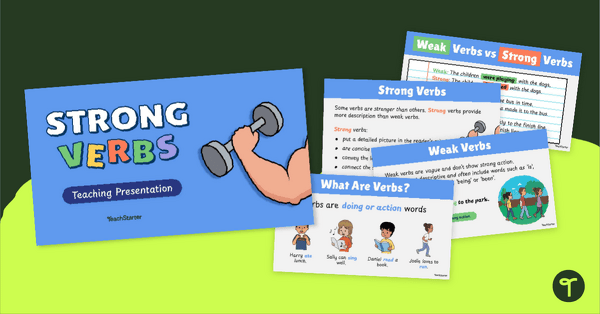
Strong Verbs Teaching Slides
Discover how to use strong verbs in sentences with this set of teaching slides.
- Plus Plan
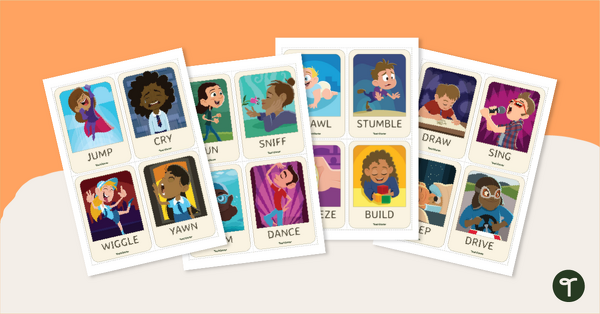
Verb Charades Active Game
Practice action verbs with this fun active charades game!
- Plus Plan
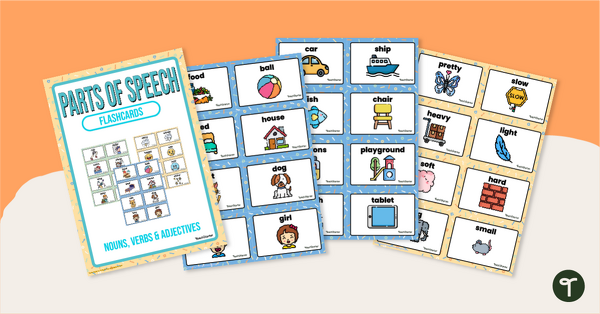
Nouns, Verbs, and Adjectives Flashcards
Create a variety of grammar activities with printable noun, verb and adjective flashcards.
- Plus Plan
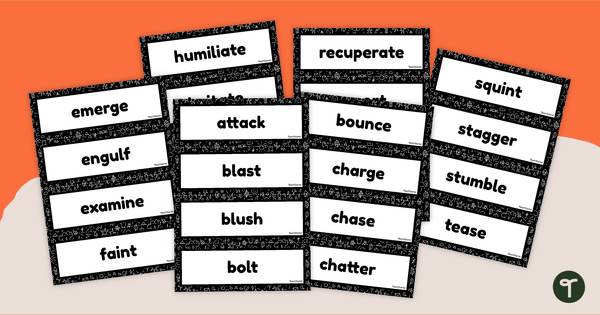
Strong Action Verbs Word Wall
Print a set of strong verbs word wall cards to help your students boost their writing skills!
- Plus Plan
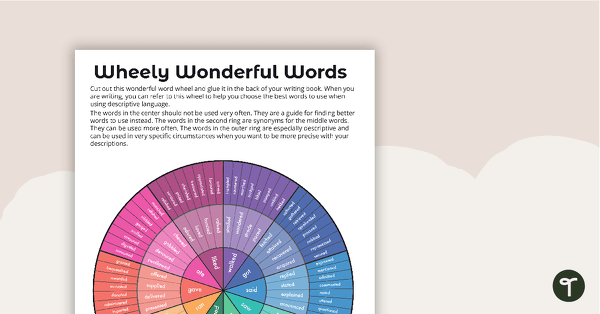
Wheely Wonderful Words – Overused Verbs
Get rid of those overused verbs with a word wheel of synonyms.
- Plus Plan
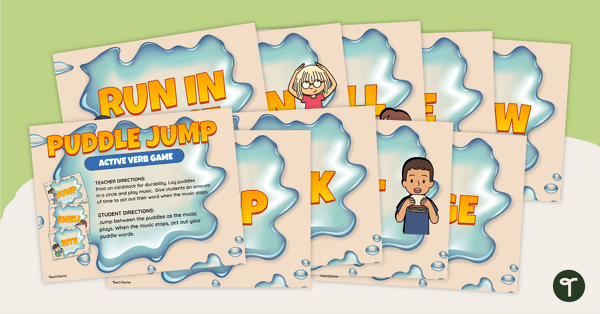
Puddle Jump - Preschool Movement Activity
Hop into your next verb lesson with a fun Puddle Jump - Preschool Movement Activity.
- Plus Plan
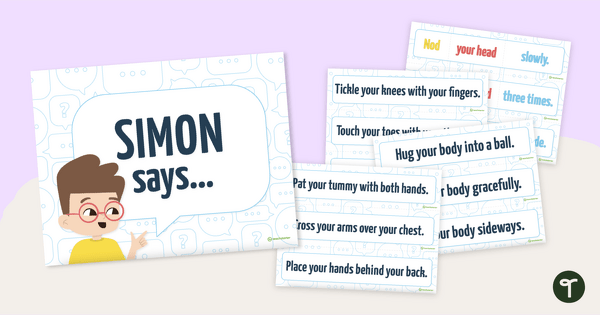
"Simon Says" Commands - Card Deck
A set of 24 instruction cards to use when playing "Simon Says."
- Plus Plan
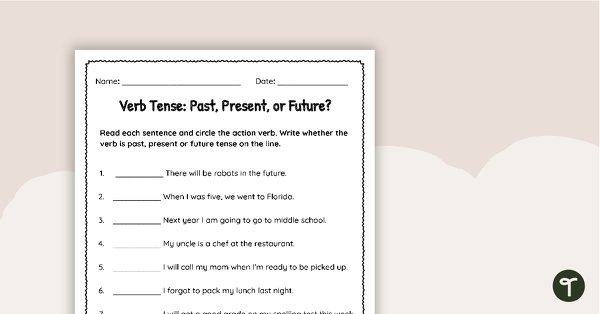
Verb Tenses Worksheet Pack
Use these verb tenses worksheet pack to help your students identify past, present and future verb forms in a variety of contexts.
- Plus Plan
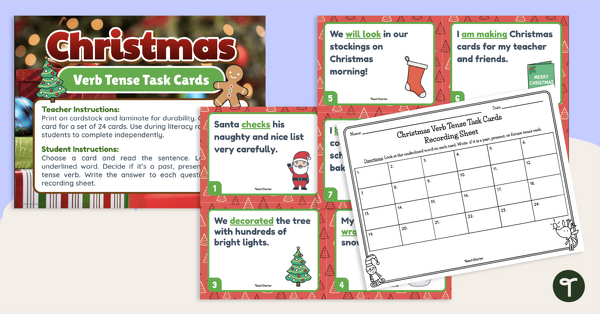
Verb Tense Printable Christmas Activity Cards
Practice identifying past, present, and future tense verbs with a set of Christmas Verb Tense Task Cards!
- Plus Plan
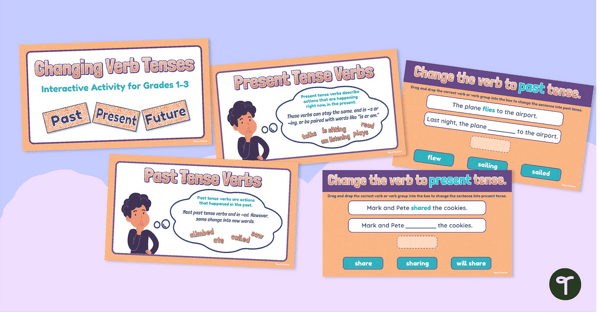
Changing Verb Tenses Interactive Activity
Provide your students with a digital learning environment to practice using past, present, and future tense verbs.
- Plus Plan
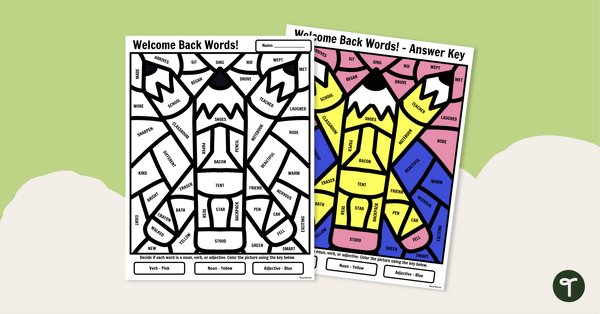
Color-by-Code Grammar- Back to School Coloring Sheet
Use this color by code grammar worksheet as a back to school parts of speech review activity with your students.
- Plus Plan
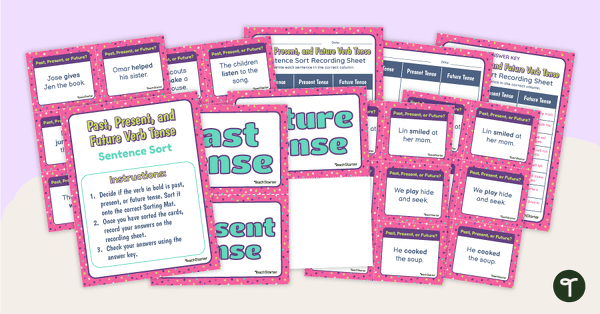
Verb Tenses Sorting Activity
Explore verb tenses through an engaging, hands‑on sorting activity that helps students confidently identify past, present and future tense sentences.
- Plus Plan
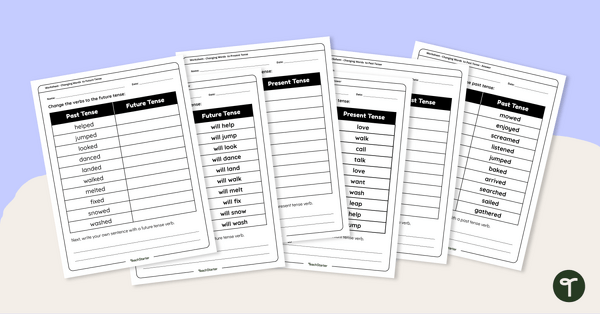
Past, Present, and Future Tense Worksheets - Grades 1/2
Provide students with additional verb tense practice with worksheets focusing on changing verbs into past, present, and future tense.
- Plus Plan
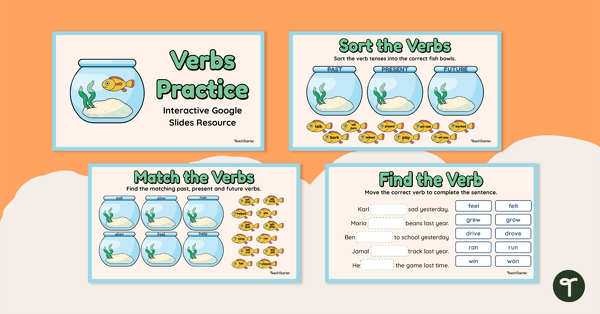
Google Slides Interactive- Past, Present, and Future Verbs Activity
Develop student skills using the correct forms of past, present, and future tense verbs with this Google Slides Interactive activity.
- Plus Plan
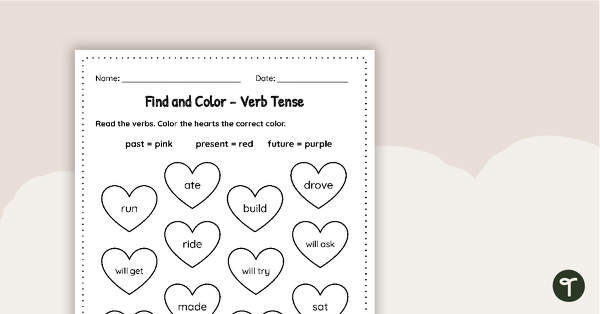
Find and Color - Verb Tense Worksheet
Differentiate between different verb tenses through this 1-page coloring worksheet.
- Plus Plan
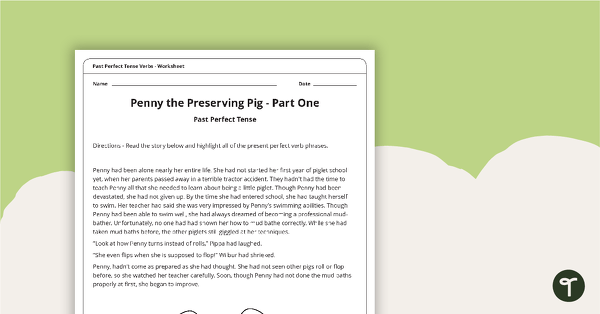
Perfect Tense Verbs Worksheet
A series of three worksheets that contain passages written in the past, present, and future perfect tenses.
- Plus Plan
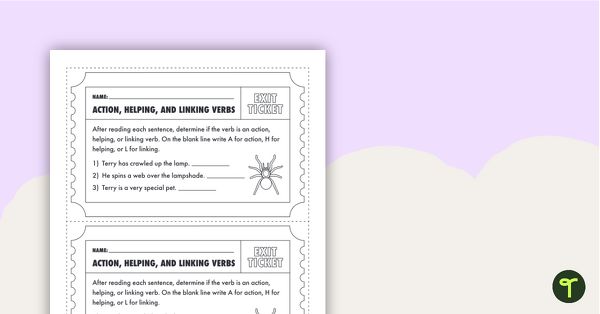
Action, Helping, and Linking Verbs Exit Ticket
Quickly assess your students' understanding of action, helping, and linking verbs with this exit ticket template.
- Plus Plan
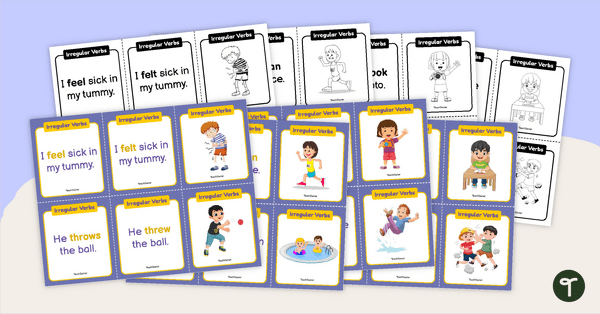
Present and Past Tense Irregular Verbs Matchup Cards
Practice matching present tense and past tense of irregular verbs with this matching activity.