Puzzles for Teachers
Browse an extensive collection of printable puzzles, brain teasers, mazes, crosswords, digital activities and a whole lot more to challenge your elementary students in fresh and fun ways!
This teaching resource collection is teacher-created, with curriculum-aligned and editable resources available for both lesson planning and adding to your fast finisher activity box or sub binder!
Curious about using puzzles in your classroom or looking for fresh ideas? Read on for a primer from our teacher team!
Types of Puzzles
There's a whole host of puzzles out there you can use to get your students more engaged in learning, develop problem-solving skills, and reinforce the concepts you're teaching! Here are a few favorites from our teacher team (and you'll find printable versions of many of these in this collection)!
- Picture puzzles — Picture puzzles are a great teaching tool that require kids to use visual perception and problem-solving skills to identify patterns or differences in a set of pictures.
- Crossword puzzles — Often used by adults, these puzzles are kid-friendly too! They offer up written clues and require students to fill in a grid with words that intersect with each other.
- Tangram puzzles — These challenging puzzles for kids involve using a set of geometric shapes to create a larger picture or design.
- Logic puzzles — This learning tool requires kids to use reasoning and deduction to solve a problem. They usually involve a set of clues that need to be used to figure out the solution.
- Word searches — In this type of puzzle, a grid of letters is given with a list of words to find hidden within it. Students are challenged to go on the hunt for the word, often reading up, down, diagonally, and sometimes even backward!
- Spot the difference — A popular feature in kids' magazines, these require our students to find the differences between two nearly identical pictures.
- Sequence puzzles — Sequence puzzles involve arranging a series of objects or symbols in a particular order, based on a set of rules or patterns. For example, students may practice skip counting as they place puzzle pieces in order based on the numbers displayed on each piece.
- Maze puzzles — Yes, mazes count as puzzles! They challenge kids to find their way through a maze to reach a goal or endpoint.
- Matching games — This is another type of puzzle you may not think of as a puzzle per se, but it is! Matching games involve finding pairs of matching items, such as shapes, colors, or numbers, in a set of cards or objects.
- Tarsia puzzles — Similar to jigsaw puzzles, tarsia puzzles are made up of irregularly shaped pieces that fit together in a specific way to form a larger picture or pattern. This type of puzzle has a twist, however! In a Tarsia puzzle, each piece contains a problem or question related to a particular topic or subject area. The students must match the pieces together by finding the correct answer or solution to each problem or question. Once all the pieces have been matched, they form a larger picture or pattern that provides a visual representation of the topic or concept being studied.

How Do You Use Puzzles in the Classroom?
Whether you're using mazes to teach math or crossword puzzles in your reading centers, this is a versatile learning tool! Here are a few of the times they can come in handy:
- Introducing new concepts
- Reviewing concepts students have learned
- Reinforcing problem-solving skills
- Collaborative learning
- Learning through play
- Differentiated instruction
- Plus Plan
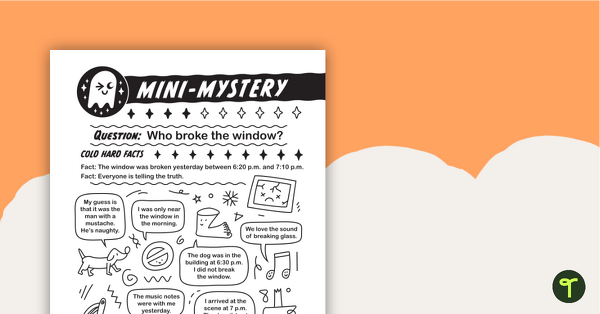
Mini-Mystery – Who Broke the Window?
A fun, logic-based activity where students read clues to solve the mystery.
- Plus Plan
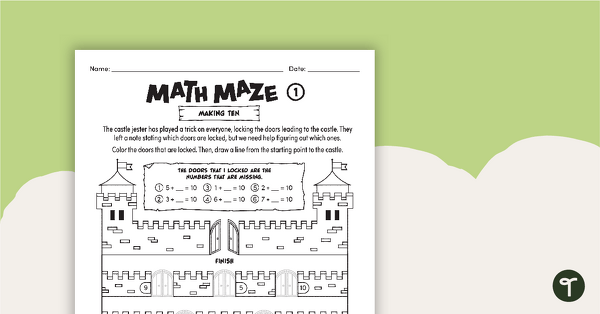
Math Mazes – Making Ten
A set of mazes where students find missing addends to solve the maze.
- Plus Plan
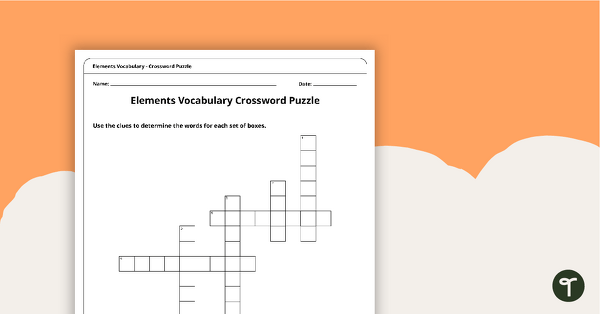
Elements Vocabulary - Crossword Puzzle
A crossword puzzle to practice terms associated with elements.
- Plus Plan
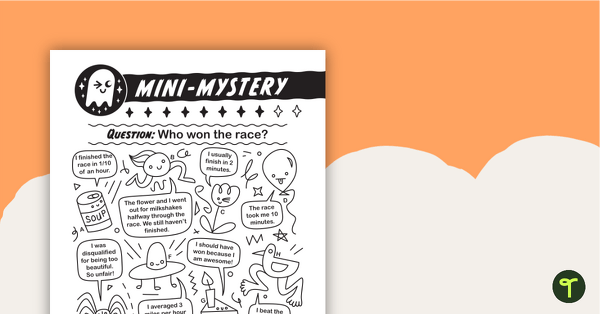
Mini-Mystery – Who Won the Race?
A fun, logic-based activity where students read clues to solve a mystery.
- Plus Plan
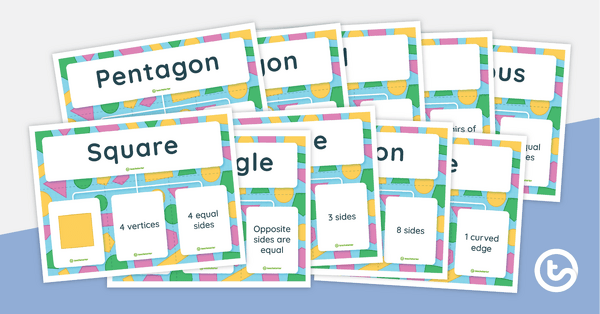
2-D Shape Match-up Puzzles
A set of puzzles that match up 2-D shapes and their properties.
- Plus Plan
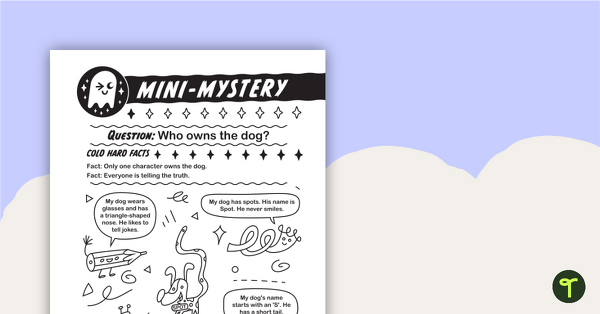
Mini-Mystery – Who Owns the Dog?
A fun, logic-based activity where students read clues to solve the mystery.
- Plus Plan
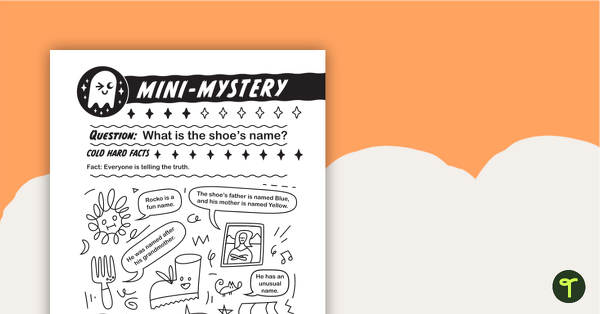
Mini-Mystery – What Is the Shoe's Name?
A fun, logic-based activity where students read clues to solve the mystery.
- Plus Plan
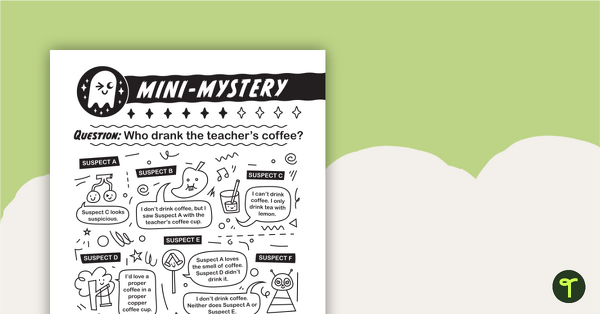
Mini-Mystery – Who Drank the Teacher's Coffee?
A fun, logic-based activity where students read clues to solve the mystery.
- Plus Plan
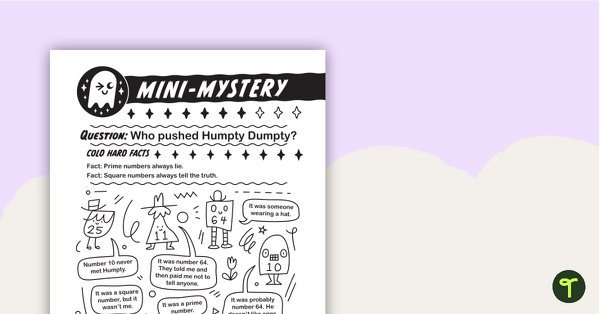
Mini-Mystery – Who Pushed Humpty Dumpty?
A fun, logic-based activity where students read clues to solve the mystery.
- Plus Plan
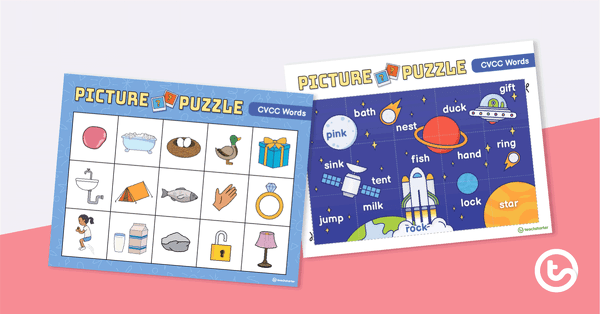
Reading CVCC Words - Picture Puzzle
Practice decoding CVCC words with this 15 piece picture puzzle.
- Plus Plan
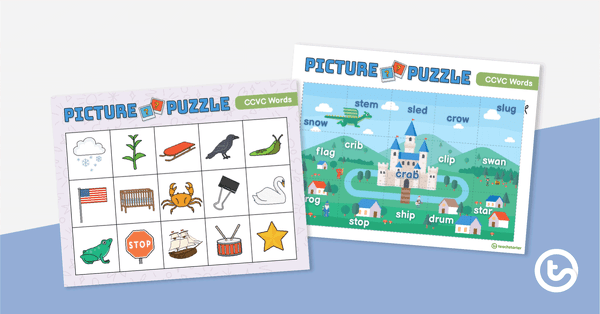
Reading CCVC Words - Picture Puzzle
Practice decoding CCVC words with this 15 piece picture puzzle.
- Plus Plan
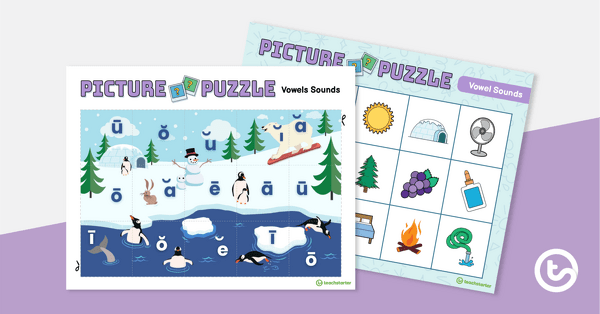
Vowel Sounds Winter Picture Puzzle
Distinguish between long and short vowel sounds with this 15 piece vowel picture puzzle.
- Plus Plan
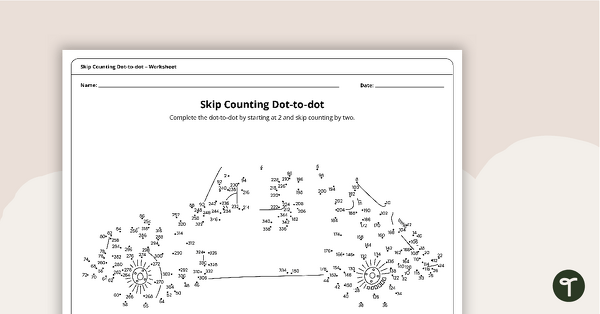
Connect the Dots Worksheet — Skip Counting by Twos (Car-Themed)
Use this printable connect-the-dots worksheet with a car theme for students to demonstrate skip counting by twos.
- Plus Plan
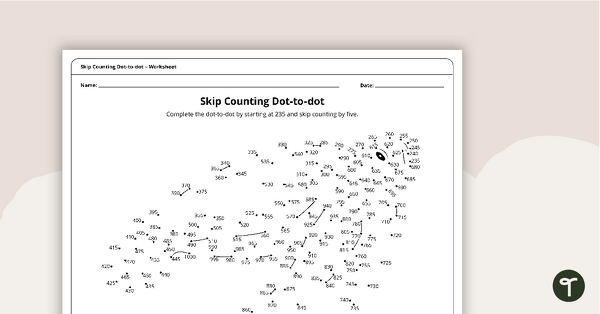
Complex Dot-to-dot – Skip Counting by Fives (Turtle) – Worksheet
A complex dot-to-dot where students demonstrate skip counting by fives.
- Plus Plan
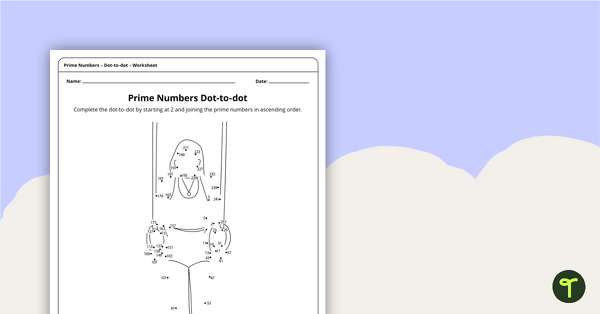
Complex Dot-to-dot – Prime Numbers (Gymnast) – Worksheet
A complex dot-to-dot where students demonstrate their knowledge of prime numbers.
- Plus Plan
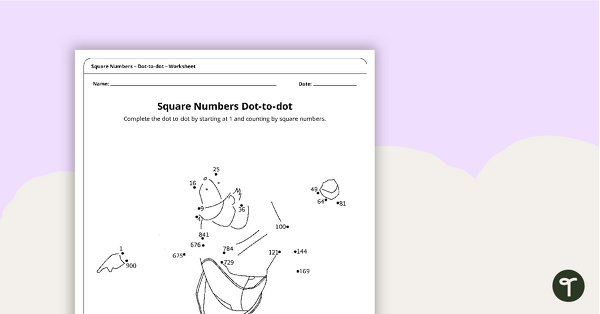
Complex Dot-to-dot – Square Numbers (Skateboarder) – Worksheet
A complex dot-to-dot where students order square numbers.
- Plus Plan
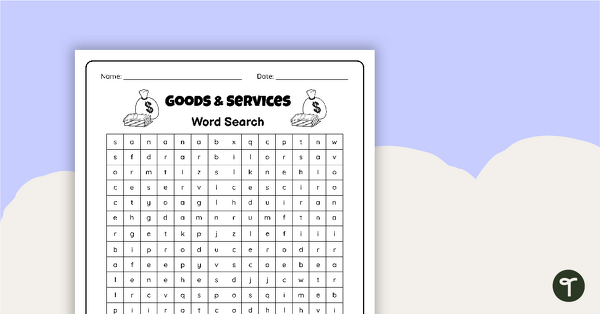
Goods and Services Word Search
Stretch your students’ vocabulary and reading skills with this economics-focused word search that features examples of goods and services.
- Plus Plan
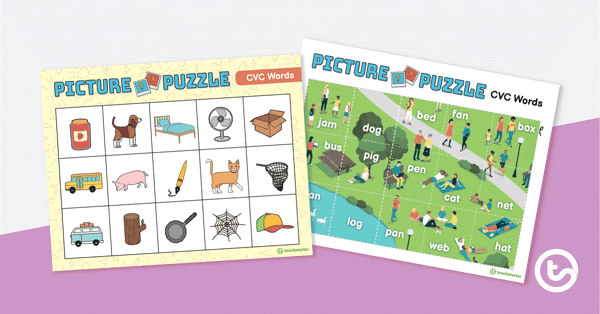
Reading CVC Words - Picture Puzzle
Decode CVC words with this 15 piece puzzle.
- Plus Plan
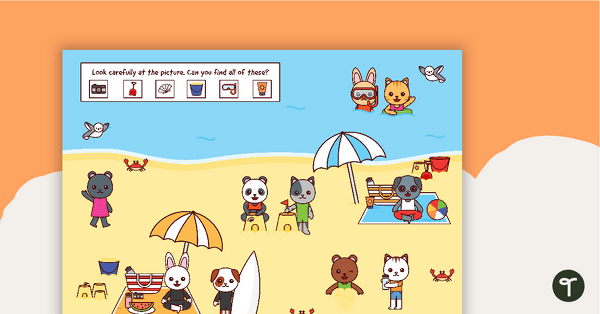
Search and Find – At the Beach
A beautifully illustrated beach scene containing everyday items that need to be found.
- Plus Plan
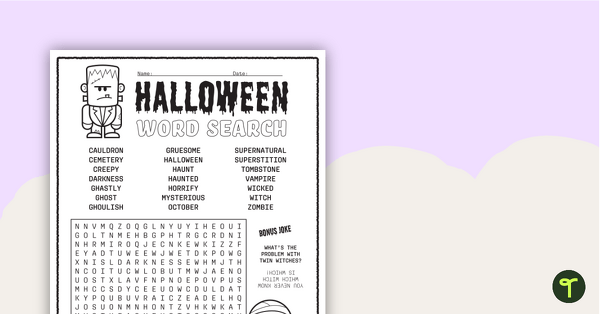
Halloween Word Search - Upper Grades
Stretch your upper elementary students’ vocabulary and reading skills with this devilishly-delightful Halloween word search.
- Plus Plan
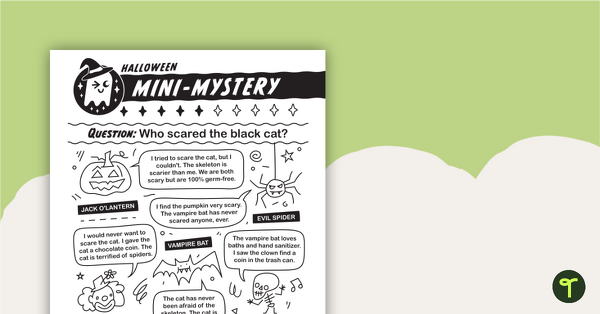
Mini-Mystery – Who Scared the Black Cat?
A logic-based Halloween-themed puzzle where students solve a mystery by reading clues.
- Plus Plan
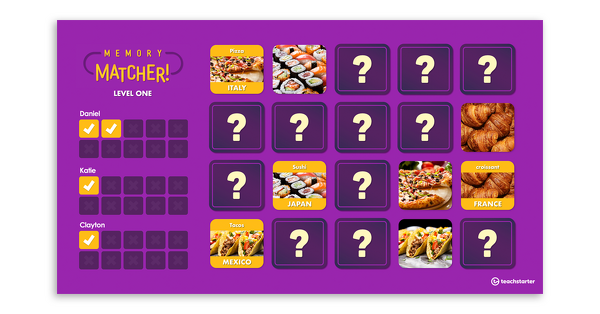
Memory Matcher Interactive Game (International Foods Theme)
An interactive match-up activity exploring foods of different cultures.
- Plus Plan
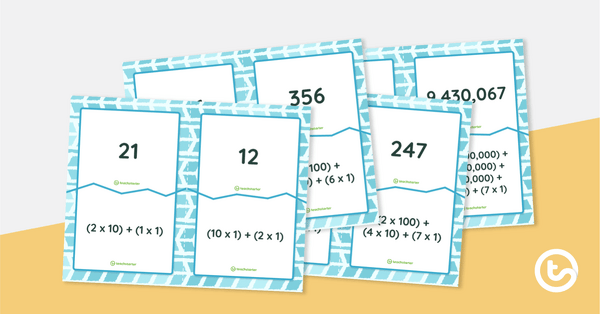
Expanded Notation Puzzles - Whole Numbers
Practice whole number expanded notation with this 28-piece matching puzzle.
- Plus Plan
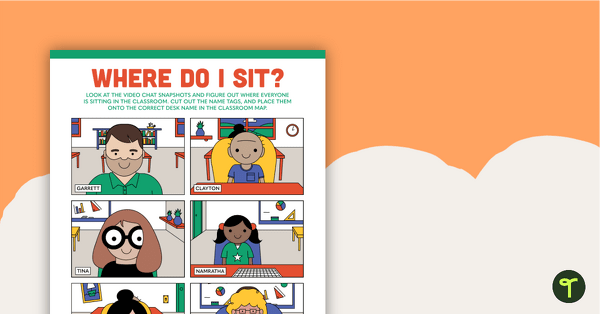
Where Do I Sit? – Logic Puzzle – Level 1
A worksheet for students to identify where people are sitting in a video chat.
- Plus Plan
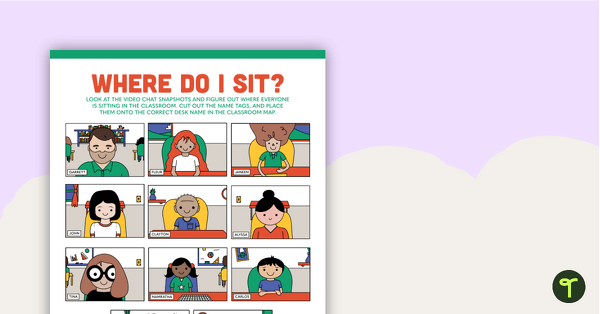
Where Do I Sit? – Logic Puzzle – Level 2
A worksheet for students to identify where people are sitting in a video chat.
- Plus Plan
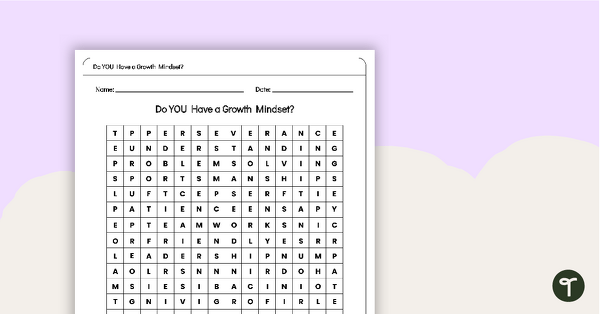
Do YOU Have a Growth Mindset? – Word Search
Use this word search activity to show students the qualities and characteristics of creating a growth mindset in the classroom.
- Plus Plan
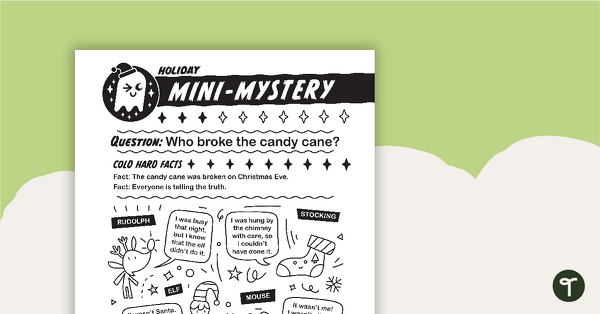
Holiday Mini-Mystery – Who Broke the Candy Cane?
A fun, logic-based holiday activity where students read clues to solve the mystery.
- Plus Plan
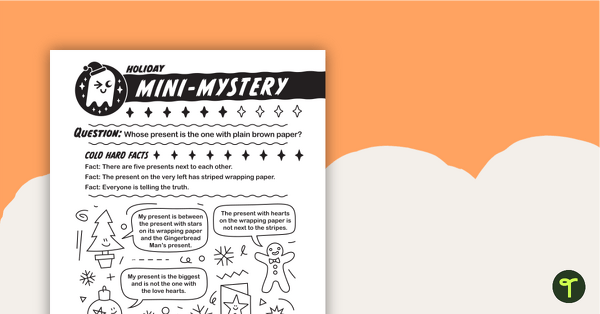
Holiday Mini-Mystery – Whose Present Is the One with Plain Brown Paper?
A fun, logic-based holiday activity where students read clues to solve the mystery.
- Plus Plan
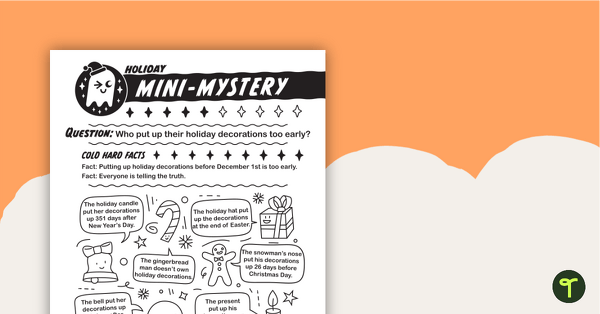
Holiday Mini-Mystery – Who Put Up Their Holiday Decorations Too Early?
Read clues to solve a mystery with this fun, logic-based Christmas-themed activity.
- Plus Plan

Organic Shape Puzzle
A puzzle focusing on the identification of organic shapes.
- Free Plan
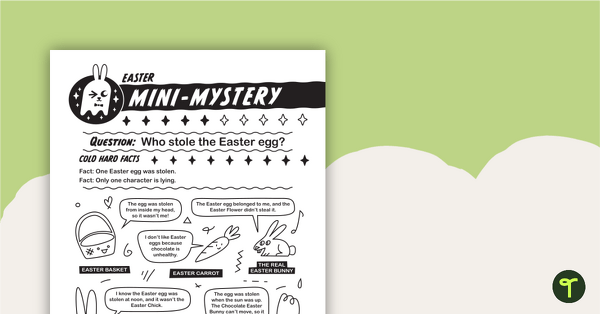
Easter Mini-Mystery – Who Stole the Easter Egg?
A fun, logic-based Easter-themed activity where students read clues to solve the mystery.
- Plus Plan
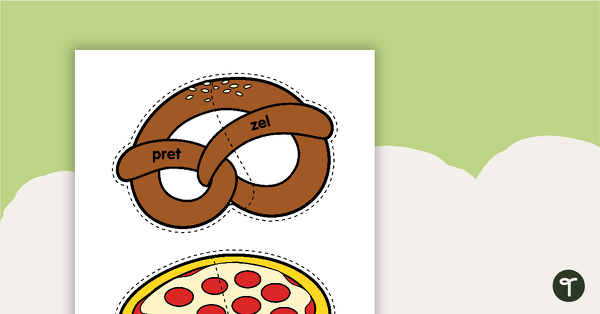
Food-Themed Syllable Puzzle
A fun food-themed phonics activity for lower years that helps to develop syllable recognition.