ELAR 1.2
Developing and sustaining foundational language skills: listening, speaking, reading, writing, and thinking--beginning reading and writing. The student develops word structure knowledge through phonological awareness, print concepts, phonics, and morphology to communicate, decode, and spell. The student is expected to:
- (1) demonstrate phonological awareness by:
- (A) producing a series of rhyming words;
- (i) recognizing spoken alliteration or groups of words that begin with the same spoken onset or initial sound;
- (ii) distinguishing between long and short vowel sounds in one-syllable words;
- (iii) recognizing the change in spoken word when a specified phoneme is added, changed, or removed;
- (iv) blending spoken phonemes to form one-syllable words, including initial and/or final consonant blends;
- (v) manipulating phonemes within base words; and
- (vi) segmenting spoken one-syllable words of three to five phonemes into individual phonemes, including words with initial and/or final consonant blends;
- (vii) demonstrate and apply phonetic knowledge by:
- (B) decoding words in isolation and in context by applying
common letter sound correspondences;
- (i) decoding words with initial and final consonant blends, digraphs, and trigraphs;
- (ii) decoding words with closed syllables; open syllables; VCe syllables; vowel teams, including vowel digraphs and diphthongs; and r-controlled syllables;
- (iii) using knowledge of base words to decode common compound words and contractions;
- (iv) decoding words with inflectional endings, including -ed, -s, and -es; and
- (v) identifying and reading at least 100 high-frequency words from a research-based list;
- (vi) demonstrate and apply spelling knowledge by:
- (C) spelling words with closed syllables, open syllables,
VCe syllables, vowel teams, and r-controlled syllables;
- (i) spelling words with initial and final consonant blends, digraphs, and trigraphs;
- (ii) spelling words using sound-spelling patterns; and
- (iii) spelling high-frequency words from a research-based list;
- (iv) demonstrate print awareness by identifying the information that different parts of a book provide;
- (D) alphabetize a series of words to the first or second letter and use a dictionary to find words; and
- (E) develop handwriting by printing words, sentences, and answers legibly leaving appropriate spaces between words.
- (A) producing a series of rhyming words;
- Plus Plan
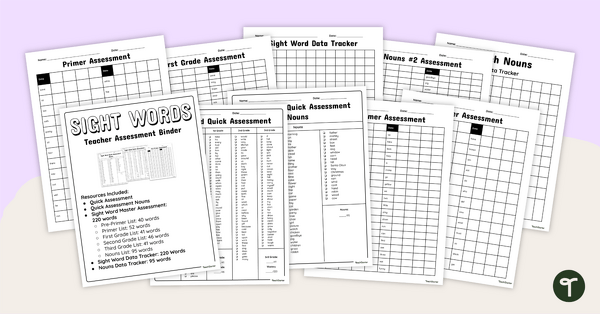
Sight Word Assessments and Data Tracking Sheets
Track Dolch sight word mastery with this set of printable assessments and data sheets.
- Plus Plan
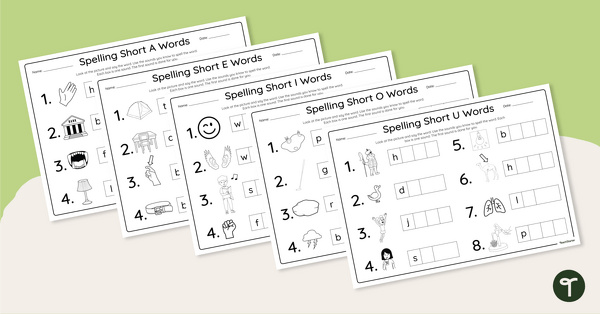
Spelling CVCC Words - Worksheets
Develop students’ ability to segment and blend the sounds in CVCC words with this set of differentiated worksheets.
- Plus Plan
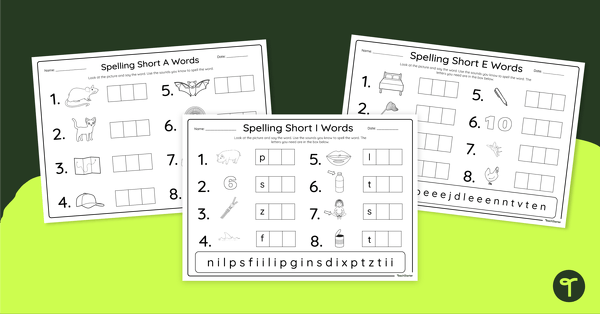
Spelling CVC Words - Worksheets
Develop students’ ability to segment and blend the sounds in CVC words with this set of differentiated worksheets.
- Plus Plan
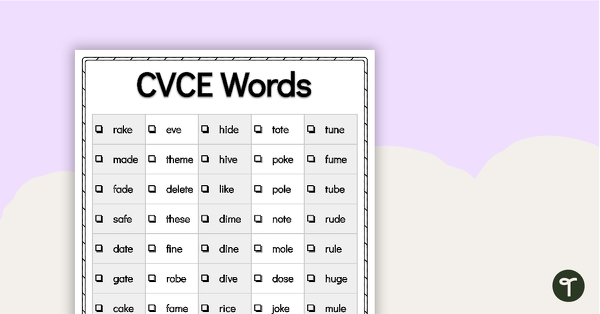
Printable Word List - CVCE Words
Introduce and explore words containing the “magic e” with this extensive list of CVCE words.
- Plus Plan
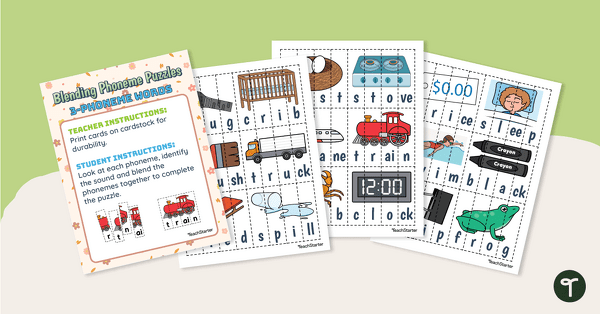
Blending Phoneme Puzzles - 4-Phoneme Puzzles
Master blending phonemes with 4-phoneme blending puzzles as a reading center activity.
- Plus Plan
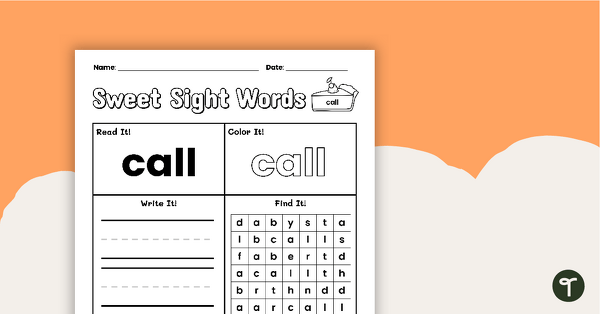
Sweet Sight Words Worksheet - CALL
Practice reading, writing, and identifying the high-frequency word “call” from the Second Grade Dolch sight words list.
- Plus Plan
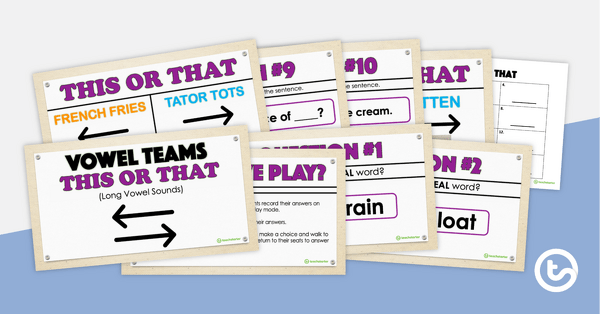
This or That! PowerPoint Game - Vowel Teams
An active PowerPoint game to practice decoding words with vowel teams.
- Plus Plan
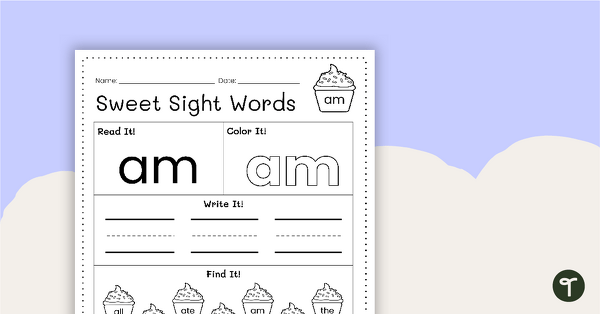
Sweet Sight Words Worksheet - AM
Practice reading, writing, and identifying the high-frequency word “am” from the Kindergarten-level Dolch sight words list.
- Plus Plan
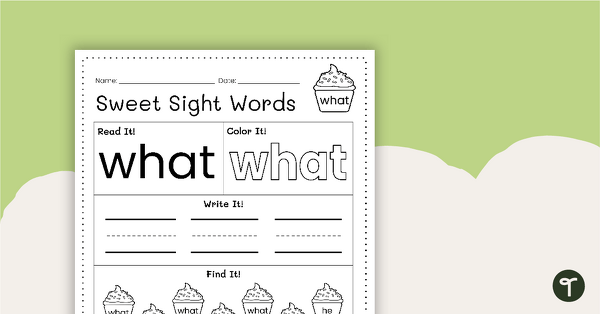
Sweet Sight Words Worksheet - What
Practice reading, writing, and identifying the high-frequency word “what” from the Kindergarten-level Dolch sight words list.
- Plus Plan
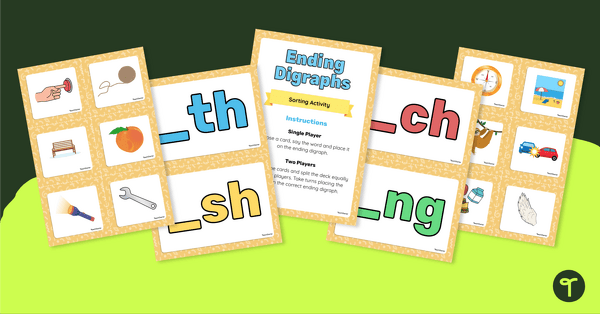
Ending Digraphs Sorting Activity
Practice decoding words by sorting 20 picture cards by their ending digraphs.
- Plus Plan
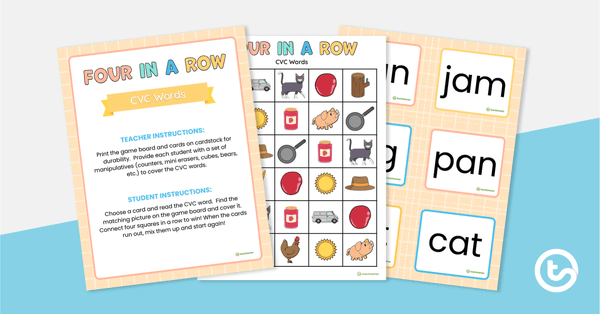
Four in a Row Game - CVC Words
Practice decoding 11 different CVC words with this word card and picture game board set.
- Plus Plan
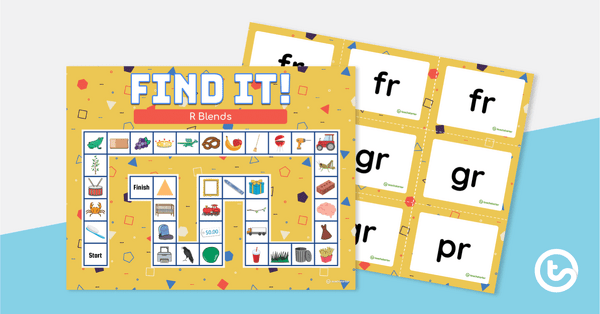
FIND IT! R Blends Board Game
Practice decoding and spelling words with this board game that focuses on R consonant blends.
- Plus Plan
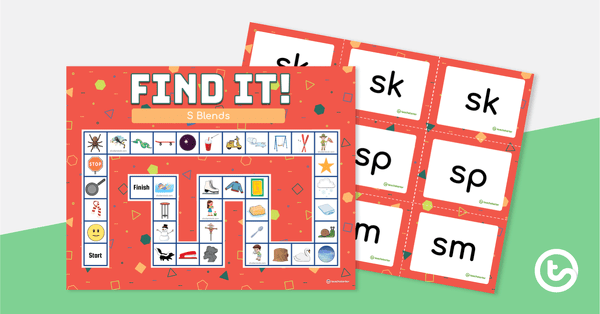
FIND IT! S Blends Board Game
Practice decoding and spelling words with this board game that focuses on S consonant blends.
- Free Plan
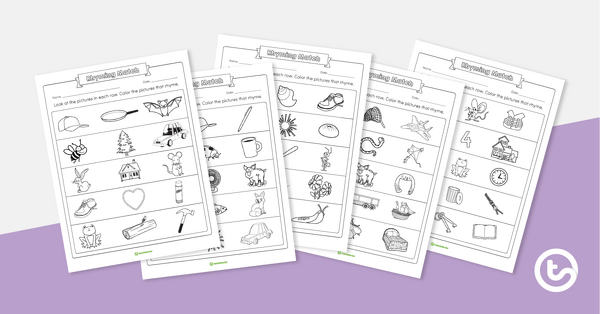
Rhyming Match Worksheet Pack
Identify rhyming words through images with this set of 5 worksheets.
- Plus Plan
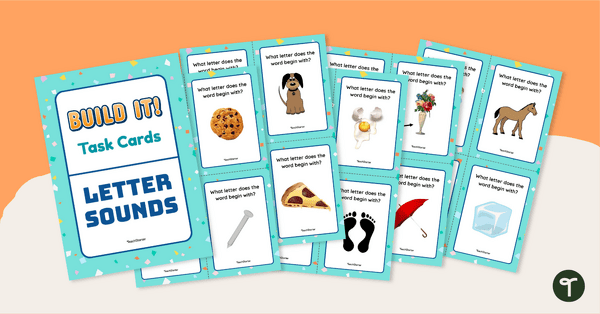
Letter Sound Knowledge Activity Cards
Practice identifying and writing the beginning sounds of words with this set of 28 task cards with your students.
- Plus Plan
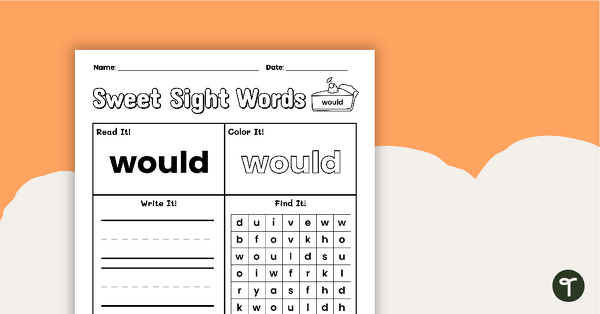
Sweet Sight Words Worksheet - WOULD
Practice reading, writing, and identifying the high-frequency word “would” from the Second Grade Dolch sight words list.
- Plus Plan
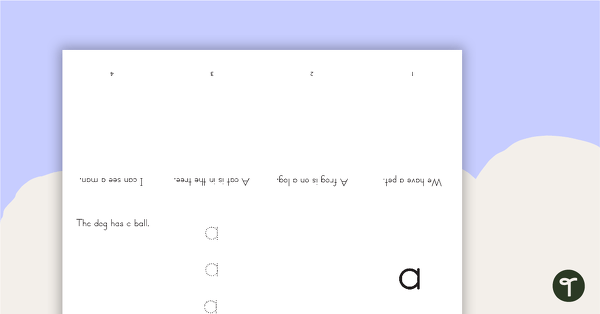
Sight Word Mini Books
A set of 12 mini sight word books to use as little readers with your students.
- Plus Plan
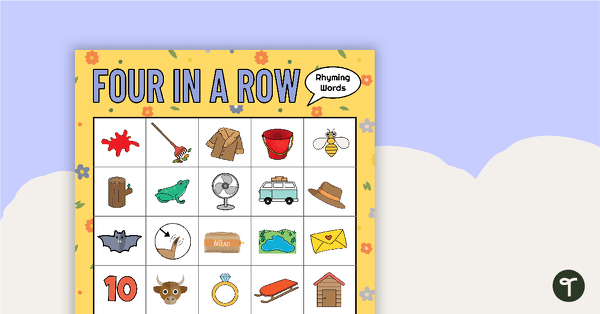
Four in a Row Game - Rhyming Words
Practice recognizing rhyming words with this set of 12 picture cards and game board.
- Plus Plan
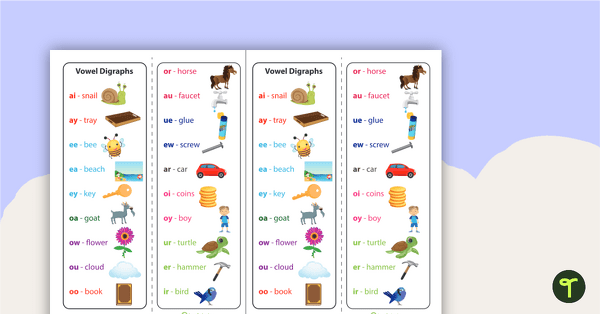
Vowel Digraphs Bookmarks
These bookmarks are designed to help students remember some of the most common vowel digraphs while reading.
- Plus Plan
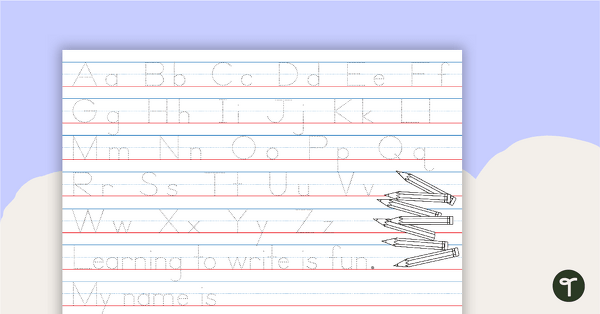
Alphabet Handwriting Sheet
A handwriting sheet with the alphabet and some words for students to trace.
- Free Plan
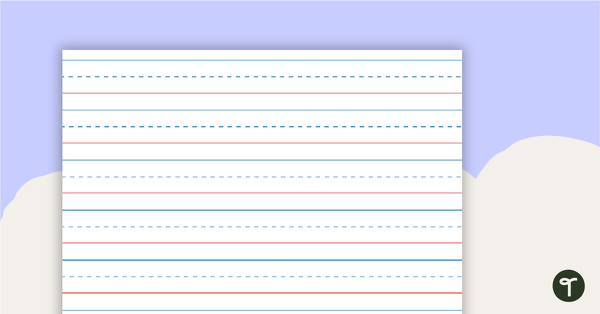
Handwriting Paper with Dotted Middle Line - Landscape
Handwriting paper for beginning writers.
- Plus Plan
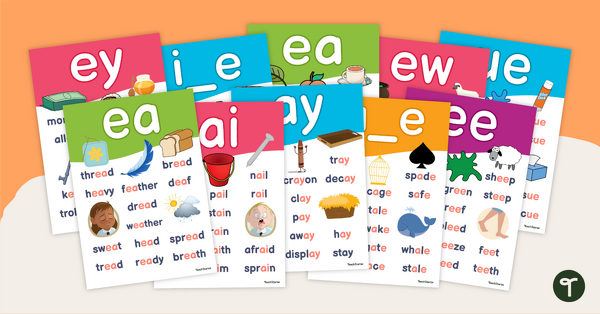
Vowel Digraphs Poster Pack
A poster showing words and pictures for various vowel blends.
- Plus Plan
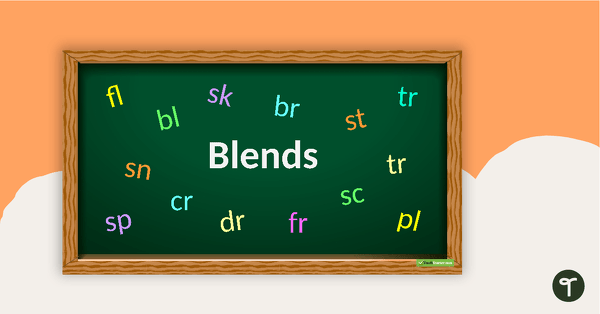
Beginning Blends Interactive PowerPoint Activity
Use this bright and interactive PowerPoint activity where Year 1 students identify beginning blends and type the correct two letters to match each image.
- Plus Plan
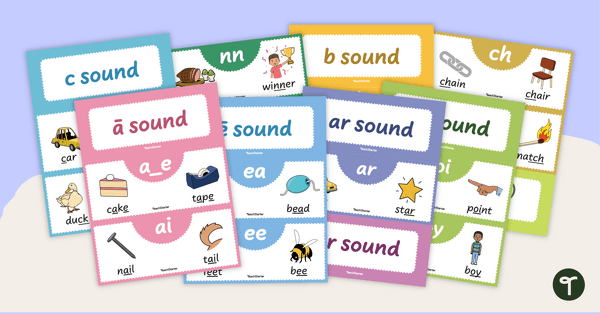
Sound Wall Classroom Interactive Bulletin Board
Print a complete Sound Wall designed to help you enhance your phonics program by displaying the phonemes your students are currently mastering.
- Plus Plan
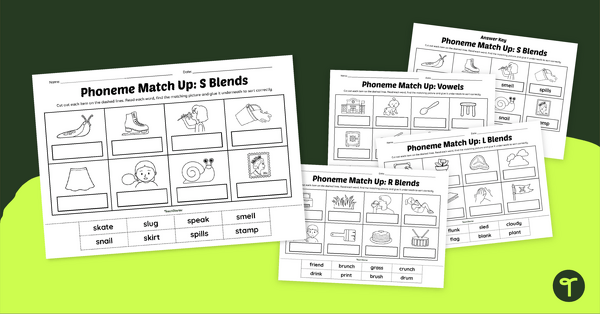
Reading 3-5 Phonemes Cut and Paste Pack
Support your early readers as they practice decoding and phoneme recognition with this hands-on cut and paste worksheet set.
- Plus Plan
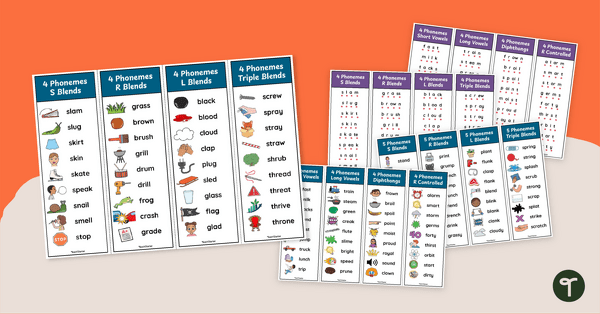
Blending and Segmenting Strips
Provide these blending and segmenting stips to students to use as a reference or to practise blending and segmenting sounds in 4 phoneme and 5 phoneme words.
- Plus Plan
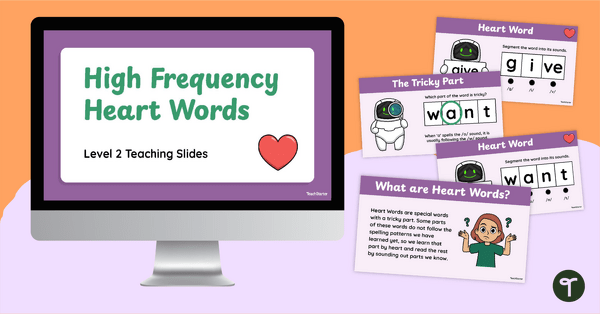
High Frequency Tricky Words Teaching Slides - 1st Grade
Give your 1st Grade students the structured support they need to read and spell high‑frequency words with unusual or unexpected spelling patterns.
- Plus Plan
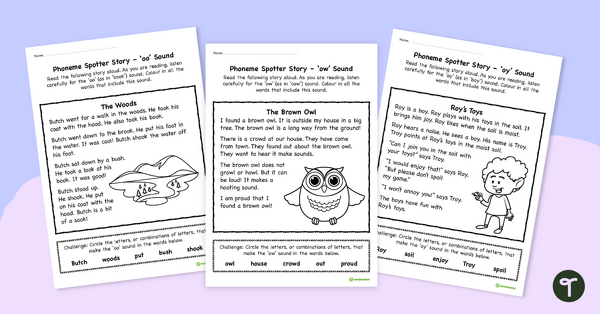
Diphthong Phoneme Spotter Stories
Use this set of decodable texts featuring various graphemes that make diphthong vowel sounds.
- Plus Plan
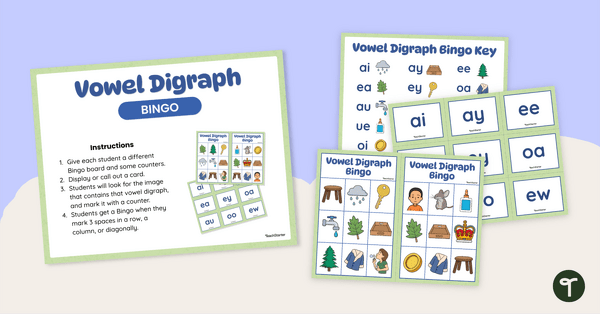
Vowel Digraph Bingo
Play our vowel digraph bingo game to engage your students while increasing their reading confidence.
- Plus Plan
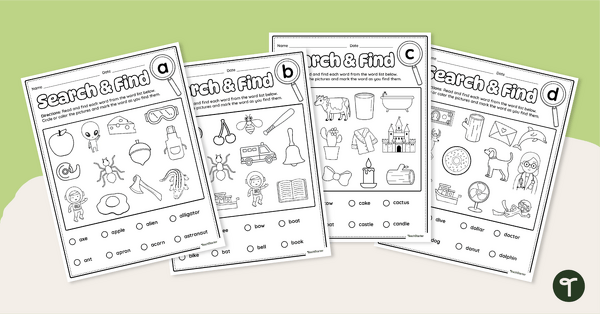
Kindergarten Letter Sounds Worksheets
Use these kindergarten letter sounds worksheets to explore each letter of the alphabet and their phoneme by searching and finding images.
- Plus Plan
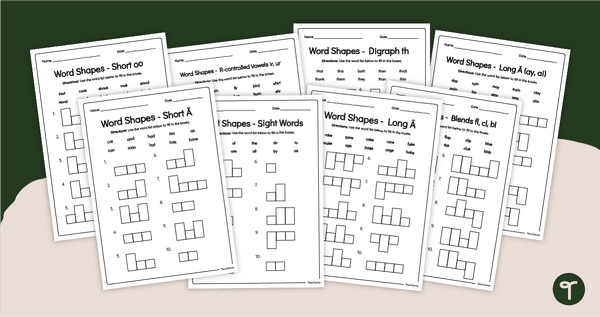
Elkonin Boxes - Word Shapes Worksheets for 1st Grade
Build first-grade phonics skills with our printable Phonics-Based Elkonin Boxes Printable Word Shapes Worksheets.
- Plus Plan
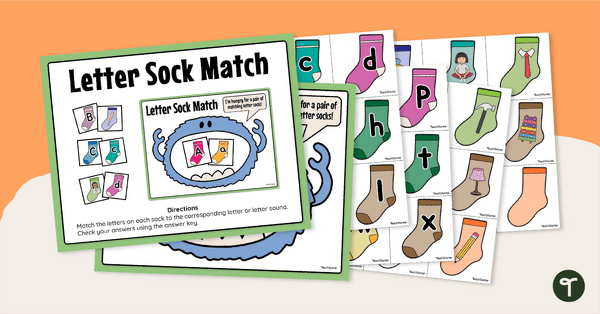
Sock Letter Matching Activity
Match socks together for a great letter matching activity where the lowercase letter, uppercase letter and beginning sounds are matched.