2D Shapes Teaching Resources
Bring dimension to 2D shapes for primary students with printable worksheets, digital activities, maths games and more — created by teachers for teachers!
This comprehensive collection of teaching resources includes editable lessons on two-dimensional shapes, aligned to the Australian curriculum and ready to be printed and used in the classroom. Explore the entire collection to find educational games, geometric activities, posters and vocabulary word wall cards to assist your students when they are learning to identify 2D figures by their names and their attributes.
Teaching this part of the maths curriculum for the first time in a while? Read on for a primer from the teachers on the Teach Starter team.
What Are 2D Shapes?
Two-dimensional shapes, or 2D shapes, are shapes that have only length and width, but no depth. Each of these geometric shapes has its own unique characteristics and properties, such as the number of sides, the types of angles and the relationship between the sides and angles.
For example, a square has four equal sides and four right angles, while a circle has no sides and no angles.
Teaching about 2D geometric shapes is crucial in those early years classrooms as these are the building blocks of more complex geometric concepts. Understanding them is an important foundation for developing spatial reasoning skills. It will also lay the groundwork for learning about symmetry, angles and perimeter and area, among other geometry and measurement concepts.
2D Shapes — A Kid-Friendly Definition
Looking to provide a simple definition for your primary students? Here's a kid-friendly definition you can use:
A 2D shape is a flat shape that has only two dimensions — length and width. When something is two-dimensional, it's flat like a drawing or a picture on a piece of paper.
Understanding 2D shapes is important because it helps us recognise and describe the shapes we see around us, and it can also help us with math and other subjects.
2D Shape Examples
A definition is a good start, but providing concrete examples will help students begin to wrap their heads around these two dimensional-objects!
Let's look at some of the common examples of 2D shapes that we teach in the early years:
Square
A square is a 2D shape with four straight sides that are all equal in length and four right angles. It is a type of rectangle and a type of parallelogram.
Rectangle
A rectangle is a 2-dimensional shape that has four straight sides. Unlike a square, a rectangle has two sides that are longer than the other two. It has four right angles and opposite sides that are parallel and equal in length.
Parallelogram
Like a rectangle and square, the parallelogram has four sides and is considered a 2D shape. The four straight sides of a parallelogram are parallel to each other. Opposite sides of a parallelogram are equal in length, and opposite angles are equal in measure. Squares, rectangles and rhombuses are all examples of parallelograms.
Trapezium
A trapezium (or trapezoid) is a quadrilateral shape with two parallel sides and two non-parallel sides. The parallel sides are called the bases of the trapezium, and the non-parallel sides are called the legs. Even though a trapezium has four sides, it is not a parallelogram!
Triangle
A triangle is a two-dimensional shape that has three straight sides and three angles. The angles of a triangle always add up to 180 degrees.
Circle
A circle is a 2D geometric shape that is round and has no straight sides. It is defined as the set of all points in a plane that are at a fixed distance (called the radius) from a single point (called the center).
Ellipse
An ellipse is a 2D shape that is similar to a circle, but its shape is stretched out or elongated. It is defined as the set of all points in a plane whose distances from two fixed points (called the foci) add up to a constant value.
Pentagon
A pentagon is a 2D shape that has five straight sides and five angles. The word 'pentagon' comes from the Greek words 'penta' (meaning 'five') and 'gonia' (meaning 'angle'). Each angle of a regular pentagon measures 108 degrees, and the sum of the angles in a pentagon is 540 degrees.
Hexagon
A hexagon is a 2D shape that has six straight sides and six angles. Each angle of a hexagon measures 120 degrees, and the sum of the angles in a hexagon is 720 degrees. Snowflakes are a common example of hexagons found in nature, and so is the honeycomb!
Rhombus
A rhombus is a 2D shape with four straight sides that are all equal in length. It is a type of parallelogram, and it has opposite angles that are equal in measure.
Octagon
An octagon is an eight-sided 2D shape. A stop sign is an octagon that students might recognise from seeing it along the road on the way to school.
Quadrilateral
A quadrilateral is a 2D shape with four sides and four angles. The sum of the interior angles of a quadrilateral is always 360 degrees. The following are all examples of quadrilaterals:
- Square
- Rectangle
- Parallelogram
- Trapezium
- Rhombus
What Are Polygons?
Many of the 2D shapes that students learn about are polygons.
A polygon is a 2D shape that has three or more straight sides and angles. Polygons can have any number of sides, but they must be straight, and they must not cross each other.
The word 'polygon' comes from the Greek words 'poly' (which means 'many') and 'gonia' (which means 'angle').
Here are some common examples of polygons:
- Triangles
- Squares
- Rectangles
- Pentagons
- Hexagons
- Octagons
A circle and an ellipse are both 2D shapes, but they are not polygons. They have a curved shape, while polygons consist of a closed structure with sides.
- Plus Plan
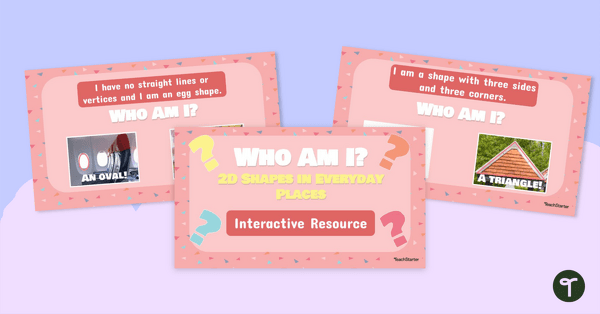
Interactive Google Slides Activity - Who Am I? 2D Shapes
This interactive digital teaching resource helps students to recognise and name 2D shapes in component parts of everyday items in their environment.
- Plus Plan
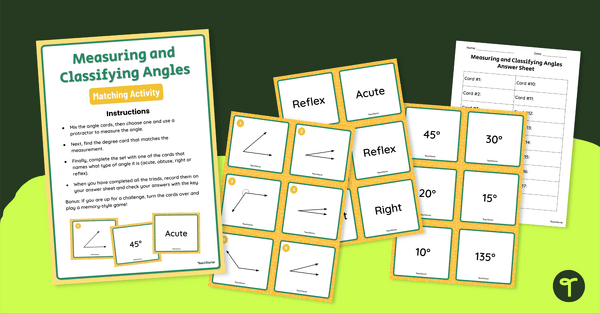
Measuring and Classifying Angles Activity
Introduce this measuring and classifying angles matching activity to your students to give them engaging, hands-on practice with key geometry concepts.
- Plus Plan
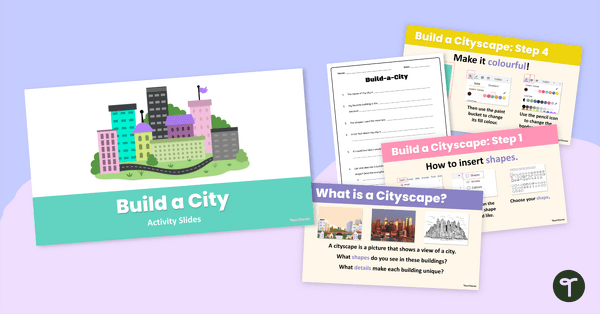
Build a City Activity
Engage your learners with this cross-curricular build a city activity that invites them to create a digital city all their own.
- Plus Plan
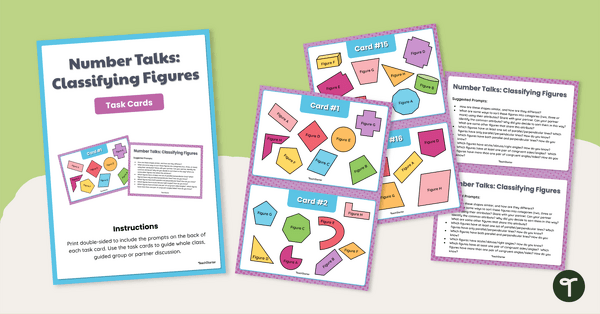
Classifying Shapes Activity — Number Talk Cards
Spark discussion with this classifying shapes activity that will have students identifying the attributes of 2D shapes.
- Plus Plan
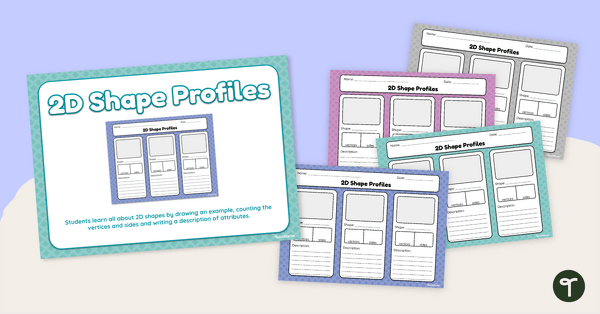
Attributes of 2D Shapes Worksheet Set
Share this attributes of 2D shapes worksheet set with your students to help them categorise and analyse two-dimensional shapes.
- Plus Plan
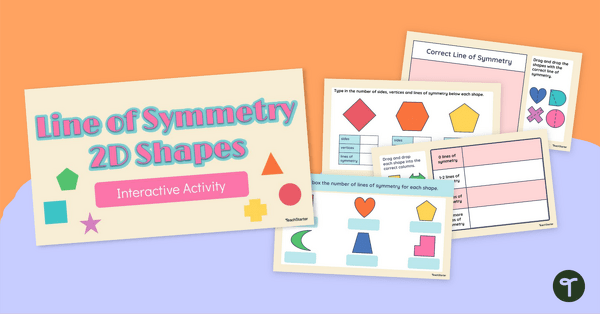
Line of Symmetry 2D Shapes Interactive Activity
Engage your students in a variety of interactive activities all focused on the line of symmetry for 2D shapes.
- Plus Plan
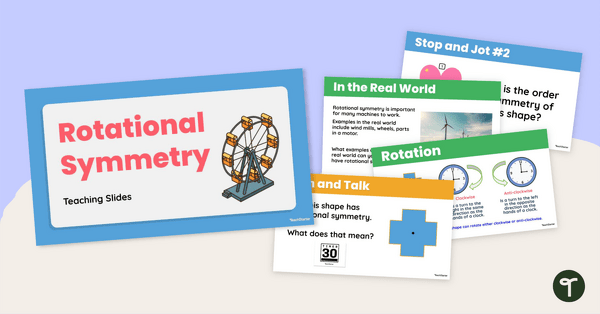
Rotational Symmetry Teaching Presentation
Share this 12-slide rotational symmetry teaching presentation with your Grade 4s to expose them to the concept of rotational symmetry.
- Plus Plan
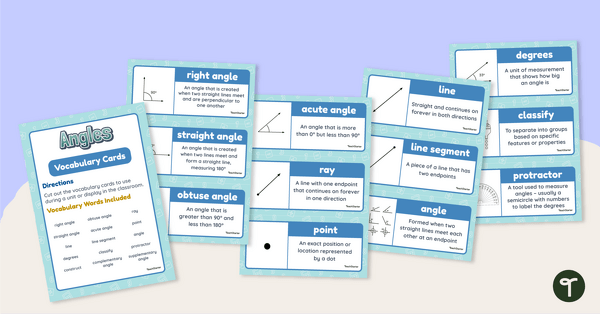
Understanding Angles – Word Wall Vocabulary Cards
Promote maths vocabulary development with this set of 15 vocabulary cards focusing on angles.
- Plus Plan
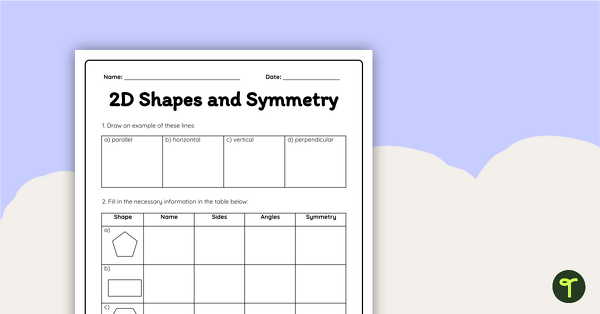
Shapes and Symmetry — Year 2 Worksheet
Assess year 2 students' understanding of 2D shape symmetry with this set of two worksheets.
- Plus Plan
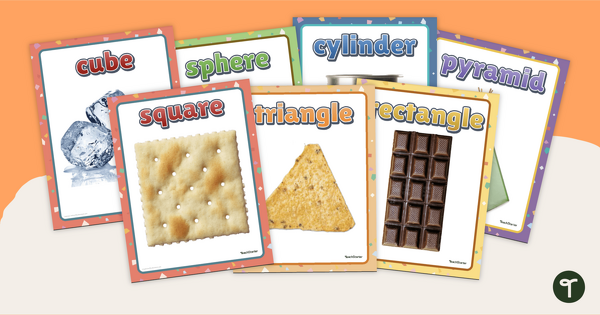
2D-3D Shape Posters
Use this set of 14 brightly coloured 2D and 3D shape posters to decorate your classroom and build academic vocabulary.
- Plus Plan
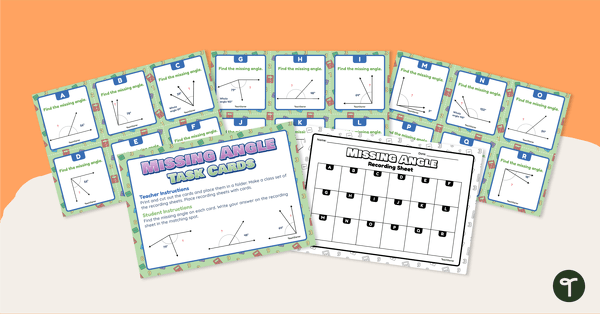
Missing Angle Task Cards
Practise how to find the measure of a missing angle with this set of 18 task cards.
- Plus Plan
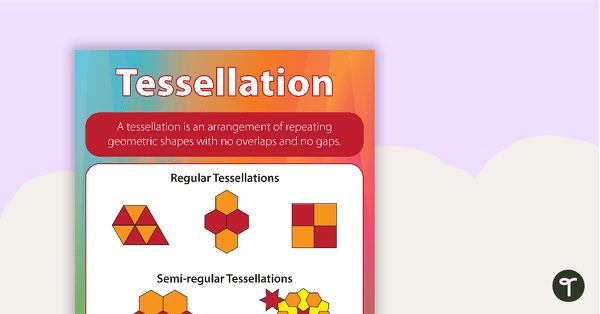
Tessellation Poster
Making tessellating patterns is fun!
- Free Plan
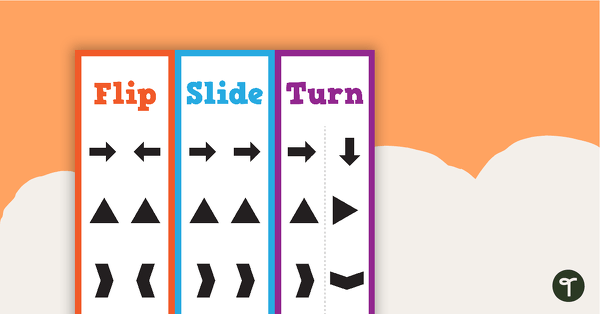
Flip, Slide and Turn Poster Set
Examine the difference between flipping, sliding and turning a shape.
- Plus Plan
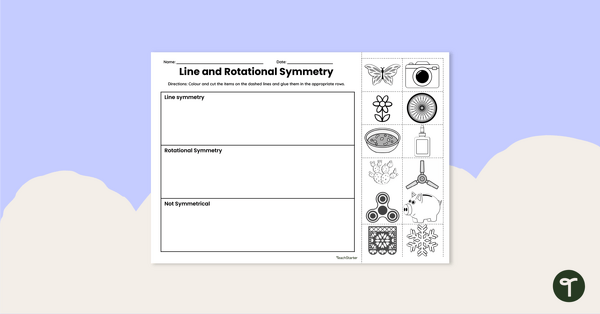
Line and Rotational Symmetry Sorting Activity
Have your students determine whether each object has line symmetry, rotational symmetry, or no symmetry, with this fun cut and paste worksheet.
- Plus Plan
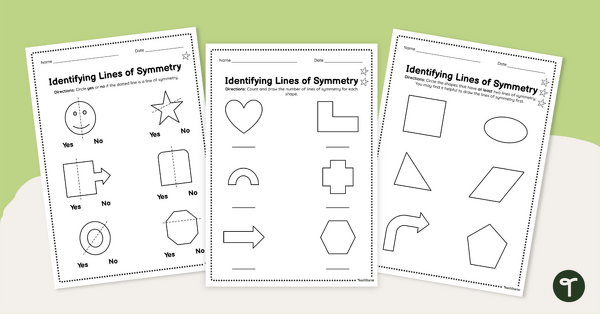
Identifying Lines of Symmetry Worksheets
Use this set of differentiated worksheets to help students practise the process involved with identifying lines of symmetry on two-dimensional shapes.
- Plus Plan
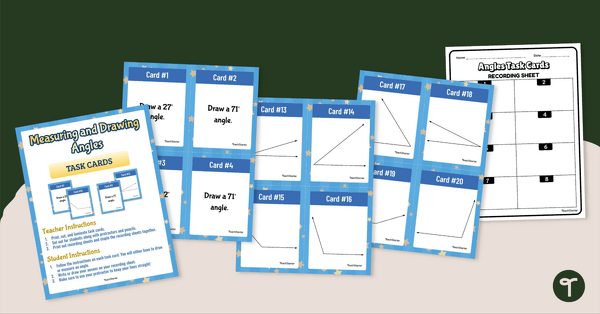
Measuring and Drawing Angles – Task Cards
Improve student understanding of angle measurement with this set of 24 task cards.
- Plus Plan
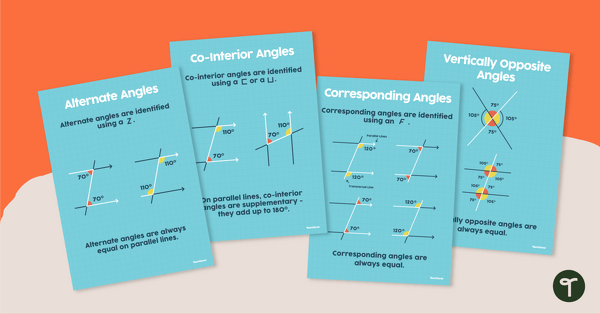
Advanced Angles Poster Pack
Teach your students about alternate, co-interior, corresponding and vertically opposite angles with this set of classroom posters.
- Plus Plan
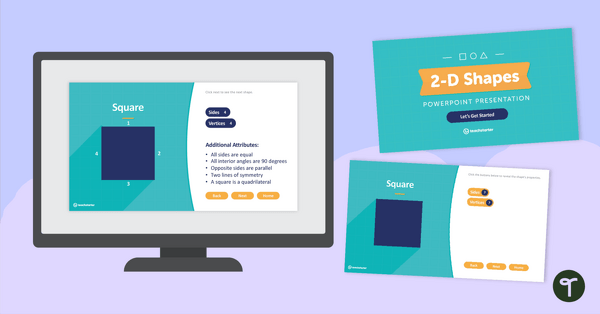
2D Shapes - Interactive PowerPoint Presentation
An interactive PowerPoint presentation that teaches the features of 2D shapes.
- Plus Plan
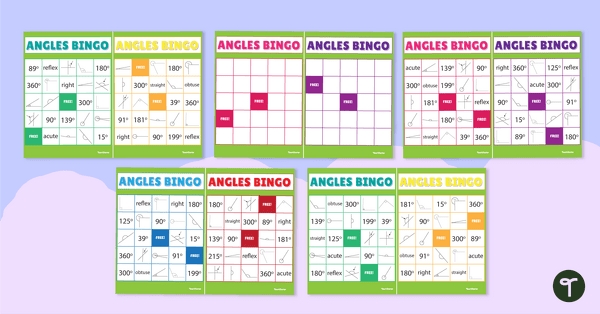
Angles Bingo
Generate excitement about angles in your classroom by playing this whole-class types of angles bingo game.
- Plus Plan
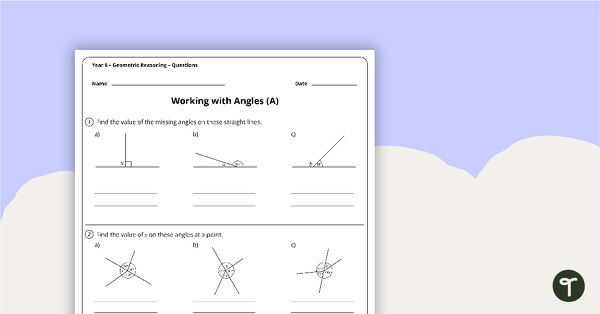
Geometric Reasoning Worksheets - Year 6
2 worksheets linked to the Australian Curriculum.
- Plus Plan

Spatial Reasoning Worksheets
Share these spatial reasoning worksheets with your students to help them master spatial relationships and composite shape standards.
- Plus Plan
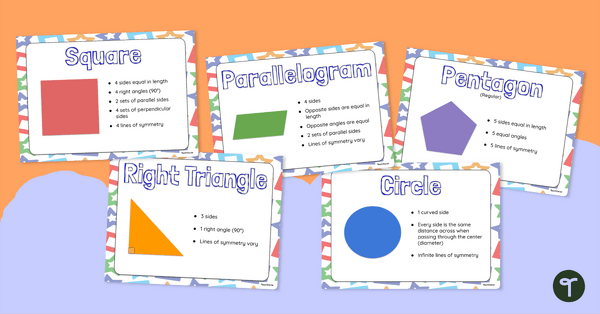
2D Shapes Poster Set
Hang this 2D shapes poster set in your classroom to give students an easy reference for the attributes of two dimensional shapes.
- Plus Plan
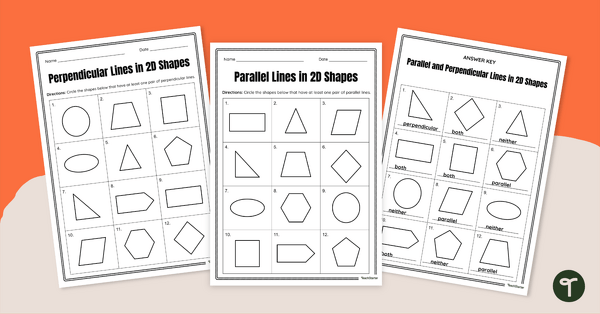
Identifying Parallel and Perpendicular Lines in Shapes Worksheet Pack
Present this parallel and perpendicular lines in shapes worksheet pack to your students to give them practice identifying attributes of 2D shapes.
- Plus Plan
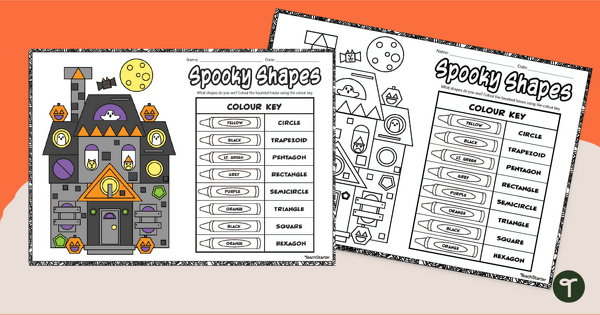
Halloween Shapes - Colour By 2D Shapes Worksheet
Don’t get too spooked while trying to identify 2D shapes with a printable Halloween Shapes Colour by Code worksheet!
- Plus Plan
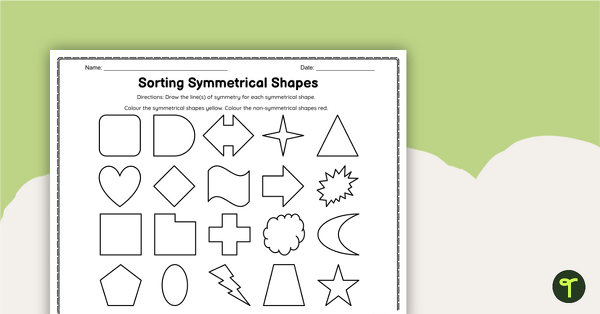
Sorting Symmetrical Shapes Worksheets
Use this simple but effective symmetry worksheet to reinforce the concepts of symmetrical and asymmetrical shapes with your Grade Four students.
- Plus Plan
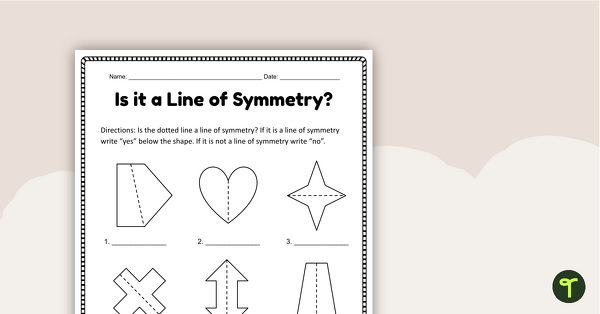
Is It a Line of Symmetry? Worksheets
Assign this lines of symmetry worksheet to your students to check their understanding of the existence of a line of symmetry on various 2D shapes.
- Plus Plan
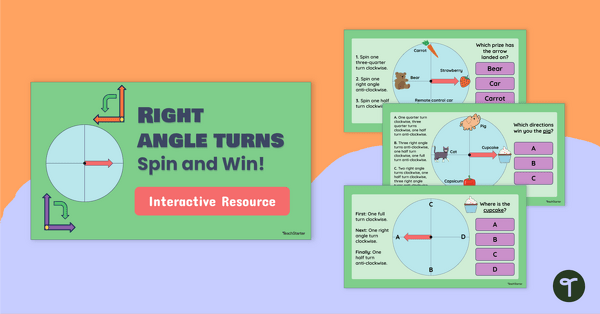
Right Angle Turns: Spin and Win! – Interactive Game
Get your Year 3 students spinning to win with this engaging digital maths game about right angles as measures of a turn.
- Plus Plan
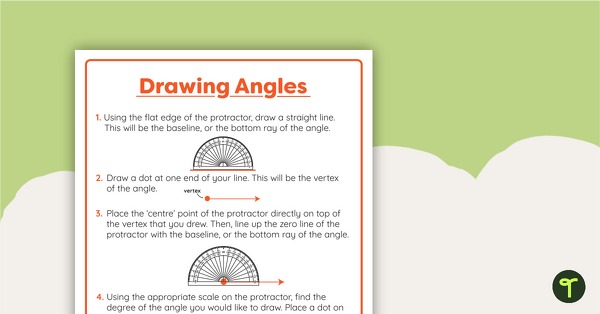
Drawing Angles Poster
Remind your students how to draw angles using a protractor with this classroom anchor chart.
- Plus Plan
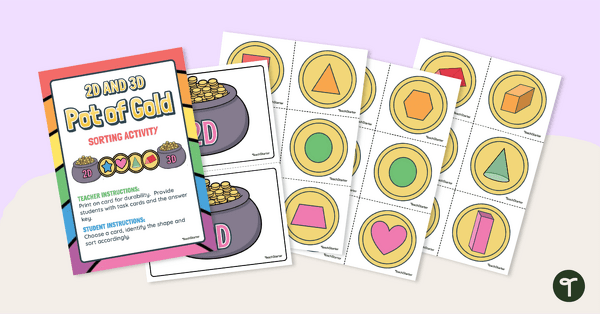
Sorting 2D Shapes and 3D Objects (Pot of Gold Theme)
Sort coins that feature 2D shapes and 3D objects into their corresponding pots with a St. Patricks Day theme!
- Plus Plan
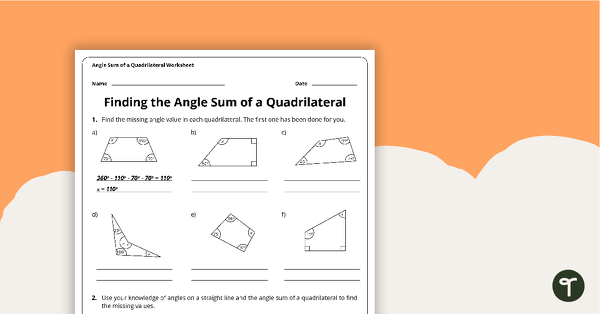
Angle Sum of a Quadrilateral – Year 7 Maths Worksheet
Calculate the missing angle in a variety of quadrilaterals with this one-page worksheet.
- Free Plan
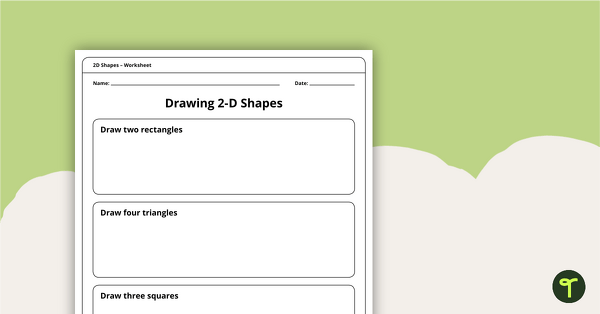
Drawing 2D Shapes Worksheet
A worksheet with questions regarding 2D shapes.
- Plus Plan
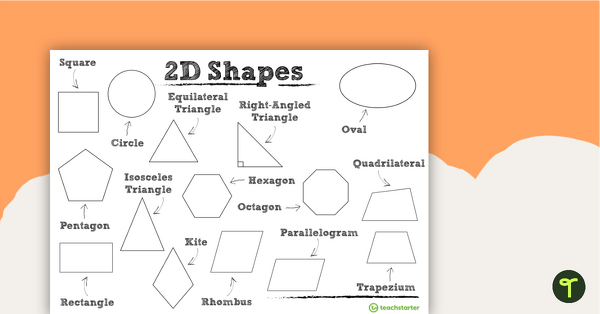
Individual 2D Shapes Posters - BW
2D Shapes and their names, diagrams and properties on individual posters.
- 2D Shapes Worksheets
- 2D Shapes Games
- 2D Shapes Posters
- 2D Shapes Teaching Presentations
- 2D Shapes Templates
- 2D Shapes for Preschool/Kindergarten
- 2D Shapes for Foundation Year
- 2D Shapes for Year 1
- 2D Shapes for Year 2
- 2D Shapes for Year 3
- 2D Shapes for Year 4
- 2D Shapes for Year 5
- 2D Shapes for Year 6
- 2D Shapes for Year 7