VC2E1LE03
discuss plots, characters and settings through a range of literary texts
- recognising similar characters and settings in a range of literary texts, for example traditional tales, narrative poems and fables
- discussing whether features of settings, including time (year, season) and place (country or city), are realistic or imagined
- discussing how plots develop, including beginnings (orientation), how the problem (complication) is introduced and how it is solved (resolution)
- Plus Plan
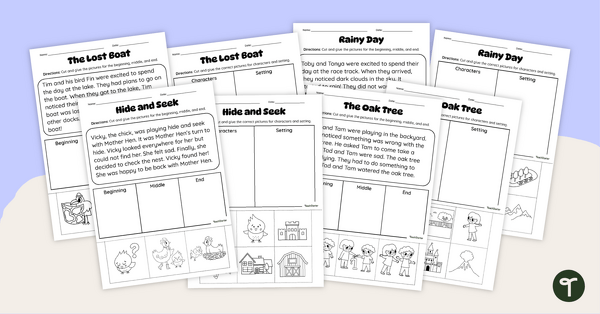
Beginning, Middle End Worksheets
Explore the main structure and story elements in a short story with these beginning, middle and end worksheets.
- Plus Plan
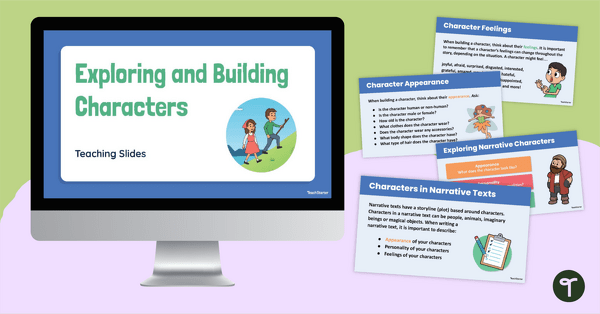
Exploring and Building Narrative Characters PowerPoint
Use this editable PowerPoint template when teaching younger students about how to build a character for a narrative text.
- Plus Plan
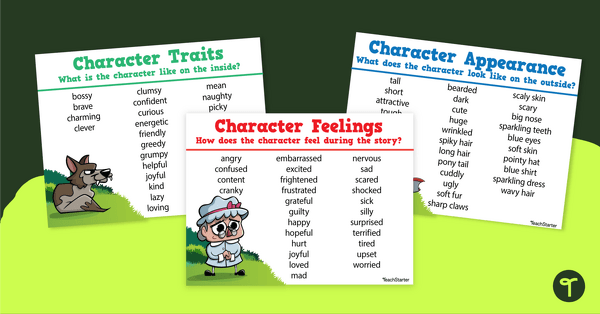
Character Traits, Feelings and Appearance - Posters
A set of 3 posters depicting words and phrases that can be used to describe a character's personality, feelings and appearance.
- Plus Plan
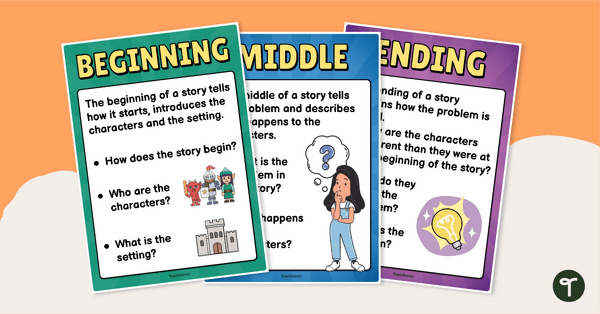
Beginning, Middle and End of Story Poster Set
Remind students of the elements that make up the beginning, middle and end of a story with this set of three posters.
- Free Plan
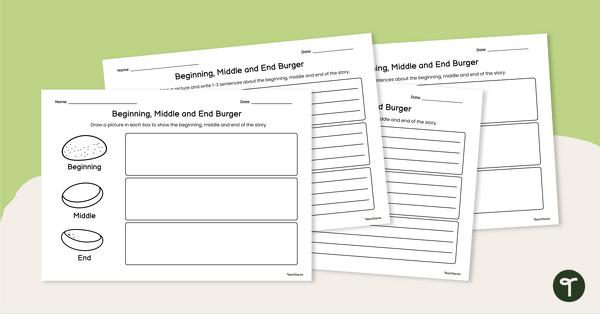
Story Beginning, Middle and End Graphic Organiser
Help your students write and draw about the beginning, middle and end of stories with this set of differentiated graphic organisers.
- Plus Plan
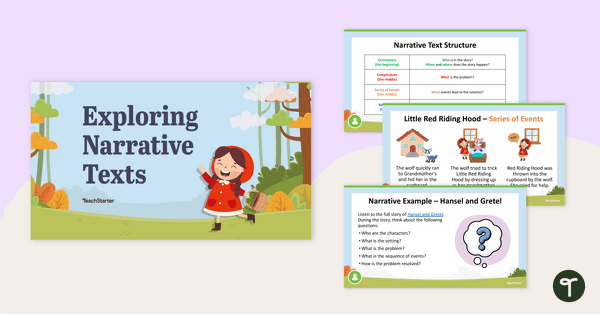
Exploring Narrative Texts PowerPoint
Teach your students about the key elements of narrative texts with this comprehensive teaching presentation.
- Plus Plan
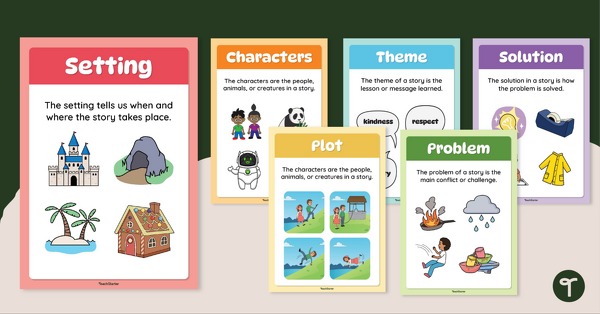
Story Elements Poster Set
Display this story elements poster set in your classroom when learning about narrative texts.
- Plus Plan
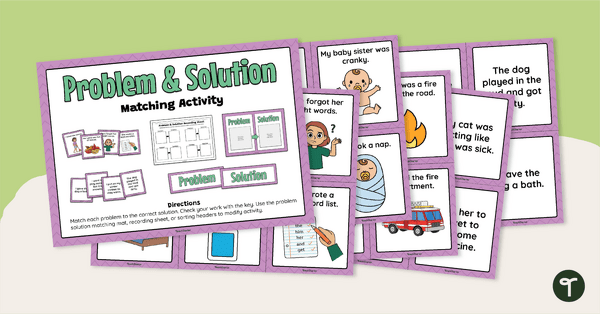
Story Problem and Solution Matching Activity
Match problems with their solutions to enhance your students' knowledge using this problem and solution matching activity.
- Free Plan
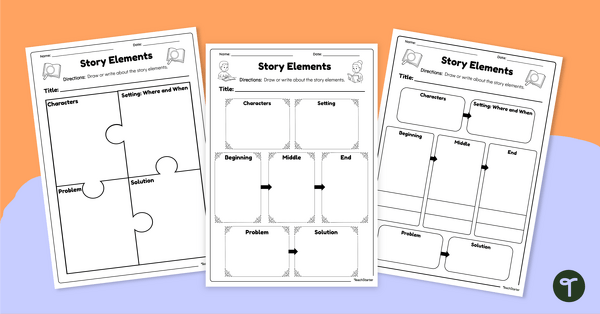
Narrative Elements Graphic Organisers – Portrait
Encourage your students to write and draw about various story elements with this set of differentiated graphic organisers.
- Plus Plan
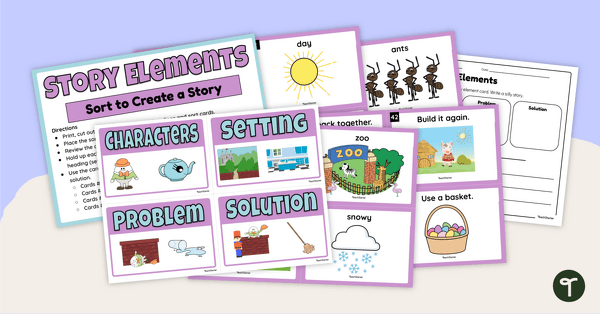
Create a Silly Story – Sorting Activity
Explore story characters, settings, problems and solutions by creating a silly story!
- Plus Plan
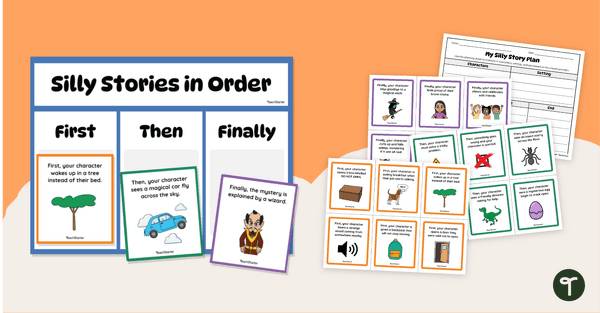
First, Then, Finally Sort and Writing Template
Help your students sequence ideas for a narrative story with these narrative element prompts and a First Then Finally Writing Template.
- Plus Plan
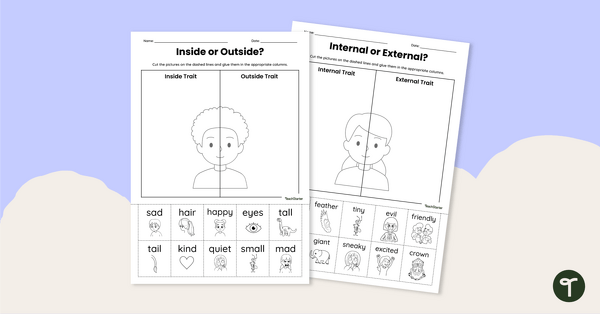
Internal and External Character Traits - Cut and Paste Worksheet
Explore the internal and external traits of story characters with this differentiated cut-and-paste worksheet.
- Free Plan
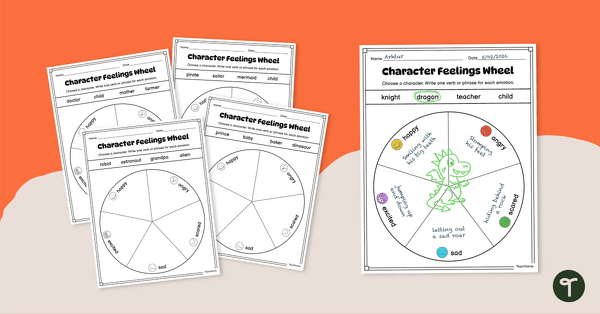
Character Emotion Wheel Pack
Help students explore how language can be used to present characters in different ways with this set of character emotion wheel templates.
- Plus Plan
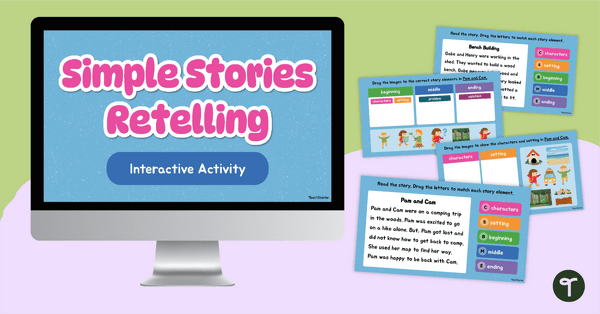
5 Elements of a Short Story Activity
Explore the 5 elements of a short story using this digital activity with five short stories.
- Plus Plan
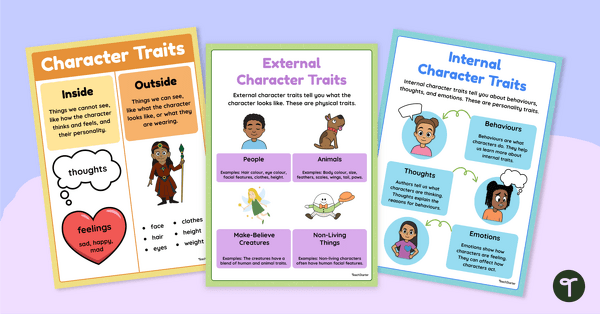
Character Traits Posters
Remind your students about the difference between external and internal character traits with this set of three classroom posters.
- Plus Plan
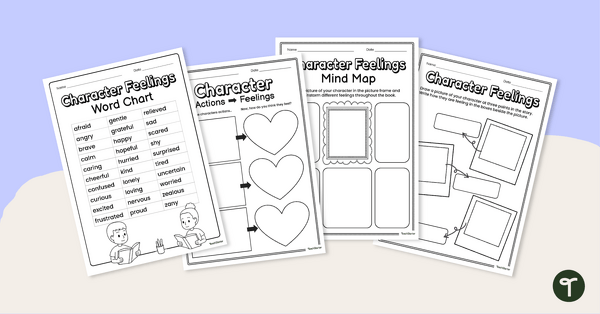
Character Emotions Chart and Worksheets
Explore character emotions in stories using this Character Emotions Chart and matching character Graphic Organisers
- Plus Plan
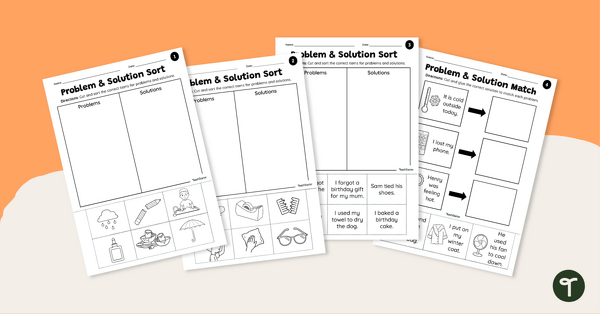
Problem and Solution Worksheets
Explore narrative elements with this set of problem and solution worksheets.
- Plus Plan
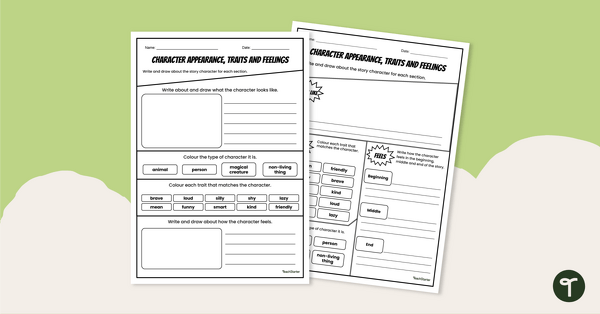
Character Appearance, Traits and Feelings - Worksheet
Explore and describe a character's personality, feelings and appearance with this differentiated worksheet to be used with any text.
- Plus Plan
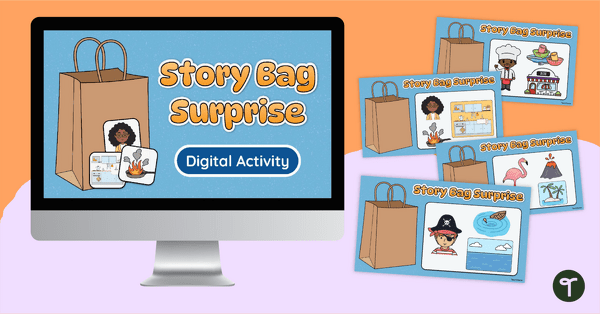
Story Bag Surprise - Story Elements Digital Activity
Introduce and explore different story elements with this story bag surprise digital activity for the whole class to enjoy.
- Plus Plan
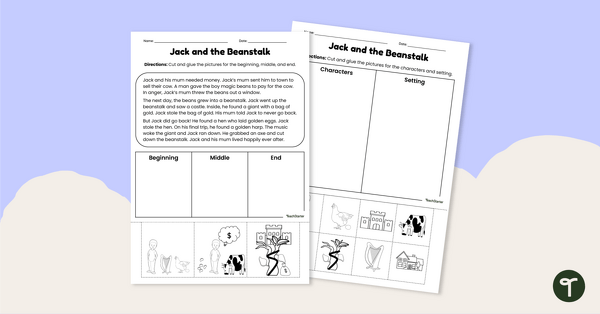
Story Elements Cut and Paste Worksheets – Jack and the Beanstalk
Explore story characters, settings and main events with this set of cut-and-paste worksheets based on a well-known fairy tale.
- Plus Plan
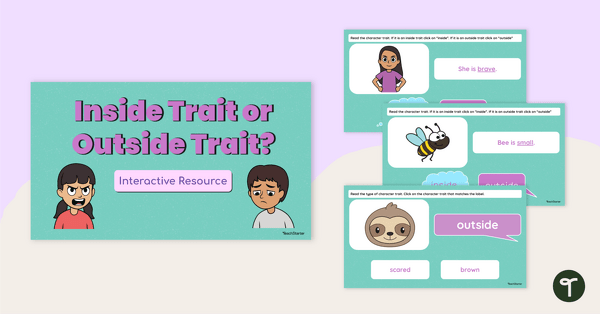
Inside Trait or Outside Trait? Interactive Game
Explore the internal and external traits of story characters with this interactive digital game.
- Plus Plan
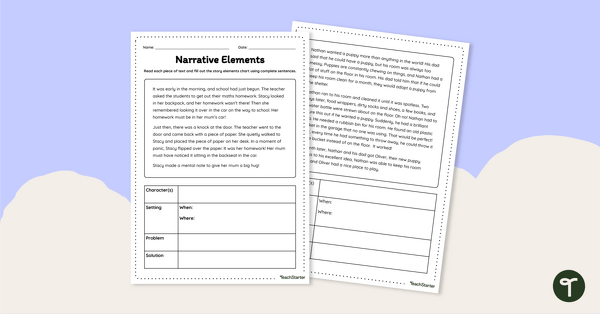
Narrative Elements - Worksheet
Practise identifying characters, settings, problems and solutions in fictional texts with this set of worksheets.
- Plus Plan
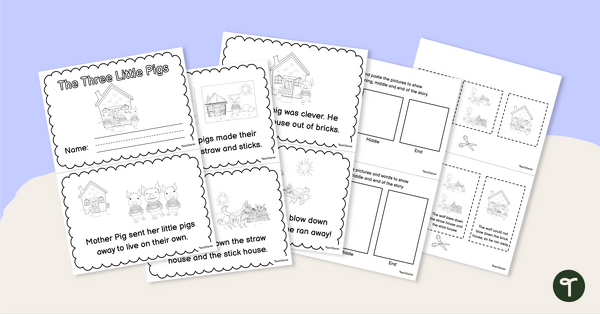
Beginning, Middle and End Mini-Book - The Three Little Pigs
Teach your students about the beginning, middle and end of a story with this mini-book retell of The Three Little Pigs.
- Plus Plan
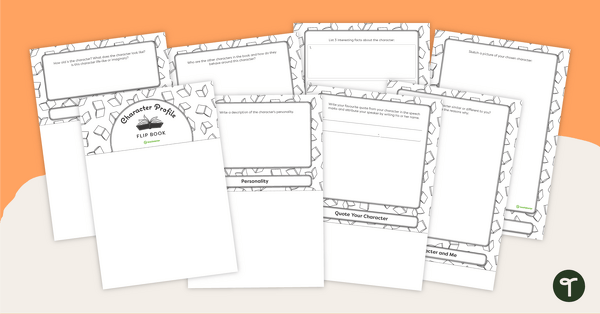
Character Profile Flip Book - Lower Primary
Explore story characters with this flipbook template for lower primary students.
- Plus Plan
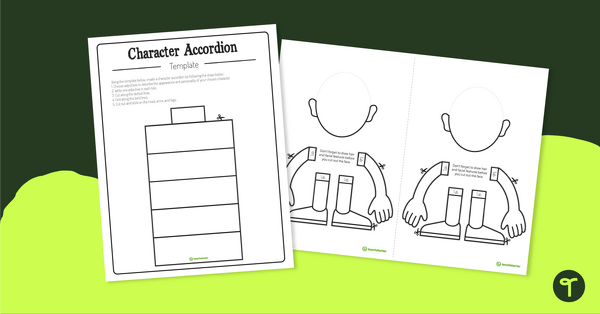
Character Adjective Concertina Template – Blank
Learn how adjectives can be used to describe a character's appearance and personality with a hands-on craft activity aligned to the English curriculum.
- Plus Plan
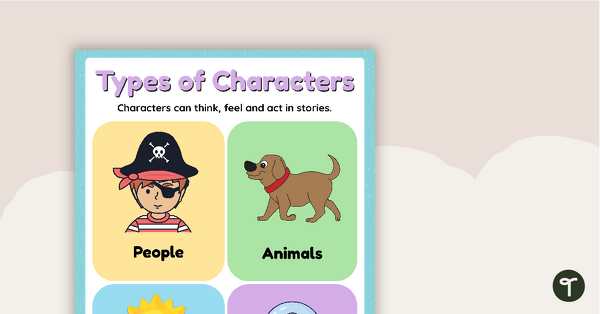
Types of Characters - Poster
Remind students about the types of characters that can be found in stories with this colourful classroom poster.
- Plus Plan
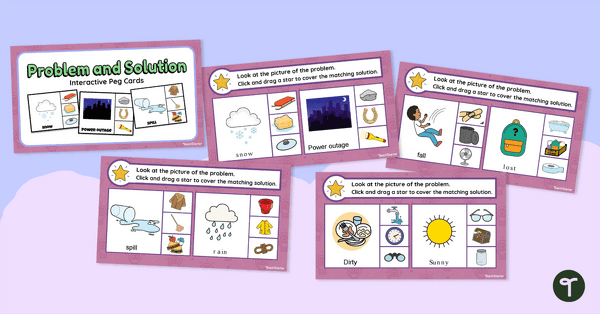
Problem and Solution Interactive Peg Cards
Practise identifying problems and solutions with an interactive peg card activity.
- Plus Plan
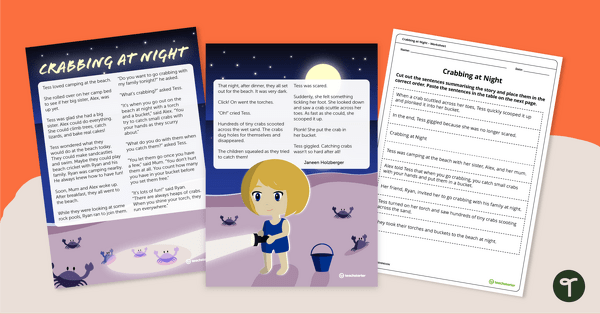
Crabbing at Night - Sequencing Worksheet
Identify the story beginning, series of events and ending with this narrative text sequencing activity.
- Plus Plan
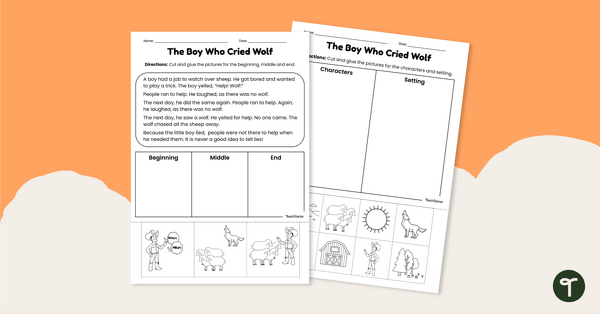
Story Elements Cut and Paste Worksheets – The Boy Who Cried Wolf
Explore story characters, settings and main events with this set of cut-and-paste worksheets based on a well-known fable.
- Plus Plan
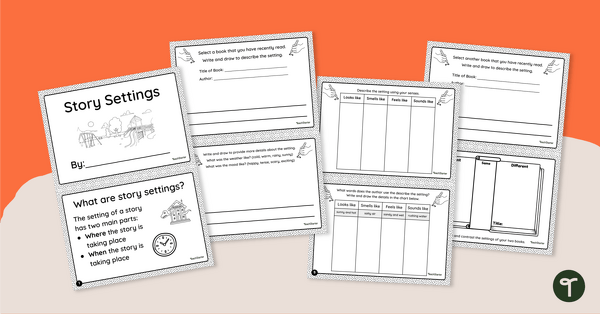
Story Settings Mini Book
Allow your little learners to explore and write about story settings with this fun-sized mini-book.
- Plus Plan
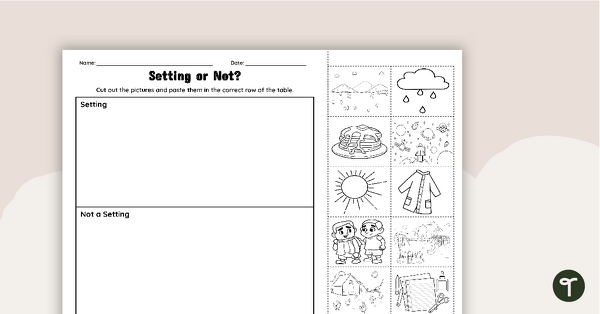
Story Setting or Not? Cut and Paste Worksheet
Explore the difference between story settings and non-settings with this cut-and-paste worksheet.
- Free Plan
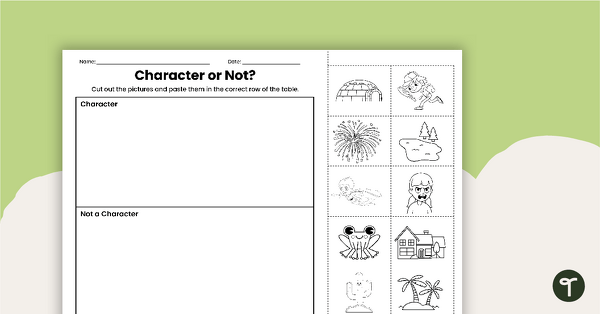
Character or Not? Cut and Paste Worksheet
Explore the difference between characters and non-characters with this cut-and-paste worksheet.