Types of Graphs Teaching Resources
Teach your students the different types of graphs with printable graphing activities, worksheets, games and more data activities created by teachers for teachers like you!
Aligned with both TEKS and the Common Core math curriculum, the printables and digital activities in this collection can help you not just introduce each type of graph but also give your students practice using each one to represent and analyze data.
Whether it's your first year covering the various types of graphs in your math classes, or you're just looking for some handy tips and tricks, the Teach Starter teacher team has you covered. Read on for a primer that covers some of the main graph types plus a handy way to explain what a graph is to your students.
What Is a Graph? A Kid-Friendly Definition
Before you can start discussing the various graph types, it helps to explain what a graph is in math. That's where our definition could come in handy!
A graph is a visual way to show data. Graphs help make information easier to understand and analyze.
What Are the Different Types of Graphs?
There is a long list of different types of graphs that mathematicians use to represent numbers and other forms of data. So, which graph types do your students need to know about right now?
Let's take a look at the more common graphing types we use in elementary and middle school math classes:
1. Bar Graphs
A bar graph is a type of graph that uses rectangular shapes called bars to represent quantities or values of data. Bars on a bar graph will be different heights or different lengths to represent the quantity or value.
This makes it easy to compare the values.
2. Line Graphs
A line graph uses points that are connected by lines to show the relationship between two sets of data.
Line graphs are helpful when we want to see changes in data sets over a period of time.

3. Pictographs
The "picto" in pictographs refers to pictures, which are used in this graph type to represent data.
4. Pie Charts
Did you know that a graph is a kind of chart? Although pie charts may not be called "pie graphs," these circles divided by lines to resemble slices of pie are most definitely a type of graph.
Pie charts can be used to represent parts of a whole or categories of a whole, and they help us understand the proportion or percentage of each category.
- Plus Plan
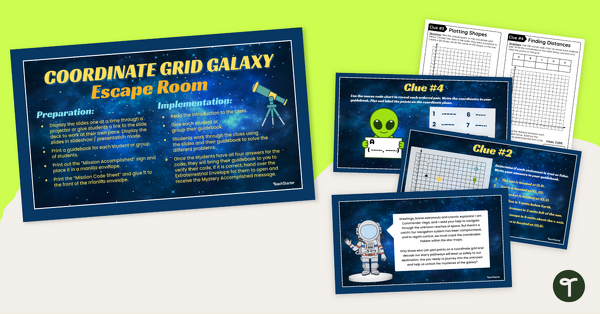
Coordinate Plane Escape Room
Play this engaging coordinate plane escape room with your students to help them refine their coordinate grid skills.
- Plus Plan
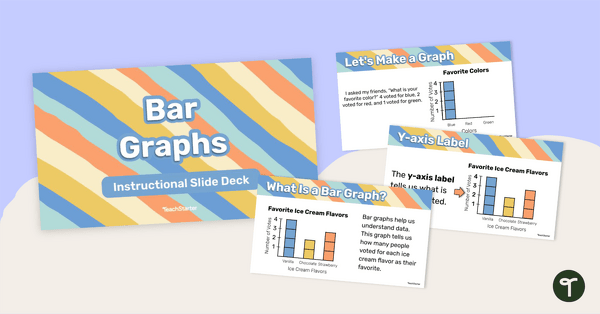
Bar Graphs – Instructional Slide Deck
Learn about the features and how to create a bar graph with this 25-page instructional slide deck.
- Plus Plan
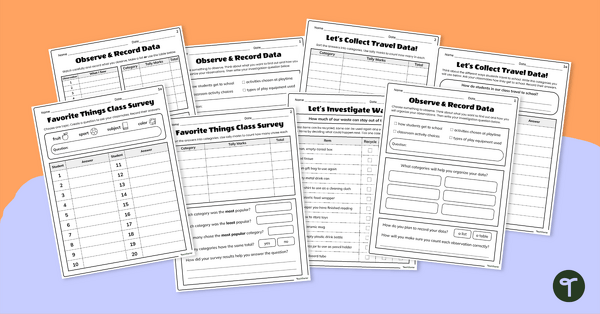
First Grade Data and Graphing Worksheets
Help students develop essential data skills with this engaging worksheet pack focused on collecting, organizing, and making sense of information through hands-on investigations.
- Plus Plan
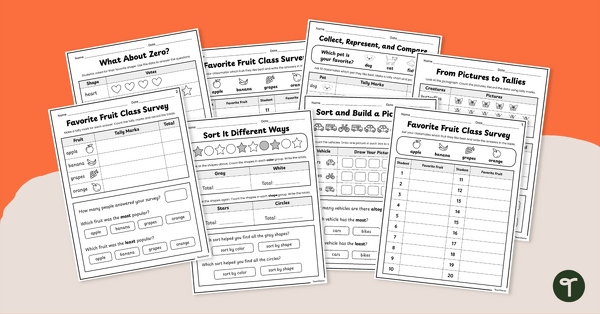
Collecting and Organizing Data Worksheet Pack
Help students build essential math skills with this engaging collecting and organizing data worksheet pack.
- Free Plan
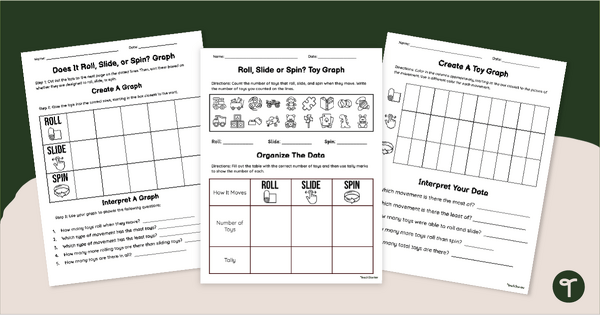
How Does It Move? Toy Graphing Worksheets
Explore motion and mathematics with engaging Toy Graphing Worksheets.
- Plus Plan
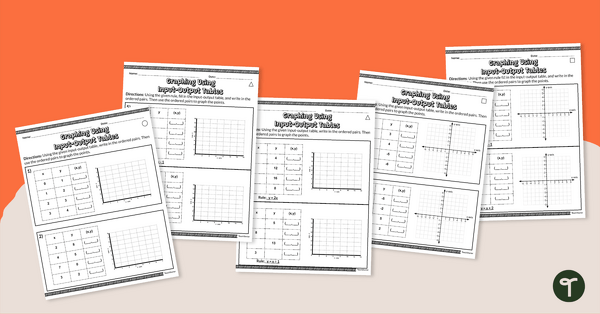
Graphing Using Input-Output Tables – Differentiated Worksheets
Use data from input-output tables to graph points with this set of differentiated worksheets.
- Free Plan
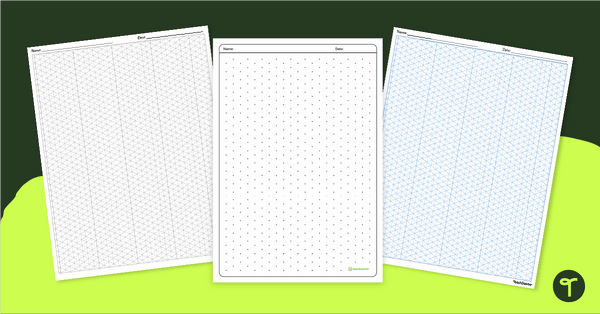
Isometric Paper Templates - Dotted/Lined
Isometric Paper - Dotted Paper Printable
- Plus Plan
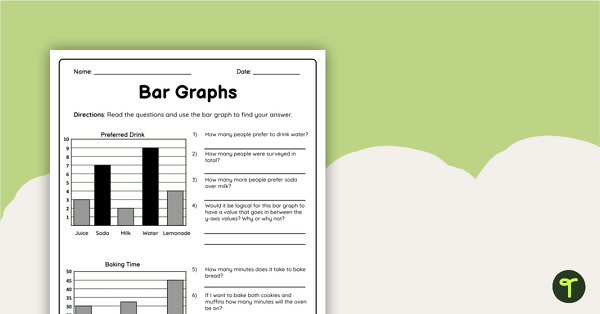
Bar Graphs Worksheet
Use this double-sided bar graphs worksheet to check your students’ understanding of interpreting and drawing bar graphs.
- Plus Plan
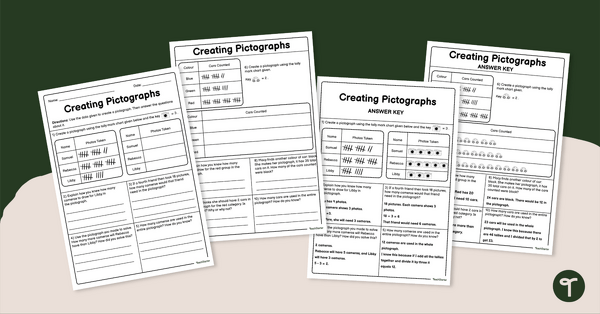
Creating Pictographs Worksheet
Use this engaging worksheet to practice creating and reading pictographs.
- Plus Plan
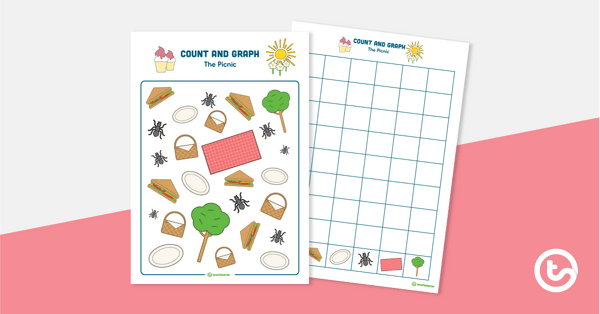
Count and Graph – The Picnic
Practice collecting, sorting, and organizing data to create a graph with this 2-page worksheet.
- Plus Plan
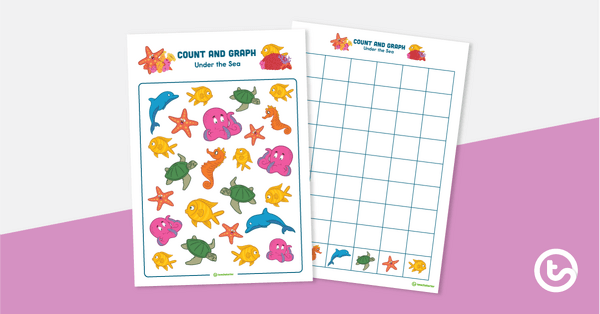
Count and Graph – Under the Sea
Practice collecting, sorting, and organizing data to create a graph with this 2-page worksheet.
- Plus Plan
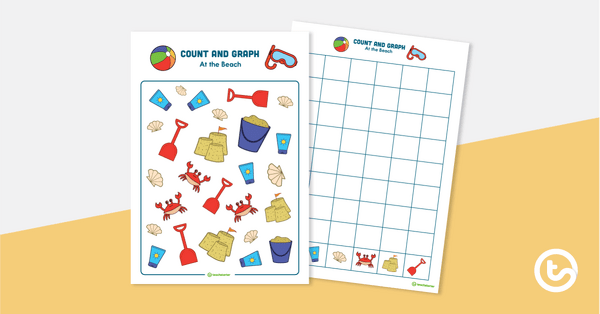
Count and Graph – At the Beach
Practice collecting, sorting, and organizing data to create a graph with this 2-page worksheet.
- Plus Plan
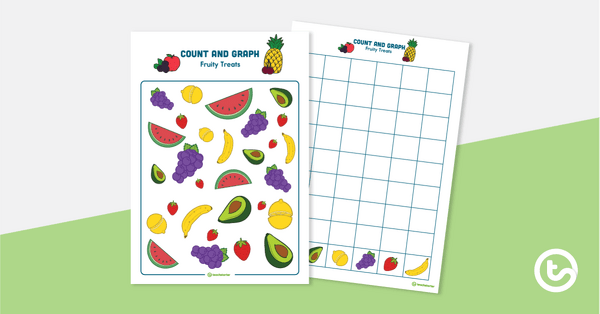
Count and Graph – Fruity Treats
Practice collecting, sorting, and organizing data to create a graph with this 2-page worksheet.
- Plus Plan
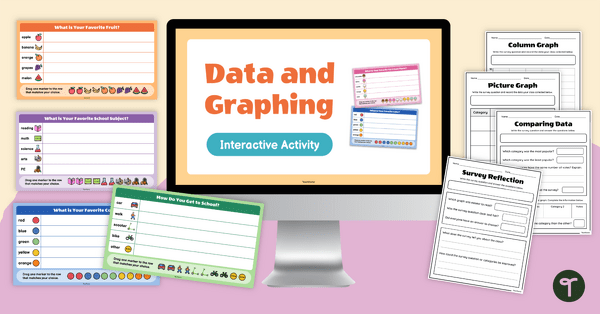
Collecting Data and Graphing Interactive Slides with Graphing Worksheets
Make graphing and data analysis engaging with this interactive resource designed to help second-grade students collect information, create graphs, and explore data through hands-on and digital activities.
- Plus Plan
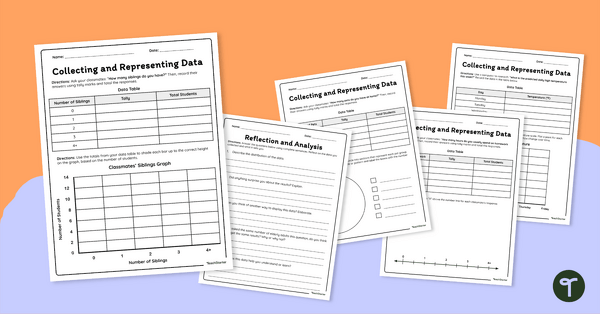
Collecting and Representing Data Worksheet Set
Download our collecting and representing data worksheet set to get your students collecting, organizing, and displaying data.
- Plus Plan
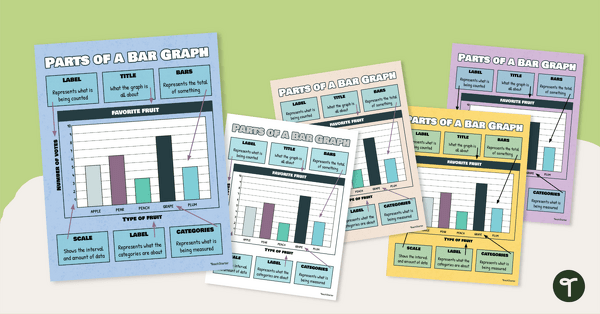
Bar Graph Anchor Chart
Hang this bar graph anchor chart in your classroom to teach your students about the different parts of this commonly used graph.
- Plus Plan
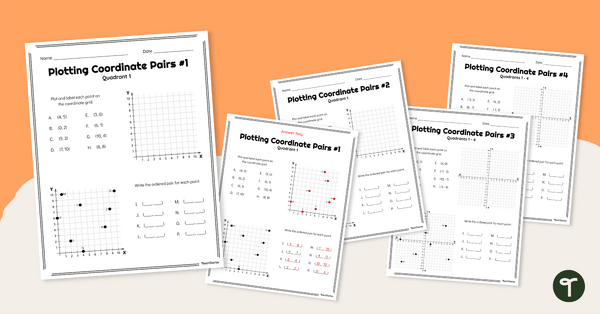
Plotting Points on a Coordinate Plane Worksheet Set
Utilize our Plotting Points on a Coordinate Plane Worksheet Set to give your students practice locating and plotting points on a coordinate grid.
- Free Plan
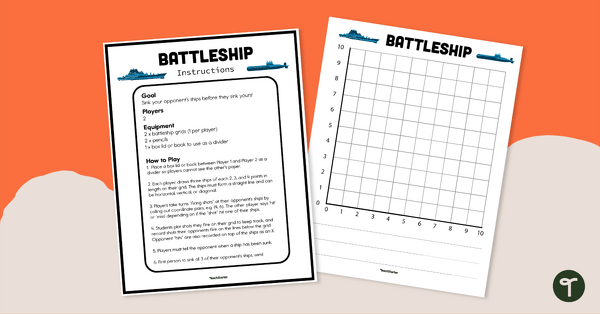
Battleship Coordinate Plane Game
Use this coordinate plane game to practice plotting ordered pairs on the coordinate grid.
- Plus Plan
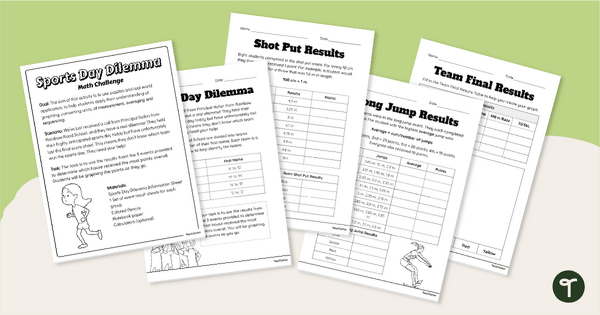
Sports Day Dilemma - Metric Conversions Math Task
Engage students with a real-world application of measurement conversions with Sports Day Dilemma, a metric conversion math task!
- Free Plan
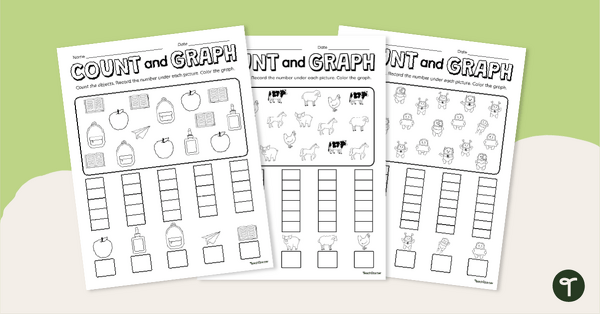
Count and Graph Worksheet Pack
Explore counting and graphing skills with this set of three worksheets.
- Plus Plan
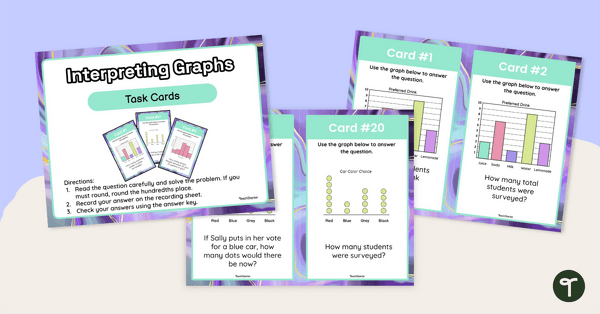
Interpreting Graphs Task Cards
Use this set of task cards students to practice interpreting bar graphs, histograms and line plots.
- Plus Plan
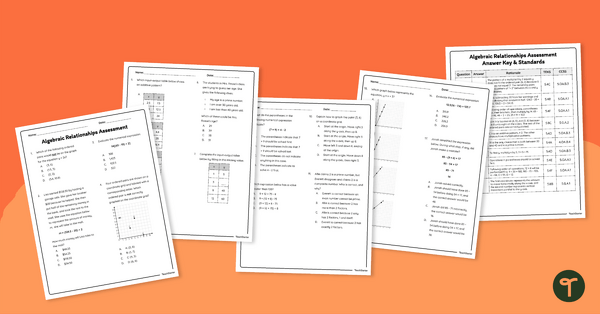
5th Grade Algebraic Relationships Assessment
Assess student understanding of prime and composite numbers, numerical expressions, graphing numerical patterns, and more with this math assessment.
- Plus Plan
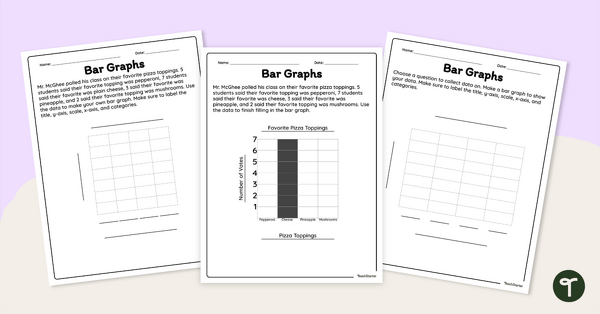
Creating a Bar Graph – Worksheet
Interpret data and create bar graphs with this worksheet.
- Plus Plan
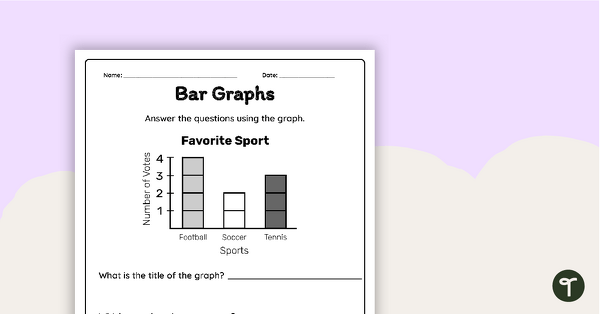
Interpreting a Bar Graph – Worksheet
Interpret information from a bar graph and answer questions with this worksheet.
- Plus Plan
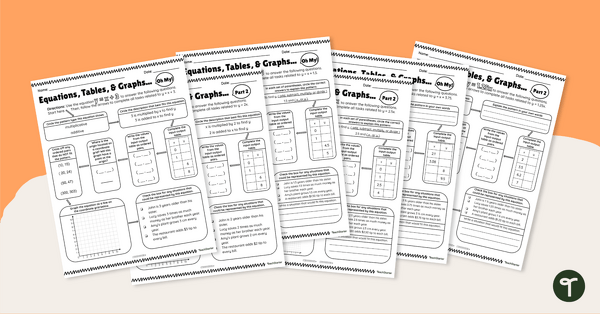
Equations, Tables, and Graphs, Oh My! – Differentiated Worksheets
Use these differentiated worksheets to practice using equations to create patterns within input-output tables and graphs.
- Plus Plan
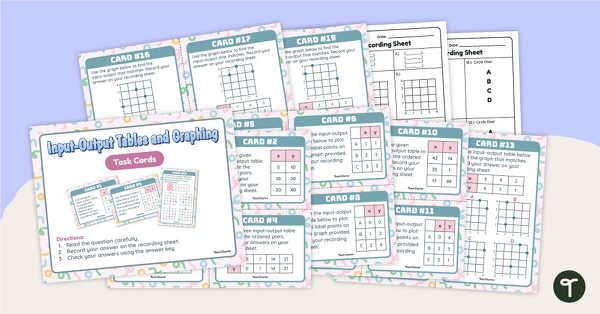
Input-Output Tables and Graphing Task Cards
Practice reading input-output tables and plotting points in the first quadrant with this set of task cards.
- Plus Plan
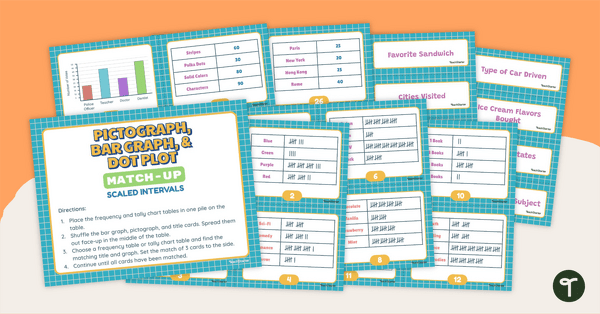
Pictograph, Bar Graph, & Dot Plot Match-Up (Scaled Intervals)
Use data analysis skills to match tally charts and frequency tables with their corresponding bar graph, pictograph, or dot plot.
- Plus Plan
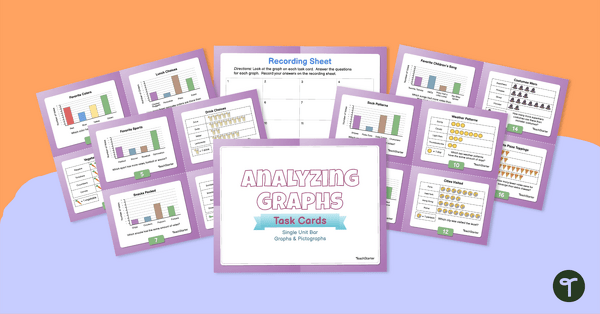
Analyzing Graphs – Single-Unit Bar Graphs & Pictographs – Task Cards
Use data analysis skills to analyze bar graphs and pictographs with this set of task cards.
- Plus Plan
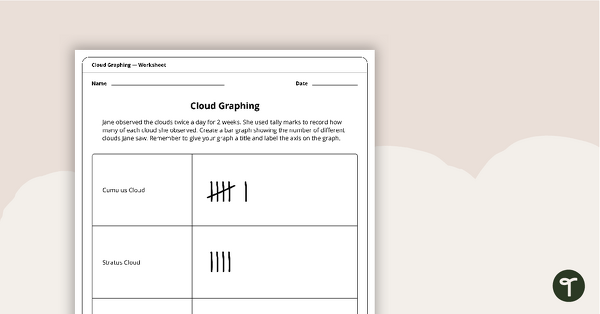
Cloud Graphing Activity
A worksheet to use when graphing cloud observations.
- Free Plan
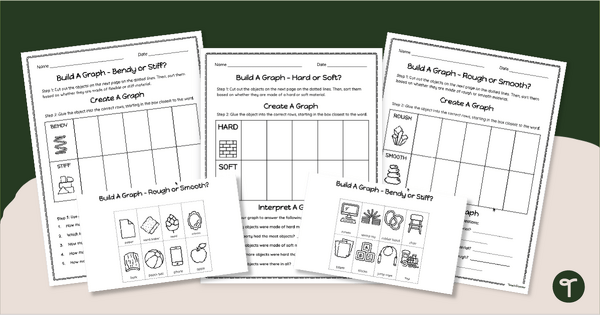
Properties of Materials - Graphing Worksheets
Explore materials and mathematics with engaging Properties of Materials Graphing Worksheets.
- Plus Plan
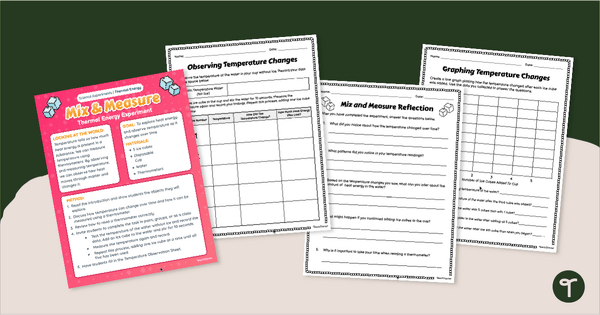
Mix & Measure Temperature Experiment
Explore temperature changes and practice reading a thermometer with our Mix and Measure Temperature Experiment.
- Plus Plan
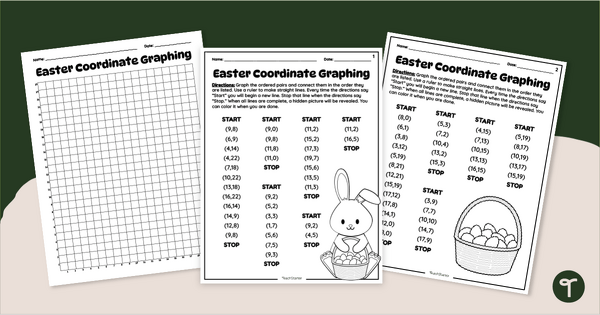
Easter Coordinate Graphing Worksheets
Hop into your study of ordered pairs with Easter Coordinate Graphing Worksheets.