ELAR 1.2
Developing and sustaining foundational language skills: listening, speaking, reading, writing, and thinking--beginning reading and writing. The student develops word structure knowledge through phonological awareness, print concepts, phonics, and morphology to communicate, decode, and spell. The student is expected to:
- (1) demonstrate phonological awareness by:
- (A) producing a series of rhyming words;
- (i) recognizing spoken alliteration or groups of words that begin with the same spoken onset or initial sound;
- (ii) distinguishing between long and short vowel sounds in one-syllable words;
- (iii) recognizing the change in spoken word when a specified phoneme is added, changed, or removed;
- (iv) blending spoken phonemes to form one-syllable words, including initial and/or final consonant blends;
- (v) manipulating phonemes within base words; and
- (vi) segmenting spoken one-syllable words of three to five phonemes into individual phonemes, including words with initial and/or final consonant blends;
- (vii) demonstrate and apply phonetic knowledge by:
- (B) decoding words in isolation and in context by applying
common letter sound correspondences;
- (i) decoding words with initial and final consonant blends, digraphs, and trigraphs;
- (ii) decoding words with closed syllables; open syllables; VCe syllables; vowel teams, including vowel digraphs and diphthongs; and r-controlled syllables;
- (iii) using knowledge of base words to decode common compound words and contractions;
- (iv) decoding words with inflectional endings, including -ed, -s, and -es; and
- (v) identifying and reading at least 100 high-frequency words from a research-based list;
- (vi) demonstrate and apply spelling knowledge by:
- (C) spelling words with closed syllables, open syllables,
VCe syllables, vowel teams, and r-controlled syllables;
- (i) spelling words with initial and final consonant blends, digraphs, and trigraphs;
- (ii) spelling words using sound-spelling patterns; and
- (iii) spelling high-frequency words from a research-based list;
- (iv) demonstrate print awareness by identifying the information that different parts of a book provide;
- (D) alphabetize a series of words to the first or second letter and use a dictionary to find words; and
- (E) develop handwriting by printing words, sentences, and answers legibly leaving appropriate spaces between words.
- (A) producing a series of rhyming words;
- Plus Plan
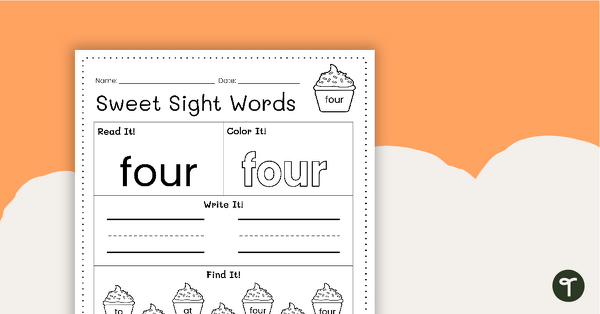
Sweet Sight Words Worksheet - FOUR
Practice reading, writing, and identifying the high-frequency word “four” from the Kindergarten-level Dolch sight words list.
- Plus Plan
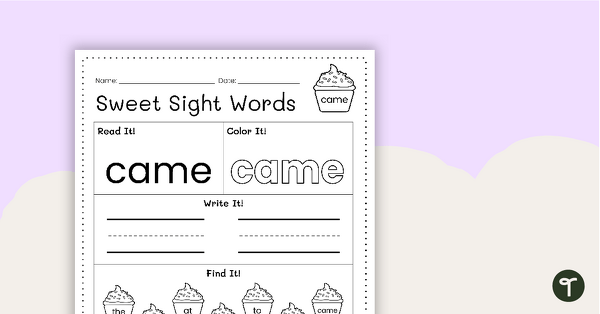
Sweet Sight Words Worksheet - CAME
Practice reading, writing, and identifying the high-frequency word “came” from the Kindergarten-level Dolch sight words list.
- Plus Plan
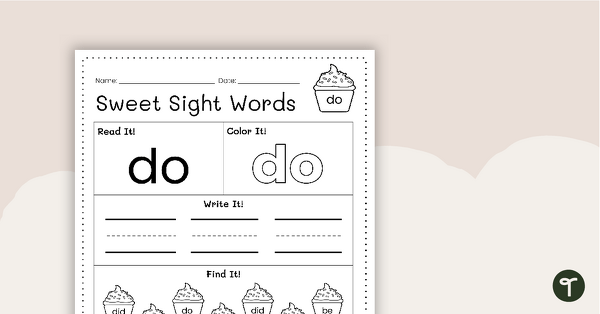
Sweet Sight Words Worksheet - DO
Practice reading, writing, and identifying the high-frequency word “do” from the Kindergarten-level Dolch sight words list.
- Plus Plan
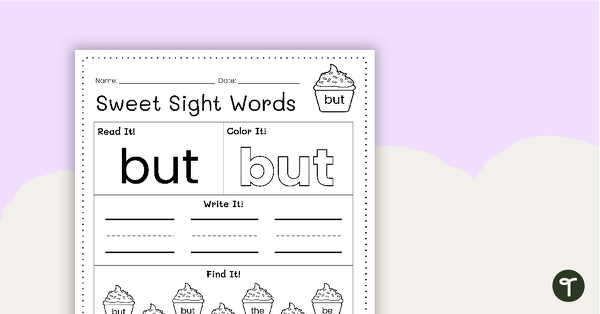
Sweet Sight Words Worksheet - BUT
Practice reading, writing, and identifying the high-frequency word “but” from the Kindergarten-level Dolch sight words list.
- Plus Plan
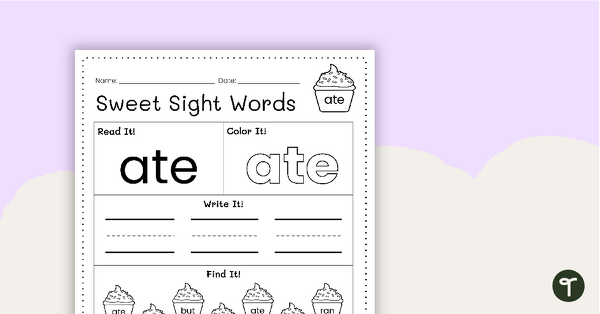
Sweet Sight Words Worksheet - ATE
Practice reading, writing, and identifying the high-frequency word “ate” from the Kindergarten-level Dolch sight words list.
- Plus Plan
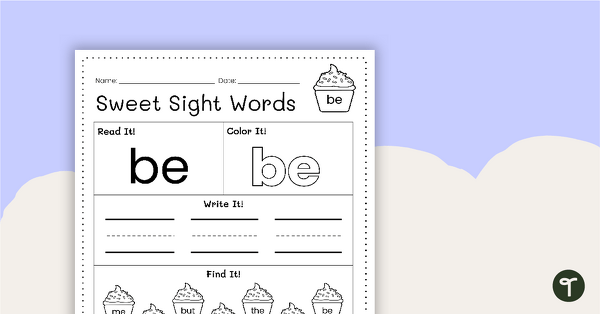
Sweet Sight Words Worksheet - BE
Practice reading, writing, and identifying the high-frequency word “be” from the Kindergarten-level Dolch sight words list.
- Plus Plan
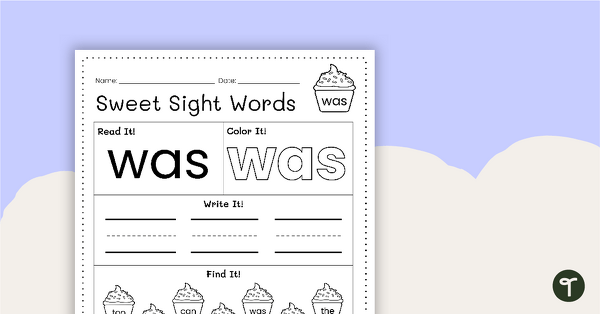
Sweet Sight Words Worksheet - WAS
Practice reading, writing, and identifying the high-frequency word “was” from the Kindergarten-level Dolch sight words list.
- Plus Plan
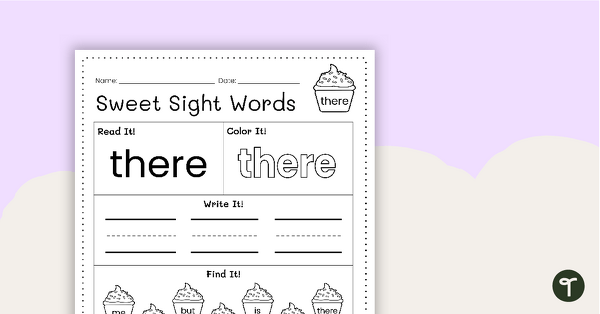
Sweet Sight Words Worksheet - THERE
Practice reading, writing, and identifying the high-frequency word “there” from the Kindergarten-level Dolch sight words list.
- Plus Plan
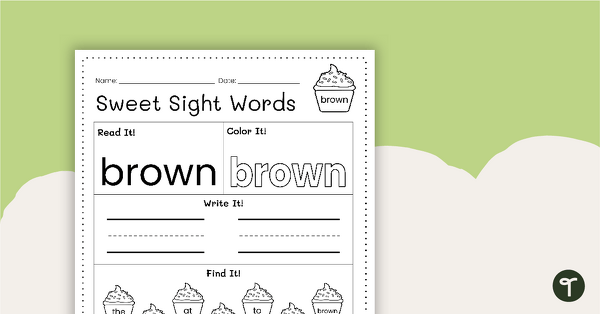
Sweet Sight Words Worksheet - BROWN
Practice reading, writing, and identifying the high-frequency word “brown” from the Kindergarten-level Dolch sight words list.
- Plus Plan
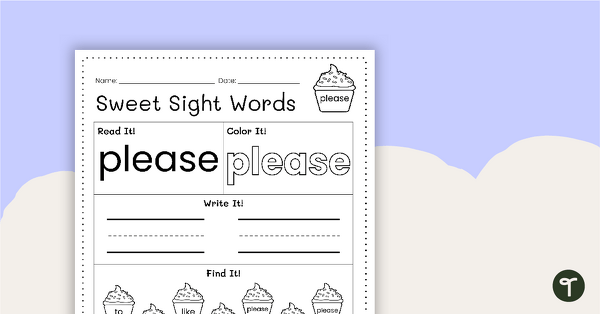
Sweet Sight Words Worksheet - PLEASE
Practice reading, writing, and identifying the high-frequency word “please” from the Kindergarten-level Dolch sight words list
- Plus Plan

Sweet Sight Words Worksheet - BLACK
Practice reading, writing, and identifying the high-frequency word “black” from the Kindergarten-level Dolch sight words list.
- Plus Plan
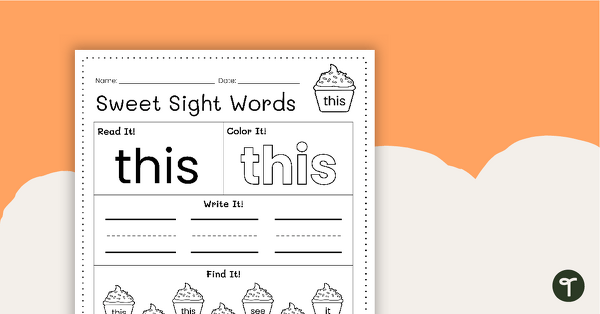
Sweet Sight Words Worksheet - THIS
Practice reading, writing, and identifying the high-frequency word “this” from the Kindergarten-level Dolch sight words list.
- Plus Plan

Sweet Sight Words Worksheet - OUR
Practice reading, writing, and identifying the high-frequency word “our” from the Kindergarten-level Dolch sight words list.
- Plus Plan
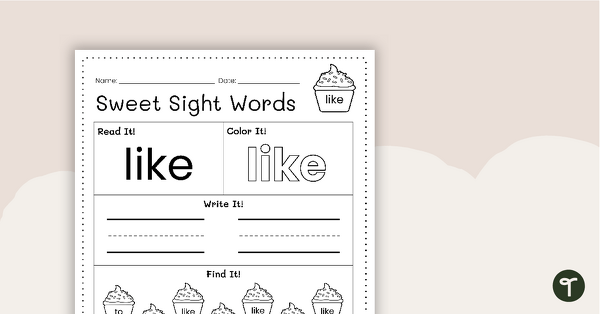
Sweet Sight Words Worksheet - LIKE
Practice reading, writing, and identifying the high-frequency word “like” from the Kindergarten-level Dolch sight words list.
- Plus Plan
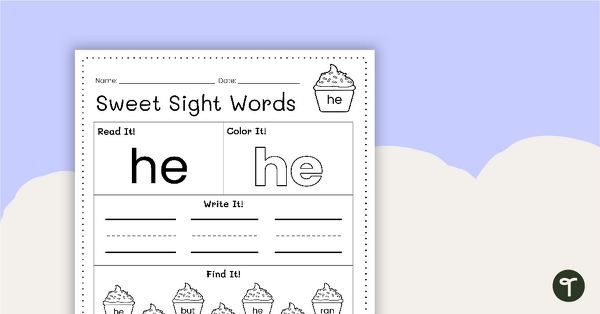
Sweet Sight Words Worksheet - HE
Practice reading, writing, and identifying the high-frequency word “he” from the Kindergarten-level Dolch sight words list.
- Plus Plan
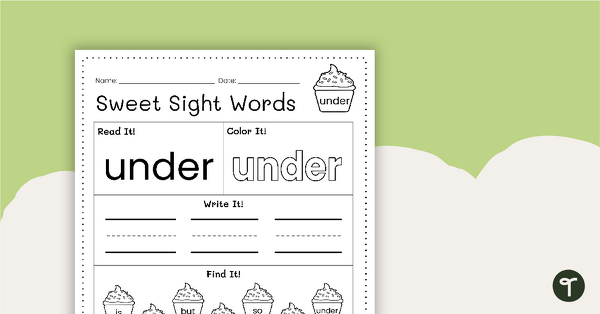
Sweet Sight Words Worksheet - UNDER
Practice reading, writing, and identifying the high-frequency word “under” from the Kindergarten-level Dolch sight words list.
- Plus Plan
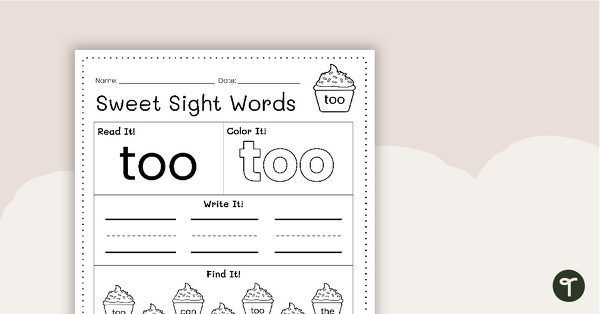
Sweet Sight Words Worksheet - TOO
Practice reading, writing, and identifying the high-frequency word “too” from the Kindergarten-level Dolch sight words list.
- Plus Plan
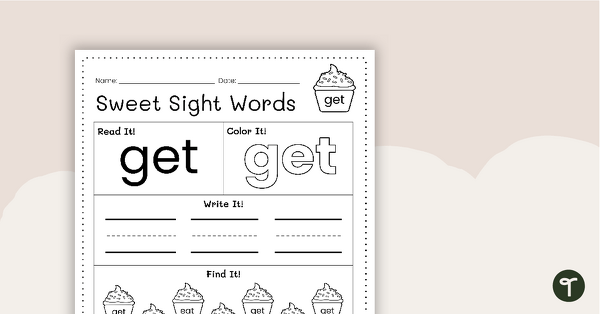
Sweet Sight Words Worksheet - GET
Practice reading, writing, and identifying the high-frequency word “get” from the Kindergarten-level Dolch sight words list.
- Plus Plan
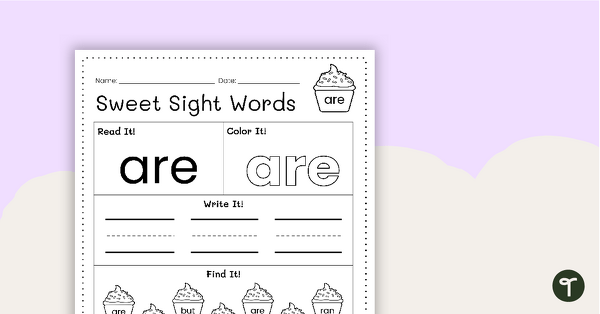
Sweet Sight Words Worksheet - ARE
Practice reading, writing, and identifying the high-frequency word “are” from the Kindergarten-level Dolch sight words list.
- Plus Plan
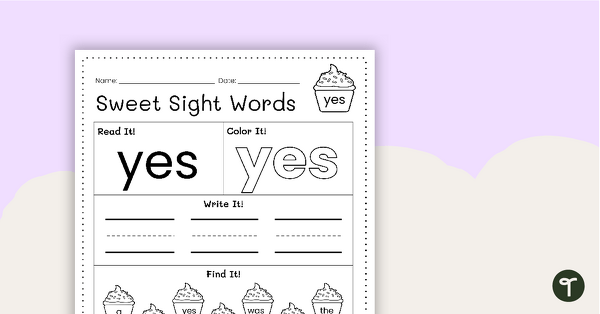
Sweet Sight Words Worksheet - YES
Practice reading, writing, and identifying the high-frequency word “yes” from the Kindergarten-level Dolch sight words list.
- Plus Plan

Sweet Sight Words Worksheet - WITH
Practice reading, writing, and identifying the high-frequency word “with” from the Kindergarten-level Dolch sight words list.
- Plus Plan
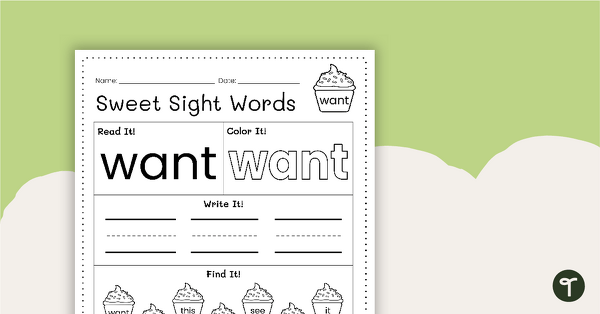
Sweet Sight Words Worksheet - WANT
Practice reading, writing, and identifying the high-frequency word “want” from the Kindergarten-level Dolch sight words list.
- Plus Plan

Sweet Sight Words Worksheet - MUST
Practice reading, writing, and identifying the high-frequency word “must” from the Kindergarten-level Dolch sight words list.
- Plus Plan
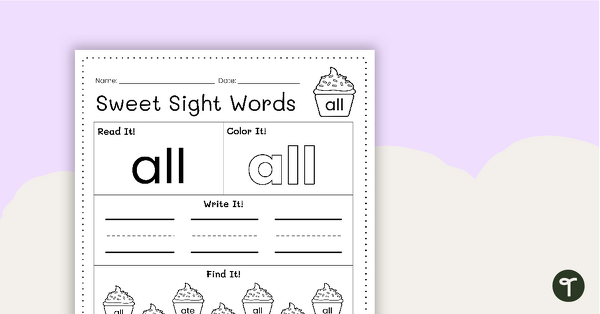
Sweet Sight Words Worksheet - ALL
Practice reading, writing, and identifying the high-frequency word “all” from the Kindergarten-level Dolch sight words list.
- Plus Plan

Sweet Sight Words Worksheet - WENT
Practice reading, writing, and identifying the high-frequency word “went” from the Kindergarten-level Dolch sight words list.
- Plus Plan
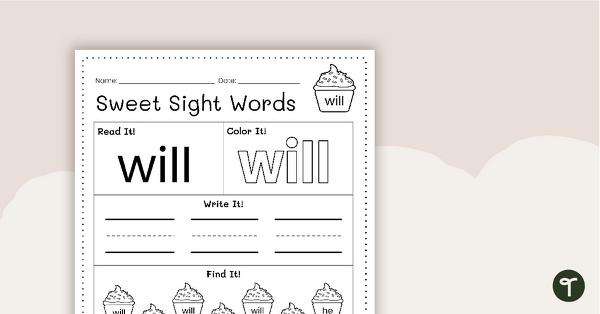
Sweet Sight Words Worksheet - WILL
Practice reading, writing, and identifying the high-frequency word “will” from the Kindergarten-level Dolch sight words list.
- Plus Plan
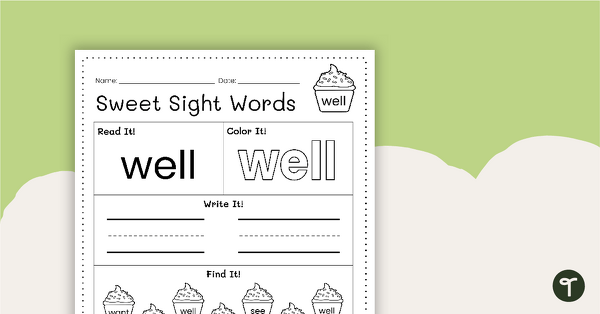
Sweet Sight Words Worksheet - WELL
Practice reading, writing, and identifying the high-frequency word “well” from the Kindergarten-level Dolch sight words list.
- Plus Plan
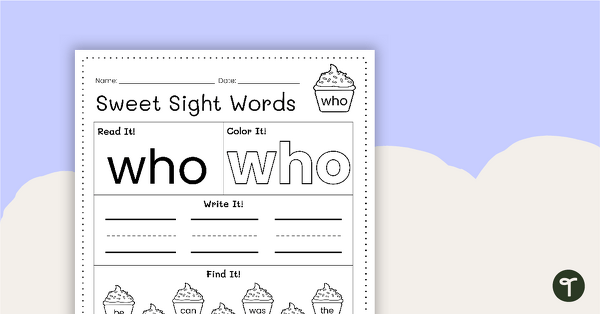
Sweet Sight Words Worksheet - WHO
Practice reading, writing, and identifying the high-frequency word “who” from the Kindergarten-level Dolch sight words list.
- Plus Plan
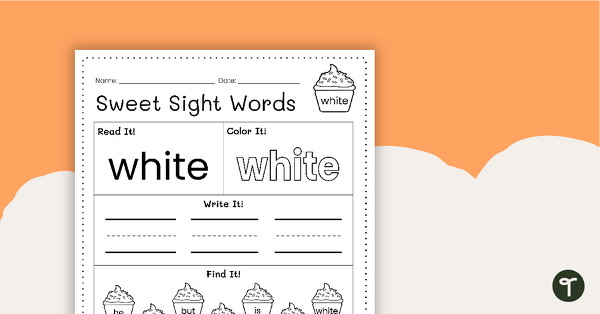
Sweet Sight Words Worksheet - WHITE
Practice reading, writing, and identifying the high-frequency word “white” from the Kindergarten-level Dolch sight words list.
- Plus Plan
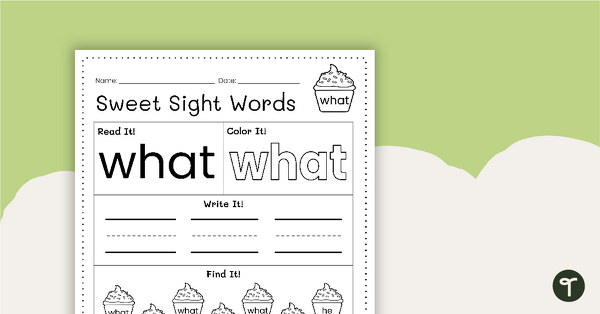
Sweet Sight Words Worksheet - What
Practice reading, writing, and identifying the high-frequency word “what” from the Kindergarten-level Dolch sight words list.
- Plus Plan

Word Building Picture Reveal PowerPoint
An interactive PowerPoint to practice decoding words using onset and rime.
- Plus Plan
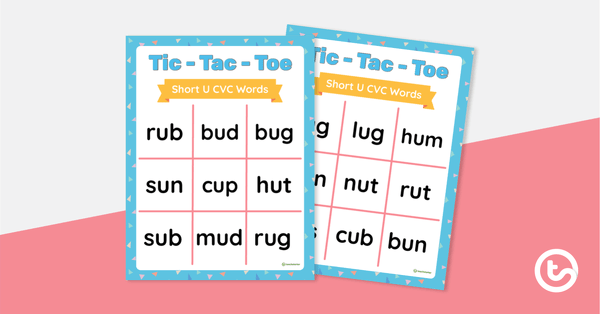
Tic-Tac-Toe Game: Short U CVC Words
Practice reading short /u/ CVC words with this set of 6 tic-tac-toe games.