ELAR 5.10
Author's purpose and craft: listening, speaking, reading, writing, and thinking using multiple texts. The student uses critical inquiry to analyze the authors' choices and how they influence and communicate meaning within a variety of texts. The student analyzes and applies author's craft purposefully in order to develop his or her own products and performances. The student is expected to:
- (1) explain the author's purpose and message within a
text;
- (A) analyze how the use of text structure contributes to the author's purpose;
- (B) analyze the author's use of print and graphic features to achieve specific purposes;
- (C) describe how the author's use of imagery, literal and figurative language such as simile and metaphor, and sound devices achieves specific purposes;
- (D) identify and understand the use of literary devices, including first- or third-person point of view;
- (E) examine how the author's use of language contributes to voice; and
- (F) explain the purpose of hyperbole, stereotyping, and anecdote.
- Plus Plan
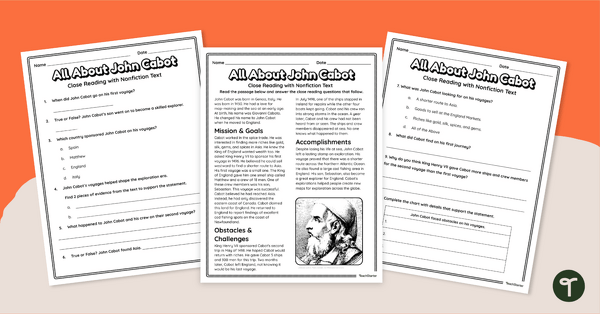
John Cabot Reading Passage - Comprehension
Discover famous explorers like John Cabot with printable reading comprehension activities.
- Plus Plan
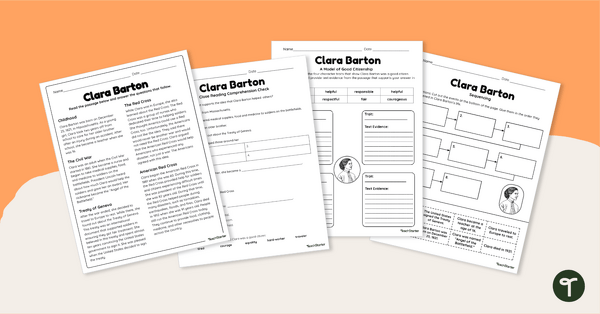
Clara Barton Passage and Comprehension Worksheets
Uncover facts about Clara Barton with a reading passage and worksheet pack to practice comprehension, character analysis, and sequencing.
- Plus Plan
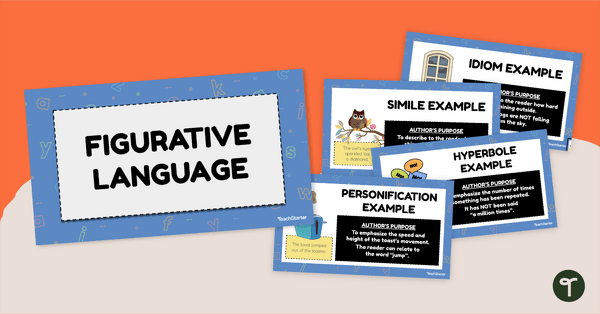
Figurative Language PowerPoint
Download this figurative language PowerPoint to teach your students how authors use figurative language to create meaning and engage readers.
- Plus Plan
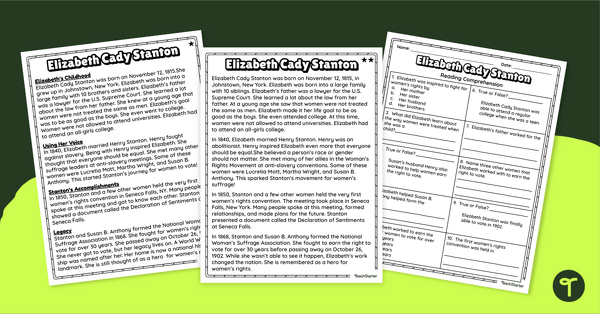
Elizabeth Cady Stanton - Differentiated Comprehension Worksheets
Learn fun facts about Elizabeth Cady Stanton with a differentiated comprehension passage and assessment.
- Plus Plan
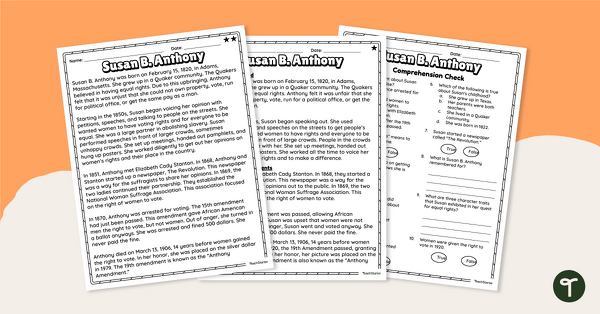
Susan B. Anthony Worksheet Pack - Comprehension
Learn fun facts about Susan B. Anthony with a differentiated Susan B. Anthony Worksheet Pack.
- Plus Plan
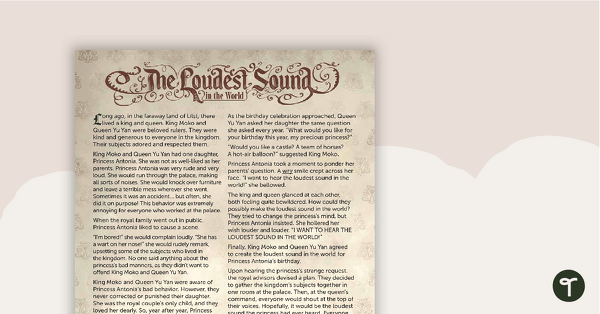
Write a Short Story – The Tale of Transformation
Get your students analyzing and writing a story with a lesson with this engaging and fully scaffolded writing project booklet.
- Plus Plan
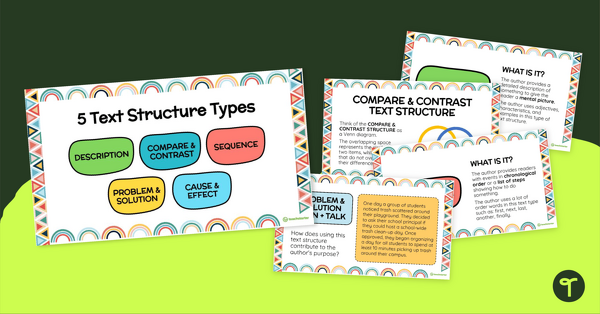
Text Structures Slide Deck
An editable text structure instructional slide deck to use when teaching text structures to your students.
- Plus Plan
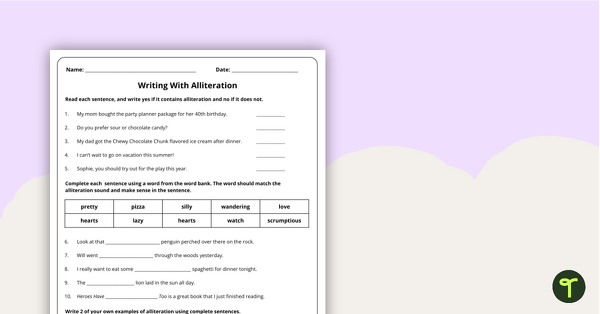
Writing With Alliteration Worksheet
Identify and create alliteration patterns in texts.
- Plus Plan
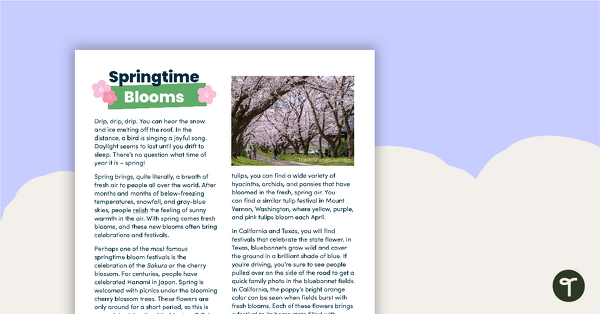
Springtime Blooms – Comprehension Task
An article about springtime blooms and festivals paired with a comprehension task.
- Plus Plan
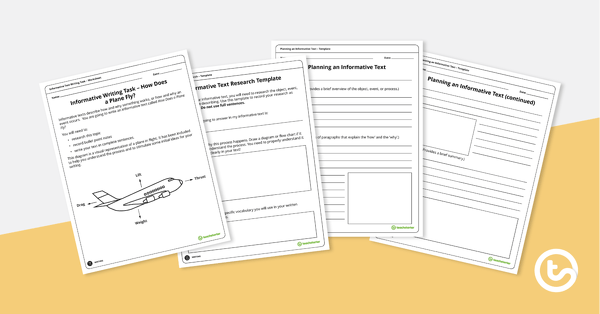
Expository Writing Project – Methods of Transport
Get your students producing high-quality expository writing with this fully scaffolded project, where students research, organize and publish an expository text about a method of transport.
- Plus Plan
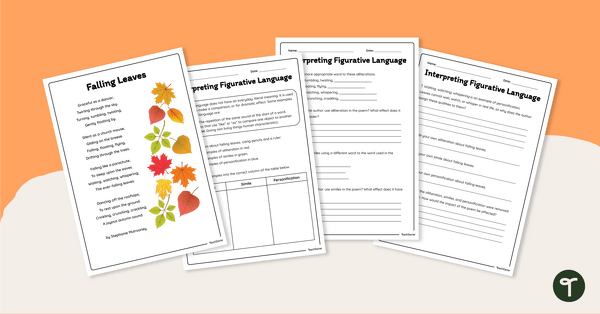
Interpreting Figurative Language - Worksheets
Explore figurative language in poetry with this age-appropriate poem and accompanying vocabulary questions.
- Plus Plan
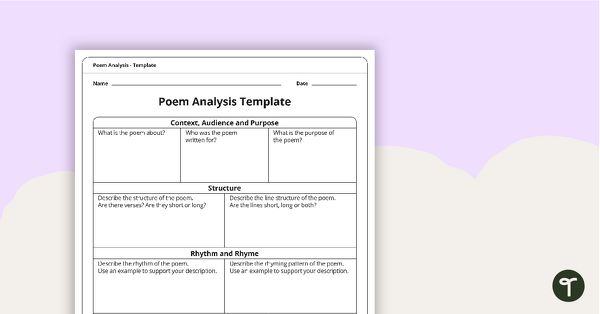
Poetry Analysis Template
A template for students to use when analyzing a poem.
- Plus Plan
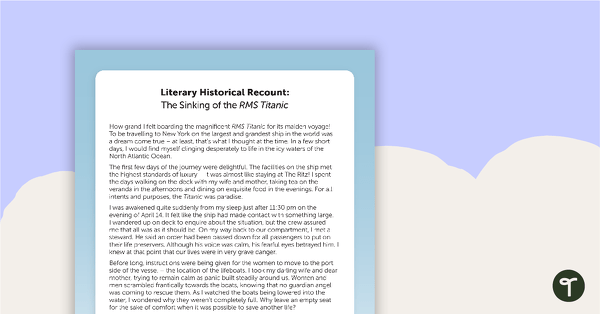
Historical Nonfiction Examples – Comparison Task
Explore historical nonfiction examples through a detailed comparison of two accounts of the RMS Titanic disaster, helping students analyze how historical events can be represented in different ways in texts.
- Plus Plan
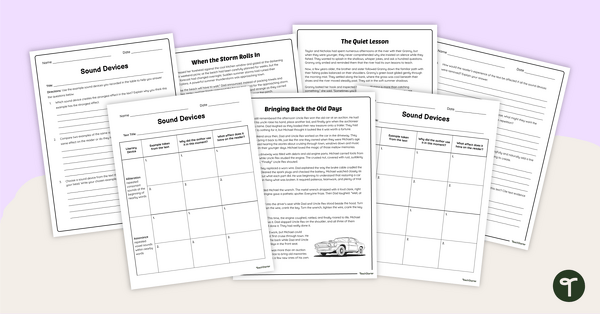
Analyzing Sound Devices in Literature Worksheets
Teach sound devices in literature with three engaging passages and accompanying worksheets that help students identify, analyze and explain the effect of key sound devices in meaningful reading contexts.
- Plus Plan
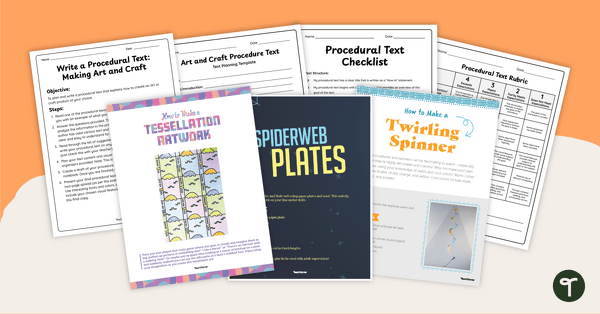
Making Art and Craft – Procedure Writing Project
Get your students to create a high-quality procedural text that teaches others how to make an art or craft creation using this fully scaffolded writing project booklet.
- Plus Plan
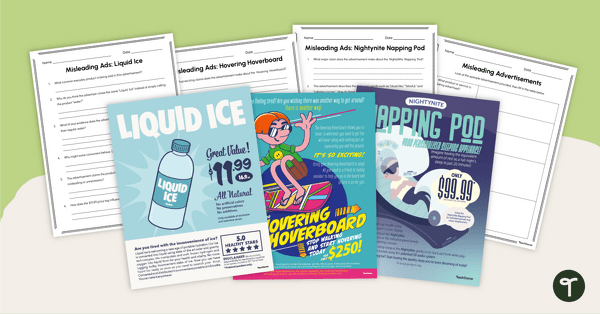
Deceptive Advertising Examples and Analysis Worksheets
Download these deceptive advertising examples and accompanying worksheets to help your students identify deceptive techniques, analyze persuasive language, and become more informed consumers.
- Plus Plan
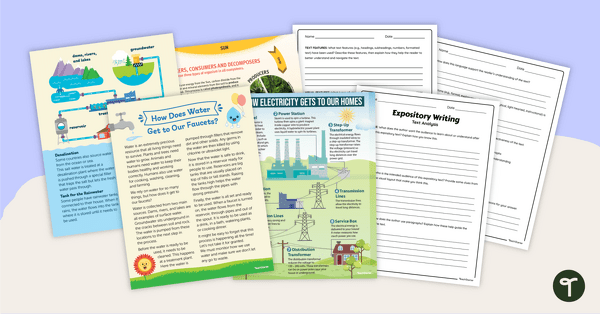
Expository Text Examples and Analysis Worksheets
Use these expository text examples with accompanying analysis worksheets to teach your students about the purpose, structure and language features of expository writing.
- Plus Plan
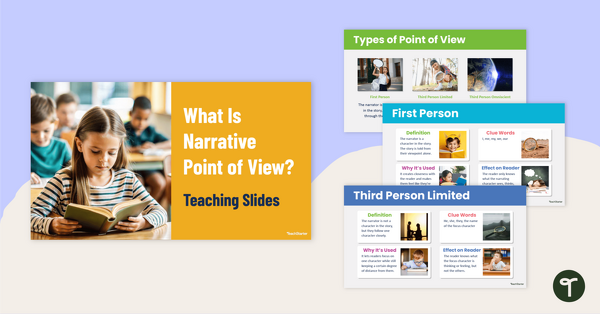
What Is Narrative Voice? Teaching Slides
Answer the question “What is narrative voice?” with this engaging slide deck that helps students understand first person, third person limited and third person omniscient narration.
- Plus Plan
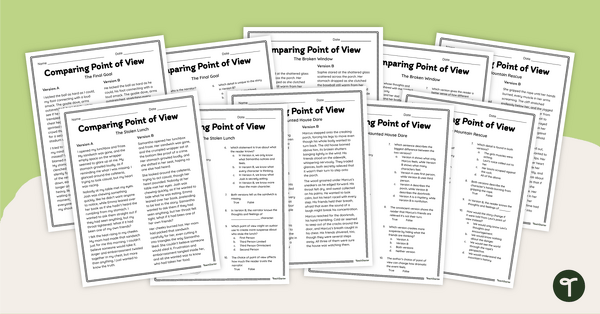
Comparing Narrator’s Voice Worksheets
Teach how narrator’s voice shapes the reader's experience of texts with this set of worksheets where students compare passages written from different points of view.
- Plus Plan
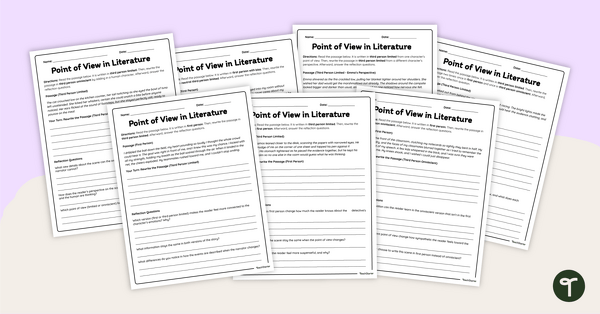
Narrative Voice Writing Prompts
Explore narrative voice with this set of engaging worksheets that require students to write literary passages in different points of view.
- Plus Plan
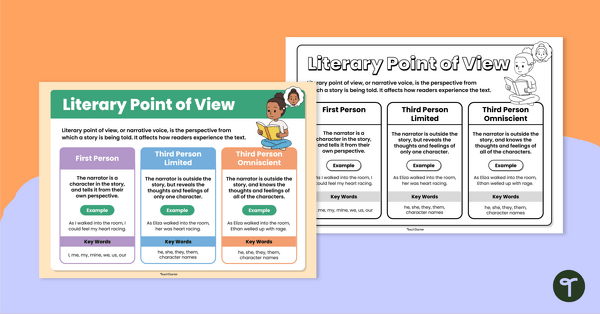
Types of Point of View in Literature Poster
Teach the types of point of view in literature with this classroom poster that explains first person, third person limited, and third person omniscient narration.
- Plus Plan
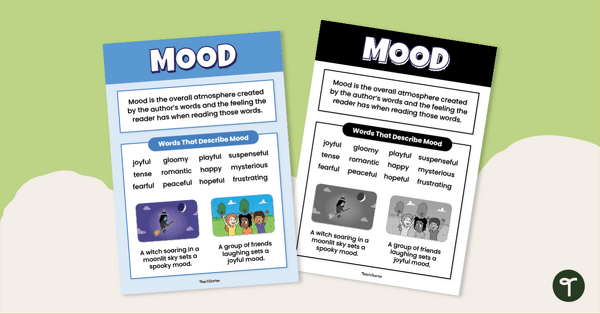
Mood Anchor Chart- Literary Element Poster
Introduce your students to mood, the atmosphere-creating literary element, with a printable Mood Anchor Chart.
- Plus Plan
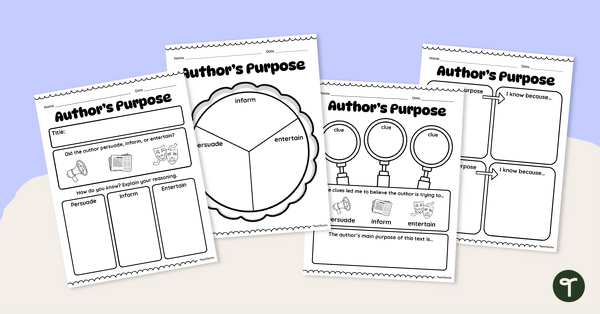
Author’s Purpose Graphic Organizer Pack
Explore the purpose of an author's writing with these Author's Purpose Graphic Organizers.
- Plus Plan
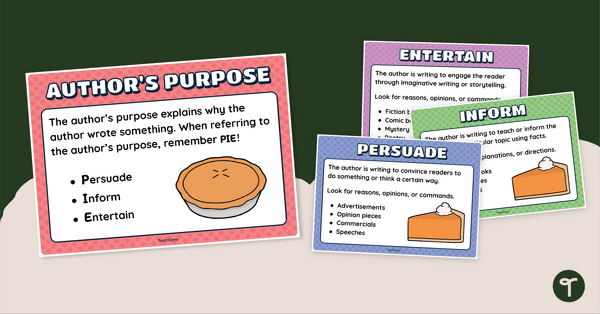
Author's Purpose Anchor Chart Set
Display this set of Author’s Purpose Pie posters to help students remember the various reasons authors write.
- Plus Plan
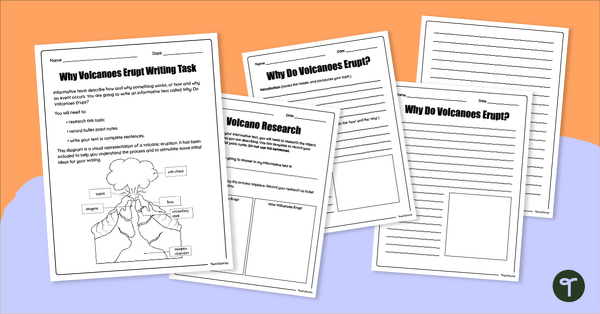
Expository Writing – Natural Disaster Project
Get your students producing high-quality writing with this fully scaffolded natural disasters project, where students research, organize and publish an expository text about a natural disaster.
- Plus Plan
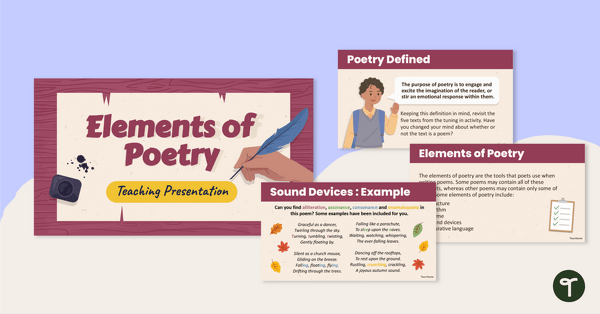
Elements of Poetry Teaching Slides
Explore the key elements of poetry with your students using this comprehensive and age-appropriate slide deck perfect for your poetry writing unit.
- Plus Plan
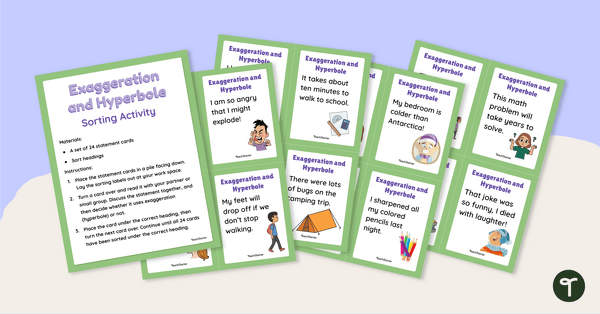
Exaggeration and Hyperbole Sorting Activity
Explore examples of hyperbole with your students using this set of 24 sorting cards perfect for your reading centers.
- Plus Plan
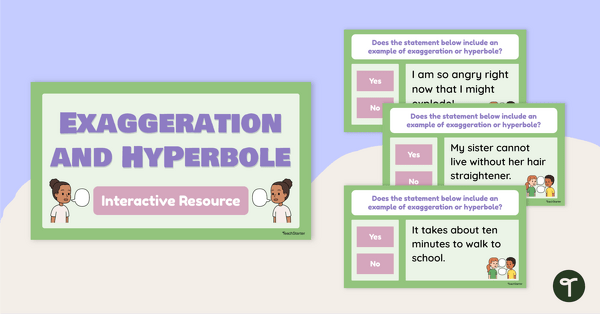
Exaggeration and Hyperbole Interactive Activity
Explore hyperbole examples with your students using this digital game perfect for lesson warm-ups or lesson wrap-ups.
- Plus Plan
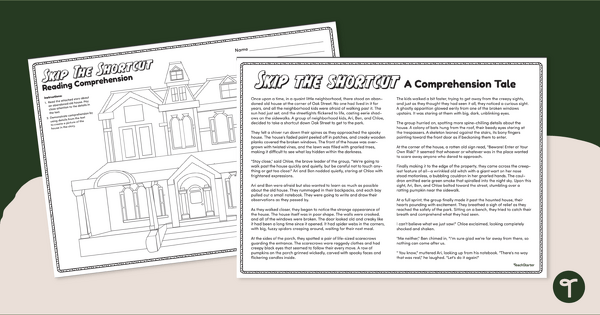
Read and Draw - Halloween Worksheets
Practice reading comprehension skills with an exciting read-and-draw comprehension worksheet for 4th grade.
- Plus Plan
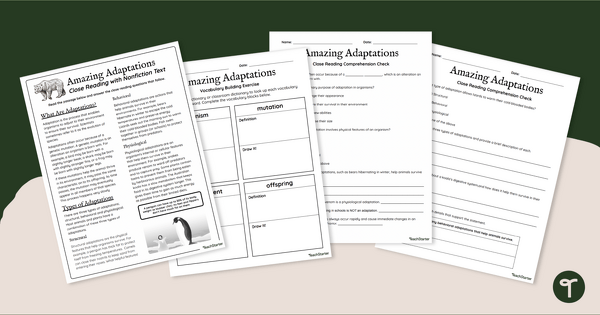
Plant and Animal Adaptations - Comprehension Worksheets
Boost reading comprehension skills with a comprehension passage, with questions, about structural, behavioral and physiological adaptations.
- Free Plan
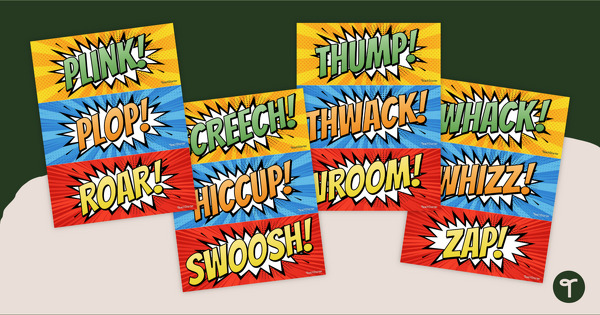
Onomatopoeia Words - Vocabulary Display
Display a fun onomatopoeia word wall in your classroom with printable cards containing onomatopoeia examples.
- Plus Plan
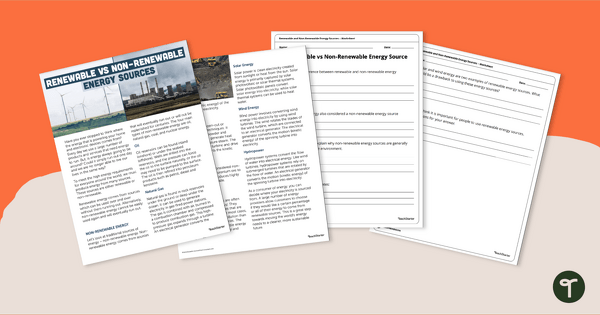
Renewable vs. Nonrenewable Energy Sources Worksheets
Discover the difference between renewable and nonrenewable energy sources with a comprehension passage and worksheet.