Mathematics
Learning mathematics creates opportunities for and enriches the lives of all Australians. The Australian Curriculum: Mathematics provides students with essential mathematical skills and knowledge in number and algebra, measurement and geometry, and statistics and probability. It develops the numeracy capabilities that all students need in their personal, work and civic life, and provides the fundamentals on which mathematical specialties and professional applications of mathematics are built.
Mathematics has its own value and beauty and the Australian Curriculum: Mathematics aims to instil in students an appreciation of the elegance and power of mathematical reasoning. Mathematical ideas have evolved across all cultures over thousands of years, and are constantly developing. Digital technologies are facilitating this expansion of ideas and providing access to new tools for continuing mathematical exploration and invention. The curriculum focuses on developing increasingly sophisticated and refined mathematical understanding, fluency, reasoning, and problem-solving skills. These proficiencies enable students to respond to familiar and unfamiliar situations by employing mathematical strategies to make informed decisions and solve problems efficiently.
The Australian Curriculum: Mathematics ensures that the links between the various components of mathematics, as well as the relationship between mathematics and other disciplines, are made clear. Mathematics is composed of multiple but interrelated and interdependent concepts and systems which students apply beyond the mathematics classroom. In science, for example, understanding sources of error and their impact on the confidence of conclusions is vital, as is the use of mathematical models in other disciplines. In geography, interpretation of data underpins the study of human populations and their physical environments; in history, students need to be able to imagine timelines and time frames to reconcile related events; and in English, deriving quantitative and spatial information is an important aspect of making meaning of texts.
The curriculum anticipates that schools will ensure all students benefit from access to the power of mathematical reasoning and learn to apply their mathematical understanding creatively and efficiently. The Mathematics curriculum provides students with carefully paced, in-depth study of critical skills and concepts. It encourages teachers to help students become self-motivated, confident learners through inquiry and active participation in challenging and engaging experiences.
- Plus Plan
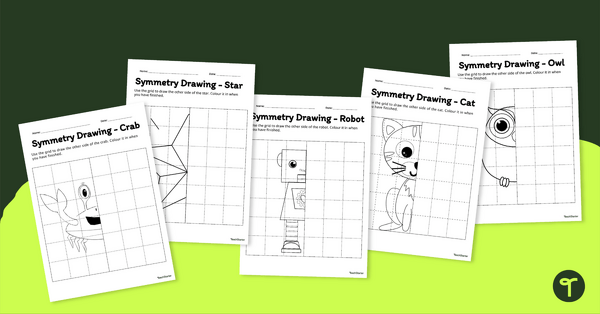
Symmetry Drawing Worksheet Pack
Teach your students about symmetry using this series of drawing worksheets where they must copy an image symmetrically using grid lines for reference.
- Plus Plan
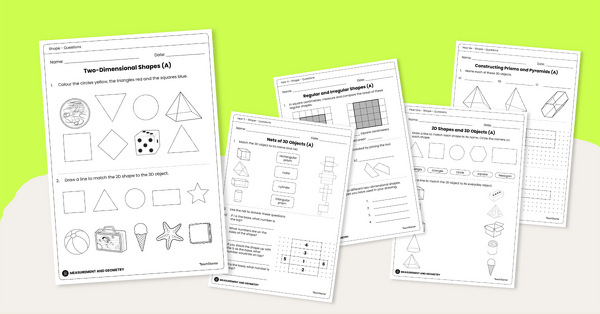
Shape Worksheet Sets (Foundation to Grade 6 Level)
Use these levelled worksheets sets with your primary school students to explore 2D shapes and 3D objects!
- Plus Plan
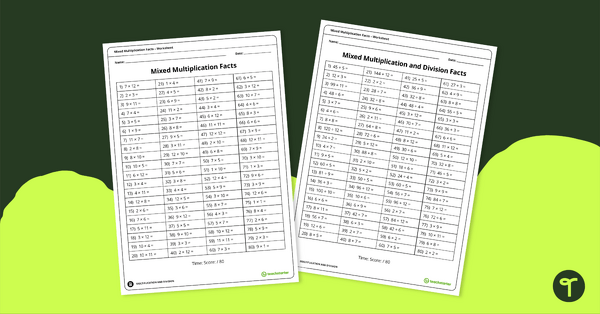
Multiplication and Division Speed Drill Worksheets – Mixed Facts
Build multiplication and division fact fluency with these times tables worksheets, designed to help students develop fast and accurate recall of multiplication facts from 2 to 12.
- Plus Plan
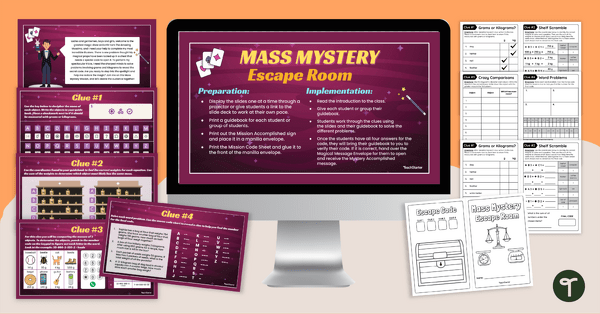
Mass Mystery Escape Room
Explore the different elements of mass with this super fun and engaging escape room resource.
- Free Plan
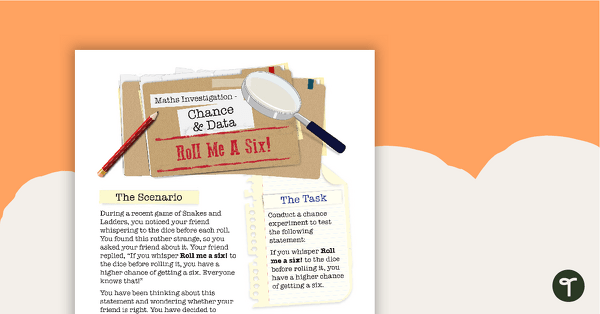
Chance and Data Maths Investigation - Roll Me a Six!
A mathematics investigation involving chance and data, embedded in a real-world context.
- Plus Plan
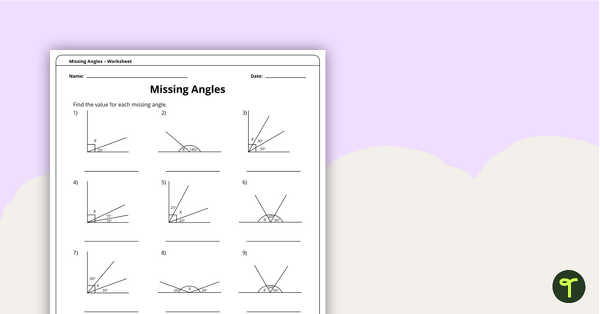
Missing Angles – Year 6 Maths Worksheet
Download this missing angles worksheet to get your students calculating missing angles on right and straight angles.
- Plus Plan
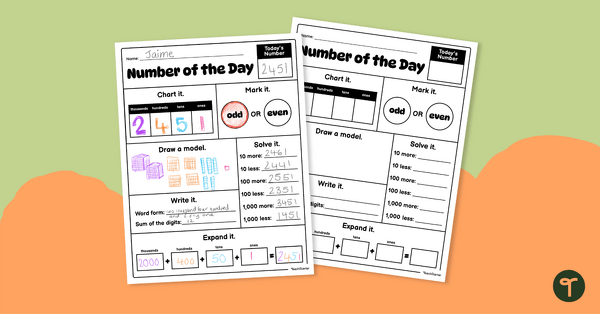
Number of the Day Worksheet
Explore 2, 3, 4, 5, and 6-digit numbers using this number of the day worksheet with your students.
- Free Plan
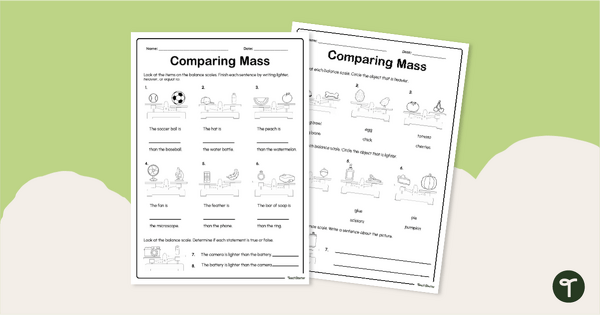
Comparing Mass With Balance Scales Worksheet
Practise comparing and contrasting the mass of objects as shown on balance scales with this set of mass measurement worksheets.
- Free Plan
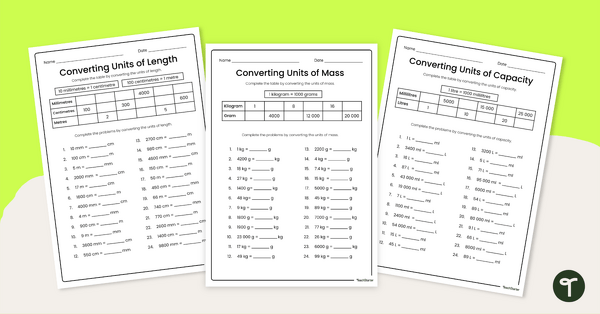
Metric Measurement Conversion Worksheet Set
Utilise our metric measurement conversion worksheet set to give your students practise converting units of metric length, mass and capacity.
- Plus Plan
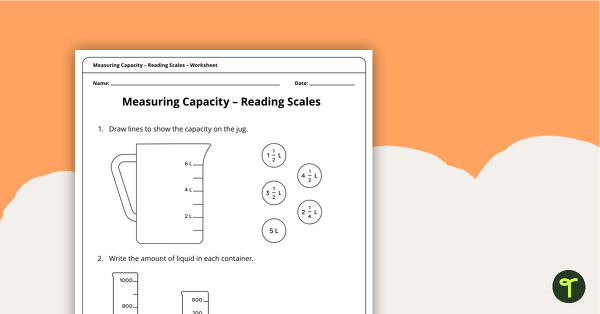
Measuring Capacity – Reading Scales Worksheet
Use this capacity worksheet to give students practice at reading scales on containers to measure capacity.
- Plus Plan
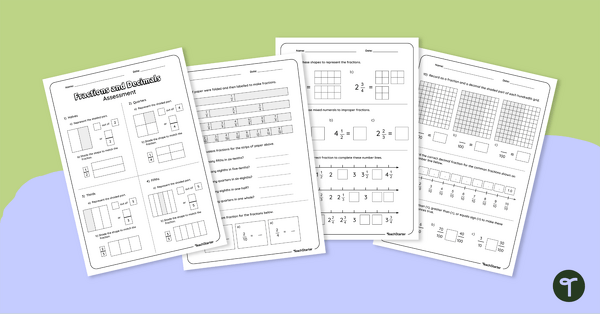
Fractions and Decimals Assessment
Assess students' knowledge of various decimals and percentages concepts with this four-page worksheet.
- Plus Plan
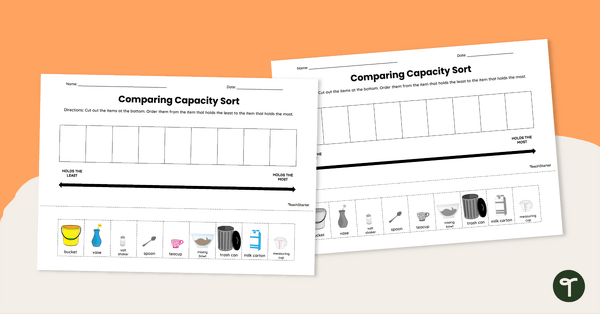
Comparing Capacity Year 1 and Foundation Activity
Share this comparing capacity year 1 and foundation activity with your students to introduce them to early measurement concepts.
- Free Plan
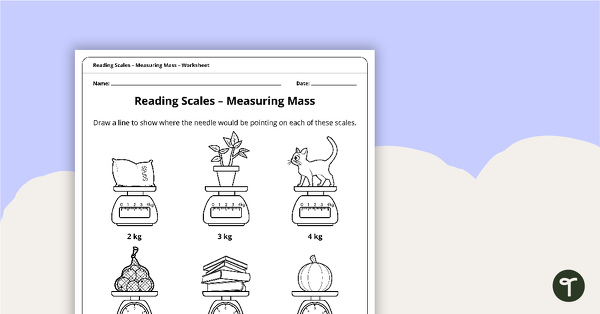
Reading Scales – Measuring Mass Worksheet
A worksheet for students to use when learning to read scaled instruments to measure mass.
- Plus Plan
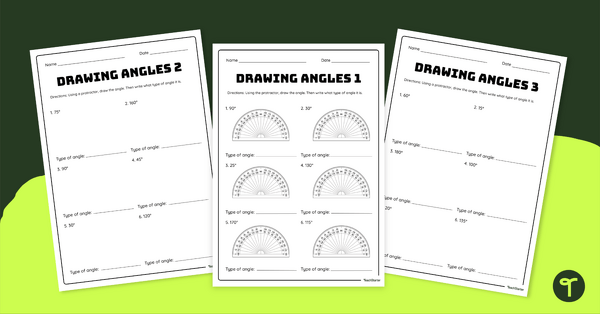
Drawing Angles Activity Sheet Set
Use our drawing angles activity sheet set to give students differentiated practice in classifying and constructing angles.
- Plus Plan
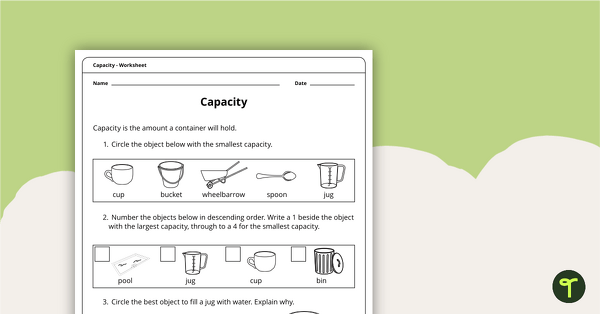
Capacity Worksheet
A worksheet to use when exploring the concept of capacity.
- Plus Plan
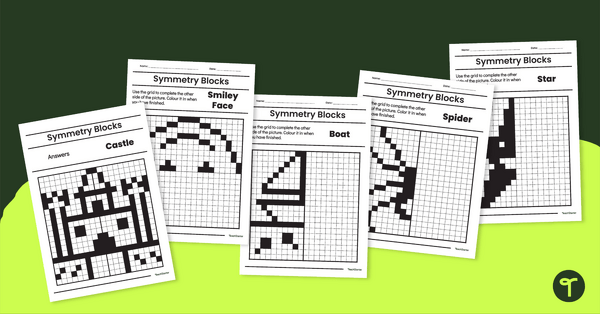
Symmetry Worksheets
Use this set of eight symmetry worksheets to help students understand symmetry, the line of symmetry, and symmetrical objects.
- Plus Plan
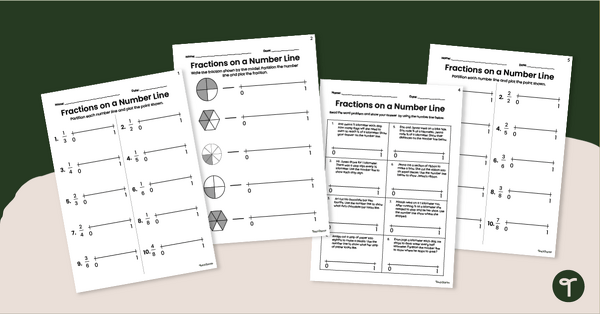
Fractions on a Number Line Worksheets
Represent fractions greater than zero and less than or equal to one with a pack of fraction number line worksheets.
- Plus Plan
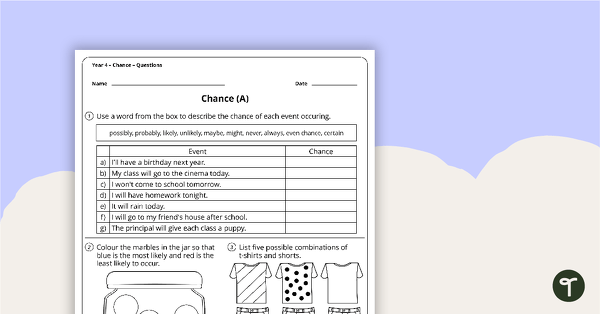
Chance Worksheets - Year 4
2 chance worksheets linked to the Australian Curriculum.
- Plus Plan
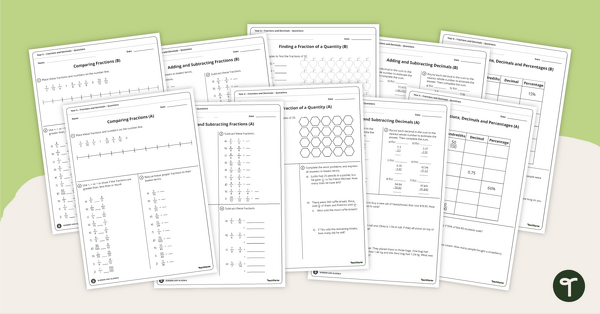
Year 6 Fractions, Decimals and Percentages Worksheets
Use these fractions, decimals and percentages worksheets in your Year 6 classroom for independent practice or as an assessment activity.
- Plus Plan
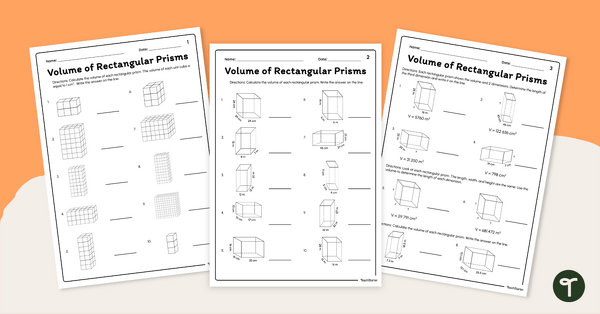
Differentiated Volume of Rectangular Prism Worksheet Set
Differentiate instruction with this volume of rectangular prism worksheet set that offers three levels of volume problems.
- Plus Plan
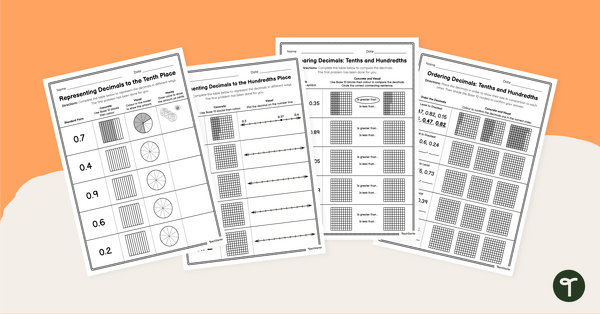
Tenths and Hundredths as Decimals Worksheet Pack
Get your students representing tenths and hundredths as decimals using concrete models, visual models and money with this set of Year 4 maths worksheets.
- Plus Plan
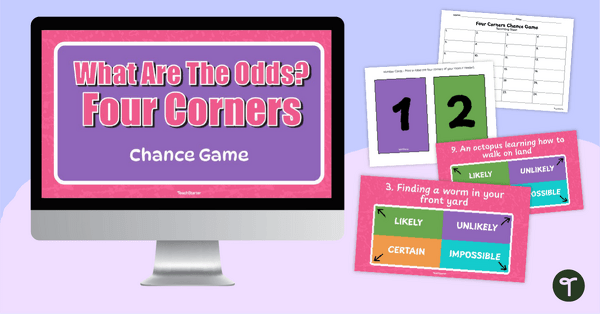
What Are The Odds? Digital Chance Game
Introduce your students to the concepts of probability and chance with an interactive ‘What Are The Odds?” Active Game?
- Plus Plan
Daily Maths Word Problems - Year 4 (Worksheets)
Build fluency with these Year 4 daily maths word problems, designed to provide meaningful maths practise while strengthening students’ problem-solving and reasoning skills.
- Plus Plan
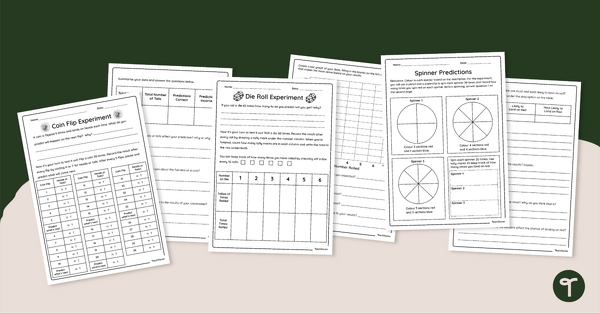
Predicting Probability Activity Set
Perform the experiments in our predicting probability activity set to give your students practice conducting experiments, predicting outcomes and reflecting on the results.
- Plus Plan
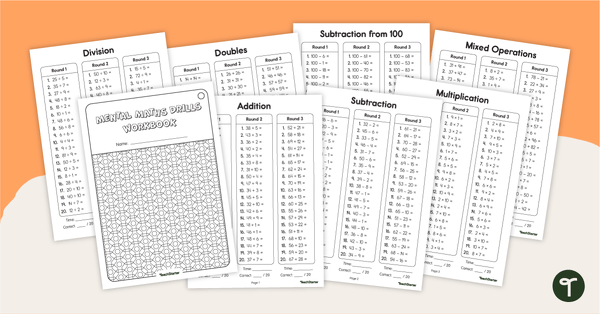
Year 6 Mental Maths Drills Workbook
Incorporate this mental maths drills booklet into your maths lesson warm-up routine.
- Plus Plan
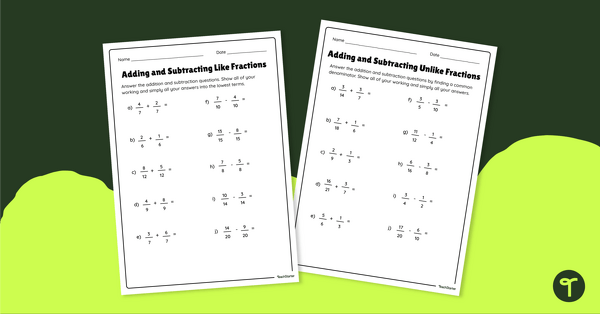
Adding and Subtracting Fractions Worksheets
Use these adding and subtracting fractions worksheets to enable your students to practise this important skill.
- Plus Plan
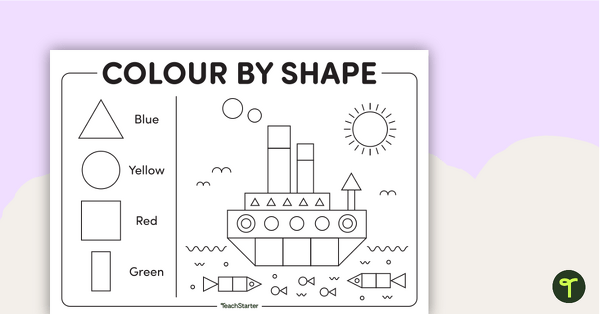
Colour by 2D Shape (Basic Shapes)
A set of five colour by shape worksheets.
- Plus Plan
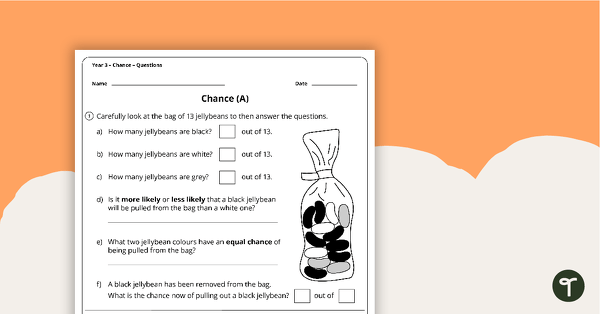
Chance Worksheets - Year 3
2 chance worksheets linked to the Australian Curriculum.
- Plus Plan
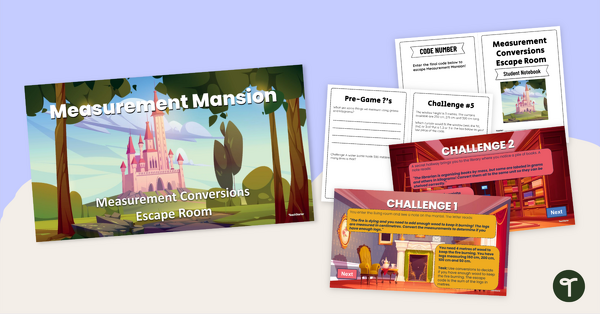
Measurement Escape Room
‘Escape’ the ordinary in your classroom with this measurement escape room that will engage your students as they solve measurement conversion problems.
- Plus Plan
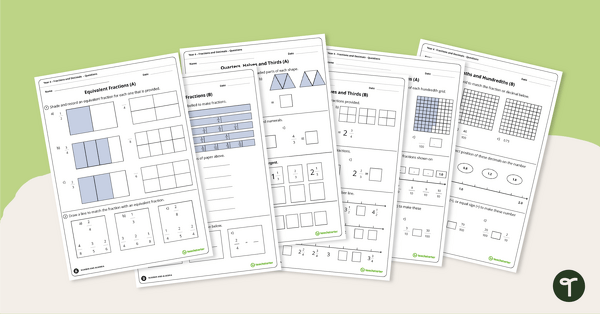
Year 4 Fractions and Decimals Worksheets
Use these fractions and decimals worksheets in your Year 4 classroom for independent practice or as an assessment activity.
- Plus Plan
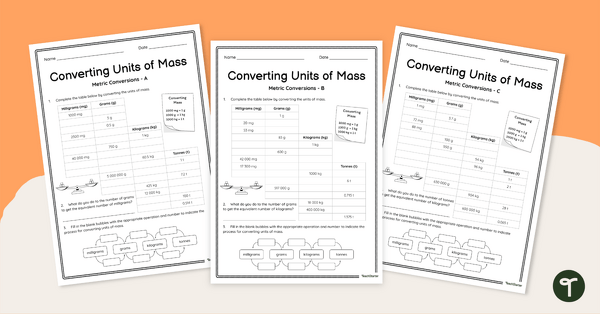
Converting Mass Worksheet Set
Download this converting mass worksheet set to give your students the practice they need to master conversions of metric mass.
- Plus Plan
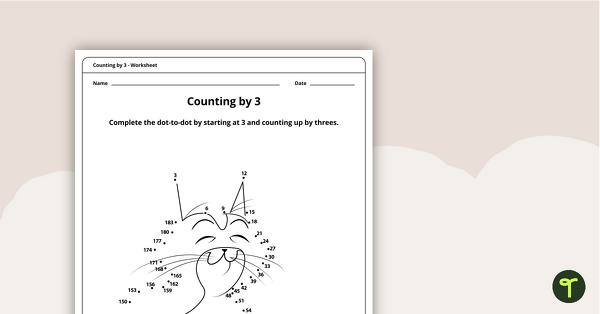
Dot-to-Dot Numbers - Skip Counting Worksheet Pack
Skip counting worksheet pack helps teachers build confident young mathematicians by providing engaging dot‑to‑dot activities that make skip counting practice both fun and effective.