Phonics Teaching Resources
Make teaching phonics easy with printable phonics worksheets, activities, games and more designed for elementary ELA and ELAR teachers.
This collection of curriculum-aligned teaching resources has been carefully reviewed by our expert teaching team to make sure every resource is classroom-ready — so we can make your lesson planning easier!
New to teaching phonics, or just looking for new ways to engage your students? Read on for a primer from our teacher team!
What Is Phonics?
You've likely heard the word "phonics" thousands of times throughout your own education and maybe on one of those old as from the '90s. But what is phonics, exactly?
Phonics is technically defined as the systematic instruction of the relationships between letters and sounds in written language. But that's a mouthful, isn't it? More simply, phonics is the word we use to refer to the method of teaching reading by focusing on the relationship between written letters and the sounds they represent.
In phonics, kids learn how to decode written words by recognizing the sound-symbol correspondence.
Phonics vs. Phonemic Awareness
When we start talking about letters and their sounds, we start to wander into phonemic awareness territory. So what's the difference?
The words phonics and phonemic are similar, and the two concepts are — surprise, surprise — related. But there are key differences.
Phonemic awareness is essentially the ability to identify and manipulate individual sounds — aka phonemes — in spoken language. It's those individual sounds and their correspondence to the letter symbols that can be used by kids to then decode written words.
So students learn to recognize the individual sounds of spoken language (phonemes) and how these sounds can be represented by letters (graphemes) in written language. Then they apply this knowledge to decode written words by understanding the sound-symbol correspondence.
Consider this example:
- Let's say your student can identify the separate sounds in a spoken word such as "cat" (i.e., /k/ /a/ /t/). That's phonemic awareness.
- Now let's say you're teaching that same student that the letter "c" represents the /k/ sound and that the letter "a" represents the /a/ sound, and that these sounds combine to form the word "cat." That's phonics!
How to Teach Phonics
OK, you probably already know that phonics is all about teaching word recognition via grapheme-phoneme associations and letter-sound correspondences.
It’s a means of teaching early readers the pieces that make up a word so they can blend them together to decode the English language as readers and writers.
But how do you teach it?
In the earliest stages, phonics instruction typically begins with teaching students the most common letter-sound relationships. You start with consonants, then move on to vowels, then consonant blends.
Students then learn to sound out words by decoding the letters and blending the sounds together to form words.

Phonics Vocabulary Terms
The English language system is one of the hardest to teach and learn, so how do you teach phonics? Let’s start with the phonics vocabulary.
- For starters, there are 26 letters that create approximately 44 phonemes, the word for the individual speech sounds that make up words. Put together, phonemes make words. OK, easy enough, right?
- Well, these phonemes can be written in over more than 200 different letter combinations, known as graphemes. Graphemes can be made up of 1 letter (such as “p” in “pig”), 2 letters (such as “gh” in ghost), 3 letters (such as “igh” in night), or 4 letters (such as “ough” in rough).
- Then there are digraphs or two letters that work together to make one sound — such as “ph” in graph. But wait, isn’t that a grapheme? Yup, a digraph is a type of grapheme.
- So is a trigraph, trigraphs, aka three letters that work together to make one sound, such as “dge” in edge.
- And if you’re teaching phonics, you can’t forget dipthongs, the name for a sound that is formed by the combination of two vowels in a single syllable, such as “ou” in loud.
Most students will spend kindergarten, first, and even second grade getting a handle on all phonics elements!
-
What Is a Digraph? Understanding This Phonics Building Block
What are digraphs? Learn the digraph definition, the difference between digraphs and blends, and more!
-
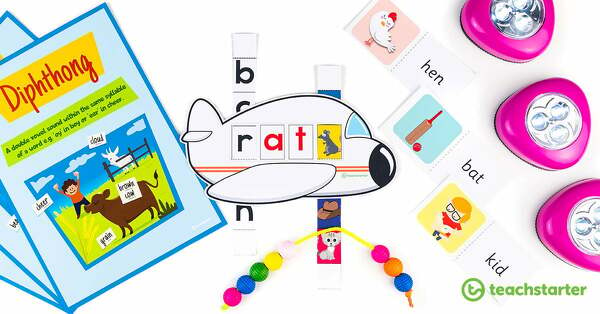
Fresh Phonics Teaching Strategies: Tips + Resources for the Classroom
Liven up your phonics lessons with these teaching strategies, tips, game ideas, and resources for teaching phonics in the classroom!
-
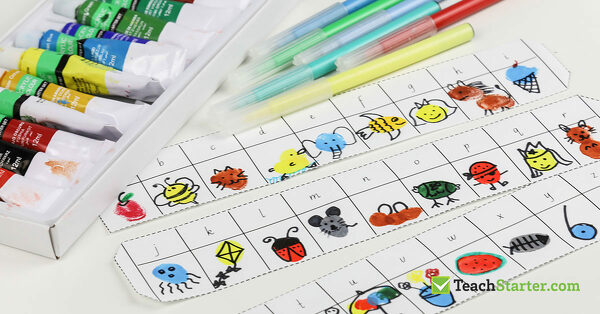
Tips and Activities for Teaching Letters and Sounds
The introduction of single letter names and sounds is crucial in the early years classroom. Here are some hints and tips, including some fun hands-on classroom resources.
-
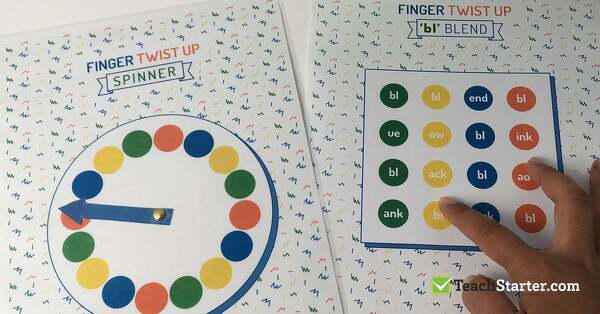
16 Hands-On Phonics Games for the Classroom
This blog outlines some fantastic phonics resources and activity ideas that can be used in the classroom environment.
-
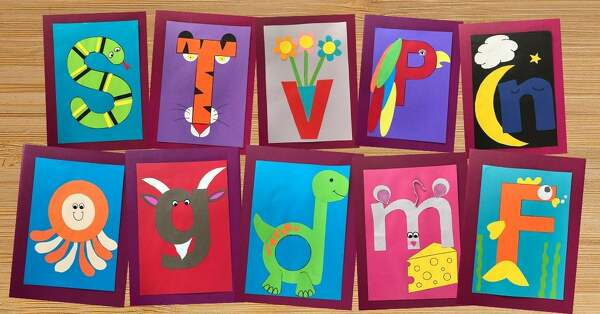
Sound and Letter Art Ideas
15 of the cutest letter art ideas you ever did see...
-
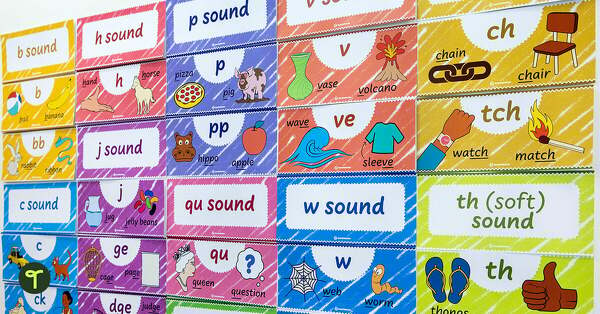
Teachers Are Adopting Sound Walls Over Word Walls: Should You?
What is a sound wall, and should you replace your classroom word wall with one of these walls instead?
-

Why the Science of Reading Research Should Be on Every Teacher's Mind
What is the science of reading and why are so many schools — and states — requiring it? Look at the research for how we teach students to read and history of the reading wars.