Reading Comprehension Teaching Resources
Explore printable worksheets, digital activities and more to teach reading comprehension strategies and skills in your elementary classroom. Created by teachers, for teachers, the teaching resources in this collection are curriculum-aligned and have undergone a careful review by a member of our expert teaching team.
You'll find editable versions to easily differentiate your instruction for individual students, plus a variety of options to make lesson planning easier this school year so your students will be able to identify the main idea of a text, draw inferences, remember key details and more.
New to teaching this portion of the English curriculum or just looking for fresh and engaging ways to teach reading comprehension strategies? Read on for a primer from our teacher team!
What Is Reading Comprehension?
We'll start at the beginning! Reading comprehension is a skill that's hard to overestimate in terms of its importance for elementary students to develop.
Defined as the ability to understand and interpret written language, reading comprehension involves the process of decoding text, extracting meaning from it, and then integrating that meaning with prior knowledge and understanding.
Not only does comprehension comprise the ability to recognize and understand individual words, but it also involves the ability to recognize patterns and relationships within sentences and paragraphs.
On top of that is the ability to make inferences and draw conclusions based on the information presented.
Yes, there's a lot packed in there!

How to Teach Reading Comprehension
To develop reading comprehension, students need a variety of language skills such as vocabulary knowledge, grammar and syntax, as well as cognitive processes such as attention, memory and critical thinking.
So how do you teach reading comprehension? Like many of those foundational skills we teach in elementary grades, this isn't something kids learn in a single lesson, unit or even one school year.
Teaching reading comprehension is going to stretch from kindergarten and first grade all the way through the rest of a child's academic career (at least on the pre-college levels).
That said, here are some activities to make use of as you approach teaching reading comprehension as an elementary teacher:
- Pre-Reading Activities — Brainstorming, KWL charts, prediction exercises and other "pre-reading" activities will help your students activate their prior knowledge, build background knowledge and set a purpose for reading. These are all key to developing their comprehension.
- During-Reading Strategies — Teaching your students to ask questions, summarize, visualize and make connections will give students the know-how they need to monitor their comprehension as they read.
- Post-Reading Activities — Reading comprehension doesn't stop when kids get to the last page of a text. It's only just beginning. That's why it's important to make sure your lesson plans include activities that help students deepen their understanding of the text and develop critical thinking skills. Examples of post-reading activities that can help build these skills include discussions, debates and written responses.
- Plus Plan
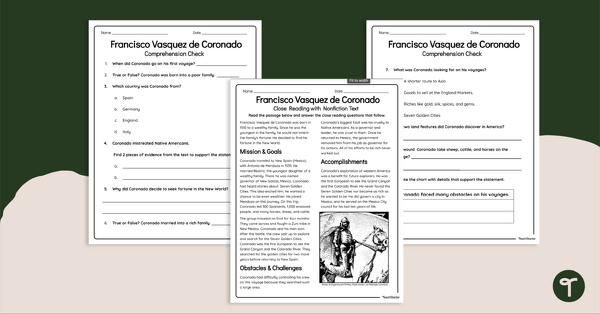
The Age of Discovery - Francisco Coronado Reading Passage
Learn about Francisco Vazquez de Coronado and his North American explorations with a printable reading passage and comprehension questions.
- Plus Plan
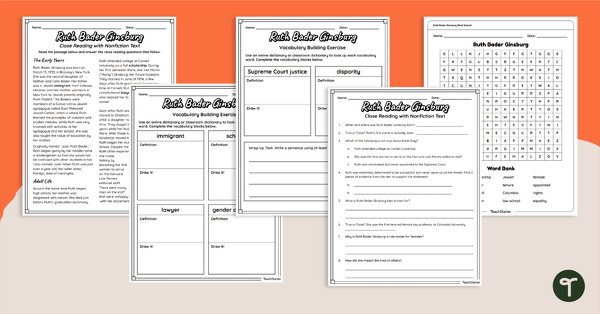
Ruth Bader Ginsberg Comprehension Activity
Learn about the life of Justice Ruth Bader Ginsburg with a reading comprehension passage, assessment, and vocabulary practice worksheets.
- Plus Plan
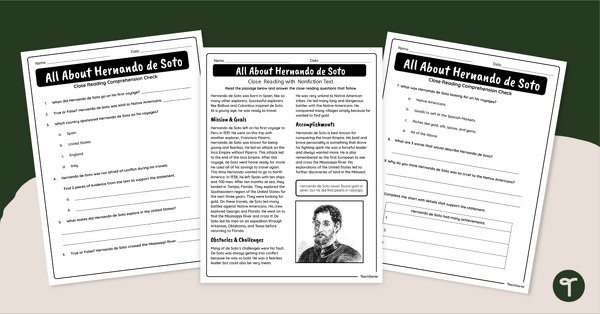
The Age of Exploration - Hernando de Soto Reading Passage
Learn about Hernando De Soto and his worldly explorations with a printable reading passage and comprehension questions.
- Plus Plan
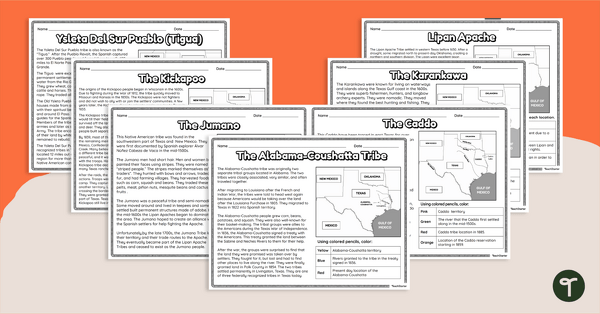
Native American Tribes in Texas - Reading Passage Worksheets
Blend reading and social studies standards with a pack of reading passages and comprehension activities about the Native American tribes in Texas.
- Free Plan
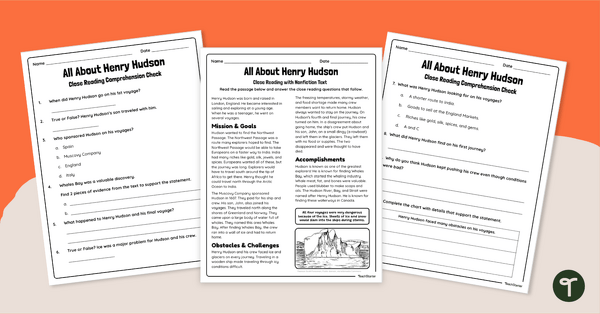
Henry Hudson Worksheet Pack
Discover famous explorers like Henry Hudson with a Henry Hudson Worksheet Pack
- Plus Plan
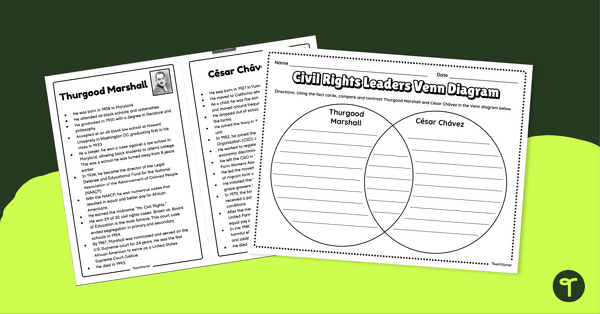
Human Rights Heroes - Marshall and Chavez Venn Diagram
Compare and contrast civil rights heroes with a set of compare-and-contrast Venn diagrams for kids.
- Plus Plan
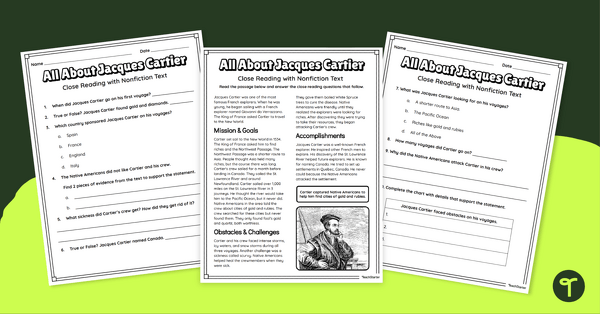
Jacques Cartier Comprehension Worksheets
Travel back in time to the Age of Exploration with a look into the life and accomplishments of Jacques Cartier.
- Plus Plan
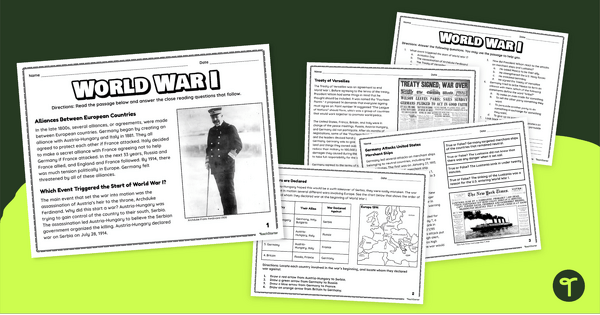
World War I Comprehension Packet
Blend reading and social studies content with a printable set of World War 1 Reading Passages and accompanying question sets.
- Plus Plan
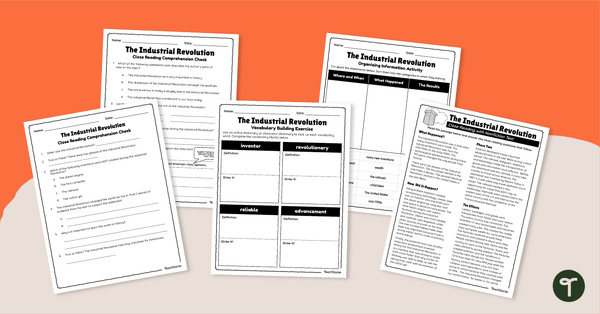
The Industrial Revolution - Reading Comprehension Worksheets
Integrate reading, writing, and American history with an Industrial Revolution passage, questions, and additional activities.
- Plus Plan
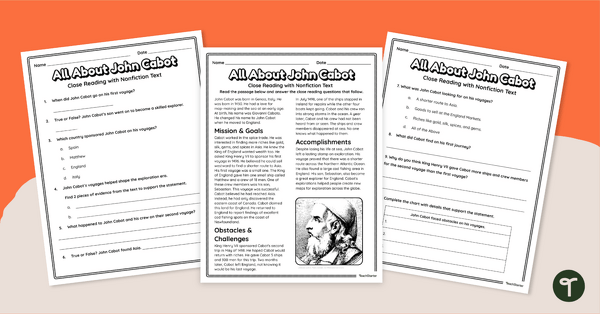
John Cabot Reading Passage - Comprehension
Discover famous explorers like John Cabot with printable reading comprehension activities.
- Plus Plan
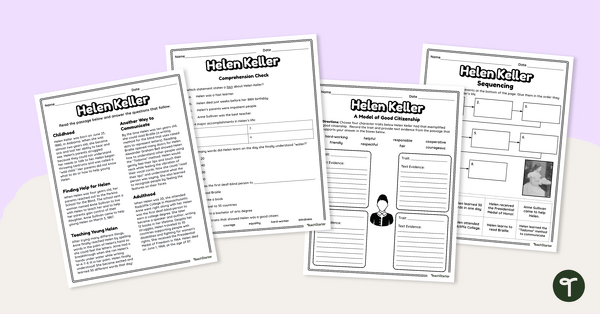
Helen Keller Reading Comprehension Passage - Tasks
Uncover facts about Helen Keller with a reading passage and worksheet pack to practice comprehension, character analysis, and sequencing.
- Plus Plan
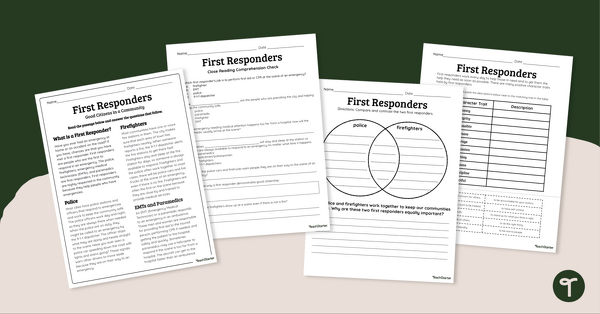
First Responders Reading Passage - Comprehension
Celebrate and learn about the American heroes known as first responders with a reading passage and comprehension questions.
- Plus Plan
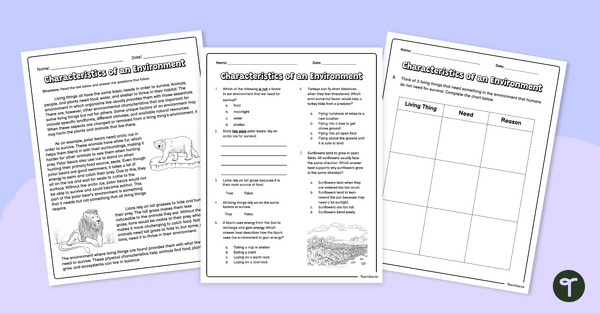
Characteristics of an Environment – Worksheet
Enhance your students’ comprehension and science skills by learning about the physical characteristics of different environments and how they support populations within an ecosystem.
- Plus Plan
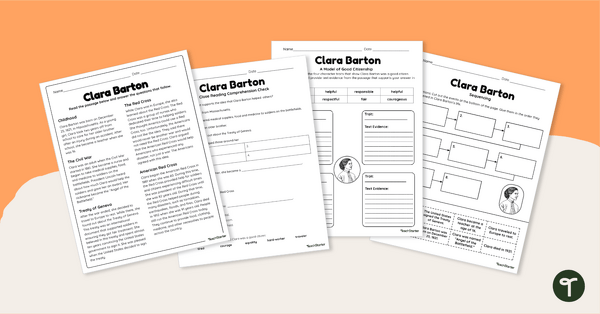
Clara Barton Passage and Comprehension Worksheets
Uncover facts about Clara Barton with a reading passage and worksheet pack to practice comprehension, character analysis, and sequencing.
- Plus Plan
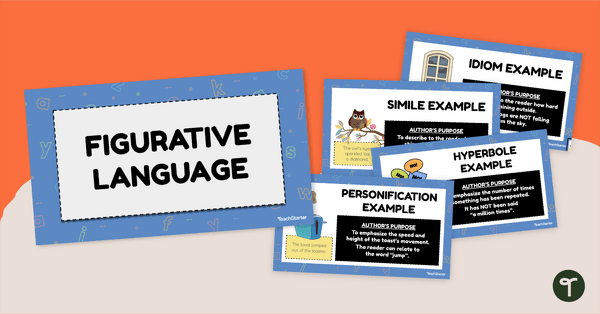
Figurative Language PowerPoint
Download this figurative language PowerPoint to teach your students how authors use figurative language to create meaning and engage readers.
- Plus Plan
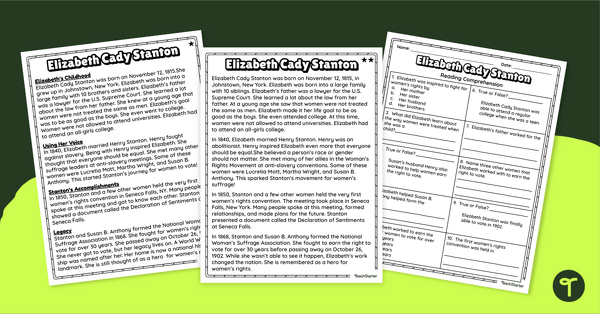
Elizabeth Cady Stanton - Differentiated Comprehension Worksheets
Learn fun facts about Elizabeth Cady Stanton with a differentiated comprehension passage and assessment.
- Plus Plan
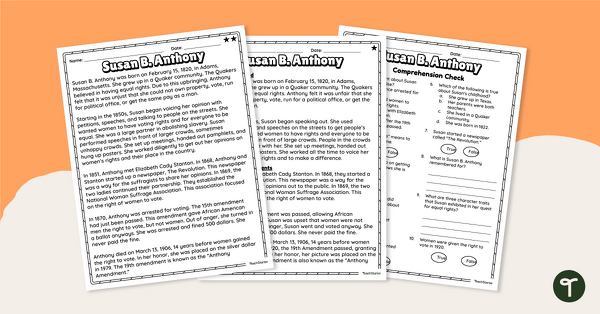
Susan B. Anthony Worksheet Pack - Comprehension
Learn fun facts about Susan B. Anthony with a differentiated Susan B. Anthony Worksheet Pack.
- Plus Plan
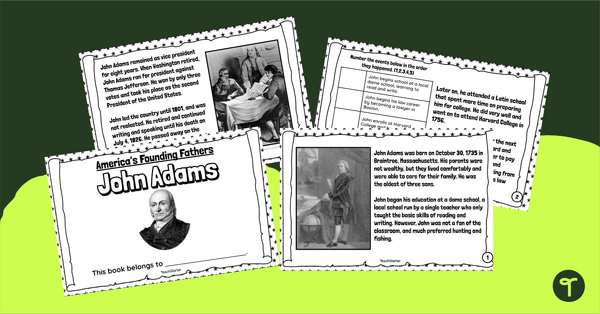
Who Was John Adams? Mini Book
Learn fun facts about John Adams with a print-and-go informative mini book.
- Plus Plan
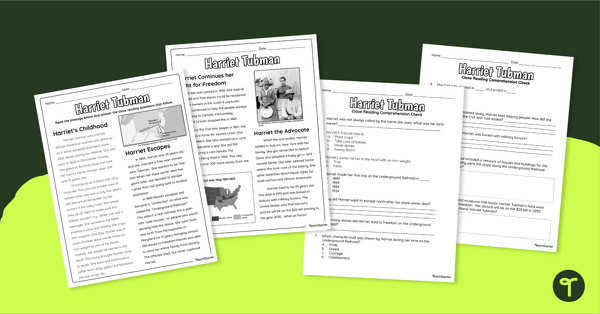
Harriet Tubman Comprehension Worksheet
Uncover facts about Harriet Tubman with a Reading Passage and Comprehension worksheet.
- Plus Plan
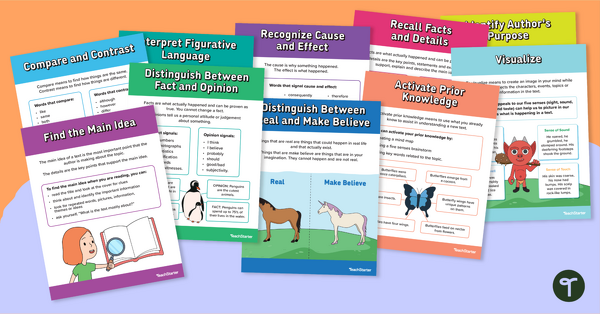
Reading Comprehension Strategies Anchor Charts
Provide young readers with concrete examples of reading strategies with a set of 18 ready-made reading anchor charts.
- Plus Plan
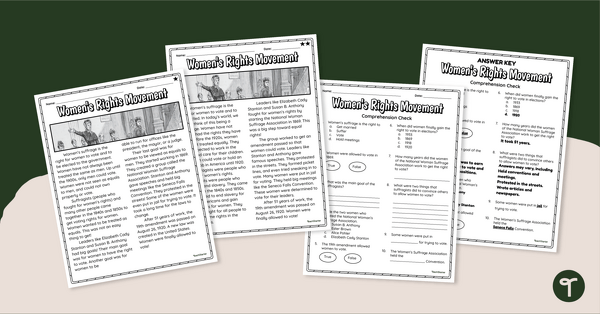
Women's Suffrage - Differentiated Comprehension Worksheets
Integrate reading, writing, and American history with a differentiated comprehension passage and worksheet about Women’s Suffrage.
- Plus Plan
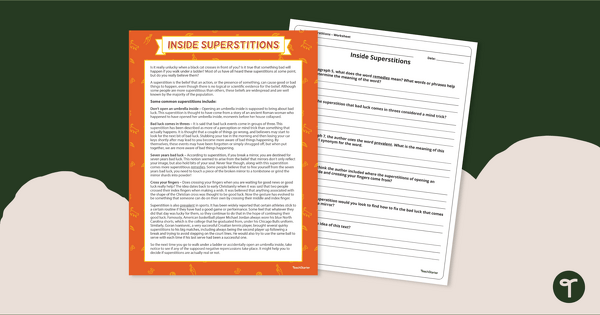
4th Grade Reading Comprehension Worksheets - Superstitions
Learn about common superstitions and beliefs with a printable reading comprehension passage for 4th grade.
- Plus Plan
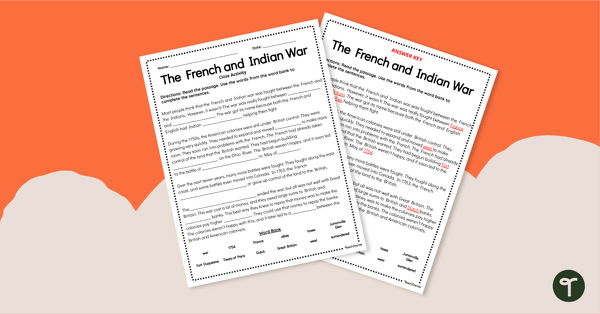
The French and Indian War - Cloze Activity
Build vocabulary and understanding of the French and Indian War with a cloze reading passage worksheet.
- Plus Plan
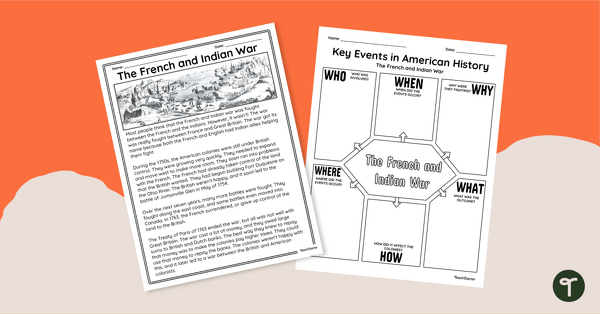
The French and Indian War - Passage and Graphic Organizer
Reveal another chapter in American History with a reading passage and graphic organizer worksheet on the French and Indian War.
- Plus Plan
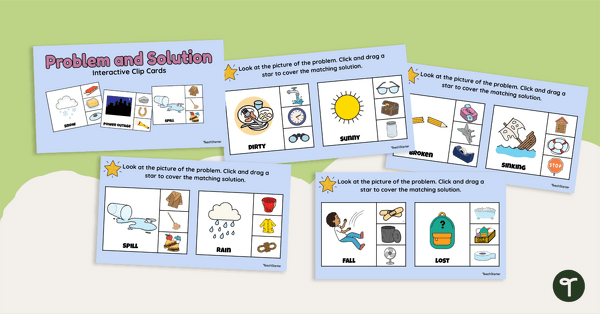
Problem and Solution Interactive Clip Cards
Practice identifying problems and solutions with an interactive clip card activity.
- Plus Plan
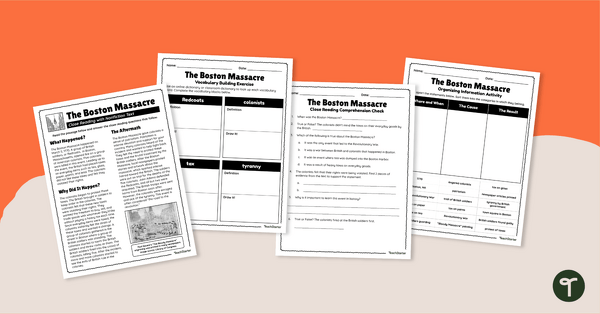
The Boston Massacre Reading and Writing Worksheets
Integrate Reading and Social Studies content with a set of Boston Massacre worksheets.
- Plus Plan
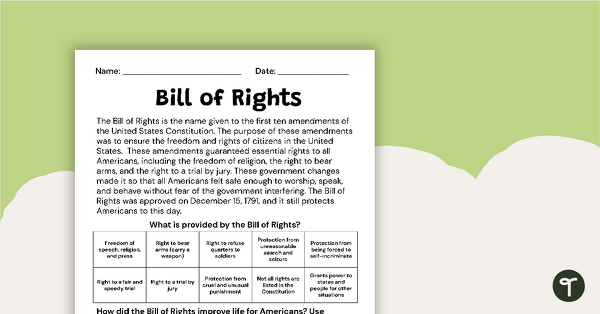
Bill of Rights - RACES writing response
Practice using the RACES writing strategy and discover the U.S. Constitution and Bill of Rights with a passage, organizer, and prompt.
- Plus Plan
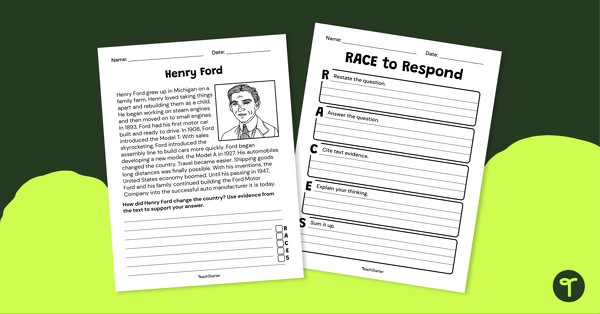
Henry Ford Worksheet- RACES Writing Strategy
Provide students with Social Studies and Writing instruction using the RACES strategy for constructed response paragraphs.
- Plus Plan
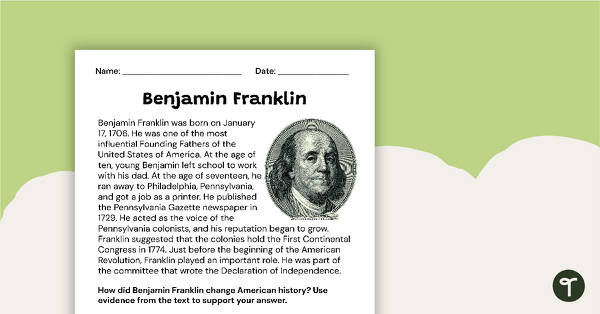
Benjamin Franklin - Constructed Response Worksheet
Learn facts about Benjamin Franklin with an informational reading and writing activity focusing on the constructed response format.
- Plus Plan
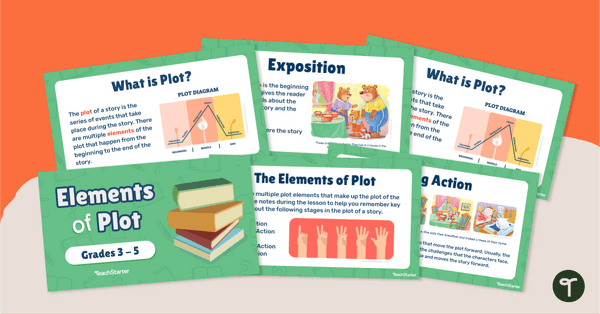
Elements of Plot Teaching Presentation
Teach them to your students with a Plot Elements Teaching presentation.
- Plus Plan
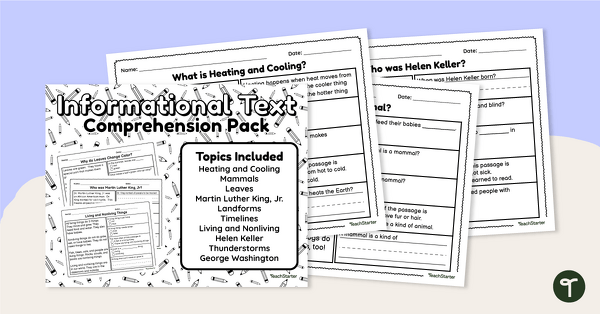
Nonfiction Comprehension Worksheet Pack for First Grade
Integrate science, social studies, and first grade reading comprehension skills with a group of ten nonfiction reading comprehension worksheets.
- Plus Plan
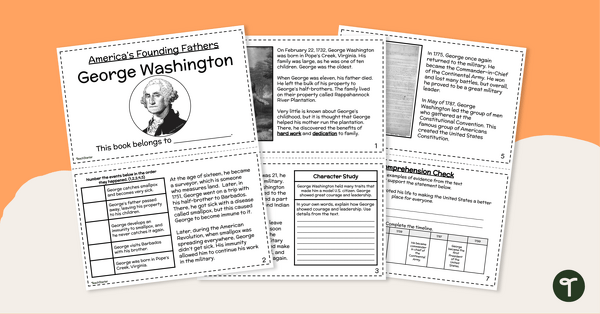
George Washington Printable Book
Read and learn about the father of our country, George Washington, with a printable reader and activity book.
- Reading Comprehension Worksheets
- Reading Comprehension Templates
- Reading Comprehension Games
- Reading Comprehension Posters
- Reading Comprehension Flashcards
- Reading Comprehension for Pre-K
- Reading Comprehension for Kindergarten
- Reading Comprehension for 1st Grade
- Reading Comprehension for 2nd Grade
- Reading Comprehension for 3rd Grade
- Reading Comprehension for 4th Grade
- Reading Comprehension for 5th Grade
- Reading Comprehension for 6th Grade