Text Structures Teaching Resources
Bring text structures to life in the classroom with text structure posters for your classroom walls, printable worksheets and downloadable Google Slides templates that easily break down the way authors organize information in a text.
Familiarity with different text structures is crucial for helping our students develop reading comprehension skills and become more confident readers. So how do you teach students all about text structures? We're so glad you asked!
Our teacher team has created hundreds of resources with this concept at the heart. With editable resources at the ready, you can save time on your lesson planning, so you have more time with your family!
Each resource in this ELA collection is curriculum-aligned to help students meet Common Core and state-level standards for understanding text structures. Each has undergone a thorough review by our teacher team to ensure it's ready for your students.
New to teaching text structure, or just looking for fresh ways to engage your students? Read on for a primer from our teacher team, including a handy definition you can use to explain the meaning of text structure to your students.
What Is a Text Structure? A Kid-Friendly Definition
Whether you've been teaching students who've already passed this stage of literacy instruction or teaching classes for younger learners, you may need a quick refresher! Don't worry — the ELA teachers on the Teach Starter team are here to back you up with a simple definition you can use to explain text structures.
Text structures are thee different ways that an author has organized information within the text. These types of organization appear in both fiction and nonfiction texts.
Text structures help us use many of our reading comprehension strategies like visualizing, inferencing and monitoring comprehension.
6 Text Structure Examples to Share With Students
Looking for text structure examples to share with your students during your lessons? Here are some of the more common — and more helpful— text structures students may encounter in their reading:
- Problem and solution
- Chronological
- Cause and effect
- Inductive and deductive
- Description
- Sequence/process
How to Teach About Text Structures — Fun Ideas for Teachers
Looking for fun ideas for teaching text structures in the classroom? Try these tips from our teacher team!
- Practice sequencing stories with cards that map out a familiar task — but only if students can put them in the right order!
- Before reading a text featuring "cause and effect" out loud to the class, supply students with cause and effect graphic organizers. Students can be instructed to make notes of the different cause and effect examples they hear throughout your read-aloud.
- Create a text structures anchor chart with your class to help break down the different ways authors organize information.
- Add a text structures sorting activity to your reading center!
- Plus Plan
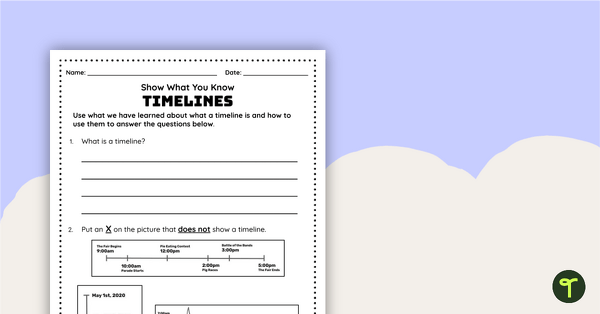
Timelines Worksheet for First Grade
Use this worksheet with the Timelines Teaching Presentation to assess students' knowledge of timelines.
- Plus Plan
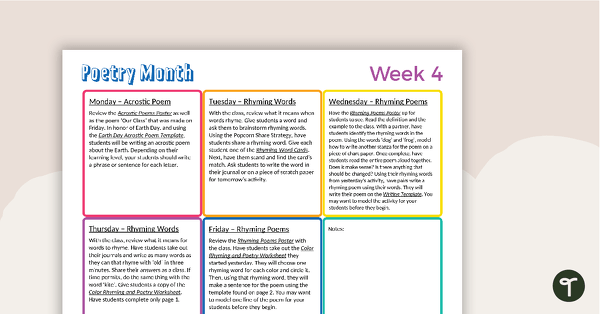
Primary Weekly Poetry Guide - Weeks 4 and 5
Use this weekly poetry guide to celebrate National Poetry Month in your primary classroom.
- Plus Plan
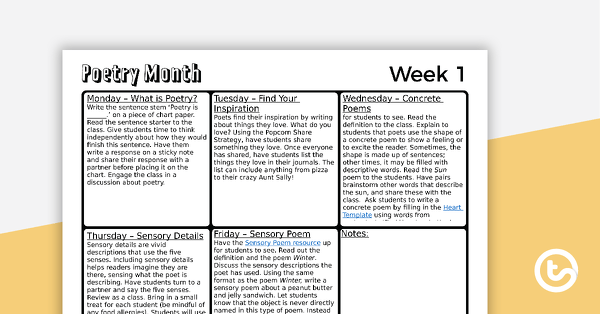
Primary Weekly Poetry Guide - Week 1
Use this weekly poetry guide to celebrate National Poetry Month in your primary classroom.
- Plus Plan
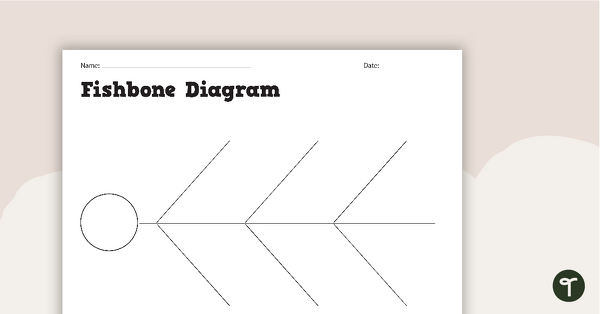
Fishbone/Herringbone Diagram Graphic Organizer
A blank fishbone and herringbone diagram to use in any subject area.
- Plus Plan
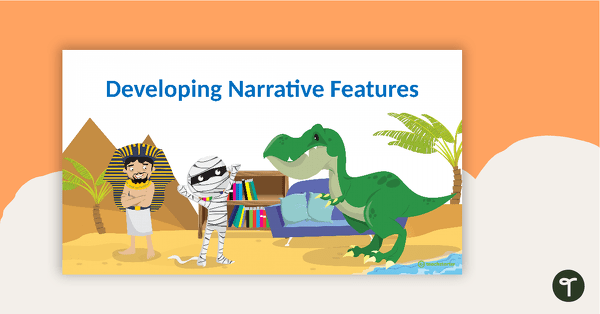
Developing Narrative Features PowerPoint - Grade 5 and Grade 6
A 26-slide editable PowerPoint template to use when teaching your students about the characteristics and craft of composing a narrative text.
- Plus Plan
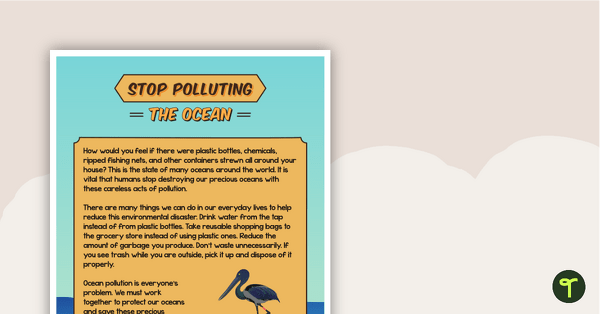
Sequence Persuasive Text Examples – Cut and Paste Worksheets
Use this example persuasive text pack to teach your students about sequencing arguments in a logical order.
- Plus Plan
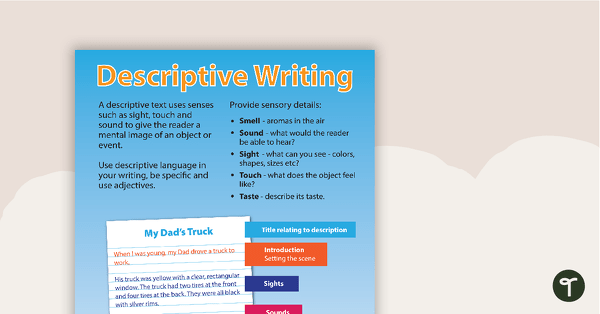
Descriptive Writing Poster
A poster outlining the main points and structure of a descriptive text.
- Plus Plan
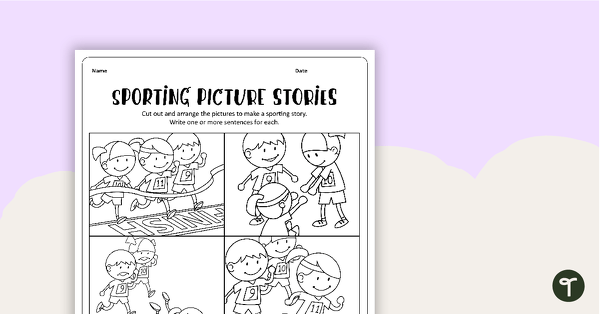
Sporting Picture Stories - Sequencing Activity
A set of sequencing cards for students to use as an independent writing activity.
- Plus Plan
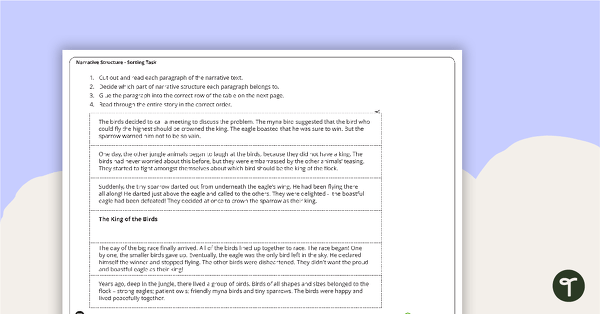
Narrative Structure Worksheet
Use this narrative structure worksheet to teach your students about the characteristic stages of narrative texts.
- Plus Plan
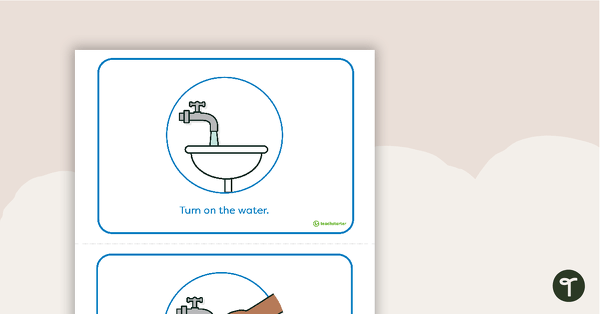
How to Wash Your Hands - Sequencing Cards
A set of 8 cards showing the steps for how to wash your hands properly
- Plus Plan
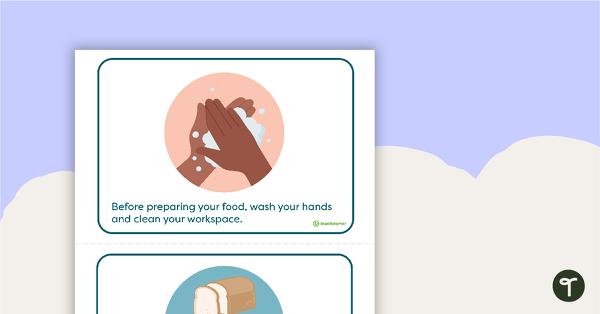
How to Make a PB and J Sandwich - Sequencing Cards
A set of 6 cards showing the steps to make a peanut butter and jelly sandwich.
- Plus Plan
Exploring Informational Texts Teaching Slides
Teach your students how to write an informational text using this detailed slideshow targeted at lower elementary school students.
- Plus Plan
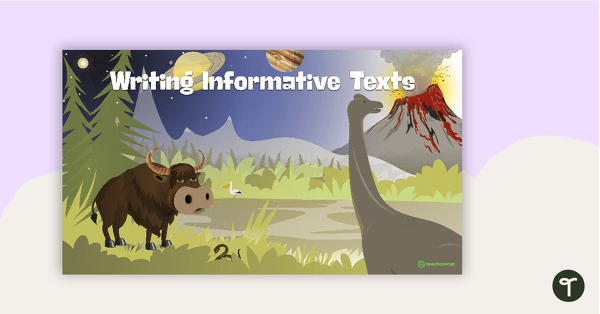
Writing Information Texts Teaching Slides
Teach your students the features of information reports using this detailed slideshow targeted at upper elementary school students.
- Plus Plan
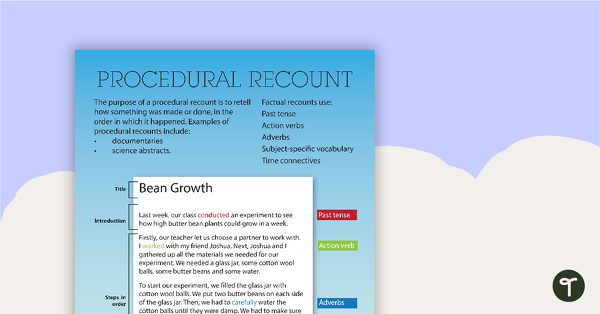
Procedural Recount Text Structure Anchor Chart - With Annotations
A poster about the procedural recount text type, including an annotated example.
- Plus Plan
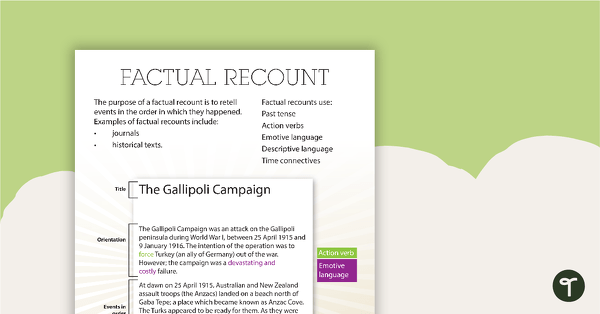
Factual Recount Text Type Poster - With Annotations
A poster about the factual recount text type, including an annotated example.
- Plus Plan
Celebrating Poetry Month in the Primary Grades – Weeks 4 and 5
Celebrate National Poetry Month in the primary classroom with this planning guide and set of resources.
- Plus Plan
Celebrating Poetry Month in the Primary Grades - Week 1
Celebrate National Poetry Month in the primary classroom with this planning guide and set of resources.
- Plus Plan
Developing Opinion Writing Skills Unit Plan - Grade 3 and Grade 4
This English unit addresses the genre of opinion writing; specifically, how to write a well-structured opinion piece.
- Plus Plan
Strong Words Make Strong Opinions
A 60 minute lesson in which students will explore how word choice can be used to strengthen an opinion.
- Plus Plan
Exploring Procedural Texts Unit Plan
This English Language Arts unit has been designed to introduce procedural texts to younger students. It addresses the purpose, structure and language features of instructions and recipes.
- Plus Plan
Understanding Point of View
A 60 minute lesson in which students will investigate point of view in relation to a situation or topic.
- Plus Plan
Writing an Opinion Piece Unit Plan - Grade 5 and Grade 6
This English unit addresses the genre of opinion writing; specifically, how to write an effective opinion piece.
- Plus Plan
Exploring Opinion Pieces Unit Plan - Grade 1 and Grade 2
This English unit has been designed to introduce the persuasive genre to younger students; specifically, the purpose, structure and language features of opinion pieces.
- Plus Plan
Narrative Features - Creating a Setting
A 60 minute lesson in which students will use descriptive language effectively to create a narrative setting.
- Plus Plan
Narrative Features - Building a Character
A 60 minute lesson in which students will use descriptive language effectively to build a character.
- Plus Plan
Animal Information Report - Modeled Writing
A 60 minute lesson in which students will jointly construct a simple information report about an animal.
- Plus Plan
Narrative Features - Creating a Setting
A 60 minute lesson in which students will use descriptive language effectively to create a narrative setting.
- Plus Plan
Informative Texts - Language Features
A 60 minute lesson in which students will identify and explore the language features of informative texts.
- Plus Plan
Independent Writing - How to Make Nature Stew
A 60 minute lesson in which students will independently write a recipe for nature stew.
- Plus Plan
Guided Writing - How To Make Fruit Salad
A 60 minute lesson in which students will jointly construct a simple recipe for fruit salad in small groups.
- Free Plan
Using a Stimulus - Independent Writing
A 60-minute lesson in which students will independently write an informative text using appropriate text structure, language, and features.
- Plus Plan
Simon Says!
A 60 minute lesson in which students will explore action verbs, common nouns, and adverbial phrases in procedures.