Graphic Organizers for Teachers
The blank graphic organizers and printable graphic organizer templates you need most for your elementary classroom are here! Help your students learn to brainstorm ideas and organize information with editable templates you can customize for your classroom.
Carefully designed and curated by our expert teacher team, each of the maps, charts, and diagrams in this collection of templates has been created with the needs of students in mind, and many are already aligned to the curriculum to save you much-needed time in your lesson planning.
You'll find:
- Printable Venn Diagram templates
- T-charts
- KWLs
- Story maps
- Concept diagrams
- Concept maps
- Knowledge maps
- Cognitive organizers
- Advance organizers
- Brainstorming templates
- More classic organizer examples
Not familiar with this teaching tool, or just looking for some fresh ideas for using them in the classroom? Read on for a primer from our teacher team!
What Is a Graphic Organizer?
A graphic organizer, by definition, is a visual guide that breaks down the relationships between ideas, vocabulary, or facts within a learning task. These learning tools scaffold learning for students, allowing them literally construct knowledge. Pretty neat, huh?
Graphic organizers can take the form of templates, charts, or diagrams and be specific to one topic or generalized for use across a range of subjects.
Printing blank templates allows students to use the tool to design their learning, explore relationships between concepts and use their evaluation and judgment skills to determine where information should be added to the organizer.
Types of Graphic Organizer Examples
So what are the different types of graphic organizers in this collection? Let's take a look at some examples and how to use them!
Concept Maps
The term "map" for this graphic organizer refers to the fact that it shares some similarities with a traditional map.
A map of a country or state can visually represent the geographic layout of different places and their relationships. Similarly, a concept map visually represents the connections and relationships between various ideas or concepts. This helps students organize their thoughts and understand the relationships between different topics, as well as helping kids understand the overall structure of a topic.
Venn Diagrams
A Venn diagram is used to show the logical relationships between two or more sets of items. The Venn diagram is named for John Venn, a mathematician, logician, and philosopher known for his work in probability.
Although a classic Venn diagram is made up of overlapping circles, other shapes can be used with this graphic organization tool. And while a Venn Diagram is often made up of just two or three circles, some forms can encompass larger numbers of shapes.
Especially useful in math and ELA classes, a Venn diagram can help students easily analyze similarities and differences between characters, objects or concepts. For example, a student might use a Venn diagram in math to sort and classify numbers or geometric shapes.
Story Maps
A story map is a graphic organizer that can help ELA students understand the elements of a story — concepts such as characters, setting, plot and resolution.
This handy tool gives kids a visual outline of the story's structure and helps students identify key elements and their relationships, plus it helps them track plot progression.
KWL Charts
KWL stands for Know-Want to know-Learned, and charts built around this acronym count as graphic organizers! They're used to activate prior knowledge, guide inquiry-based learning and track learning progress.
The goal is for students to fill in what they already know about a topic, what they want to learn, and what they have learned. This gets kids to engage with the content and ask questions!
Cause and Effect Charts
Typically used in social studies or science, cause and effect charts help students understand the relationship between events or actions.
For example, students can use one of these charts to identify the causes and consequences of a specific event in history or to analyze cause-and-effect relationships in a science experiment.
Flowcharts
Flowcharts use symbols and arrows to represent a sequence of steps or events. This type of organizer tends to be used in subjects like science and math to help kids visualize processes, procedures and problem-solving strategies.
In science, for example, a student might use a flowchart to illustrate the steps of the water cycle. They could use symbols and arrows to represent each stage, starting with "Evaporation," followed by "Condensation," "Precipitation" and "Collection." Arrows would then connect the steps logically, showing the water flow through the cycle.
Mind Maps
Yup, we have yet another kind of map on this list! Mind maps are diagrams that start with a central idea and branch out to represent related concepts or ideas visually.
You can use these organizers for brainstorming, organizing thoughts and making connections between different pieces of information, and they come in handy across a broad range of school subjects.
In writing, for example, a student could use a mind map to generate ideas or outline an essay. Meanwhile, in science class, mind maps can help a student explore different branches of a scientific concept or create visual summaries of key scientific principles.
Comparison Charts
Comparison charts help students analyze similarities and differences between two or more objects, concepts, or ideas. They are used to compare and contrast information, such as characteristics of animals, historical figures or different geographical locations.
Let's say a student needs to compare two animals in science class — an elephant and a giraffe.
They could use a comparison chart with columns for different attributes like "Size," "Habitat," "Diet" and "Physical Features." Under each column, they would then fill in the specific characteristics and compare how elephants and giraffes are different or share similarities.
Timelines
As a graphic organizer, a timeline provides a structured framework for organizing and presenting information visually. Students can see the progression of events over time, making it easier to understand historical developments, story plots or the sequence of steps in a process.
A timeline typically includes a horizontal or vertical line representing a specific timespan. Specific points or intervals are marked along the line to indicate specific events or periods. Events are then labeled and positioned relative to when they happen — this way kids can more easily grasp the order of each event and how long each one lasted.
Problem-Solution Charts
Problem-solution charts help students analyze problems and create potential solutions. They typically include sections for identifying the problem, brainstorming possible solutions and evaluating the best way to move forward.
This organizer can help kids with planning out a project like solving the problem of waste in the cafeteria. They could identify that the garbage can is always full of items that could be recycled, brainstorm ways to address the issue, and come up with a plan to add recycling bins beside the garbage can.
T-Charts
T-Charts are fairly simple graphic organizers.
They divide information into two columns — a line at the top and a line down the center give this organizer its name — and help students compare and contrast information or categorize data into two categories.
Benefits of Graphic Organizer Templates
Should you use this tool in your classroom to support your students' learning goals? We can't tell you that — but just look at the benefits of graphic organizers!
A graphic organizer helps students organize their ideas, drawing out relationships between ideas or concepts and expressing them in a graphic display. These visual representations or guides may also help students to retain information.

Not sure which organizer you and your students need?
Don't worry; this collection of teaching resources has them all covered with resources created by teachers for teachers, including free printables and templates to scaffold learning in social studies, ELA, and beyond.
- Plus Plan
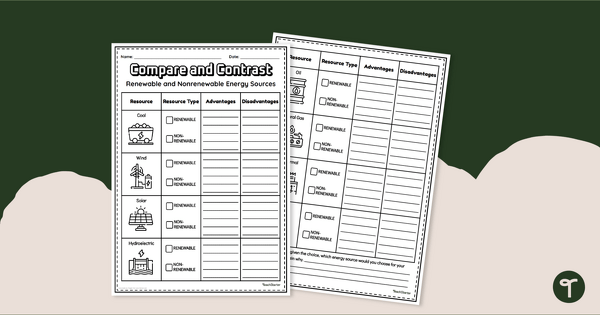
Comparing Energy Sources Worksheet & Graphic Organizer
Compare and contrast different types of renewable energy sources with a printable graphic organizer.
- Free Plan
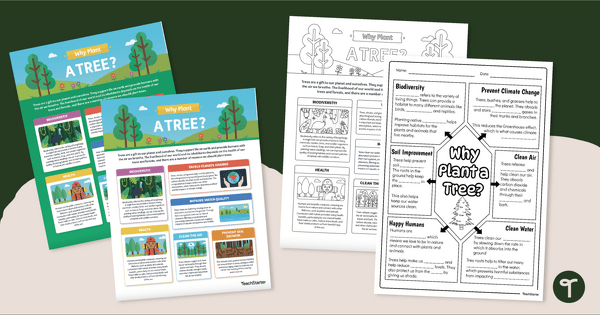
Why Plant a Tree? Infographic Analysis Activity & Posters
Teach about Arbor Day or Earth Day with an infographic poster and a cloze note-taking worksheet about the importance of trees in our environment.
- Plus Plan
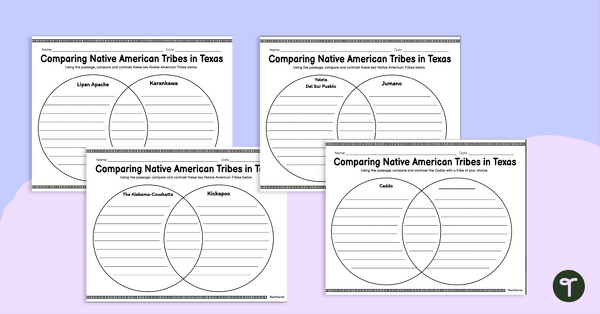
Native American Tribes in Texas - Venn Diagrams
Compare and contrast Native American tribes in Texas with a set of Venn diagram graphic organizers.
- Plus Plan
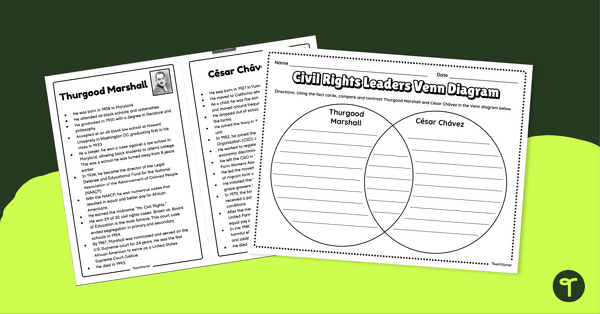
Human Rights Heroes - Marshall and Chavez Venn Diagram
Compare and contrast civil rights heroes with a set of compare-and-contrast Venn diagrams for kids.
- Plus Plan
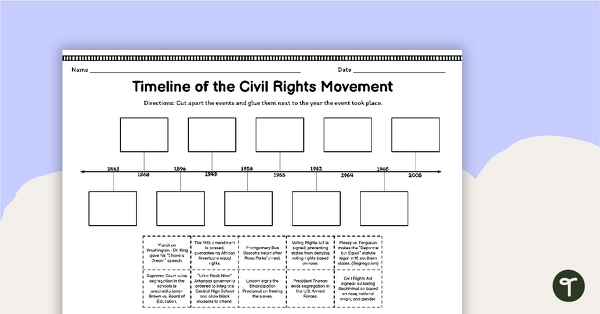
Timeline of the Civil Rights Movement Worksheet
Craft an chronological timeline for students to visually model the events occurring during the Civil Rights Movement.
- Plus Plan
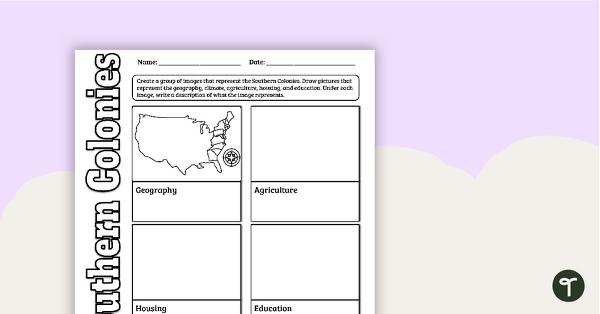
The Southern Colonies - Image Board Worksheet
Create a visual representation of the characteristics of the Southern colonies with an image board worksheet.
- Plus Plan
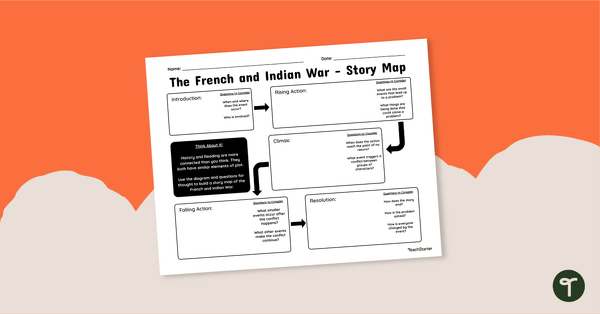
Social Studies Story Map - The French and Indian War
Combine literary plot diagrams and Social Studies standards with a French and Indian war story map worksheet.
- Plus Plan
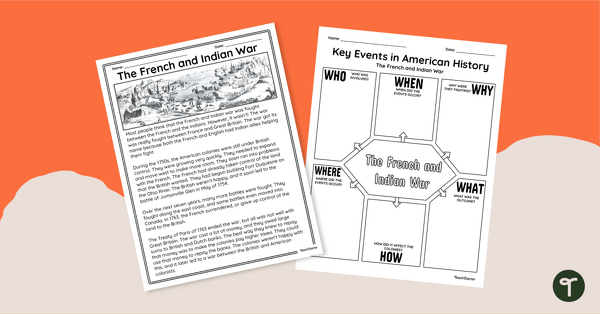
The French and Indian War - Passage and Graphic Organizer
Reveal another chapter in American History with a reading passage and graphic organizer worksheet on the French and Indian War.
- Plus Plan
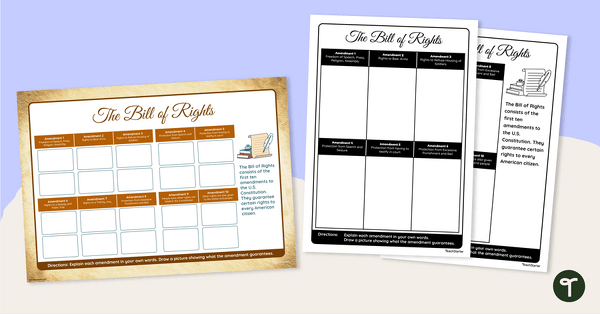
Explaining the Bill of Rights Organizer
Describe the concepts related to the first ten amendments of the United States Constitution.
- Free Plan
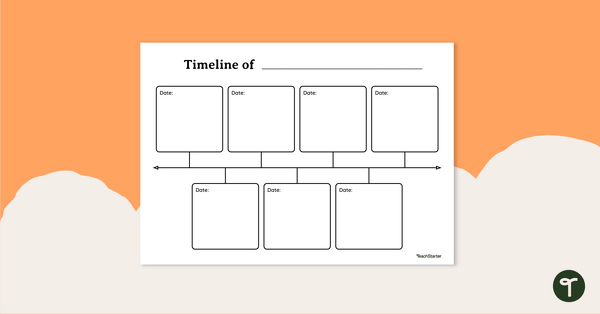
Biography Timeline Worksheet
Download this biography timeline template to help students organize key life events for a person's biography with a clear, structured format.
- Plus Plan
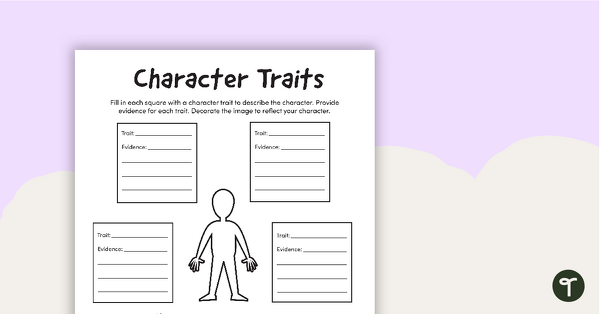
Character Traits Graphic Organizer
Describe the most notable mental and moral qualities of a real or fictional person.
- Free Plan
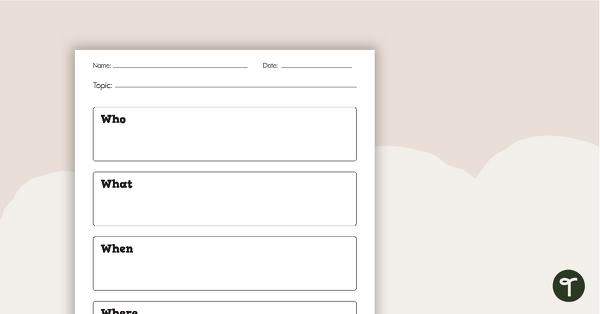
5 W's Graphic Organizer
A blank 5 W's graphic organizer to use when planning a piece of writing text.
- Free Plan
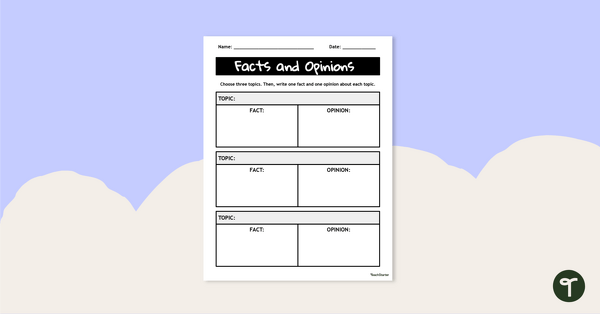
Fact and Opinion Graphic Organizer
Use this fact and opinion graphic organizer to get your students writing facts and opinions for a variety of topics.
- Plus Plan
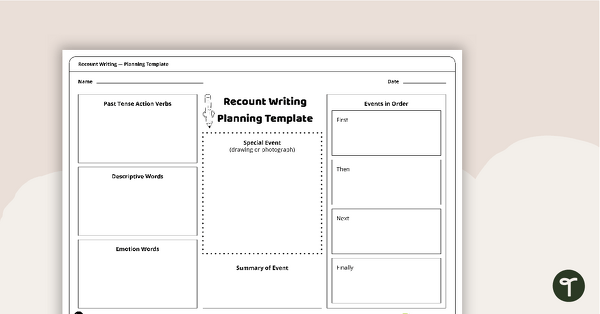
Personal Recount Planning Template
A template for students to use when planning a personal recount.
- Free Plan
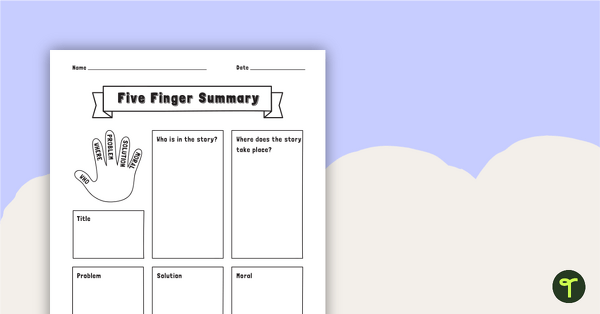
Five Finger Summary - Graphic Organizer
A graphic organizer for students to use to summarize a fiction text.
- Plus Plan
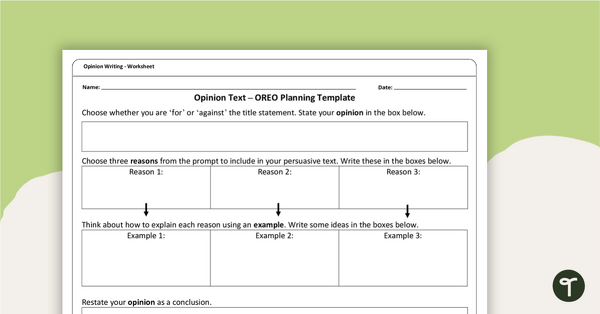
Persuasive Writing Template Pack
Download this persuasive planning template pack that helps upper elementary students organize their ideas clearly and confidently as they prepare to write well‑structured persuasive texts.
- Plus Plan

Alternative Energy Source Graphic Organizers
Take note of the advantages and disadvantages of alternative energy sources in the real world with a set of printable Energy Source Graphic Organizers.
- Plus Plan
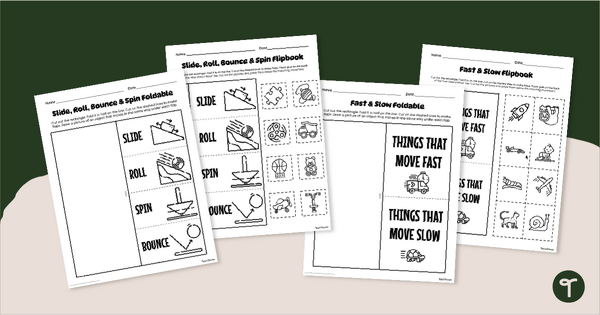
How Things Move Foldables
Explore ways things move with printable How Things Move foldables for interactive science notebooks.
- Plus Plan

Life Cycle Templates
Map the life cycle of an animal or insect easily with printable life cycle templates.
- Plus Plan
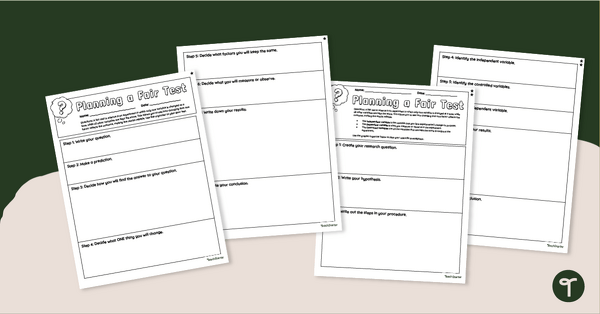
Planning a Fair Test Graphic Organizers
Plan and implement fair scientific tests in the classroom with printable Planning a Fair Test Graphic Organizers.
- Plus Plan
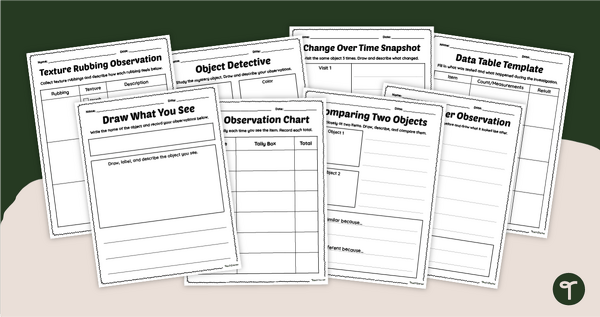
Scientific Observation Graphic Organizers
Record and organize scientific data with printable Scientific Observation Graphic Organizers for kids.
- Plus Plan
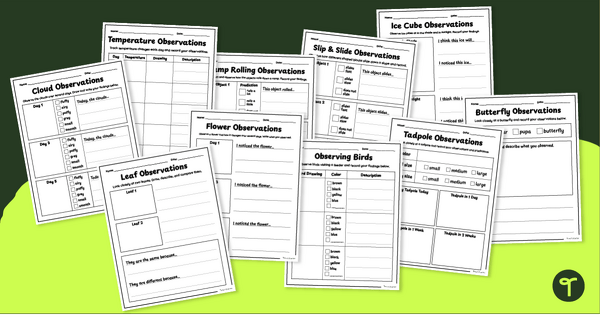
Scientific Prediction & Observation Templates (K-2)
Introduce your early learners to scientific inquiry skills with a set of printable Scientific Observation templates.
- Plus Plan
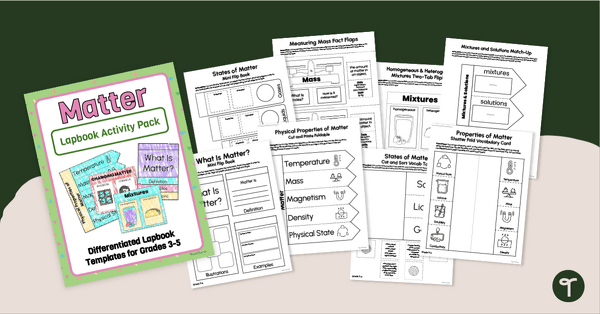
Matter Lapbook - Foldables for Science
Use our printable Matter Lapbook Foldables to teach your students about the states of matter, characteristics of matter, and changes in matter.
- Free Plan
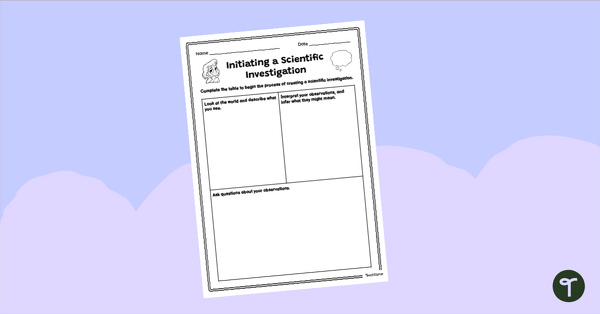
Starting a Scientific Investigation Worksheet
Help students begin the process of a scientific investigation with an introduction to the scientific method activity sheet.
- Plus Plan
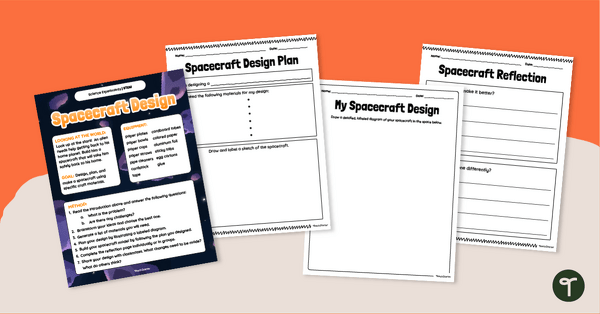
Spacecraft Design Task - STEM Project (Grades 1-3)
Implement STEM Education in the classroom with an exciting 'Build a Spacecraft' STEM Project for first through third grade students.
- Plus Plan
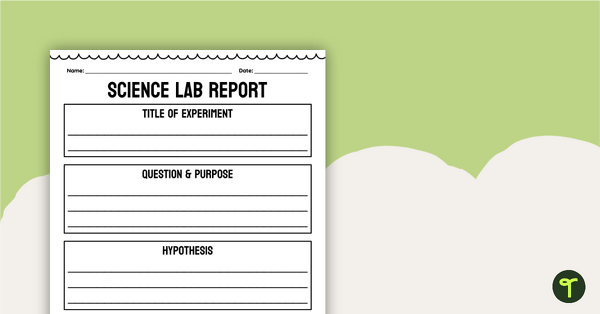
Science Lab Report Template
Use a Science Lab Report Template to help your students organize their findings in any scientific method lab experiment.
- Plus Plan
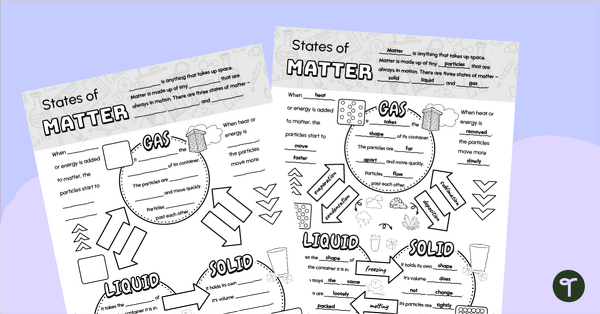
States of Matter Doodle Notes Template
Improve note-taking skills with a printable States of Matter Doodle Notes Template.
- Plus Plan
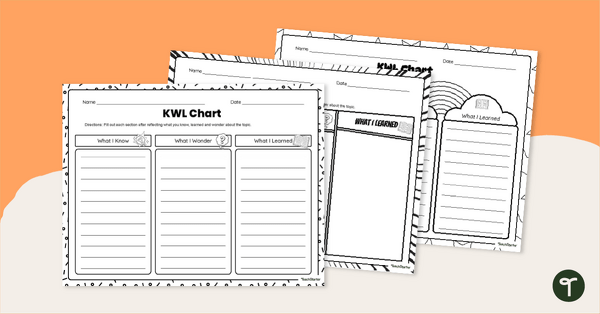
Know Wonder Learned KWL Charts
Encourages active participation while also helping your students identify prior knowledge, set their learning objectives, and summarize their learnings with this set of 3 KWL charts.
- Plus Plan
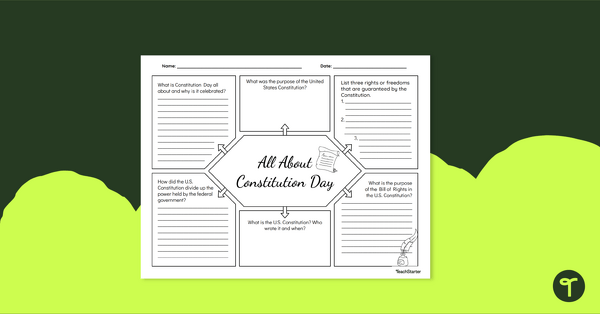
Constitution Day Graphic Organizer
Organize your Constitution Day learning with a printable U.S. Constitution Day graphic organizer.
- Plus Plan
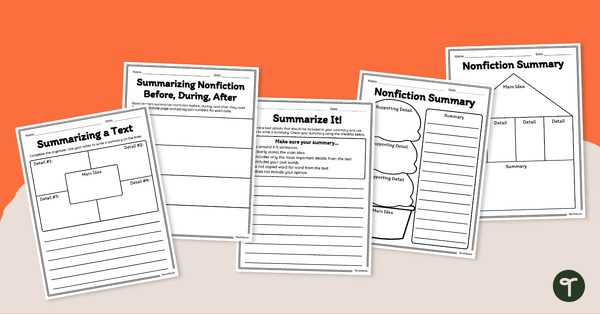
Summarizing Nonfiction Graphic Organizer Pack
Help students summarize nonfiction texts with this set of graphic organizers.
- Plus Plan
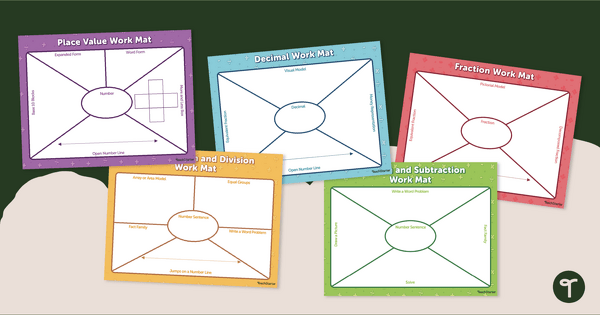
Math Graphic Organizers - Printable Work Mats
Practice working on specific math concepts with our set of 5 printable math graphic organizers.
- Free Plan
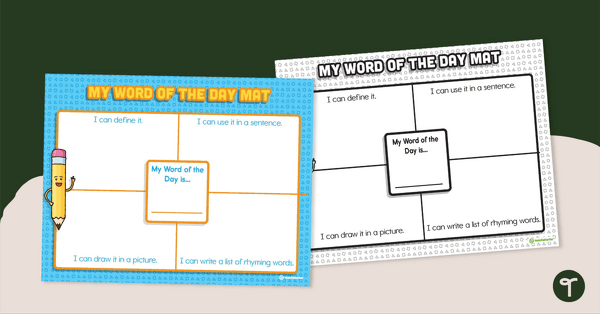
My Word of the Day Mat
A fun worksheet to use in the classroom when building vocabulary.