Mathematics
Learning mathematics creates opportunities for and enriches the lives of all Australians. The Australian Curriculum: Mathematics provides students with essential mathematical skills and knowledge in number and algebra, measurement and geometry, and statistics and probability. It develops the numeracy capabilities that all students need in their personal, work and civic life, and provides the fundamentals on which mathematical specialties and professional applications of mathematics are built.
Mathematics has its own value and beauty and the Australian Curriculum: Mathematics aims to instil in students an appreciation of the elegance and power of mathematical reasoning. Mathematical ideas have evolved across all cultures over thousands of years, and are constantly developing. Digital technologies are facilitating this expansion of ideas and providing access to new tools for continuing mathematical exploration and invention. The curriculum focuses on developing increasingly sophisticated and refined mathematical understanding, fluency, reasoning, and problem-solving skills. These proficiencies enable students to respond to familiar and unfamiliar situations by employing mathematical strategies to make informed decisions and solve problems efficiently.
The Australian Curriculum: Mathematics ensures that the links between the various components of mathematics, as well as the relationship between mathematics and other disciplines, are made clear. Mathematics is composed of multiple but interrelated and interdependent concepts and systems which students apply beyond the mathematics classroom. In science, for example, understanding sources of error and their impact on the confidence of conclusions is vital, as is the use of mathematical models in other disciplines. In geography, interpretation of data underpins the study of human populations and their physical environments; in history, students need to be able to imagine timelines and time frames to reconcile related events; and in English, deriving quantitative and spatial information is an important aspect of making meaning of texts.
The curriculum anticipates that schools will ensure all students benefit from access to the power of mathematical reasoning and learn to apply their mathematical understanding creatively and efficiently. The Mathematics curriculum provides students with carefully paced, in-depth study of critical skills and concepts. It encourages teachers to help students become self-motivated, confident learners through inquiry and active participation in challenging and engaging experiences.
- Plus Plan
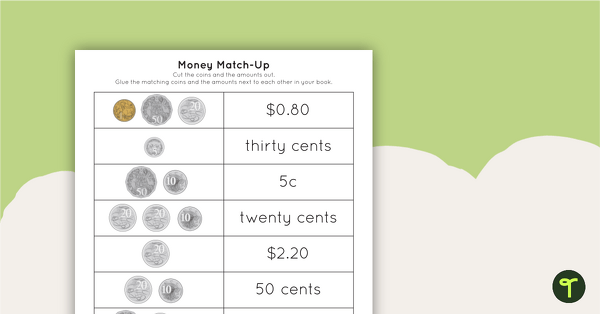
Money Match-Up Activity (Australian Currency)
An activity to help students recognise Australian coins and their combined amounts.
- Free Plan
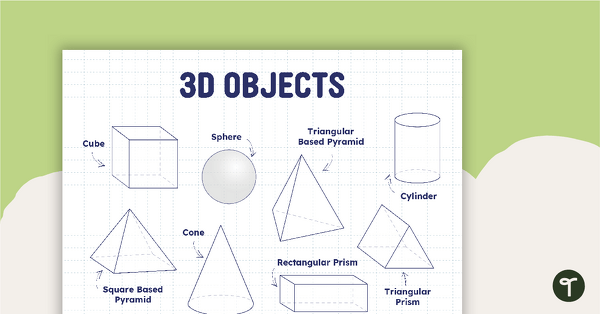
3D Objects Poster
Learn the names of some common 3D shapes with this classroom poster.
- Plus Plan
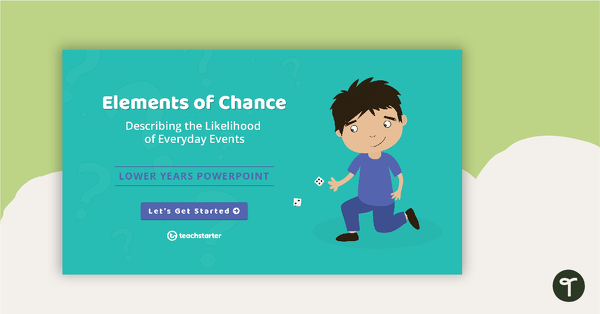
Chance Lower Years PowerPoint
An engaging 22 slide interactive PowerPoint to use in the classroom when learning about chance in the lower years.
- Plus Plan
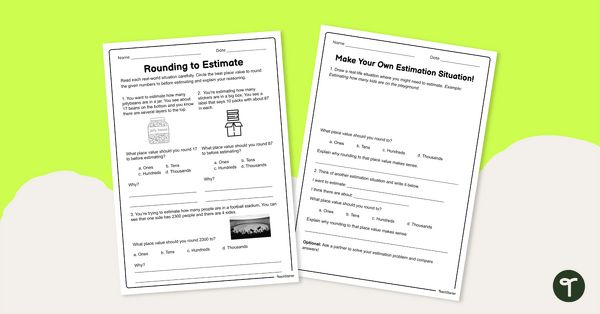
Rounding to Estimate Worksheet Set
Use our rounding to estimate worksheet set to sharpen number sense and mental maths skills.
- Plus Plan
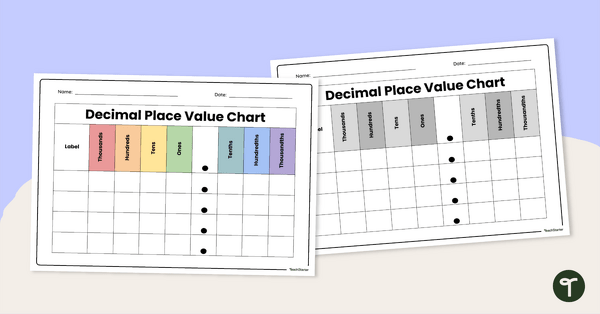
Decimal and Place Value Chart
Provide your students with our decimal and place value chart to make comparing and ordering decimals a breeze!
- Plus Plan
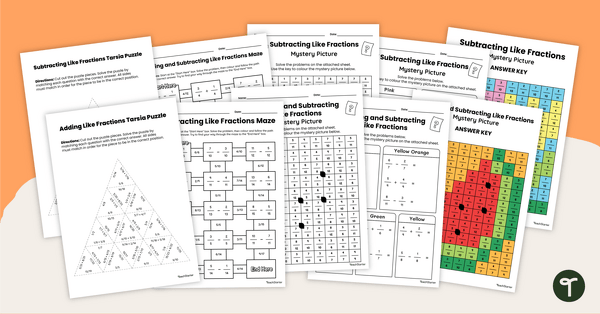
Adding and Subtracting Like Fractions Puzzle Pack
Get your students adding and subtracting fractions with like denominators with this set of nine fraction puzzles!
- Plus Plan
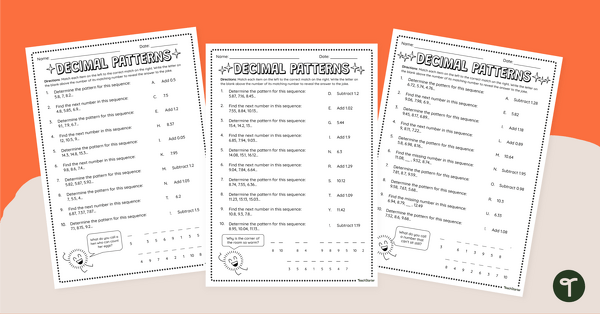
Decimal Number Patterns – Differentiated Worksheets
Practise determining a pattern and next value in a numerical sequence of decimals to the hundredths place.
- Plus Plan
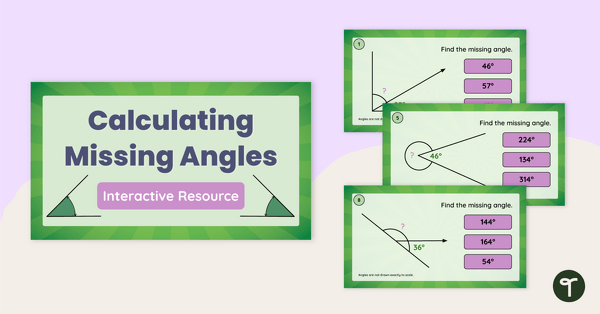
Calculating Missing Angles Interactive Activity
Get your students to find missing angles with this interactive game perfect for Year 6 maths lessons.
- Plus Plan
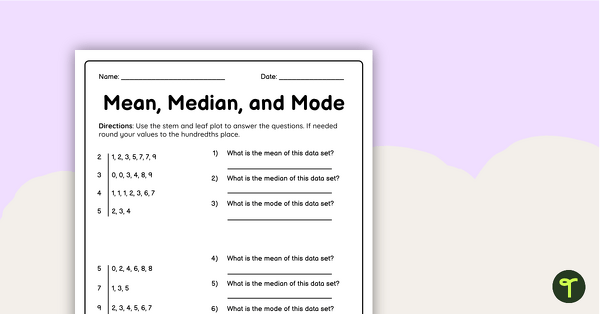
Mean Median Mode Worksheet
Use this double-sided worksheet to check students’ ability to find the mean, median and mode of given data sets.
- Plus Plan

Count and Colour by 3D Objects - Worksheet
Practise identifying 3D objects with a code-based colouring task!
- Free Plan
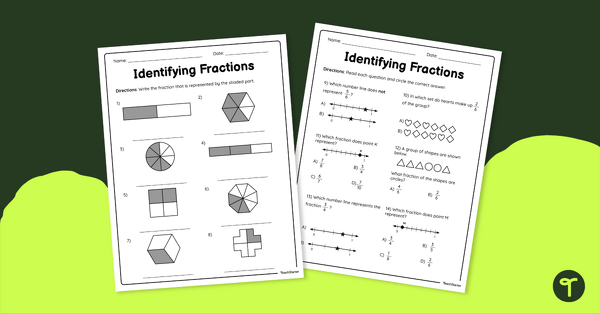
Identifying Fractions – Worksheet
Strengthen student understanding of fraction models, how to identify fractions on a number line and determine a fraction of a collection with this free worksheet.
- Plus Plan
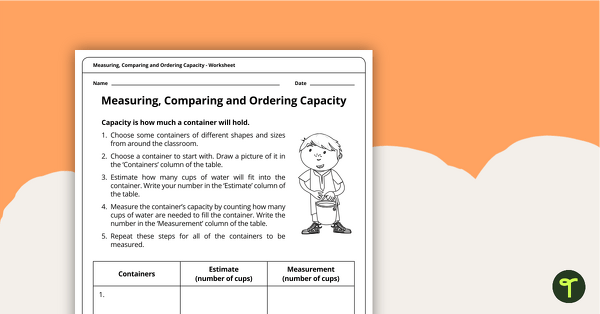
Measuring, Comparing and Ordering Capacity Worksheet
A worksheet that explores the concept of capacity using informal units of measurement.
- Plus Plan
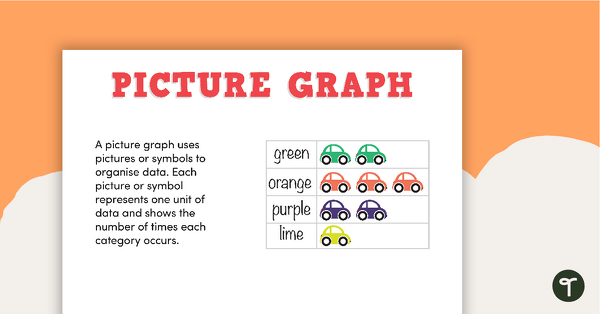
Types of Graphs Posters and Worksheets
A collection of posters displaying the different types of graphs along with matching worksheets to assist students with laying out graphs on the page.
- Plus Plan
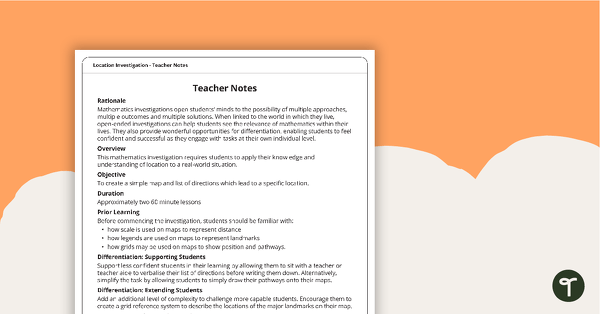
Location Maths Investigation - Blackbeard's Bounty
Discover a pirate-themed maths investigation that helps students master location skills by creating maps, writing directions and finding treasure.
- Plus Plan
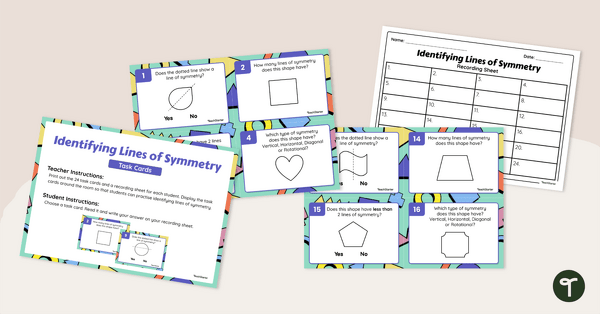
Identifying Lines of Symmetry Task Cards
Use this set of 24 task cards to help your students practise identifying lines of symmetry in 2D shapes.
- Plus Plan
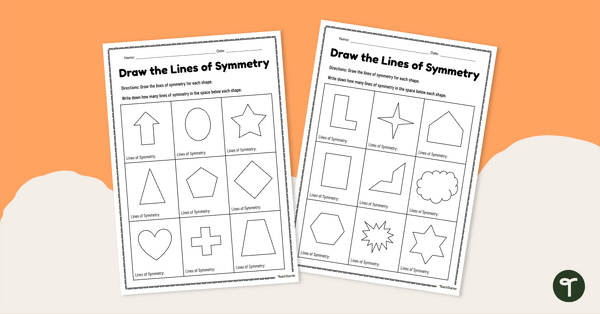
Draw The Line of Symmetry Worksheets
Use this lines of symmetry worksheet to help students practise drawing lines of symmetry on 2D shapes.
- Free Plan
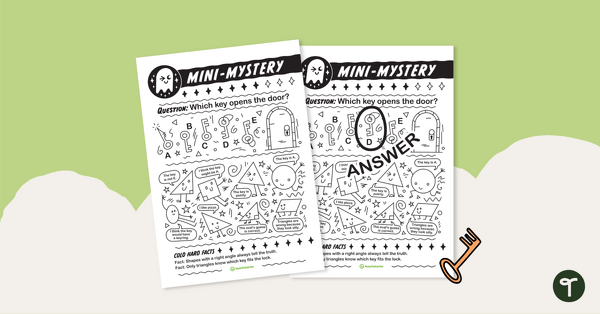
Mini-Mystery – Which Key Opens the Door?
Use knowledge of 2-D shapes and right angles to solve the mystery in this fun, logic-based activity.
- Plus Plan

Improper Fraction Escape Room
Play this improper fraction escape room with your students for a fun way to review converting between mixed numbers and improper fractions!
- Plus Plan
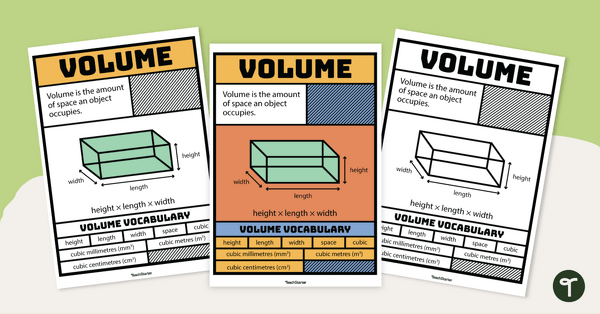
Volume Poster
Display our volume poster in your classroom to give students an easy reference for the volume formula and related vocabulary.
- Plus Plan
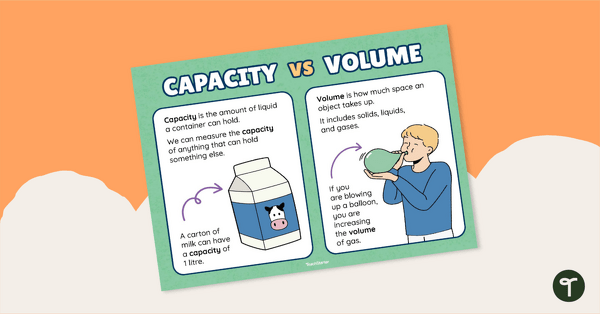
Volume and Capacity Definition Poster
Display this volume and capacity definition poster in the classroom to help students identify the main difference between capacity and volume.
- Free Plan
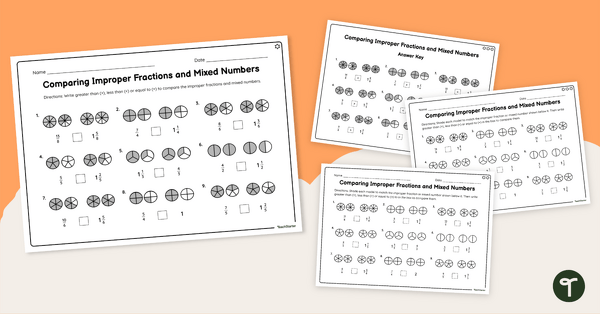
Comparing Improper Fractions to Mixed Numbers Worksheet Set
Use our comparing improper fractions to mixed numbers worksheet set to give your students practise representing and comparing fractions.
- Plus Plan
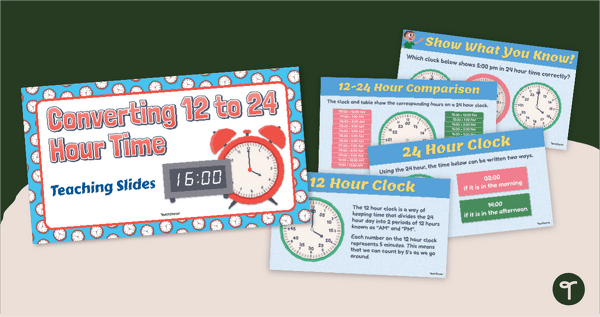
Converting 12 to 24 Hour Time Teaching Slides
Teach your students to convert between 12 and 24-hour clock times with an interactive teaching slide presentation.
- Plus Plan
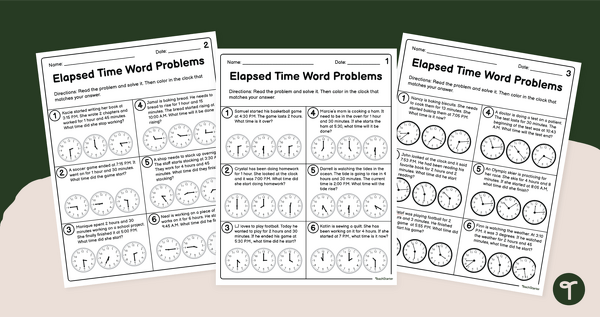
Differentiated Elapsed Time Word Problems Worksheets
Calculate time between events with a set of printable elapsed time worksheets.
- Plus Plan
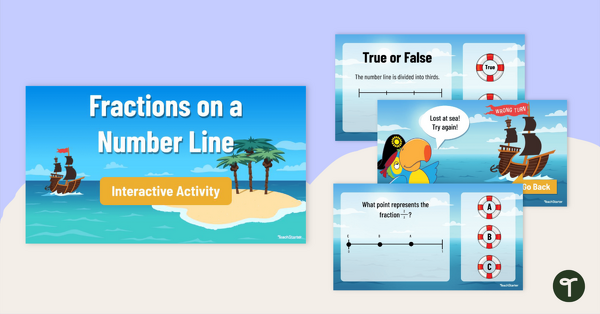
Fractions on a Number Line – Year 4 Interactive Task Cards
Practise identifying fractions on a number line with this set of 24 interactive task cards designed for year 4 students.
- Plus Plan
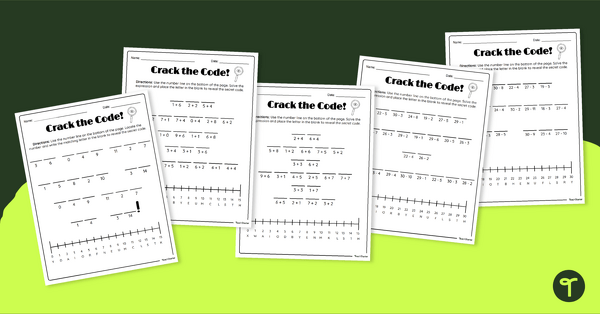
Secret Code Number Line - Worksheet
Crack the number line code with five number line codebreaker worksheets to practice number identification, addition, and subtraction.
- Plus Plan

Converting Decimals, Fractions and Percentages – Worksheet
Strengthen your students’ understanding of how to convert a percent to a decimal and a fraction with this worksheet.
- Plus Plan
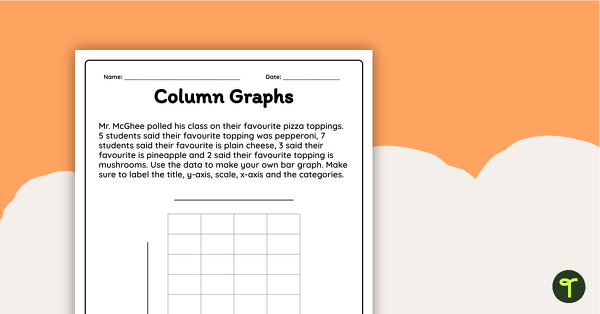
Creating a Bar Graph Worksheet
Interpret data and create a column graph display with this worksheet.
- Free Plan
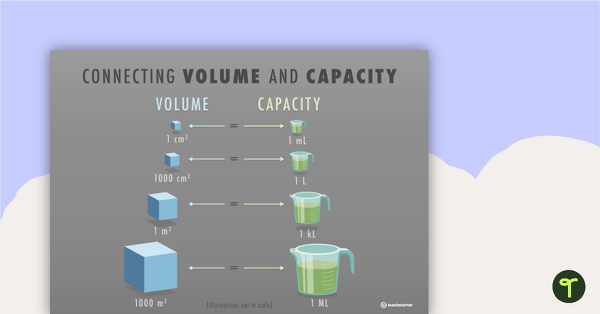
Connecting Volume and Capacity Posters
A set of three posters to help with connecting and converting units of volume and capacity.
- Plus Plan
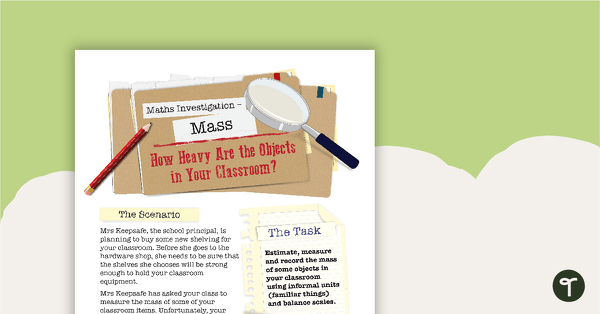
Mass Investigation - How Heavy Are the Objects in Your Classroom?
Explore the mass of objects in the classroom with this mass mathematics investigation embedded in a real-world context.
- Plus Plan
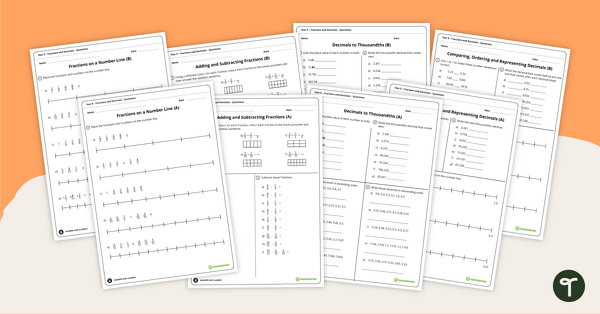
Year 5 Fractions and Decimals Worksheets
Use these fractions and decimals worksheets in your Year 5 classroom for independent practice or as an assessment activity.
- Plus Plan
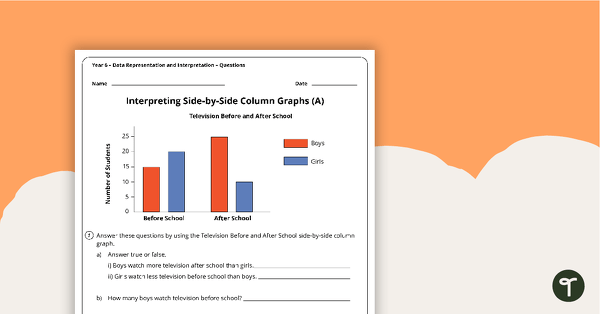
Data Representation and Interpretation Worksheets - Year 6
8 data representation and interpretation worksheets linked to the Australian Curriculum.
- Plus Plan
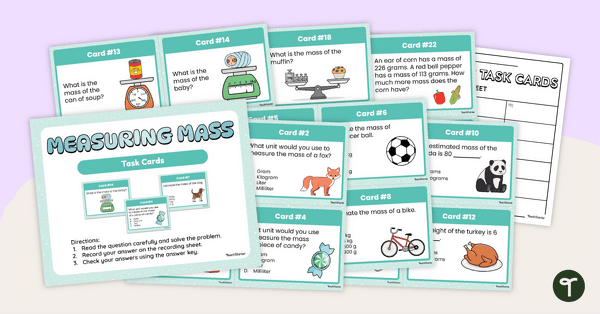
Measuring Mass Task Cards
Explore estimation and measuring mass with this set of 24 word problem task cards.