Division Teaching Resources
Make teaching division simple this school year with printable worksheets, digital activities, word problems, games and more to help students understand how to divide and apply division strategies to math problems.
This teaching resource collection was created by the teachers on the Teach Starter team for elementary teachers, and each curriculum-aligned resource has been carefully reviewed and curated to ensure it's ready to use with your students! Explore long division activities, methods for explaining divisors and dividends and more, plus find differentiated resources to help you meet each student's needs!
Want to learn more about division, or looking for fresh ideas? Read on for a primer from our teacher team!
What Is Division? A Kid-Friendly Definition
Introducing division to your class? Let's start with a definition of this math operation that's easy for them to understand!
Division is the math operation that separates a group of items or values into equal parts. The division symbols used to represent the division operation are the ÷ or / symbols. Students will also learn how to divide with a long division bracket.
An example can help students understand this!
Let's say you have 10 apples, and you want to share them equally between 2 people. To do this, you can divide 10 by 2, creating the following problem:
- 10 ÷ 2 = 5
Using division, you determine that you can give each person 5 apples.
Division Terms
Launching into division in your math class involves plenty of new vocabulary words for your students to learn! Here are some of the terms you will want to start off with.
Dividend
The number that is being divided in a division problem is called a dividend.
Divisor
The divisor is the number that divides the dividend in a division problem.
Quotient
The answer to a division problem is called the quotient. This number represents the number of equal parts.
Remainder
The remainder in a division problem is the amount left over after dividing a dividend by the divisor that cannot be divided evenly.
Fact Family
A fact family is a set of related multiplication and division equations using the same three numbers.
Divisibility Rules
If you have a division problem where you want to know if there will be a remainder or not, these general rules will help you determine if the divisor can be divided evenly into the dividend. Some rules of divisibility include even numbers being divisible by 2, dividends that end with 0 being divisible by 10, etc.
Repeated Subtraction
What does subtraction have to do with division? This division method involves repeatedly subtracting the divisor from the dividend until the remainder or zero is reached.

A cartoon styling of the division symbol
What Is Long Division?
Long division is one type of division students learn in elementary school. This method is used to divide multi-digit numbers into smaller parts using a standard algorithm.
Long division looks a lot like a little house with a roof! You write the big number you want to divide inside the house, and you place the number you want to divide it by on the outside. Then you use subtraction and multiplication to figure out the answer.
What Is Decimal Division?
Just as the name implies, decimal division is a way to divide numbers that have a decimal point.
This math operation works just like regular division, but you have to move the decimal point over to make the numbers easier to work with.
For example, if you want to divide 3.6 by 2, you would follow the steps of decimal division:
- Move the decimal point in 3.6 over one spot to the right to make it 36.
- Divide that by 2 to get 18.
- Move the decimal point back over one spot to get the answer of 1.8.
What Is Area Model Division?
Area model division is a way to solve long division problems using partitioned boxes and multiplication. The process involves the following steps.
- Draw a rectangle large enough to vertically divide and write numbers as you work through the problem.
- Write the dividend on the inner left-hand side of the rectangle.
- Put the divisor on the outside part of the rectangle.
- Use your knowledge of multiplication to find a factor that can easily be multiplied by the outside number. This may be a multiple of 10 or 100. Write this number on top of the rectangle.
- Multiply the two factors (the number on the top and the side of the rectangle). Subtract this from the number inside the rectangle.
- Vertically partition the rectangle to create a new column. Write the difference from the first box in the newly created space. Repeat the process until you reach 0 or a remainder is left. Add the numbers that are on top of the rectangle to determine the quotient.
What Is Box Method Division?
Box method division is similar to how the standard algorithm works but is an alternative for students who may need a bit more structure when solving long division problems.
- To solve problems with this model, you will draw a box and vertically divide it into the number of places present in the dividend. For example, if your dividend is 852, you would draw a box with 3 columns.
- Place each digit from the dividend into its own column in your box. Place the divisor outside of the box on the left-hand side.
- The process is very similar to the standard division steps (divide, multiply, subtract, bring down), but rather than students bringing down the number after subtracting, this number is carried over to the next column and placed before the digit in that box.
- Once you are finished, the numbers on top of the box, put together, are the quotient (and any remainder you may have).
What Is Partial Quotient Division?
If the quotient is the answer to a division problem, what is partial quotient division? This is a handy way to divide numbers by breaking them down into smaller pieces.
Here's how it works:
- Set up the long division problem with your "division house" and draw a long vertical line down from the "roof" of the house. This will give you space to write down the number of times the divisor can "go into" the dividend.
- Divide the big number by a smaller number that's easy to work with, such as a multiple of 10 or 100. Write this number on the right side of your vertical line.
- Multiply it with your divisor and write it under the dividend.
- Subtract the two numbers and repeat the process until you reach 0 or there is a remainder.
- The total of the partial quotients along the right-hand side (and any remainder) is the final answer to your division problem!
- Plus Plan
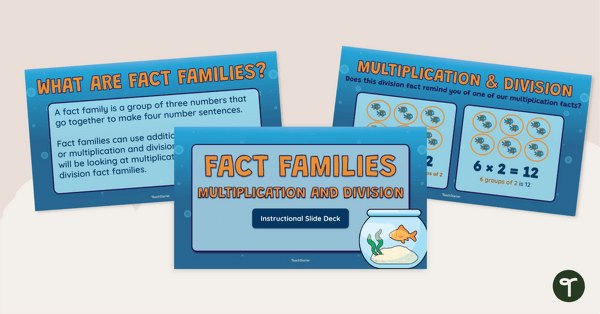
Multiplication and Division Fact Families Teaching Slides
Introduce your students to multiplication and division fact families with this 36-slide teaching slide deck.
- Plus Plan
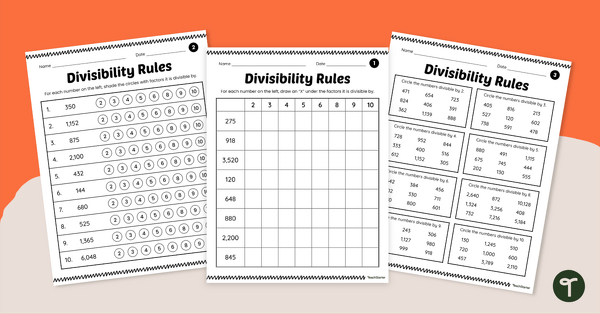
Divisibility Rules Worksheet Set
Use this divisibility rules worksheet set to give your students varied practice finding the factors of given numbers.
- Plus Plan
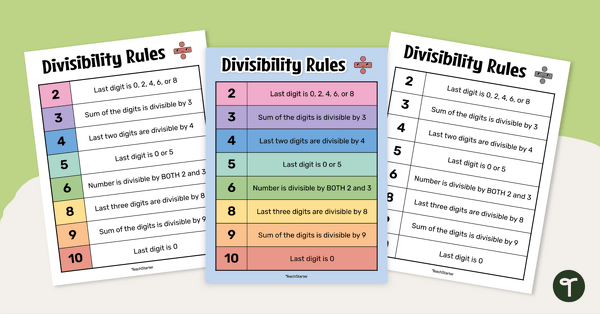
Divisibility Rules Chart
Hang our Divisibility Rules Chart in your classroom to give students a quick and easy reference for the rules of divisibility.
- Plus Plan
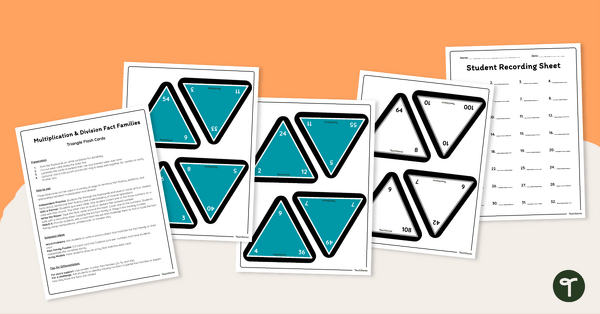
Multiplication and Division Fact Families Triangle Flashcards
Use our multiplication and division fact families triangles to give your students practice with their basic facts up to 12.
- Plus Plan
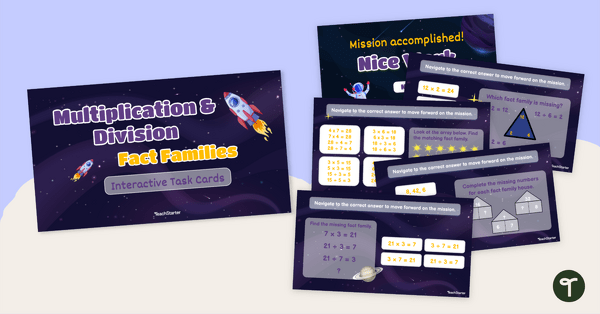
Multiplication Division Fact Family Interactive Task Cards
Use our digital multiplication division fact family task cards to give your students practice with arrays and basic facts.
- Plus Plan
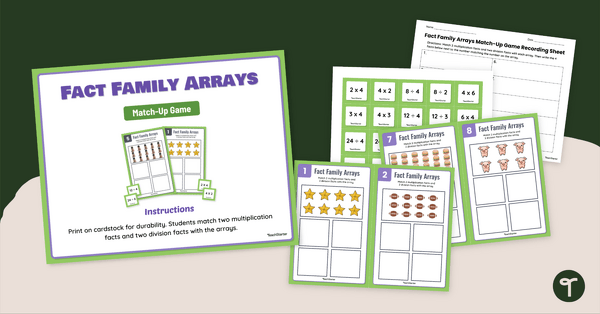
Fact Family Arrays Match-Up Game
Play this fact family arrays matching game with your students to give them practice identifying multiplication and division fact families.
- Plus Plan
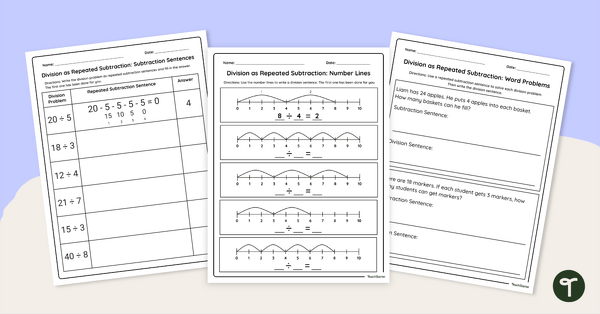
Division as Repeated Subtraction Worksheet Set
Share this division as repeated subtraction worksheet set with your students to teach division by building on subtraction concepts they are already familiar with.
- Plus Plan
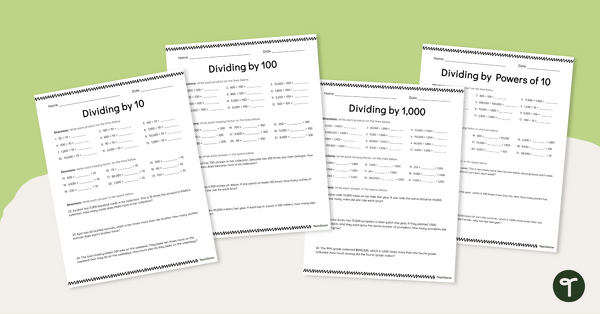
Dividing by Powers of 10 Worksheet Set
Utilize this dividing by powers of 10 worksheet set to give your students practice dividing whole numbers by 10, 100, and 1,000.
- Plus Plan
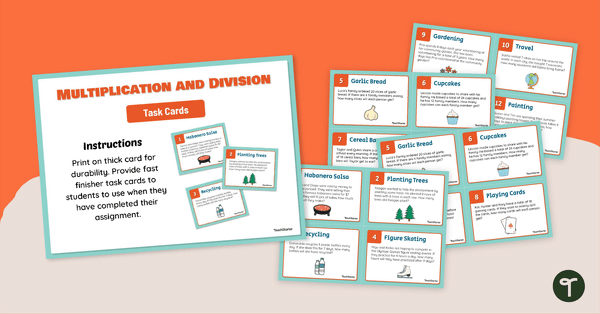
Multiplication and Division Word Problems Task Cards
Use a range of strategies to solve 2-digit by 1-digit multiplication and division word problems that exceed the facts of the 12 times tables.
- Plus Plan
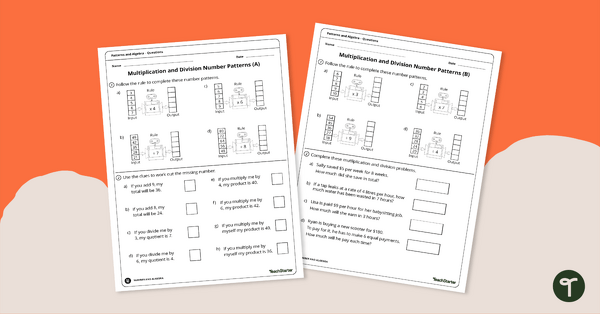
Number Patterns 4th Grade Worksheet Set
Use this number patterns 4th grade worksheet set to give your students practice with multiplication and division number patterns.
- Plus Plan
Division Dragon – Worksheet
Division doesn't have to be boring! Let your pupils practise with our fun differentiated dragon division worksheets.
- Plus Plan
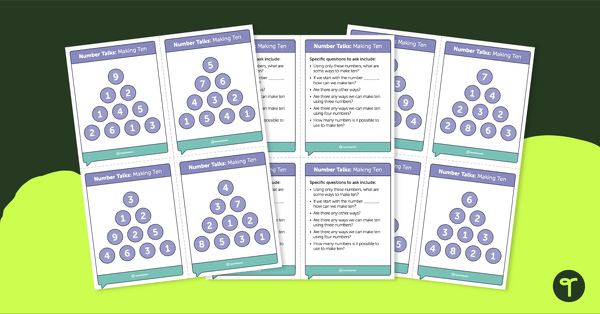
Number Talks - Making Ten Task Cards
Build number sense skills with this set of 20 task cards.
- Plus Plan
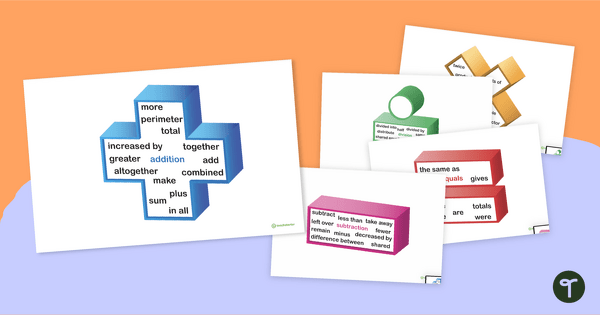
Math Symbols Posters with Vocabulary
Students can often identify the mathematical symbol, but what about all of the different names for it?
- Plus Plan
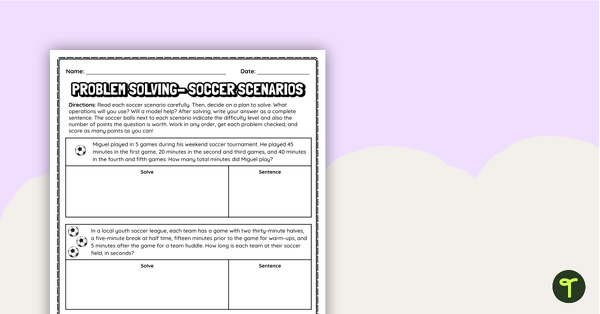
Soccer Stories - Problem Solving Worksheets
Practice multiplication, division, and problem solving skills with a high-interest soccer-themed scenario activity.
- Plus Plan
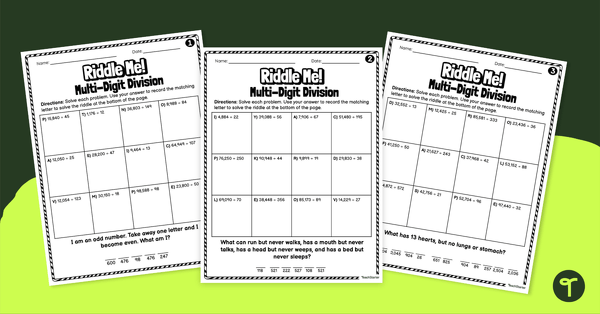
Multi-Digit Division Riddles – Worksheet
Have fun solving multi-digit division problems with this set of 3 riddle worksheets.
- Plus Plan
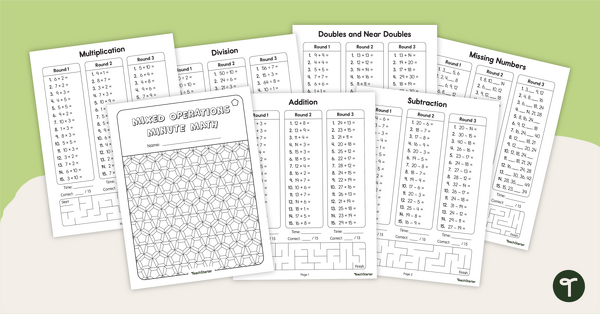
Mixed Operations Minute Math Booklet (Lower-Level Version)
Jump into your math lessons with this ten-page mental math booklet covering the four operations and number patterns.
- Plus Plan
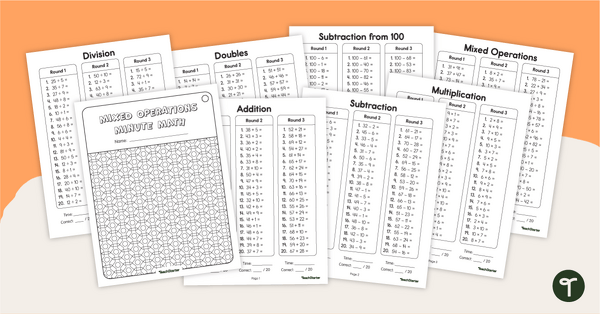
Mixed Operations Minute Math Booklet (Higher-Level Version)
Incorporate this mental math drills booklet into your math lesson warm-up (or assessment) routine.
- Plus Plan
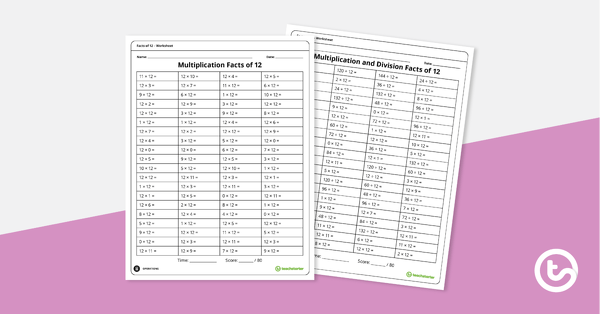
Multiplication and Division Worksheets – Facts of 12
A set of worksheets to help students develop fast and accurate recall of the facts of 12.
- Plus Plan
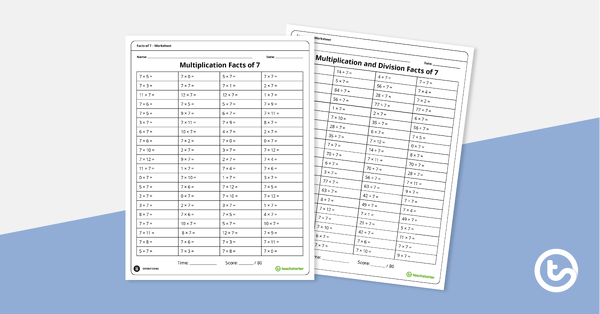
Multiplication and Division Worksheets – Facts of 7
A set of worksheets to help students develop fast and accurate recall of the facts of 7.
- Plus Plan
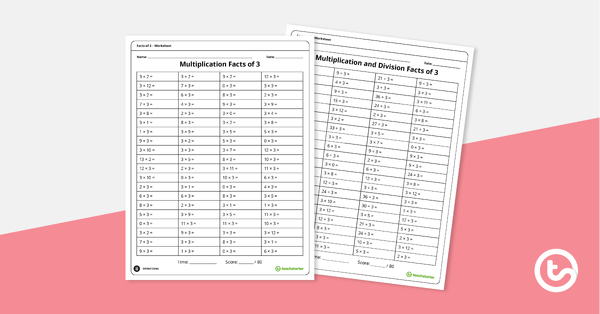
Multiplication and Division Worksheets – Facts of 3
A set of worksheets to help students develop fast and accurate recall of the facts of 3.
- Plus Plan
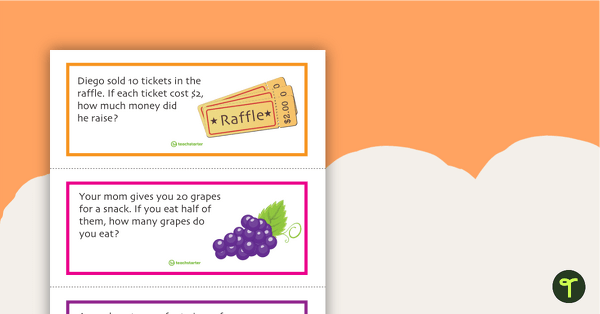
Basic Multiplication and Division Word Problem Task Cards
21 word problem task cards to use when learning to differentiate between and model multiplication and division situations.
- Plus Plan
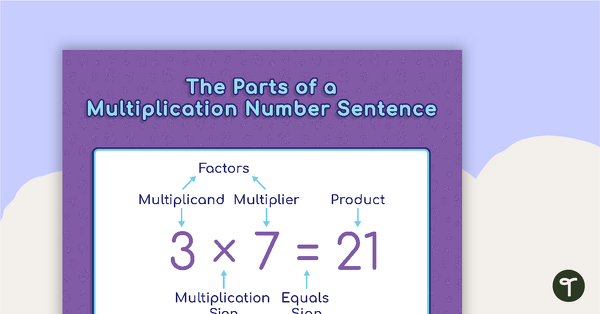
Parts of a Number Sentence - Multiplication and Division
A set of 4 posters explaining the numbers involved a multiplication and division number sentence.
- Plus Plan
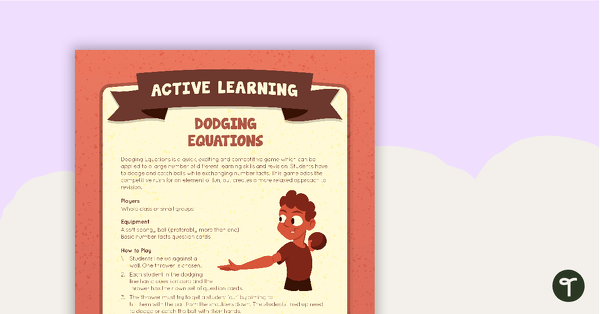
Dodging Equations Active Learning
A whole class active game that encourages practicing math facts in a physical setting.
- Plus Plan
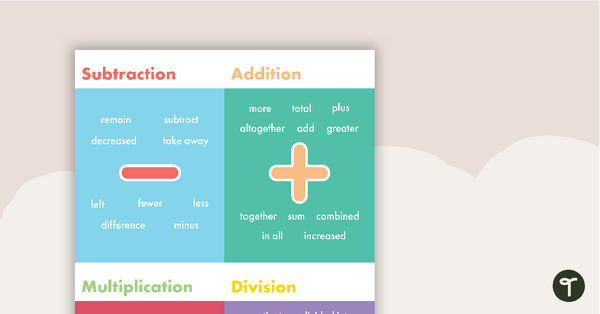
Mathematics Vocabulary Posters
A teaching resource to help students identify the associated vocabulary for mathematical operations.
- Plus Plan
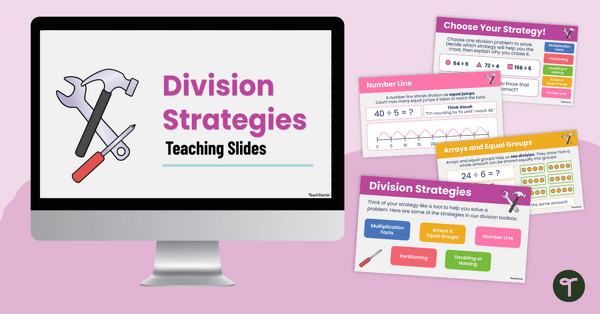
Division Strategies Teaching Slides
Master division strategies with engaging Grade 3 teaching slides that introduce multiple approaches to division and help students become confident problem-solvers.
- Plus Plan
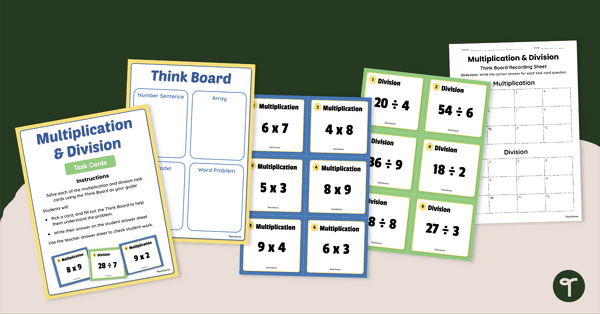
Multiplication and Division Task Cards
Use this multiplication and division resource to help 3rd grade students build a deeper understanding of mathematical strategies.
- Plus Plan
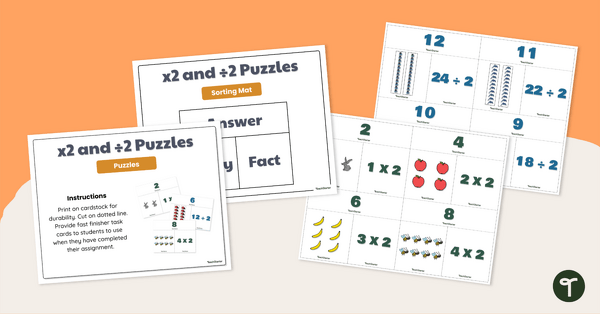
Multiplication and Division Puzzles
Incorporate multiplication and division puzzles that help students build fluency with the 2× facts and related ÷2 facts.
- Plus Plan
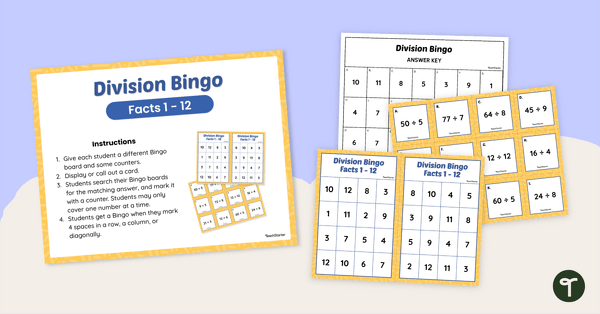
Division Bingo - Facts 1 - 12
Gamify your math lesson with our division bingo game that delivers engaging practice with division facts up to 12.
- Plus Plan
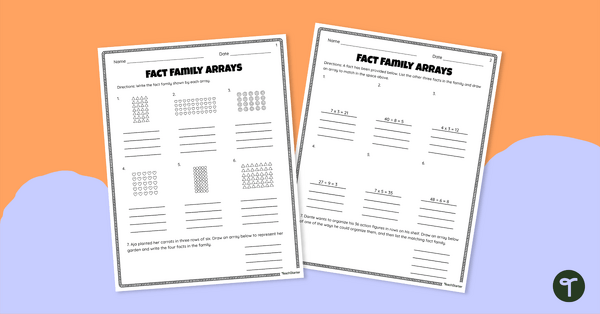
Fact Families Multiplication and Division Worksheets
Download these fact families multiplication and division worksheets to help your students visualize fact families with arrays.
- Plus Plan
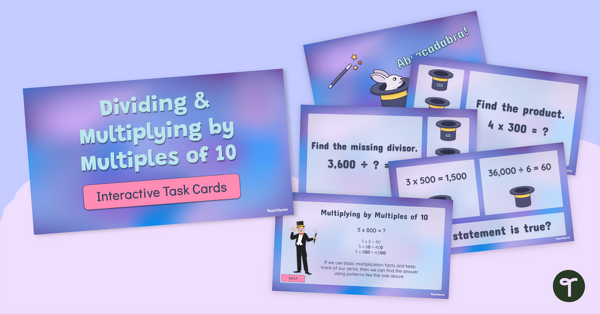
Dividing and Multiplying by Multiples of 10 Interactive Task Cards
Practice dividing and multiplying by multiples of 10 with this engaging interactive task card activity.
- Plus Plan
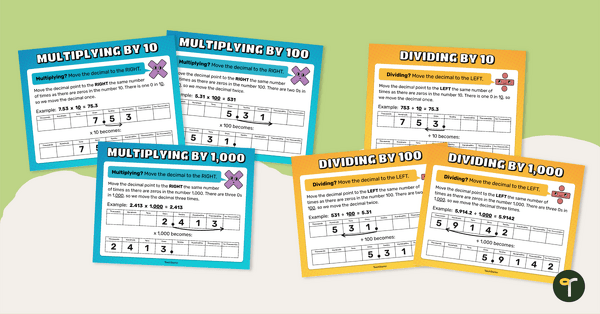
Multiplying and Dividing by Powers of 10 Anchor Chart Set
Display our multiplying and dividing by powers of 10 anchor chart set in your classroom for an easy reference for students learning operations with powers of 10.
- Plus Plan
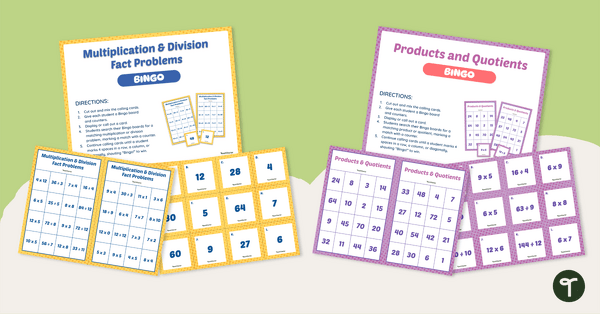
Multiplication and Division Bingo
Practice fact families with our multiplication and division bingo resource that offers two different ways to play!