Solve problems involving multiplication of larger numbers by one- or two-digit numbers, choosing efficient mental and written calculation strategies and using digital tools where appropriate; check the reasonableness of answers
Recall and demonstrate proficiency with multiplication facts up to 10 × 10 and related division facts, and explain the patterns in these; extend and apply facts to develop efficient mental and written strategies for computation with larger numb...
Follow and create algorithms involving a sequence of steps and decisions that use addition or multiplication to generate sets of numbers; identify and describe any emerging patterns
Develop efficient mental and written strategies and use appropriate digital tools for solving problems involving addition and subtraction, and multiplication and division where there is no remainder
Extend and apply knowledge of addition and subtraction facts to 20 to develop efficient mental strategies for computation with larger numbers without a calculator
Recognise and explain the connection between addition and subtraction as inverse operations, apply to partition numbers and find unknown values in number sentences
Recognise and represent unit fractions including 1/2, 1/3, 1/4, 1/5 and 1/10 and their multiples in different ways; combine fractions with the same denominator to complete the whole
Recognise, describe and create additive patterns that increase or decrease by a constant amount, using numbers, shapes and objects, and identify missing elements in the pattern
Use mathematical modelling to solve practical problems involving additive and multiplicative situations, including money transactions; represent situations and choose calculation strategies; interpret and communicate solutions in terms of the co...
Multiply and divide by one-digit numbers using repeated addition, equal grouping, arrays and partitioning to support a variety of calculation strategies
Add and subtract one- and two-digit numbers, represent problems using number sentences and solve using part-part-whole reasoning and a variety of calculation strategies
Represent practical situations, including simple financial situations, involving addition, subtraction and quantification with physical and virtual materials and use counting or subitising strategies
Represents and compares halves, quarters, thirds and fifths as lengths on a number line and their related fractions formed by halving (eighths, sixths and tenths)
Solve problems involving multiplication of larger numbers by one- or two-digit numbers, choosing efficient calculation strategies and using digital tools where appropriate; check the reasonableness of answers
Develop efficient strategies and use appropriate digital tools for solving problems involving addition and subtraction, and multiplication and division where there is no remainder
Extend and apply knowledge of addition and subtraction facts to 20 to develop efficient mental strategies for computation with larger numbers without a calculator
Recognise and explain the connection between addition and subtraction as inverse operations, apply to partition numbers and find unknown values in number sentences
Recognise and represent unit fractions including 1/2, 1/3, 1/4, 1/5 and 1/10 and their multiples in different ways; combine fractions with the same denominator to complete the whole
Recognise, describe and create additive patterns that increase or decrease by a constant amount, using numbers, shapes and objects, and identify missing elements in the pattern
Use mathematical modelling to solve practical problems involving additive and multiplicative situations, including money transactions; represent situations and choose calculation strategies; interpret and communicate solutions in terms of the situation
Multiply and divide by one-digit numbers using repeated addition, equal grouping, arrays, and partitioning to support a variety of calculation strategies
Add and subtract one- and two-digit numbers, representing problems using number sentences, and solve using part-part-whole reasoning and a variety of calculation strategies
Represent practical situations involving addition, subtraction and quantification with physical and virtual materials and use counting or subitising strategies
Solve problems involving multiplication of large numbers by one- or two-digit numbers using efficient mental, written strategies and appropriate digital technologies
Develop efficient mental and written strategies and use appropriate digital technologies for multiplication and for division where there is no remainder
Recall multiplication facts up to 10 x 10 and related division facts
Elaborations
using known multiplication facts to calculate related division facts (Skills: Numeracy, Critical and Creative Thinking)
View this topic on www.australiancurr...
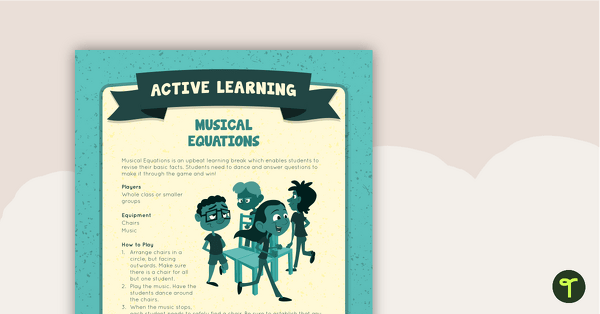
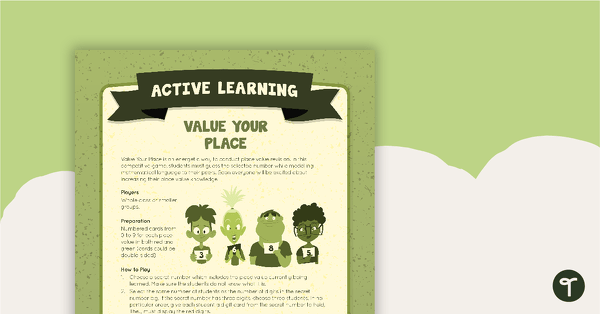
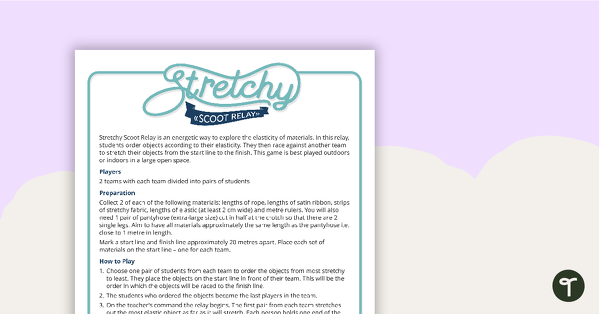
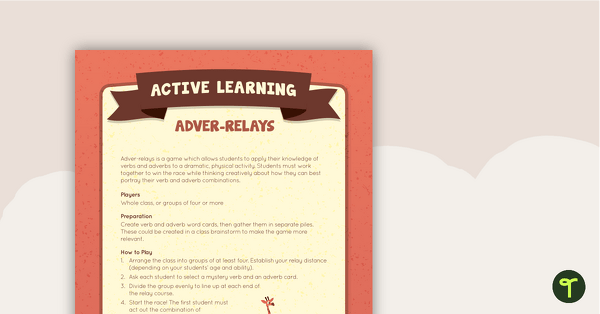
A whole class active game that encourages learning through a physical setting.
This teaching resource is a great way to encourage learning number facts through a physical game.
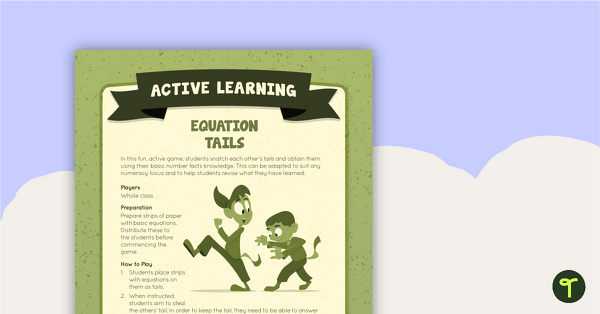
In this fun, active game, students snatch each other’s tails and obtain them using their basic number facts knowledge. This can be adapted to suit any numeracy focus and to help students revise what they have learned.
Solve problems involving multiplication of larger numbers by one- or two-digit numbers, choosing efficient mental and written calculation strategies and using digital tools where appropriate; check the reasonableness of answers
Recall and demonstrate proficiency with multiplication facts up to 10 × 10 and related division facts, and explain the patterns in these; extend and apply facts to develop efficient mental and written strategies for computation with larger numb...
Follow and create algorithms involving a sequence of steps and decisions that use addition or multiplication to generate sets of numbers; identify and describe any emerging patterns
Develop efficient mental and written strategies and use appropriate digital tools for solving problems involving addition and subtraction, and multiplication and division where there is no remainder
Extend and apply knowledge of addition and subtraction facts to 20 to develop efficient mental strategies for computation with larger numbers without a calculator
Recognise and explain the connection between addition and subtraction as inverse operations, apply to partition numbers and find unknown values in number sentences
Recognise and represent unit fractions including 1/2, 1/3, 1/4, 1/5 and 1/10 and their multiples in different ways; combine fractions with the same denominator to complete the whole
Recognise, describe and create additive patterns that increase or decrease by a constant amount, using numbers, shapes and objects, and identify missing elements in the pattern
Use mathematical modelling to solve practical problems involving additive and multiplicative situations, including money transactions; represent situations and choose calculation strategies; interpret and communicate solutions in terms of the co...
Multiply and divide by one-digit numbers using repeated addition, equal grouping, arrays and partitioning to support a variety of calculation strategies
Add and subtract one- and two-digit numbers, represent problems using number sentences and solve using part-part-whole reasoning and a variety of calculation strategies
Represent practical situations, including simple financial situations, involving addition, subtraction and quantification with physical and virtual materials and use counting or subitising strategies
Represents and compares halves, quarters, thirds and fifths as lengths on a number line and their related fractions formed by halving (eighths, sixths and tenths)
Solve problems involving multiplication of larger numbers by one- or two-digit numbers, choosing efficient calculation strategies and using digital tools where appropriate; check the reasonableness of answers
Develop efficient strategies and use appropriate digital tools for solving problems involving addition and subtraction, and multiplication and division where there is no remainder
Extend and apply knowledge of addition and subtraction facts to 20 to develop efficient mental strategies for computation with larger numbers without a calculator
Recognise and explain the connection between addition and subtraction as inverse operations, apply to partition numbers and find unknown values in number sentences
Recognise and represent unit fractions including 1/2, 1/3, 1/4, 1/5 and 1/10 and their multiples in different ways; combine fractions with the same denominator to complete the whole
Recognise, describe and create additive patterns that increase or decrease by a constant amount, using numbers, shapes and objects, and identify missing elements in the pattern
Use mathematical modelling to solve practical problems involving additive and multiplicative situations, including money transactions; represent situations and choose calculation strategies; interpret and communicate solutions in terms of the situation
Multiply and divide by one-digit numbers using repeated addition, equal grouping, arrays, and partitioning to support a variety of calculation strategies
Add and subtract one- and two-digit numbers, representing problems using number sentences, and solve using part-part-whole reasoning and a variety of calculation strategies
Represent practical situations involving addition, subtraction and quantification with physical and virtual materials and use counting or subitising strategies
Solve problems involving multiplication of large numbers by one- or two-digit numbers using efficient mental, written strategies and appropriate digital technologies
Develop efficient mental and written strategies and use appropriate digital technologies for multiplication and for division where there is no remainder
Recall multiplication facts up to 10 x 10 and related division facts
Elaborations
using known multiplication facts to calculate related division facts (Skills: Numeracy, Critical and Creative Thinking)
View this topic on www.australiancurr...
Represent practical situations to model addition and sharing
Teach Starter Publishing
We create premium quality, downloadable teaching resources for primary/elementary school teachers that make classrooms buzz!
0 Comments
Write a review to help other teachers and parents like yourself. If you'd like to
request a change to this resource, or report an error, select the corresponding tab
above.
Would you like something changed or customised on this resource? While our team
makes every effort to complete change suggestions, we can't guarantee that every
change will be completed.
0 Comments
Write a review to help other teachers and parents like yourself. If you'd like to request a change to this resource, or report an error, select the corresponding tab above.