Graphing Teaching Resources
Teach graphing this school year with printable worksheets, fun graphing activities and games, task cards and more teacher-created resources for elementary school math!
This collection of editable teacher-created resources is aligned with the Common Core curriculum. It has been carefully reviewed by the expert teachers on the Teach Starter team to ensure every single digital or printable resource is ready to use in the classroom. That means you can save hours on lesson planning with activities ready to print or use digitally!
Are you looking to learn more about teaching students to use graphs, or just on the hunt for fresh ideas and activities to engage your students? Read on for a primer from our teacher team, including a look graphing on this level and some key vocabulary!
What Is Graphing? A Kid-Friendly Definition
Graphing starts as early as kindergarten or first grade in many schools around the country with simple pictographs. But how do you explain what graphing is to the youngest students? This kid-friendly definition may help.
Graphing is a way to show information using pictures and symbols. It's sort of like drawing a picture that helps you understand numbers and facts.
For example, we could use graphs to show how many kids in our class like different colors or how many toys in the toy bin are cars.
Graphing Vocabulary for Elementary Teachers
Looking for a guide to some of the graphing vocabulary your students will encounter — and you will have to define? Here's a comprehensive look, along with some simple definitions!
- Data —Information that is collected and analyzed
- Axis — The horizontal and vertical lines that make up a graph.
- X-axis — The horizontal axis on a graph
- Y-axis — The vertical axis on a graph
- Bar — A rectangular shape we use to represent data on a bar graph
- Scale — The units used to measure data on a graph
- Pictogram/pictograph — A graph that uses pictures to represent data
- Legend/key — A chart that explains the symbols used on a graph (students may recognize this from their map skills lessons)
- Line of best fit — A straight line on a graph that represents the overall trend in a set of data
- Line plot — A graph that shows the frequency of data values on a number line
- Tally — A mark used to represent data on a tally chart
- Pie chart — A graph that shows the proportion of each data value to the whole, represented as a circle that looks like a pie
- Line graph — A graph that shows the relationship between two variables using a line
- Data point — An individual value on a graph
- Plus Plan
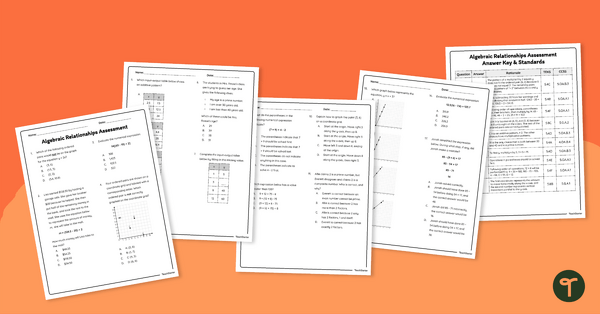
5th Grade Algebraic Relationships Assessment
Assess student understanding of prime and composite numbers, numerical expressions, graphing numerical patterns, and more with this math assessment.
- Plus Plan
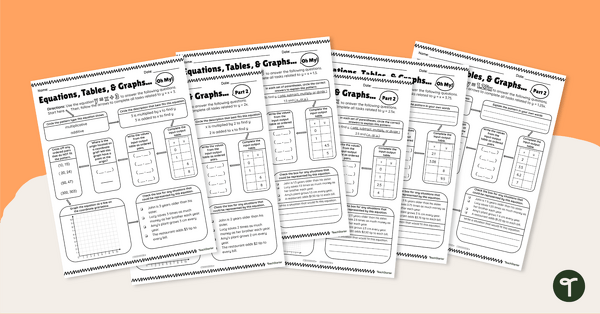
Equations, Tables, and Graphs, Oh My! – Differentiated Worksheets
Use these differentiated worksheets to practice using equations to create patterns within input-output tables and graphs.
- Plus Plan
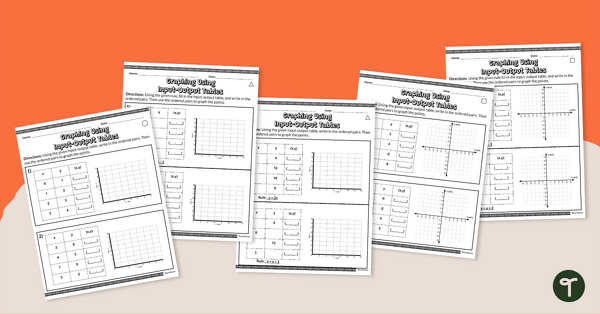
Graphing Using Input-Output Tables – Differentiated Worksheets
Use data from input-output tables to graph points with this set of differentiated worksheets.
- Plus Plan
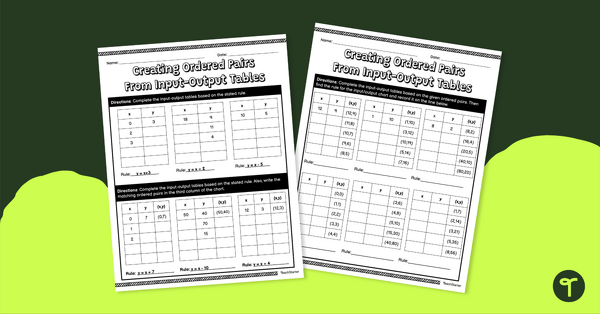
Creating Ordered Pairs From Input-Output Tables – Worksheet
Create ordered pairs from an input-output table and determine the rule for each table with this worksheet.
- Plus Plan
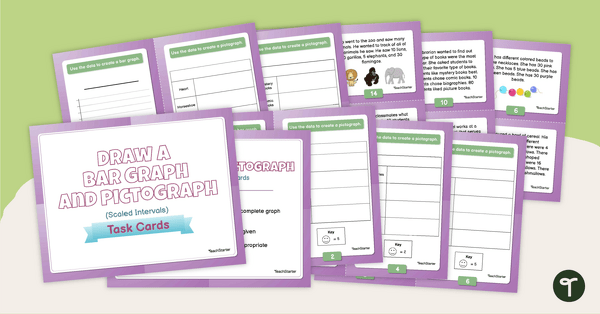
Draw a Bar Graph and Pictograph (Scaled Intervals) – Task Cards
Practice drawing scaled bar graphs and pictographs with this set of task cards.
- Plus Plan
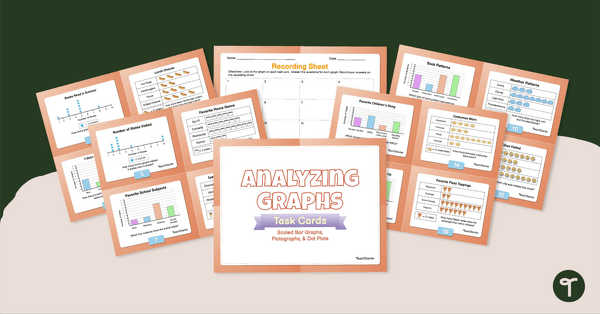
Analyzing Graphs — Scaled Bar Graphs, Pictographs, & Dot Plots —Task Cards
Use data analysis skills to analyze scaled bar graphs, pictographs, and dot plots with this set of task cards.
- Plus Plan
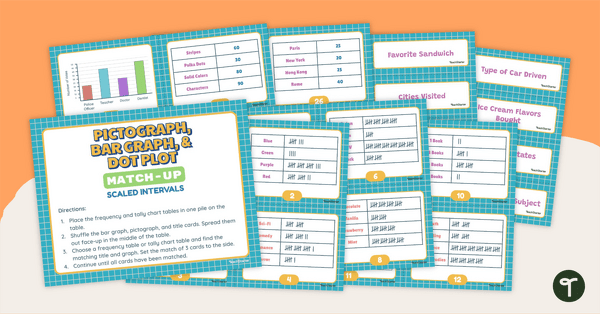
Pictograph, Bar Graph, & Dot Plot Match-Up (Scaled Intervals)
Use data analysis skills to match tally charts and frequency tables with their corresponding bar graph, pictograph, or dot plot.
- Plus Plan
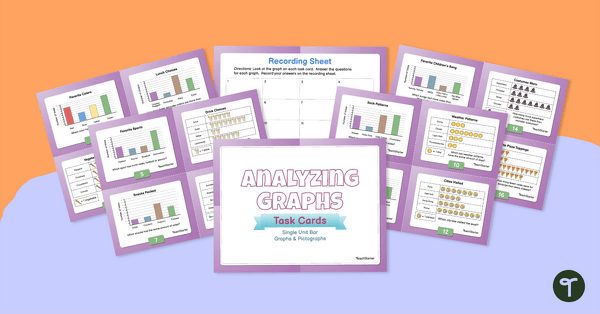
Analyzing Graphs – Single-Unit Bar Graphs & Pictographs – Task Cards
Use data analysis skills to analyze bar graphs and pictographs with this set of task cards.
- Free Plan
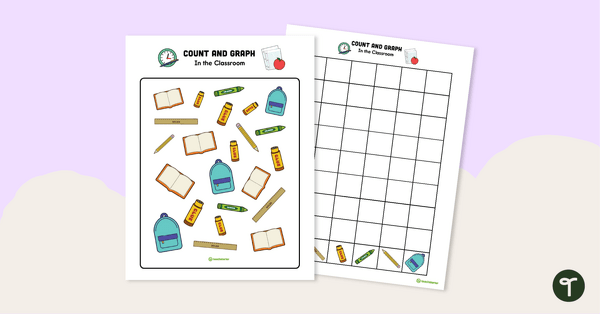
Count and Graph – In the Classroom
Practice collecting, sorting, and organizing data to create a graph with this 2-page worksheet.
- Plus Plan
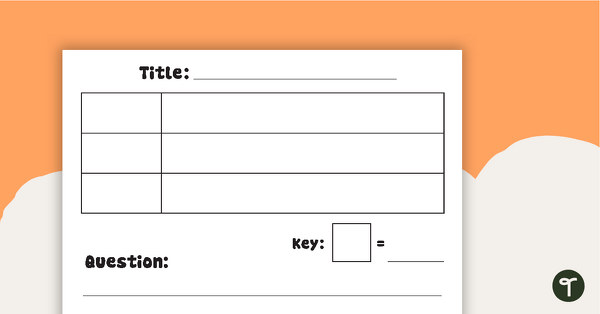
Picture Graph Templates
A set of blank picture graph templates for students to represent data.
- Plus Plan
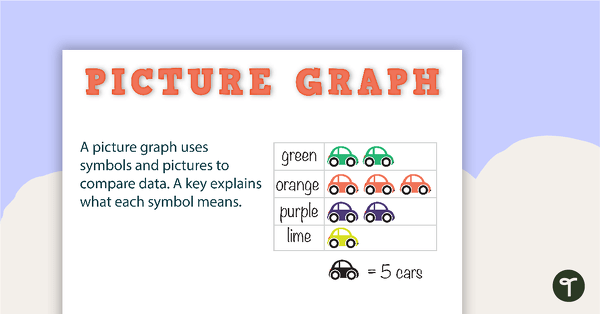
Types of Graphs Posters and Worksheets
A collection of posters displaying the different types of graphs along with matching worksheets to assist students with laying out graphs on the page.
- Plus Plan
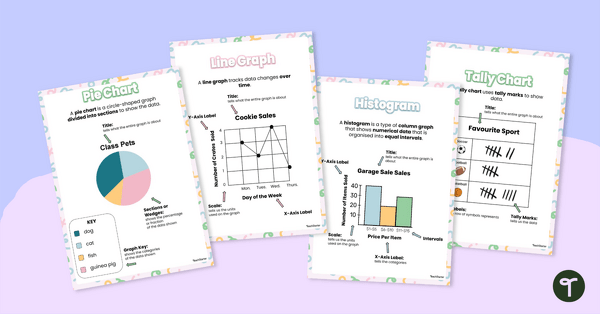
Types of Graphs Posters
This colorful and easy-to-digest visual display shows students the varying data displays they will encounter in their elementary math lessons.
- Plus Plan
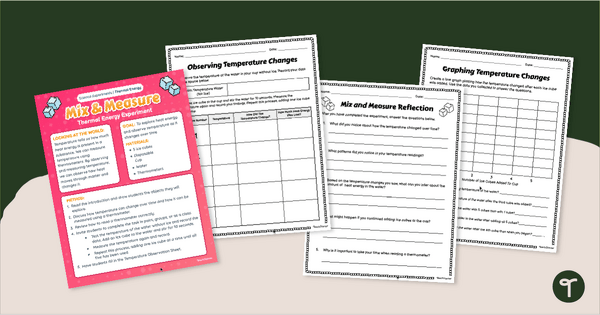
Mix & Measure Temperature Experiment
Explore temperature changes and practice reading a thermometer with our Mix and Measure Temperature Experiment.
- Plus Plan
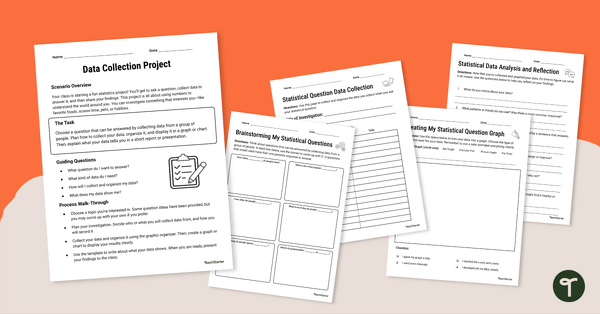
Data Collection Project
Complete this data collection project with your students to give them practice developing a statistical question, collecting data, and displaying the results.
- Plus Plan
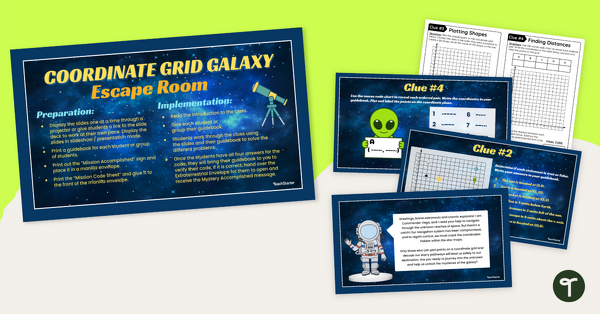
Coordinate Plane Escape Room
Play this engaging coordinate plane escape room with your students to help them refine their coordinate grid skills.
- Plus Plan
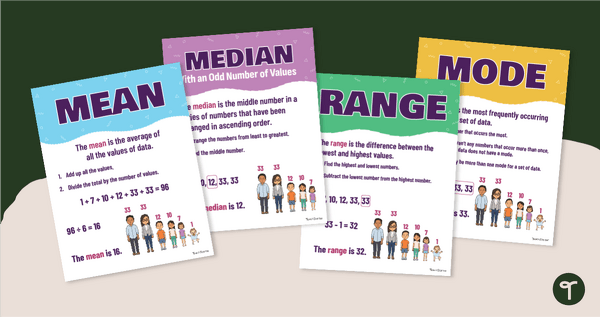
Range, Mean, Median & Mode Chart Pack
Download a Range, Mean, Median & Mode Chart pack to help your students remember measures of central tendency.
- Plus Plan
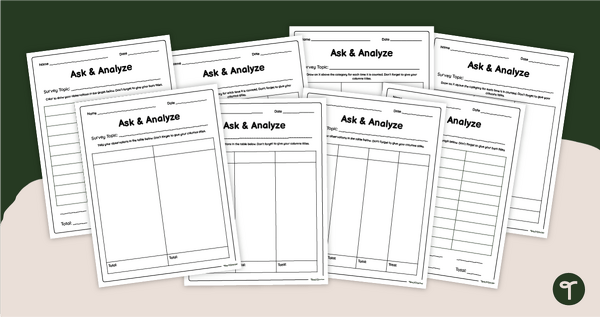
Data Collection Worksheets - Blank Survey Template
Organize student survey data with a set of printable survey data collection worksheets.
- Plus Plan
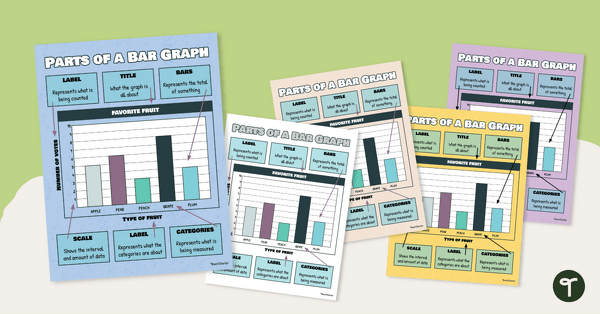
Bar Graph Anchor Chart
Hang this bar graph anchor chart in your classroom to teach your students about the different parts of this commonly used graph.
- Plus Plan
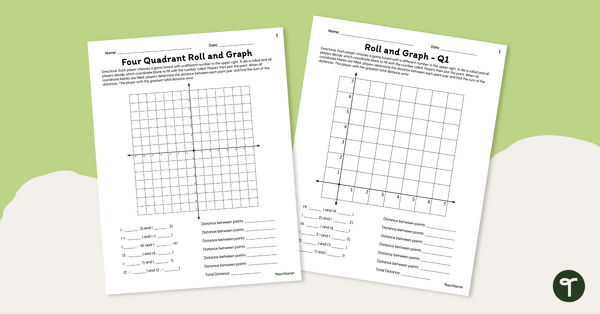
Coordinate Plane Games — "Roll and Graph"
Play our coordinate plane games in your classroom to enhance students’ ability to plot points and find the distance between them.
- Plus Plan
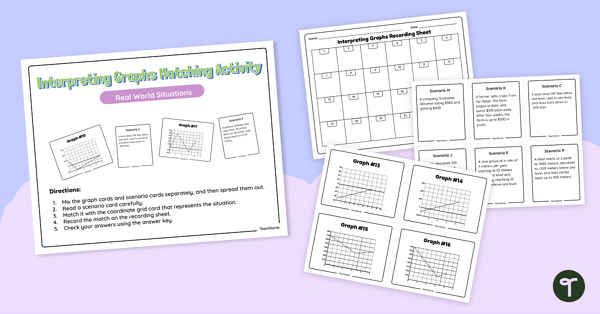
Interpreting Graphs on the Coordinate Plane Matching Activity
Incorporate this interpreting graphs matching activity into your unit on coordinate planes.
- Plus Plan
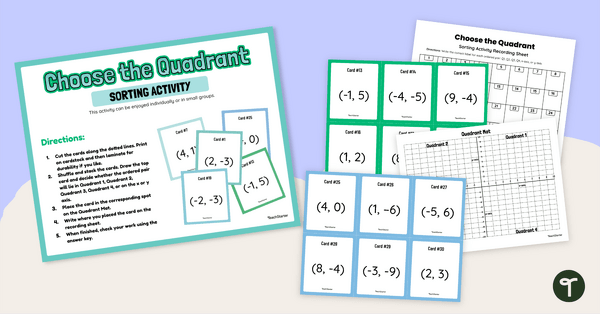
Coordinate Plane Activity — Four Quadrant Sort
Introduce this coordinate plane activity to students to enhance their skills in identifying ordered pairs in all four quadrants.
- Plus Plan
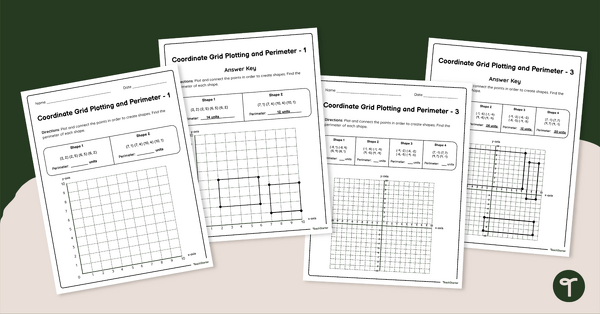
Coordinate Grid Worksheets — Plotting and Perimeter
Provide your students with these coordinate grid worksheets to help them master plotting and perimeter on the coordinate plane.
- Free Plan
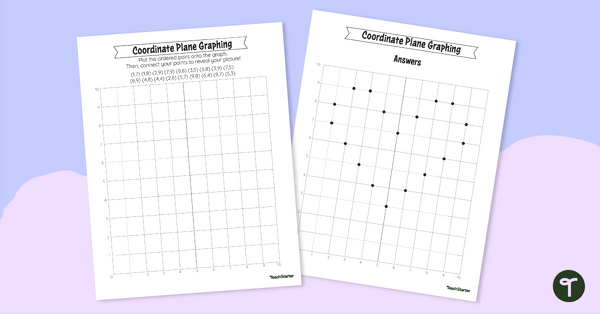
Plotting Points Mystery Picture — Valentine’s Day
Share this potting points mystery picture with your students on Valentine’s Day.
- Plus Plan
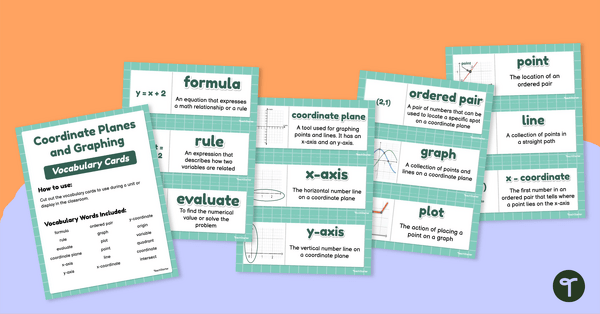
Coordinate Planes and Graphing Vocabulary Card Set
Introduce coordinate planes to your students with this set of 18 vocabulary cards.
- Plus Plan
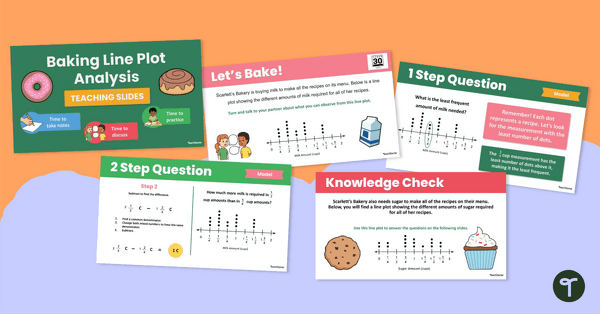
Baking Line Plot Analysis Teaching Slides
Explore the sweet side of graphs and data with this bakery-themed line plot resource, supporting your students' abilities to interpret line plots!
- Plus Plan
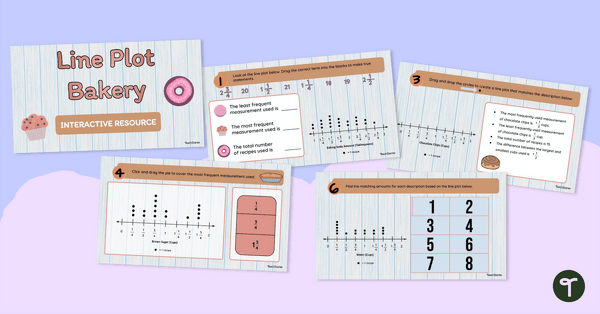
Dot Plot Bakery Interactive Activity
Strengthen dot plot skills with this bakery-themed interactive activity, designed to help students practice creating and analyzing dot graphs in a fun, structured way.
- Plus Plan
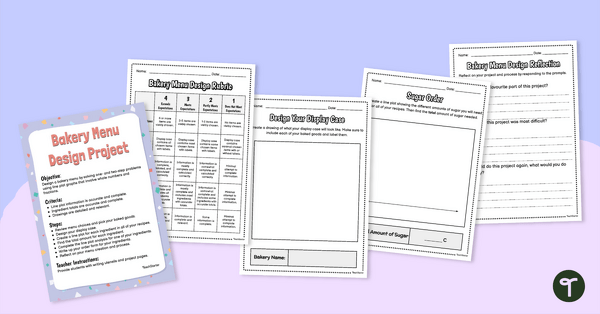
Line Plot Project: Bakery Menu Design
Make learning about math as sweet as your students' favorite treats with this project based learning line plots exercise!
- Plus Plan
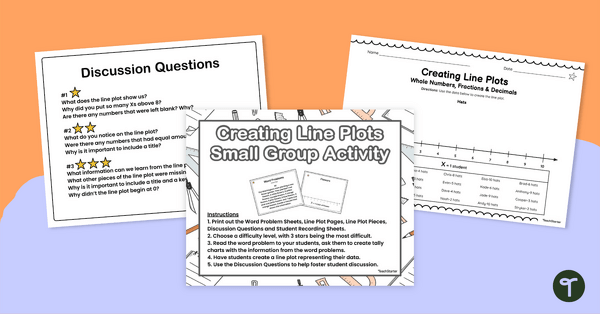
Creating Line Plots (with Fractions and Decimals) Small Group Activity
Incorporate this small group activity into your math centers to reinforce students skills in interpreting data and displaying it as line plots.
- Plus Plan
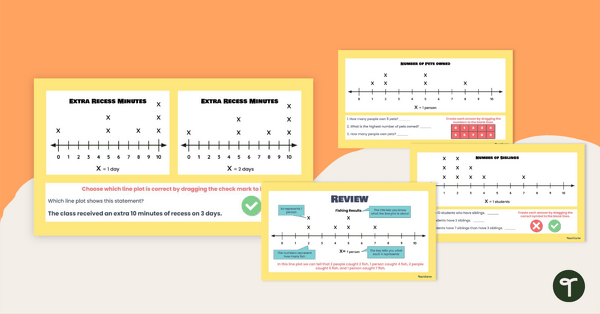
Analyzing Line Plots Interactive Activity
Dive into data with your class using this engaging Analyzing Line Plots Interactive Activity!
- Plus Plan
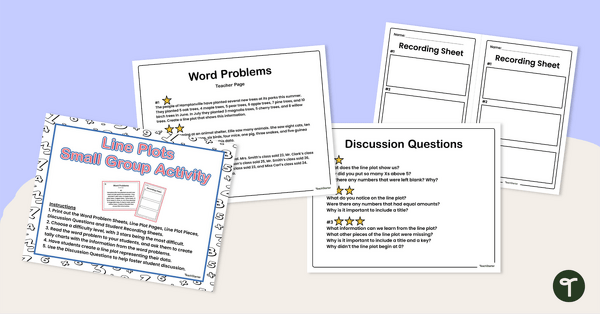
Creating Line Plots Small Group Activity
Enhance your students’ math skills through this small group activity where they’ll transfer word based data to create line plots.
- Plus Plan
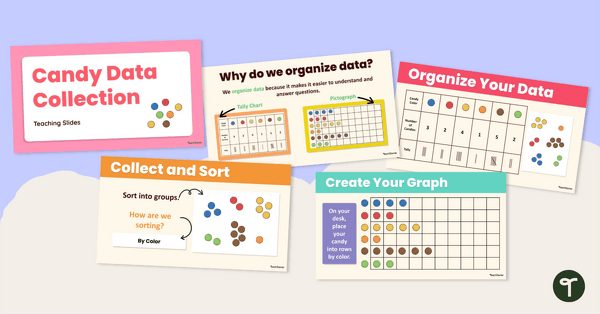
Candy Data Collection Instructional Slide Deck
Explore this candy-themed data collection teaching presentation to teach students the basics of acquiring and recording data.
- Plus Plan
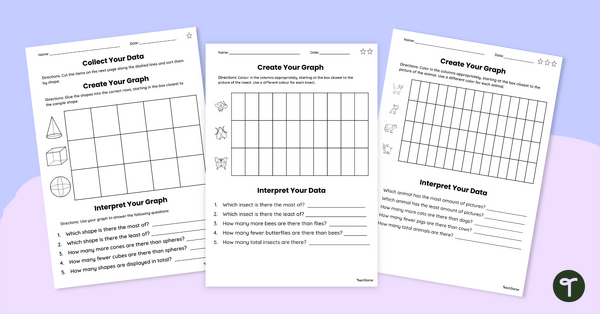
Data Collection Worksheet Set
Use this set of differentiated graphs worksheets to assess your students’ understanding of how data is collected, organized and presented.