Counting Teaching Resources
Teach counting skills this school year with printable worksheets, educational games, digital activities and more elementary school resources designed to help students when they are learning to count.
This extensive collection of curriculum-aligned teaching resources includes Base 10 flashcards, subitizing worksheets and more to save elementary teachers time on lesson planning.
Created by expert teachers, each resource in this math collection has been carefully reviewed and curated by our team. That means it's ready to use in the classroom! You'll even find editable resources, plus differentiated options.
New to teaching counting, or just looking for fresh ways to engage your students? Read on for a primer from our teaching team!
What Is Counting?
It may seem obvious, but let's start at the beginning.
The basic counting process involves a one-to-one correspondence between the items in the set and the counting numbers. It's a fundamental mathematical concept taught in the early years that helps our students develop number sense and mathematical skills.
In the primary grades of elementary, students typically learn to:
- Recite the numbers in sequence
- Count objects by pointing to them and saying the corresponding number
- Recognize and write numerals
- Count forward and backward
- Skip count by twos, fives and tens
- Use counting strategies to solve simple addition and subtraction problems
Counting Vocabulary Terms
Let's dive into some common math vocabulary terms related to counting that students encounter in elementary school.
Numerals
Numerals is another word for symbols representing numbers, such as 1, 2 and 3.
Digits
Digits are the individual symbols that are used to make up numerals. For example, let's look at the numeral 12. The digits 1 and 2 make up the numeral 12.
Skip Counting
One of the early skills students learn in counting is the process of skip counting, in which they literally skip over numbers. A precursor to traditional addition, skip counting involves counting by a specific number sequence, such as 2, 4, 6, 8, etc.
For example, when skip counting by 2s, a student would start at 2, counting out 4, 6, 8, 10 and so on.
Counting On
Counting on is a simple strategy for performing addition. Using this strategy, students start with a smaller number and count up by the number being added to find a sum.
For example, if a student faces the addition problem 3 + 4, they would start with the number 3 and count on 4 more: 4, 5, 6, 7. In this case, the answer is 7.
Counting Back
The opposite of counting on is counting back. This strategy for solving subtraction problems involves starting with a larger number and counting down by the number being subtracted to find a difference.
For example, a student who wants to solve the subtraction problem 5 - 3 could count backward from the larger number to find the solution. In this case, the larger number is 5. The student would start with 5, counting back 3 — 4, 3, 2. The answer is 2.
Tally Marks
Tally marks are a great tool for teaching early counting skills. When teaching counting with tally marks, you ask your students to draw a certain number of tally marks to represent a given quantity.
For example, if a student is going to count to four using tally marks, they would draw a single vertical line and then draw three more lines next to it.
Tally marks are typically drawn in groups of five, so if a student were asked to count to five using tally marks, they would draw a diagonal line crossing through the four vertical lines to represent all five.
Understanding how to create sets of five tally marks can help students count to larger numbers easily. For example, if a student is asked to count to 15, they would create three sets of five tally marks.
Grouping
The term grouping has several definitions, depending on how it's being used. But when it comes to counting, grouping refers to a method of organizing objects into groups of equal size to facilitate counting.
Sets of tally marks are a perfect example of grouping — they're a visual representation of grouping numbers into sets of five.
How to Teach Counting
Are you looking for some fun ways to teach counting in your classroom? The more hands-on and active, the better!
In addition to the worksheets, games and other activities in this collection, try some of these fun ideas from our teacher team!
- Use Snacktivities — Math manipulatives help young kinesthetic learners understand counting by making the concepts more concrete, and using snacks adds a real-world element to the lesson! Challenge students to string snacks like cereal loops for practice with grouping or simply to count out exact numbers of gummy bears. Just make sure no one samples the manipulatives!
- Get Arty — Incorporating art into counting activities adds an element of fun. For example, ask kids to draw a certain number of circles, squares or other shapes and then count them out loud. This also helps students work fine muscles and develops their understanding of basic shapes.
- Play Store — Even before students learn about currency, kids enjoy the role-play of "shopping" like adults. Use this to your advantage by setting up a classroom "store" and asking children to count out the correct amount of play money to purchase items.
- Get Active — Encourage movement and help students get their wiggles out while learning. Ask children to count out loud while jumping or hopping, or play a game of Simon Says that involves specific numbers of a specific movement.
- Plus Plan
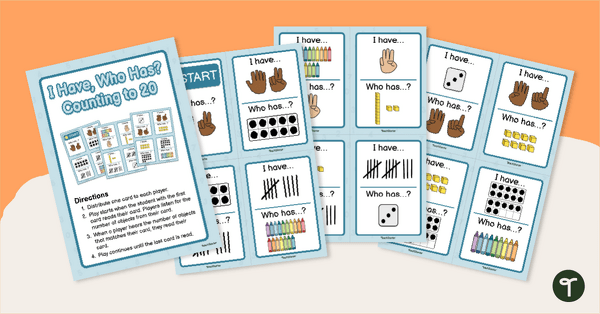
Counting to 20 I Have, Who Has? Card Game
Show student knowledge of counting to 20 with this fun I Have, Who Has? Counting Card Game.
- Plus Plan
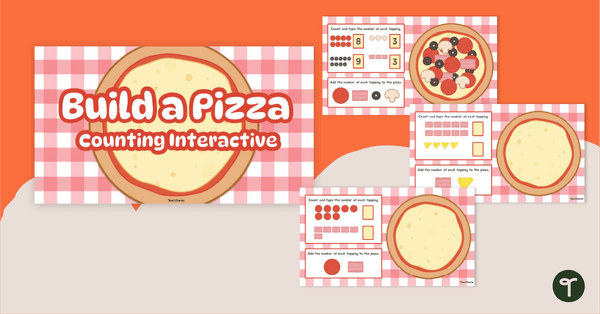
Build a Pizza Counting Interactive Activity
Build a pizza by using counting skills with this fun interactive game.
- Plus Plan
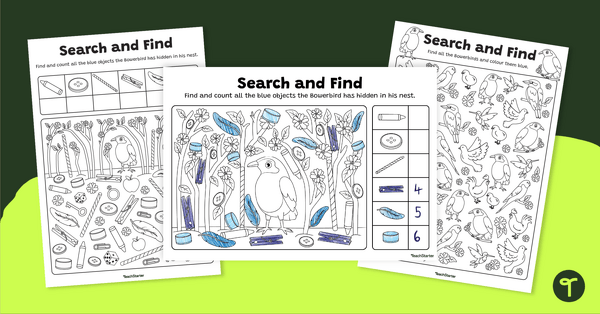
Search and Find Bowerbird Worksheets
Explore images of bowerbirds and search, find and count objects that bowerbirds collect or bowerbirds themselves.
- Plus Plan
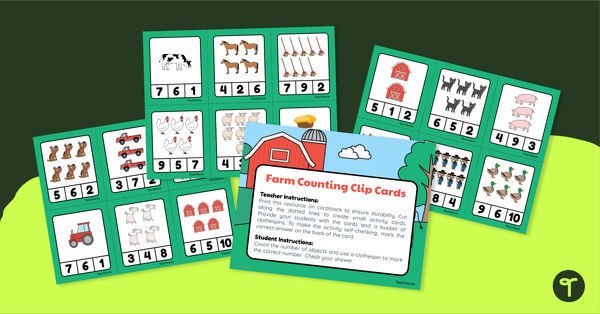
Counting Clip Cards - On the Farm
Practice counting objects with a set of 18 farm-themed counting clip cards.
- Plus Plan
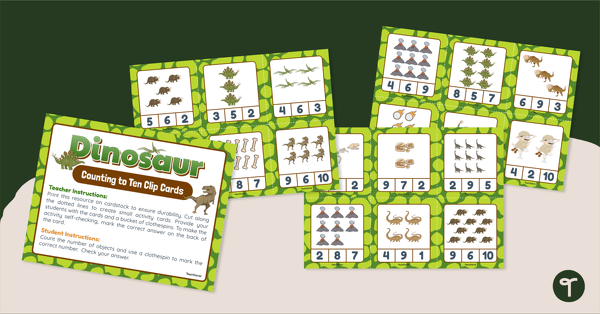
Counting Clip Cards - Dinosaurs
Practice counting objects with a set of 18 dinosaur-themed counting clip cards.
- Free Plan
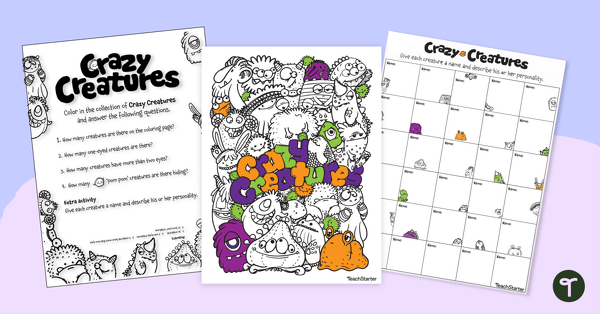
Crazy Creatures – Counting Worksheet
Bring a bit of (not-so) spooky counting into kindergarten with a crazy creatures Halloween activity.
- Plus Plan
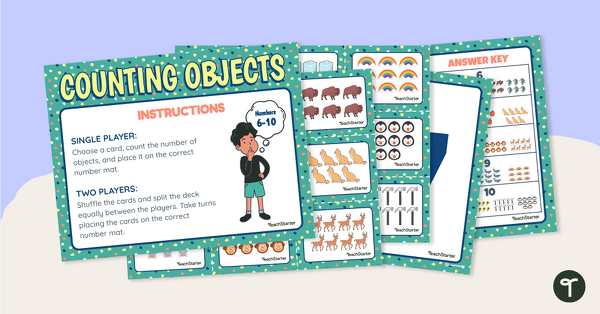
Counting Objects Sorting Numbers 6-10
Practice counting 6 – 10 objects with this colorful sorting activity.
- Plus Plan
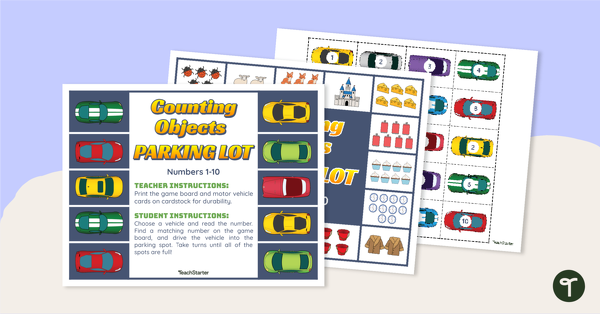
Counting Objects Parking Lot - Numbers 1-10
Practice counting objects and recognizing numerals with a match-up style game.
- Plus Plan
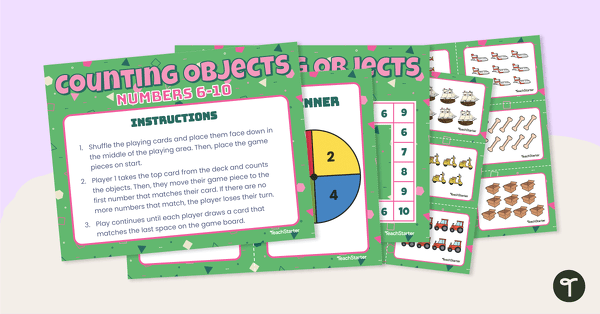
Counting Objects Board Game - Numbers 6-10
Practice counting to 10 with an engaging board game.
- Plus Plan
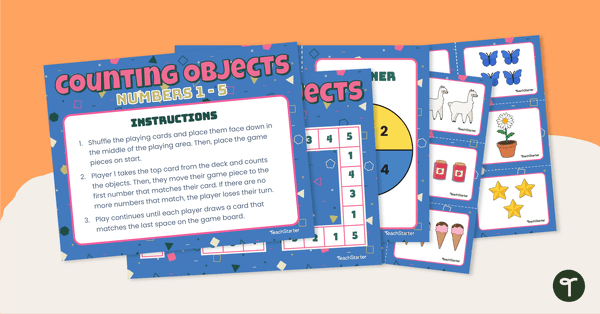
Counting Objects Board Game - Numbers 1-5
Practice basic math skills with a counting objects board game.
- Plus Plan
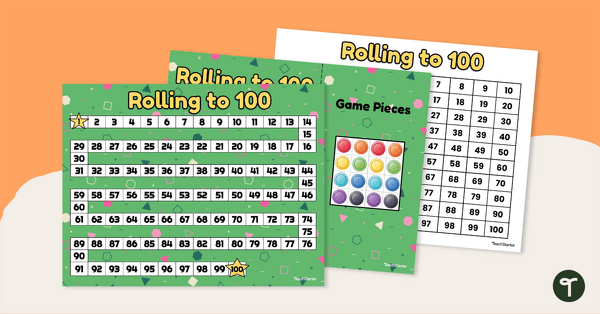
Rolling to 100 Board Game
Practice counting to 100 by 1's with this interactive hundreds chart board game for multiple players.
- Free Plan
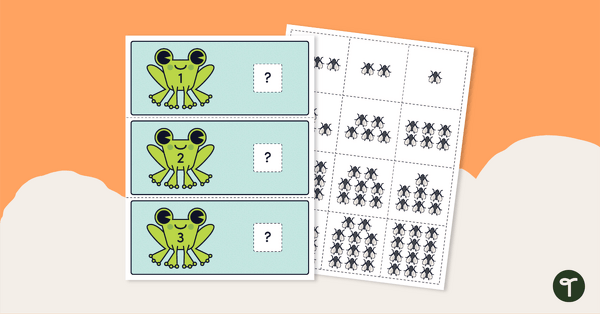
Frog and Flies Match-Up Activity (Counting to 12)
Practice counting numbers 1 to 12 with this fun frog and fly match-up activity.
- Plus Plan
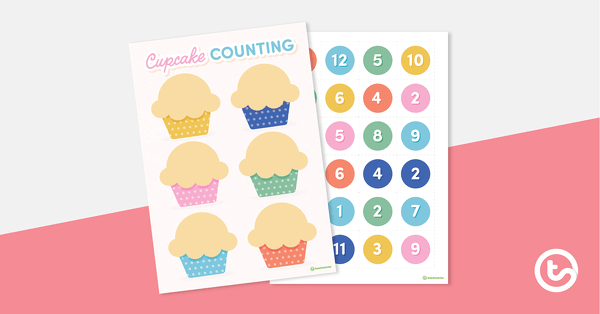
Cupcake Counting Activity
Practice one-to-one correspondence with this cupcake counting activity.
- Plus Plan
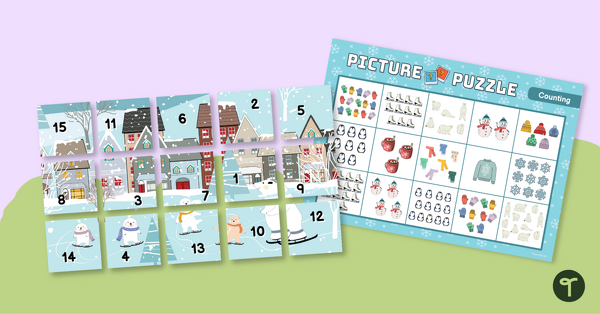
Counting Within 20 Picture Puzzle
Practice counting objects within 20 and matching groups to numbers through this 15-piece winter scene picture puzzle.
- Plus Plan
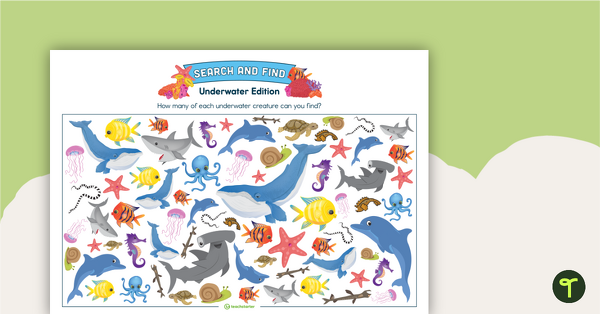
Seek and Find – Underwater Theme
A fun, search and find counting activity.
- Plus Plan
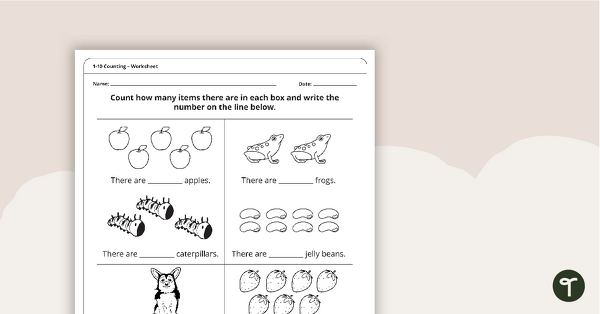
1-10 Counting Worksheet
A worksheet to practice one-to-one correspondence.
- Plus Plan
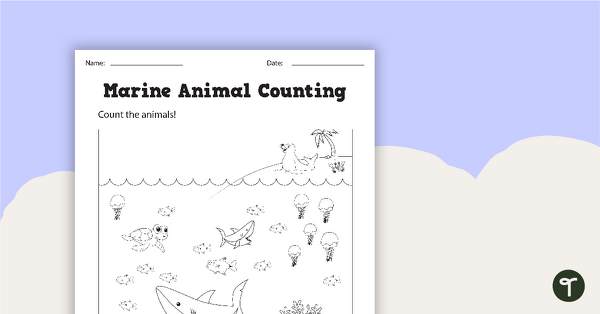
Marine Animal Counting Worksheet (0–9)
A worksheet to practice one-to-one correspondence.
- Plus Plan
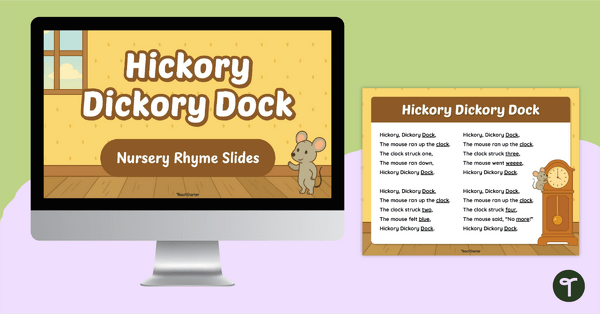
Hickory Dickory Dock – Nursery Rhyme Poster and PowerPoint
Use this “Hickory Dickory Dock” nursery rhyme poster and PowerPoint to teach your youngest students about rhyme, rhythm and counting.
- Plus Plan
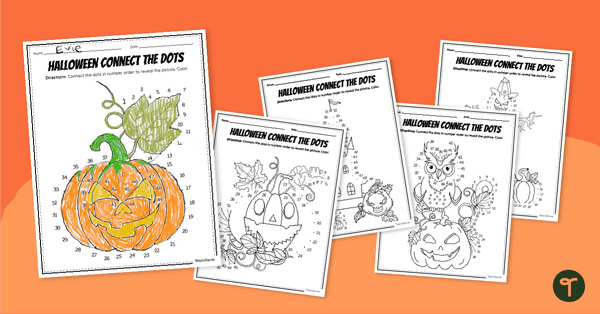
Halloween Connect the Dots Worksheets (1-50)
Practice counting up to 50 with a set of fun Halloween Connect the Dots worksheets.
- Plus Plan
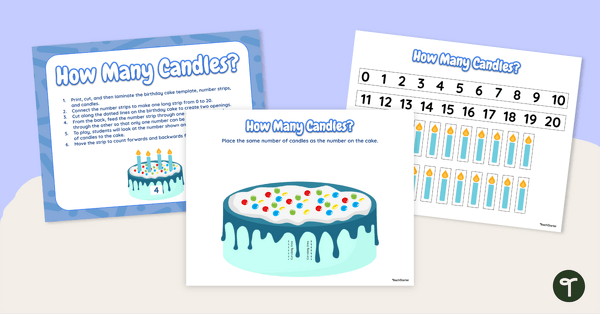
Counting Birthday Candles Activity
“Gift” this counting birthday candles activity to your students for hands-on counting and number representation practice.
- Plus Plan
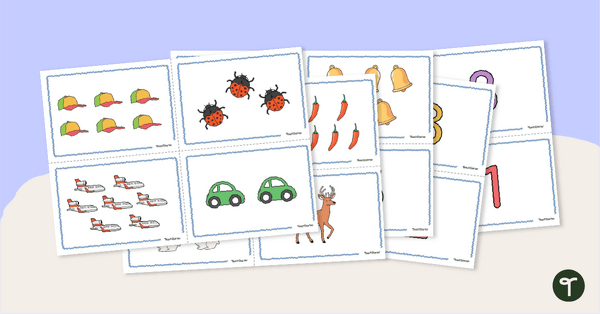
Counting to 10 Match-Up Activity
Practice counting to 10 with this set of twenty object and number matching cards.
- Plus Plan
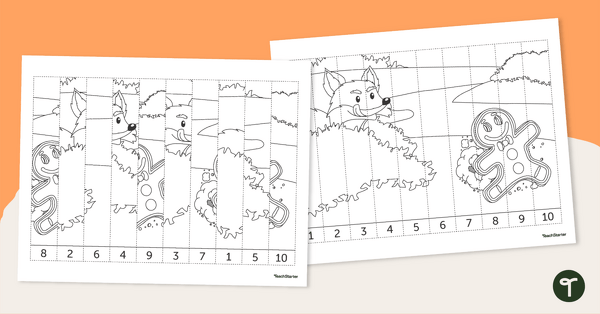
Sequence Puzzle for Numbers 1 - 10 — Gingerbread Man
Share this sequence puzzle with your students for a fun way to practice ordering the numbers 1 - 10.
- Plus Plan
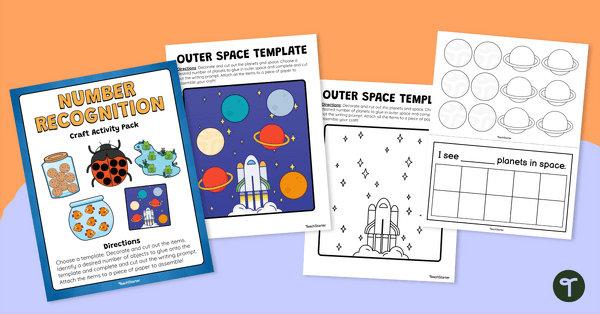
Number Recognition Craft Activity Pack
Reinforce number recognition with this engaging craft activity pack for numbers 1 - 10.
- Free Plan
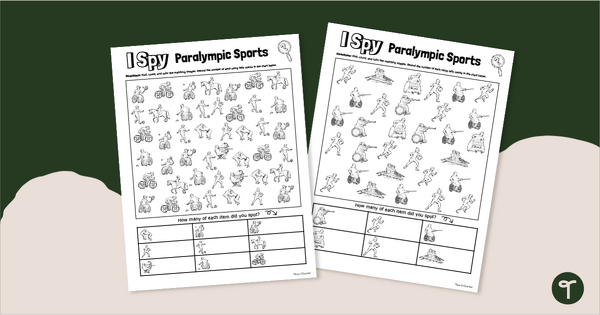
Paralympic Games Count and Color Worksheets
Count and tally Paralympic icons with our engaging I Spy Worksheets, perfect for enhancing your students' observation and counting skills.
- Plus Plan
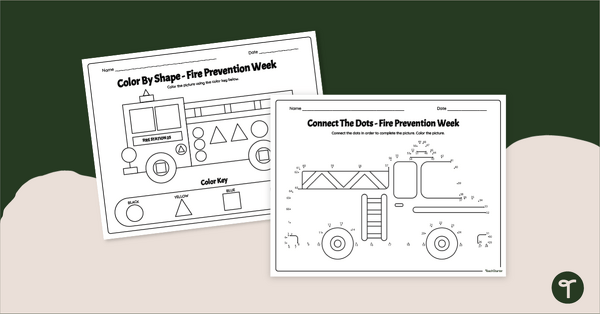
Fire Truck Printable Math Worksheets (PK-K)
Build number and 2D shape identification skills with our Fire Truck Printable Math Worksheets for Pre-K and Kindergarten.
- Plus Plan
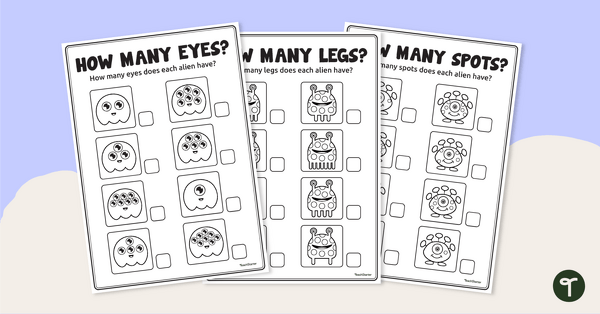
Alien-Themed Counting Worksheet
Use these alien-themed counting worksheets to help your students count quantities between 1 and 10.
- Plus Plan
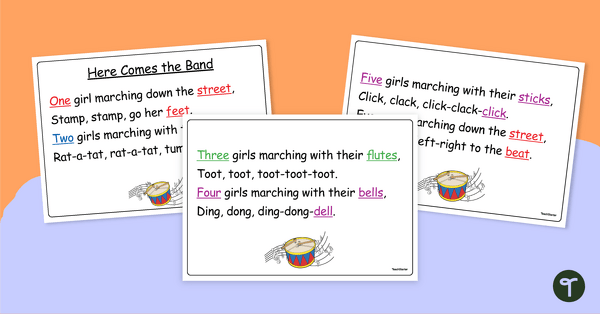
Here Comes the Band – Counting Rhyme Poster
Use the counting rhyme “Here Comes the Band” poster to teach your students about numbers and rhyme simultaneously!
- Plus Plan
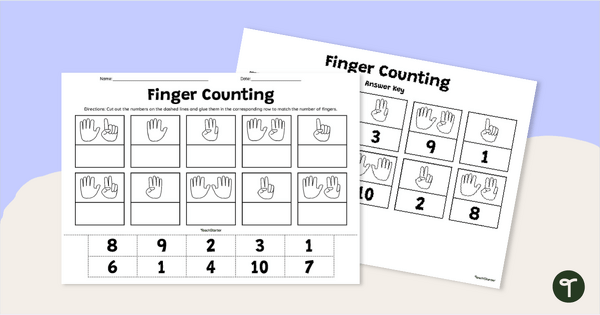
Finger Counting Cut and Paste
Count to ten using this finger counting cut and paste worksheet.
- Plus Plan
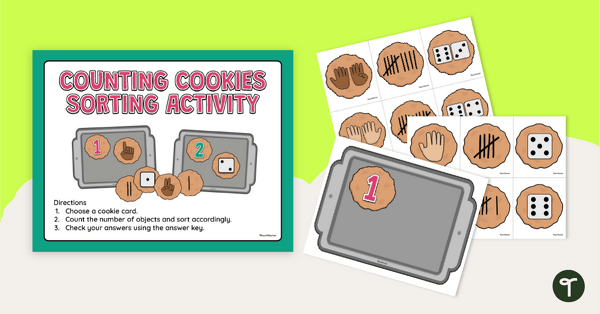
Counting Cookies Sorting Activity
Practice counting to 10 with various representations with this cookie sorting activity.
- Plus Plan
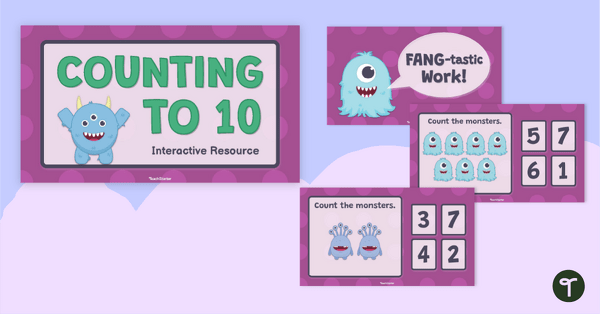
Counting to 10 Interactive Task Cards
Count groups of aliens up to 10 with this set of fun and engaging interactive counting task cards.
- Plus Plan
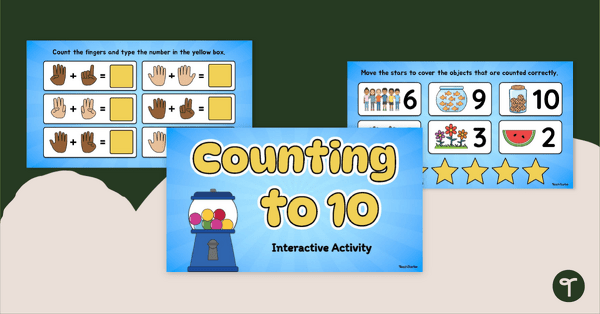
Counting to 10 Interactive Activity
Practice counting to 10 with this fun and engaging interactive activity.
- Plus Plan
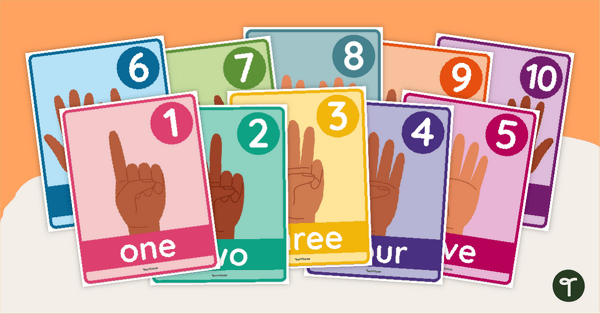
Finger Counting Poster Set
Display this set of finger counting posters to 10 in the early years classroom.